Eucheumatoids Production Overview
Production Overview
Eucheumatoids are tropical red seaweeds that contain carrageenan, for which they started to be commercially farmed in the 1970s in South East Asia. Cottonii and spinosum are the most commonly cultivated species. Since their cultivation method is fairly similar and many farmers grow these interchangeably they are summarised as Eucheumatoids in this report.
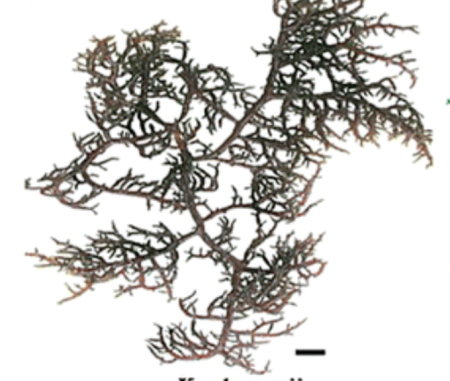
Common name:
Cottonii
Scientific name:
Kappaphycus alvarezii
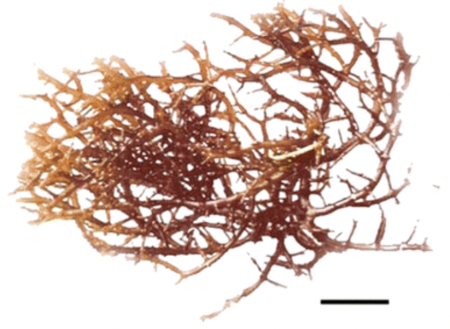
Common name:
Spinosum
Scientific name:
Eucheuma denticuatum
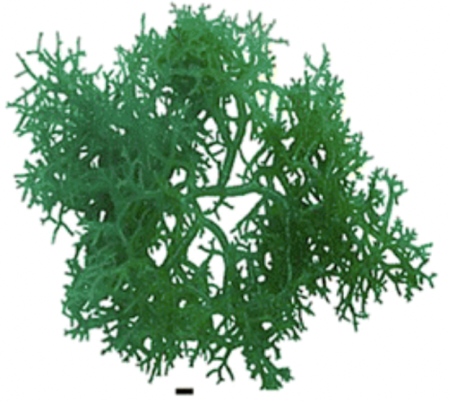
Common name:
Sacol
Scientific name:
Kappaphycus striatus
Group: Red seaweeds (Rhodophyta)
There are many different morphotypes from cultivars of the same species that range in colour: from green, to brown, to red.
Global production map
Utilisation
Carrageenan - a global commodity
Eucheumatoids are primarily processed for carrageenan extraction — still the dominant market application globally. Carrageenans are widely used in food processing, pharmaceuticals, cosmetics and nutraceuticals for their gelling, thickening and stabilising properties.
Typical applications include:
- Food grade: dairy and meat products (due to strong protein-binding), sauces, bakery.
- Pharma grade: tissue engineering, wound dressings, drug delivery.
- Industrial grade: animal feed, textiles.
However, the protein, fat and mineral fractions of the seaweed — which account for 70–92% of the dried biomass — are largely discarded during processing. This represents a significant lost economic opportunity and a missed pathway for higher-value utilisation.
Beyond carrageenan extraction, fresh consumption of mainly Kappaphycus spinosum occurs in coastal communities (e.g. salads), though this represents only a small share of total production.
Emerging applications beyond carrageenan
While carrageenan remains the most established and well-developed market, new application pathways are rapidly emerging, particularly in regions that are relatively new to farming Eucheumatoids.
Biostimulants and bio-insumos
for agriculture:
Especially in Brazil and Venezuela, where small local processors are developing simple mechanical extraction methods and producing liquid plant stimulants (“suco”), with strong demand from regenerative agriculture and specialty crop markets.
Direct food applications:
In parts of the Caribbean, fresh and minimally processed Eucheumatoids are increasingly used in beverages, functional foods, porridges and traditional cuisine. This reflects cultural familiarity with seaweed as food and growing interest in local value addition.
Cosmetic and personal-care products:
Also prominent in the Caribbean, where artisanal and small-batch producers use whole seaweed or crude extracts in skin gels, soaps, masks and wellness products — markets that valorise the bioactive compounds beyond carrageenan.
Together, these trends show a gradual shift toward whole-biomass utilisation and diversified product portfolios, creating opportunities for higher local value capture and reduced waste of valuable nutrients.
Global production volumes
South East Asia
Production volumes
Southeast Asia remains the world’s largest production hub for Eucheumatoids, driven by mature farming systems in Indonesia and the Philippines that supply the global carrageenan industry.
The Philippines
Commercial farming of Eucheumatoids was pioneered in the Philippines around the 1970s. The production peaked in 2011 with 1.8 million tonnes wet weight and has been stagnant with about 1.3 million tonnes wet weight in 2021, according to government statistics.
Industry estimates: 500.000 tonnes wet weight in 2021
Indonesia
According to government statistics, production in Indonesia has seen an almost 10-fold increase between 2000 and 2015 but has been slightly decreasing/stagnating since, with a production of 7 million tonnes wet weight in 2021.
Industry estimates: 1.3 -1.5 million tonnes wet weight 2021
Malaysia
Malaysia ranked third in terms of Eucheumatoid production over the past five years, although production figures have been declining since 2012 to about 180,000 tonnes wet weight, which is significantly lower than for Indonesia and the Philippines.
Industry estimates: 30,000 tonnes wet weight in 2021
Caribbean
Production volumes
The Caribbean produces small volumes, primarily based on individual farmers supplying the ‘seamoss’ market overseas and locally for juices and emerging cosmetic applications. Current production volumes are estimated inconsistently, but generally remain below 200 tonnes wet weight.
St Lucia
Seaweed farming in St. Lucia began in the 1980s with Eucheuma denticulatum, but Kappaphycus alvarezii, introduced in 2008, has since become dominant. According to FAO statistics, production remained below 50 tonnes wet weight until 2019, then grew steadily to a peak of 204.17 tonnes wet weight in 2021, with 147.83 tonnes recorded in 2023.
St Vincent and the Grenadines
Seaweed farming started in the early 2000s, initially focusing on native Gracilaria species before Kappaphycus alvarezii was introduced in 2008 and became the main crop. According to FAO statistics, production increased 54-fold between 2019 and 2020, reaching 13 tonnes wet weight, and remained stable through 2023, though Hurricane Beryl in 2024 severely impacted output.
Grenada
Commercial seaweed farming in Grenada was promoted through an FAO-supported strategy focusing on Kappaphycus alvarezii. According to FAO data, production has grown consistently since records began in 2015, reaching 25 tonnes wet weight in 2023.
South America
Production volumes
In South America, commercial Eucheumatoid production is most recently expanding with strong potential to scale quickly to significant volumes.
Venezuela
Kappaphycus alvarezii was introduced from the Philippines in 1996 and cultivated until 2001, when it was restricted by the government. In 2019 the wild collection of K. alvarezii and the native species Eucheumaptopsis isiformis was granted. In 2020 special permits were granted for 3 private companies to resume farming activities. Since then the farming of Kappaphycus grew exponentially, to become the largest exporter of red tropical seaweed with 1076 tonnes dry weight in 2024.
Brazil
Commercial farming of Kappaphycus alvarezii in Brazil began in 1995 after introductions from Japan and Venezuela. Production remained near 700 tonnes (wet weight) from 2010 to 2019, before surpassing 1,000 tonnes in 2019. Production has been growing steadily since, but not as strong as it could, due to slow market uptake. Almost all of its production is currently going into the extraction and formulation of agricultural biostimulants.
East Africa
East Africa is a key production area for Eucheumatoids outside of Southeast Asia, the Caribbean, and South America. Specifically, Tanzania, Kenya, and Madagascar produce substantial volumes, engaging thousands of farmers.
Our next focus for expanding our Seaweed Insights platform will be in this region.