Undaria Site Selection
East Asia
Overview
Undaria naturally occurs in the open sea, usually in the lower intertidal zone up to 18 m depth. Salinity levels between 27-33ppt are preferred at an optimal growth temperatures between 5-15°C.
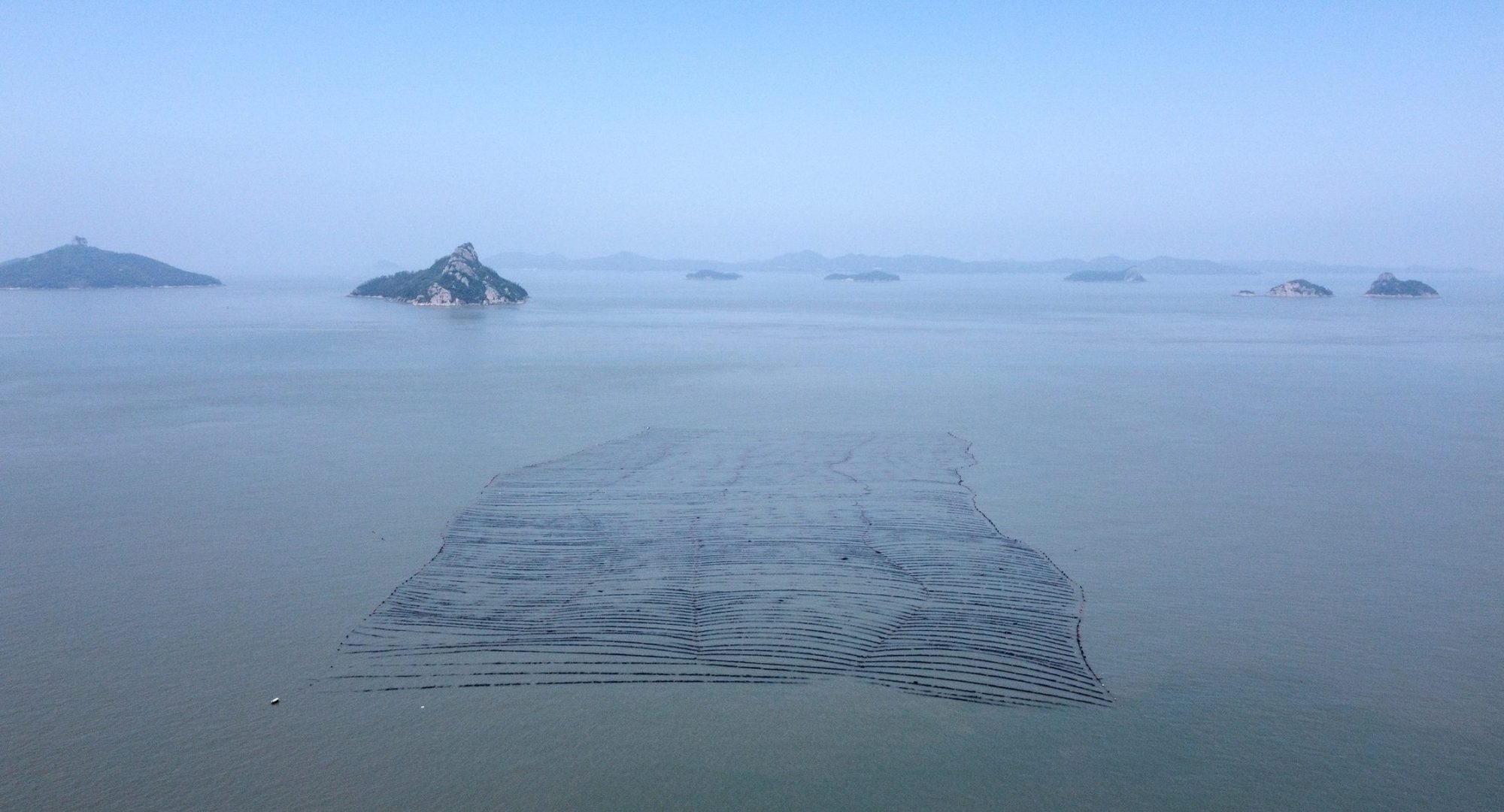
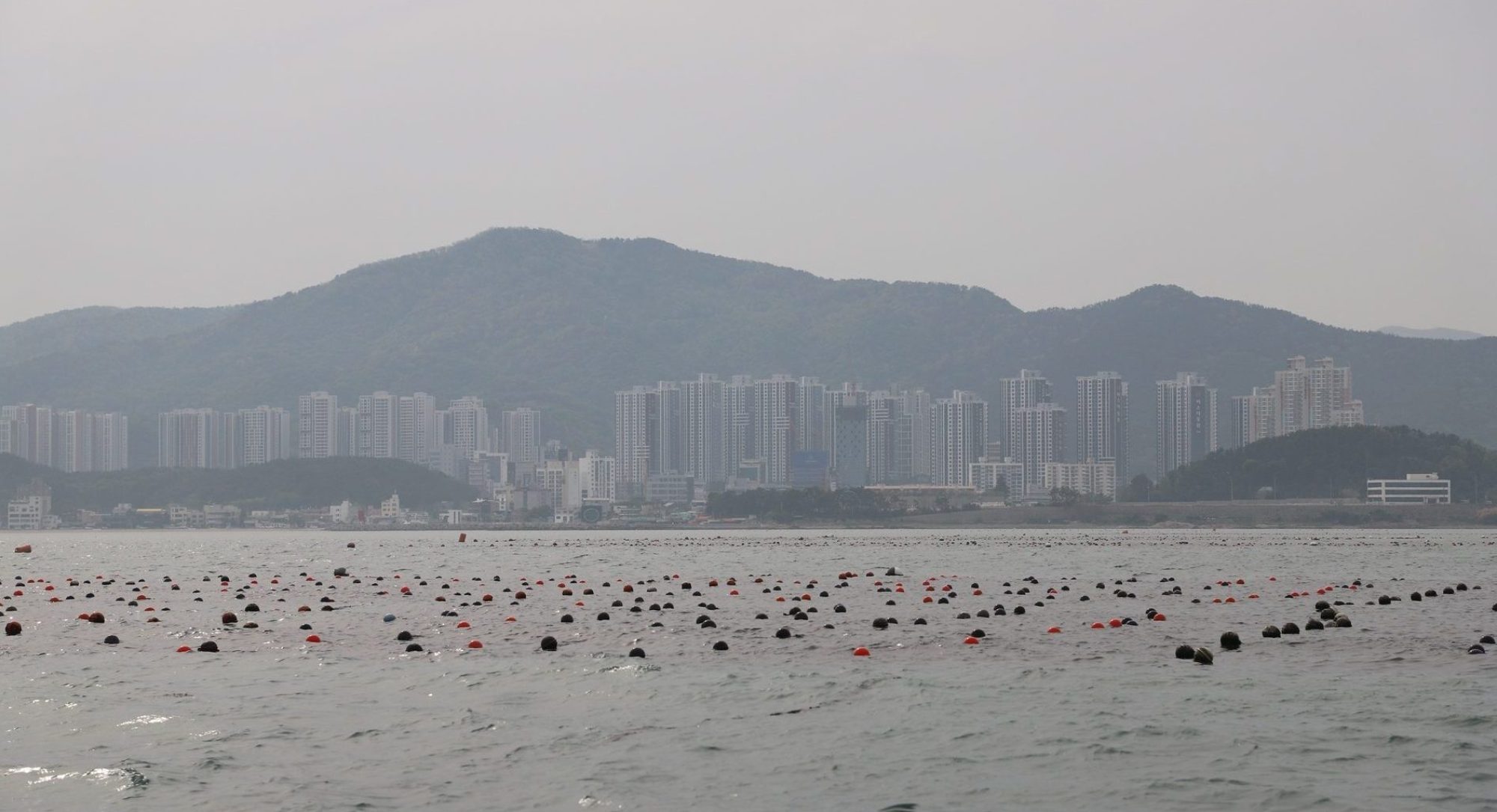
Suitable site conditions:
- Water depth between 10 and 40 metres (preferably 20-30 m)
- Water velocity between 0.2 and 1 m/s (preferably 0.6-0.8 m/s)
- Water temperature between 2°C and 20°C
- Transparency in the water column above 3 metres
Substrates
In Southern China and South Korea, Undaria is often farmed as fresh feedstock for Abalone farms and located in close proximity to them. It is typically farmed interchangeably with Saccharina.
Licences
Since the farmable area is publicly owned, prospective farmers must obtain a concession or licence from the government before they begin operating. In China and South Korea it is getting more difficult to obtain permits for new farms or farm expansions, as the maximum carrying capacity has been reached in most established locations. In South Korea and Japan it is mandatory to be in a farmers association in order to receive a permit.
In China, farm sizes are not usually measured in hectares, but rather in MU (1 ha = 15 MU) or simply by the length of cultivation lines. In Japan and South Korea, the measurement of farms in length and amount of culture lines is more common than hectares as a metric.
In Japan, we visited farms in the Sanriku prefecture, which is the most famous and largest Undaria farming region, responsible for 74% of total Undaria production in Japan. This East Coast of Japan, is characterised by open sea conditions with strong tidal currents.
In China, Undaria is farmed in most of the coastline of the Shandong and Liaoning peninsula, where Dalian is by far the most productive region and site conditions are mostly expose.