Gracilaria Future of farm
East & South-East Asia
Overview
Challenges & innovation needs
Chinese Gracilaria farmers use ropes for cultivation. This requires a lot of manual labour, especially when seeding, harvesting and processing. Farmers report that younger generations are not interested in doing this type of work, so finding labour is a recurring challenge for the industry.
Another industry challenge that affects farmers in both China and Indonesia, are rising water temperatures due to climate change. Farmers report that they have to contend with longer periods when the water reaches above 33ºC, reducing seaweed growth. This can be a critical point for Gracilaria cultivation and could affect harvest yields which would have economical repercussions for the farmers.
In Indonesia the main challenge mentioned was lack of space. Pond areas are limited and not all have suitable characteristics. Similarly, more frequent and stronger tropical storms in farming areas bring excessive flooding and wash away the production lines.
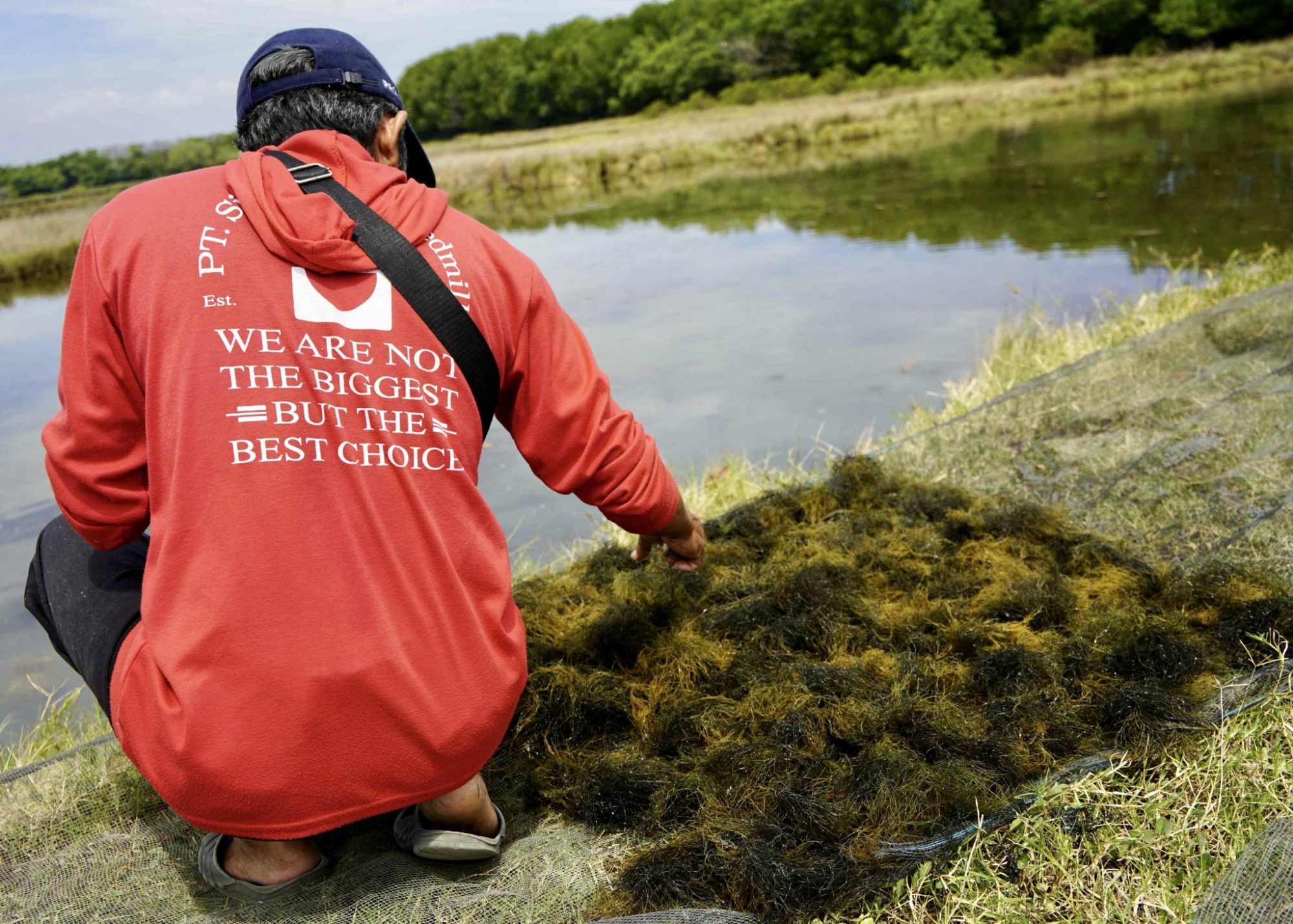
Gracilaria farmers in Indonesia that use ponds to grow their crop tend to begin production during the dry season to ensure they maintain the correct salinity levels (below 10 ppt). Long-line cultivation at sea is showing promising results and may provide alternative growth opportunities for Gracilaria production in the future.
However, cultivation at sea comes with risks. The general threat in open marine culture is exposure to herbivorous fish and epiphytes.
Similar to Eucheumatoids, a general “seedling problem” exists, where high quality strains are not available for Gracilaria. Seedlings from spores of Gracilaria changii have been developed and piloted in Takalar, Maros, Pangkep and Bone districts in South Sulawesi. Such efforts aim to increase future Gracilaria production and quality.
South America
Overview
Challenges & innovation needs
The Chilean Gracilaria farming industry is struggling because of two main problems: poor finances and harm to the environment. Most farmers are unhappy with the current situation. The industry's future is difficult due to low market prices, low demand, an aging workforce, and practices that require a lot of manual labor.
Almost all farmers want to grow their businesses, but they are held back. The biggest obstacles are fighting among producers over limited space, poor-quality seaweed in important rivers like Maullín and Pudeto, and ongoing disagreements with major buyers who keep prices too low. This market situation prevents farmers from making enough money to reinvest, and a government aid system encourages dependence instead of true business success. On top of this, farms are often ruined by outbreaks of parasitic algae, like Rhizoclonium, which can destroy over 90% of a harvest.
Gracilaria farming requires significant, long-term investment. This investment is crucial for professionalizing smallholders and scaling promising technologies that can both reconcile cultivation with and restore Chile's vital coastal ecosystems. The continued viability of this sector, however, is currently highly dependent on market development, as Algas Marinas remains the primary buyer.