Reports
Overview
This page brings together a selection of publicly available reports and studies that Hatch Blue Consulting has contributed to or led in collaboration with partners around the world. These publications explore the seaweed sector from different angles — from market and policy analysis to sustainability, investment, and innovation insights — offering an evidence base for advancing a more regenerative and scalable seaweed industry.
Worldbank report
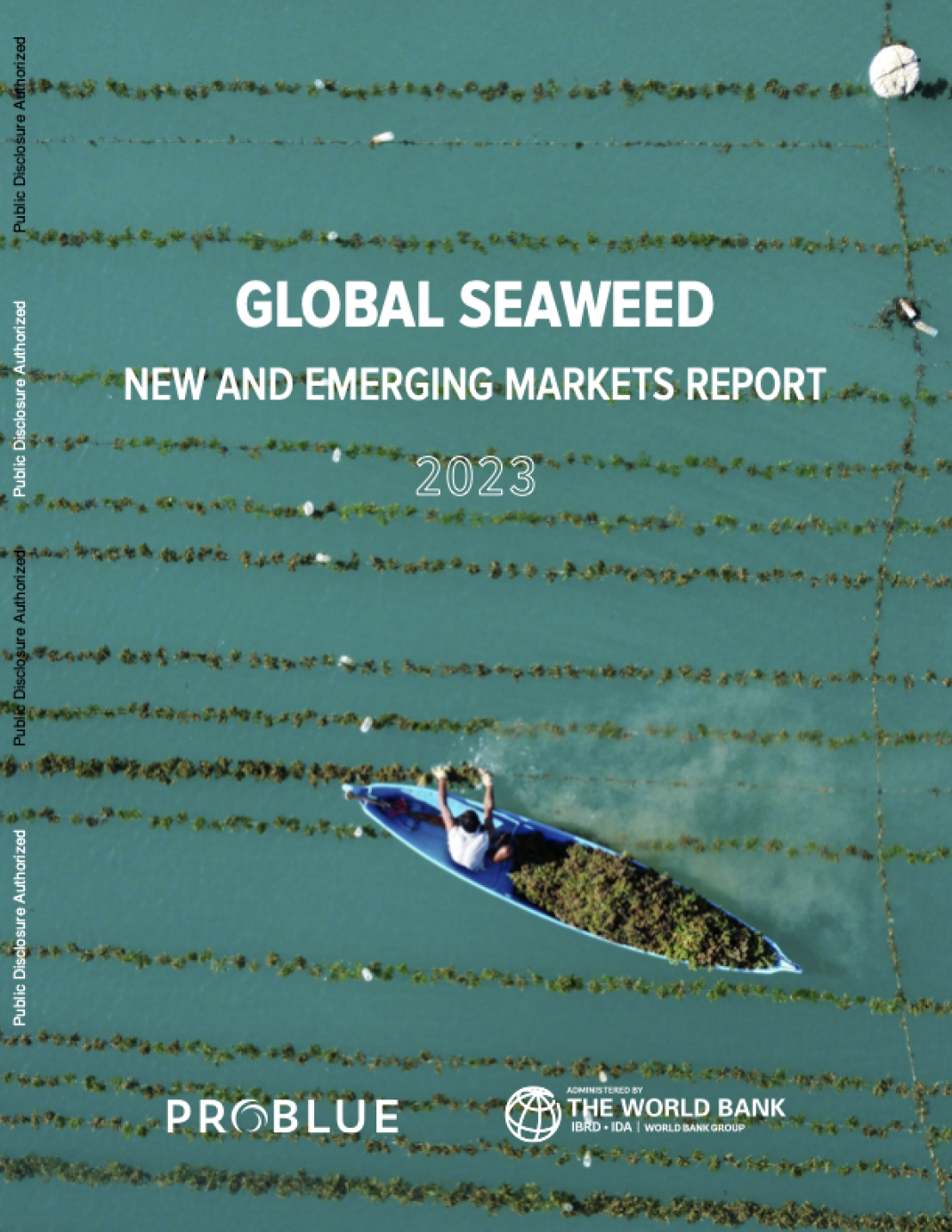
Global Seaweed - New and Emerging Markets Report 2023
The Global Seaweed New and Emerging Markets Report 2023 has identified ten global seaweed markets with the potential to drive additional growth in seaweed production by 2030, beyond its current markets. Today, most farmed seaweed is used for direct human consumption, as fresh feed in aquaculture, or as hydrocolloids.
However, seaweed-farmed products may be able to displace fossil fuels in sectors such as fabrics and plastics; can provide ecosystem services, such as carbon sequestration and nitrogen cycling; and can generate socioeconomic benefits in fragile coastal communities. Further, the market is currently dominated by a handful of Asian countries, which produce 98 percent of farmed seaweed by volume globally. Opportunities for growth in new regions and applications are high, but scaling farming of seaweed outside of Asia requires an understanding of new market opportunities to justify. This is what the report lays out.
Commissioned and published by the World Bank Group
Tropical Seaweed Resilience Institute
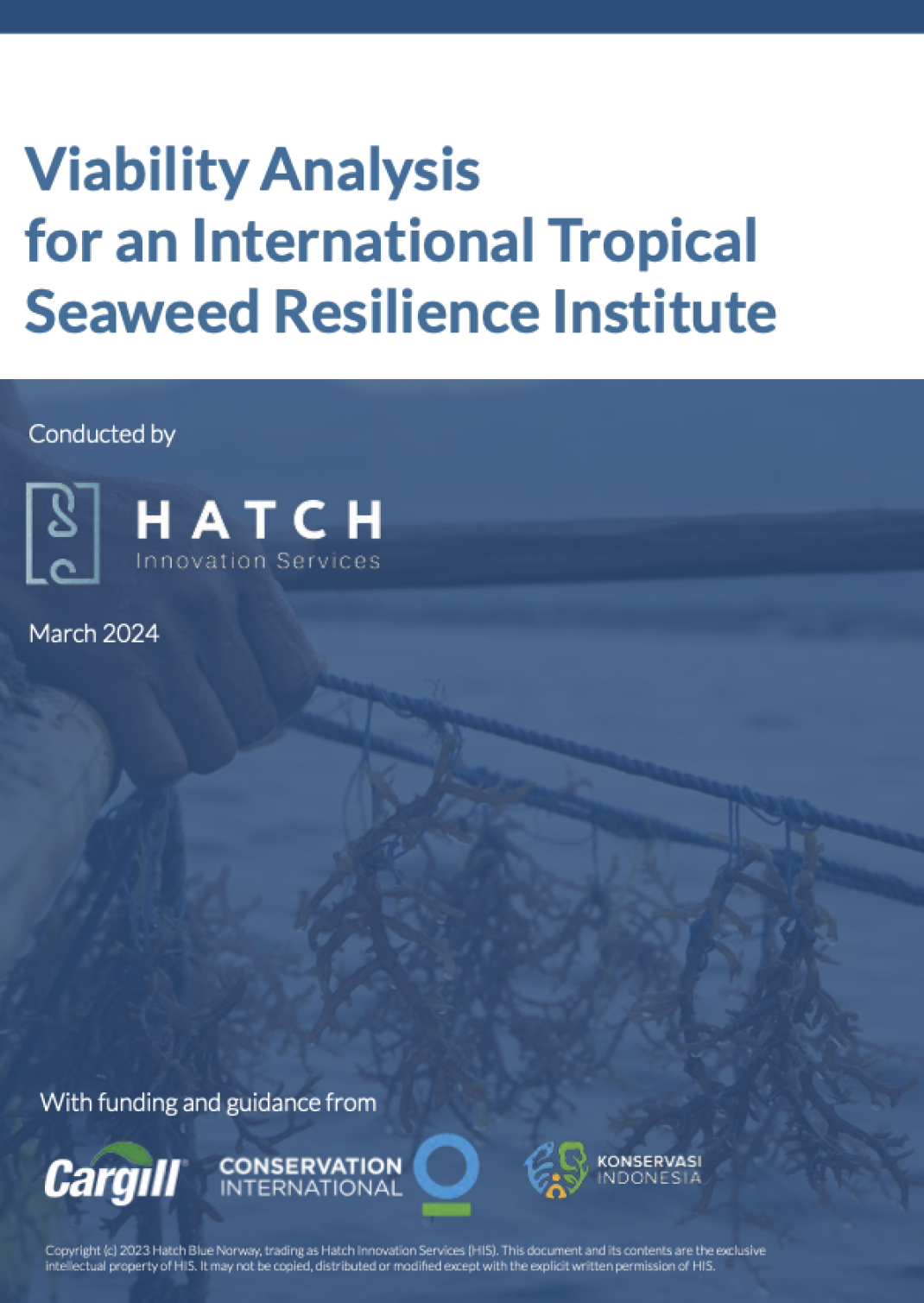
Viability Analysis for an International Tropical Seaweed Resilience Institute Report 2024
This report explores the viability and need for a tropical seaweed resilience institute to work as an international umbrella organisation supporting the upstream development of the tropical seaweed industry in different countries.
Tropical seaweed farming has been and is developing as a sustainable avenue for economic development and environmental conservation in tropical regions. But primary production faces obstacles such as genetic uniformity and susceptibility to climate change, making it prone to diseases and, therefore, crop failure, which puts the livelihood of hundreds of thousands of farmers at risk. Recognising the need for urgent measures, there's a call for an international initiative to enhance tropical seaweed resilience.
Through comprehensive research and analysis, learning from successful land-based crop resilience institutes, the report identifies strategic priorities and proposes the formation of the Tropical Seaweed Resilience Institute (TSRI). The report highlights the institute's aim to promote resilience within the industry, by conserving biodiversity, improving seed material, and recommending a network-based approach for optimal efficiency and global dissemination of best practices.
This report is funded by Cargill and Konservasi Indonesia
Policy Brief
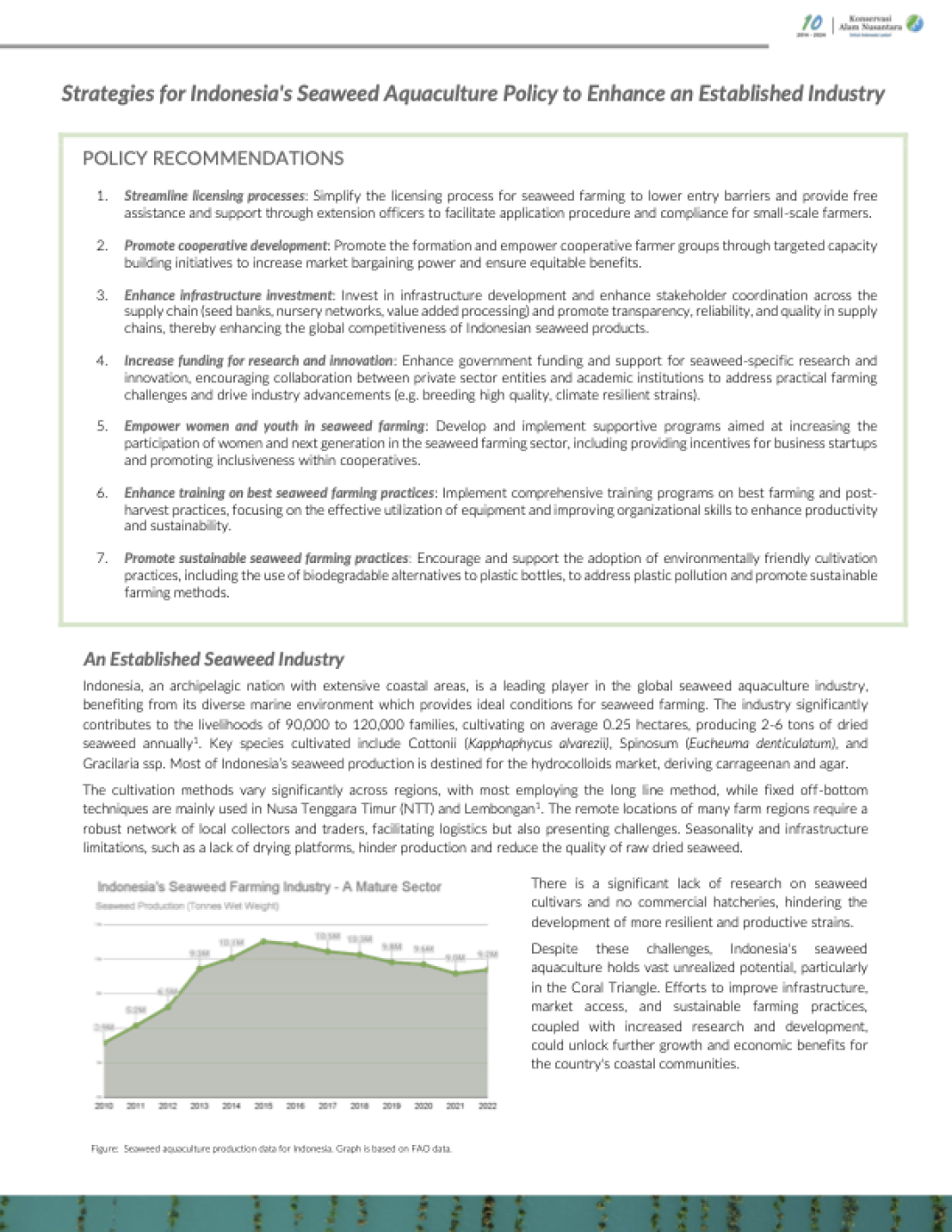
Indonesia Seaweed Aquaculture Policy Gap Analysis Policy Brief 2024
Indonesia is a leading player in the global seaweed aquaculture industry, benefiting from its diverse marine environment which provides ideal conditions for seaweed farming. The industry significantly contributes to the livelihoods of 90,000 to 120,000 families, who use a variety of cultivation methods depending on the region in which they farm.
Though Indonesia's seaweed sector holds significant potential, some challenges currently stand in the way. Seasonality and infrastructure limitations hinder production and reduce the quality of raw dried seaweed. Additionally, there is a significant lack of research on seaweed cultivars and no commercial hatcheries, preventing the development of more resilient and productive strains.
To foster the sustainable growth of seaweed aquaculture in Indonesia, this report provides recommendations for relevant enabling policies and regulations. A thorough review of relevant literature and policies, combined with insights from expert interviews, was conducted to identify key areas for improving policies. The analysis focused on the regulatory framework, supportive infrastructure, research and innovation, and best management practices.
This report is funded by Cargill and Konservasi Indonesia
The Fish Site featured articles