Seaweed
  • Species production
  • Regional production
  • About
  • Reports
  • en
  • es
  • pt
  • Species Production Overview
  • Eucheumatoids
  • Saccharina
  • Undaria
  • Pyropia
  • Gracilaria
  • Macrocystis
  • Global Production Overview
  • East Asia
  • South East Asia
  • Central America & Caribbean
  • South America
  • Species production
    • Species Production Overview
    • Eucheumatoids
      • Production Overview
      • Site selection
      • Farm design
      • Seeding
      • Grow out
      • Harvest
      • Post harvest
      • Sales
      • The farmer
      • Future of farm
    • Saccharina
      • Production Overview
      • Site selection
      • Farm design
      • Seeding
      • Grow out
      • Harvest
      • Post harvest
      • Sales
      • The farmer
      • Future of farm
    • Undaria
      • Production Overview
      • Site selection
      • Farm design
      • Seeding
      • Grow out
      • Harvest
      • Post harvest
      • Sales
      • The farmer
      • Future of farm
    • Pyropia
      • Production Overview
      • Site selection
      • Farm design
      • Seeding
      • Grow out
      • Harvest
      • Post harvest
      • Sales
      • The farmer
      • Future of farm
    • Gracilaria
      • Production Overview
      • Site selection
      • Farm design
      • Seeding
      • Grow out
      • Harvest
      • Post harvest
      • Sales
      • The farmer
      • Future of farm
    • Macrocystis
      • Production Overview
  • Regional production
    • Global Production Overview
    • East Asia
    • South East Asia
    • Central America & Caribbean
    • South America
  • About
  • Reports
Seaweed
  • en
  • es
  • pt
  • Production Overview
  • Site selection
  • Farm design
  • Seeding
  • Grow out
  • Harvest
  • Post harvest
  • Sales
  • The farmer
  • Future of farm

Undaria Grow out

Table of contents
  • East Asia
    1. Overview

    2. Maintenance

    3. Technology use

East Asia

Overview

Undaria is only farmed in the winter months. Grow out lines are deployed starting from October to November and the grow out period lasts until March to April the following year. The exact timing depends on the region and weather. 
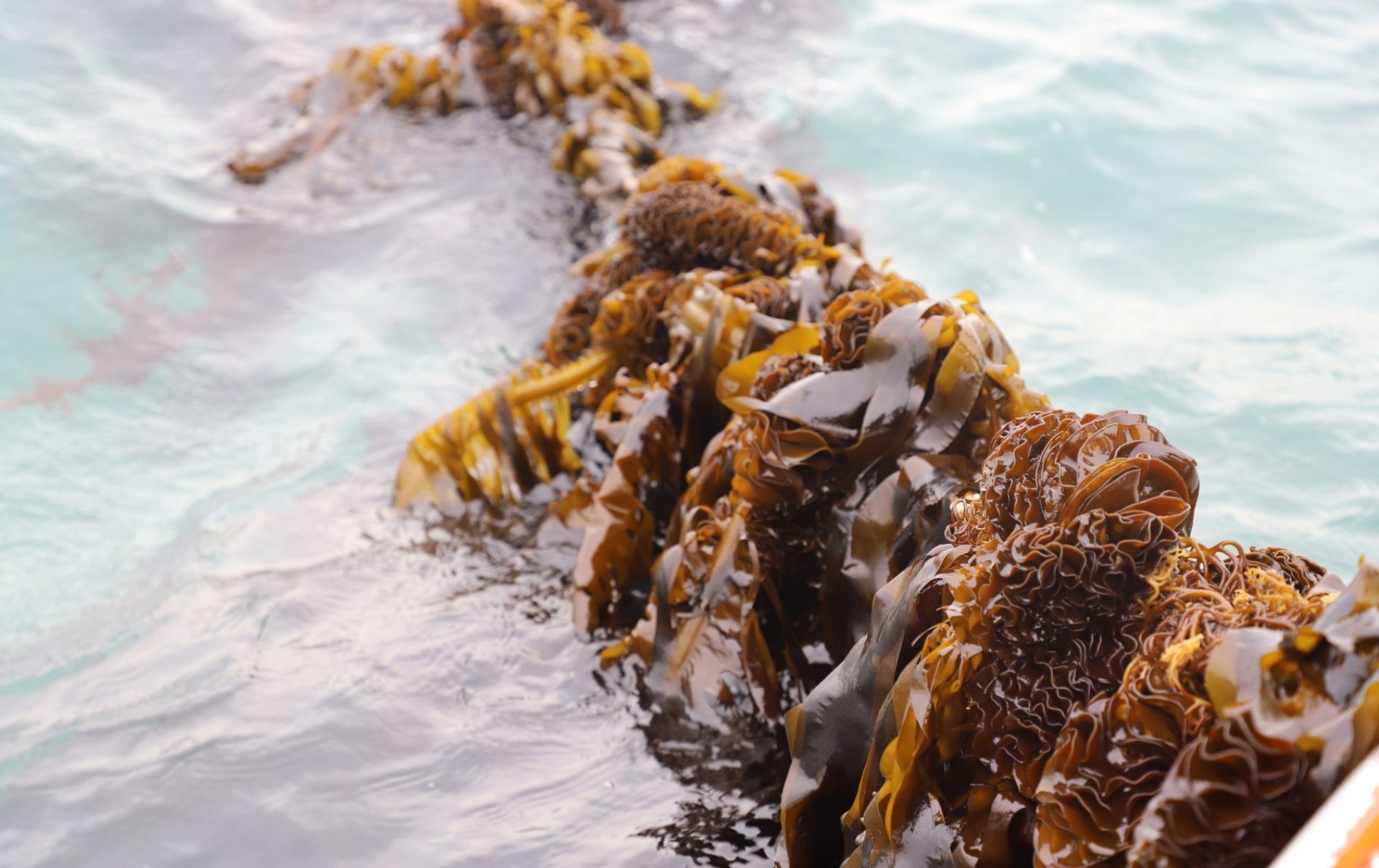
Undaria at the end of the grow out period in April in Kijang, South Korea
Undaria growing for Abalone feed near Wando in South Korea.

Maintenance

Throughout the grow out period the farmers revisit the farm site to check on the structure of the rig and the growth of the crop. When the density of seedlings on the seeded rope is too high, the cultivation lines need to be thinned by scraping off seedlings. This process is absolutely necessary for high quality crops. Farmers also need to clean the lines to remove any other algae, fouling shellfish or other foreign matter.


Furthermore, farmers who use the horizontal raft and long-line methods need to manage the water depths of the ropes. Cultivation lines are typically hung deeper (1.5 metres) at the start of the growing period and raised closer to the water’s surface during grow out.
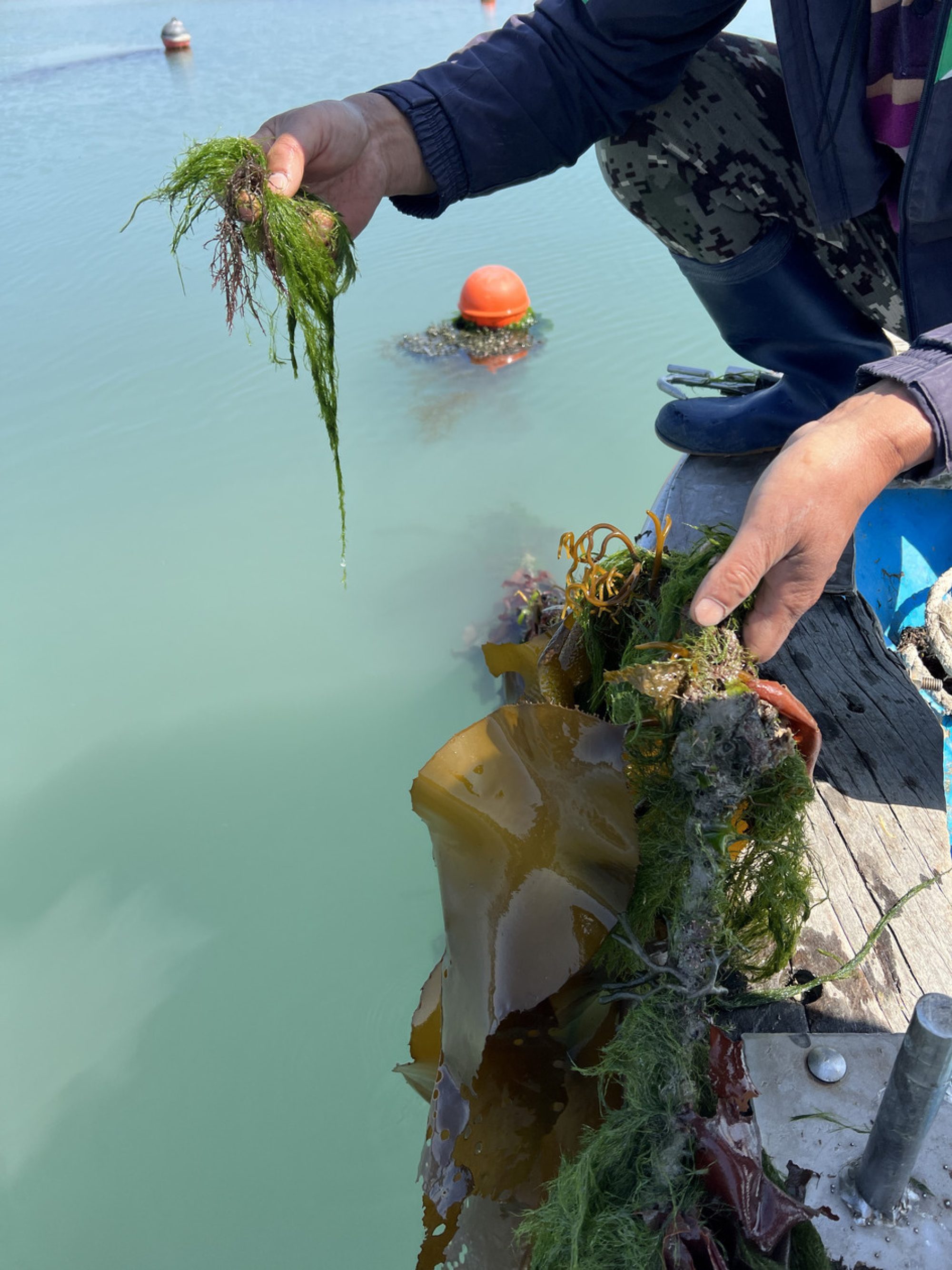
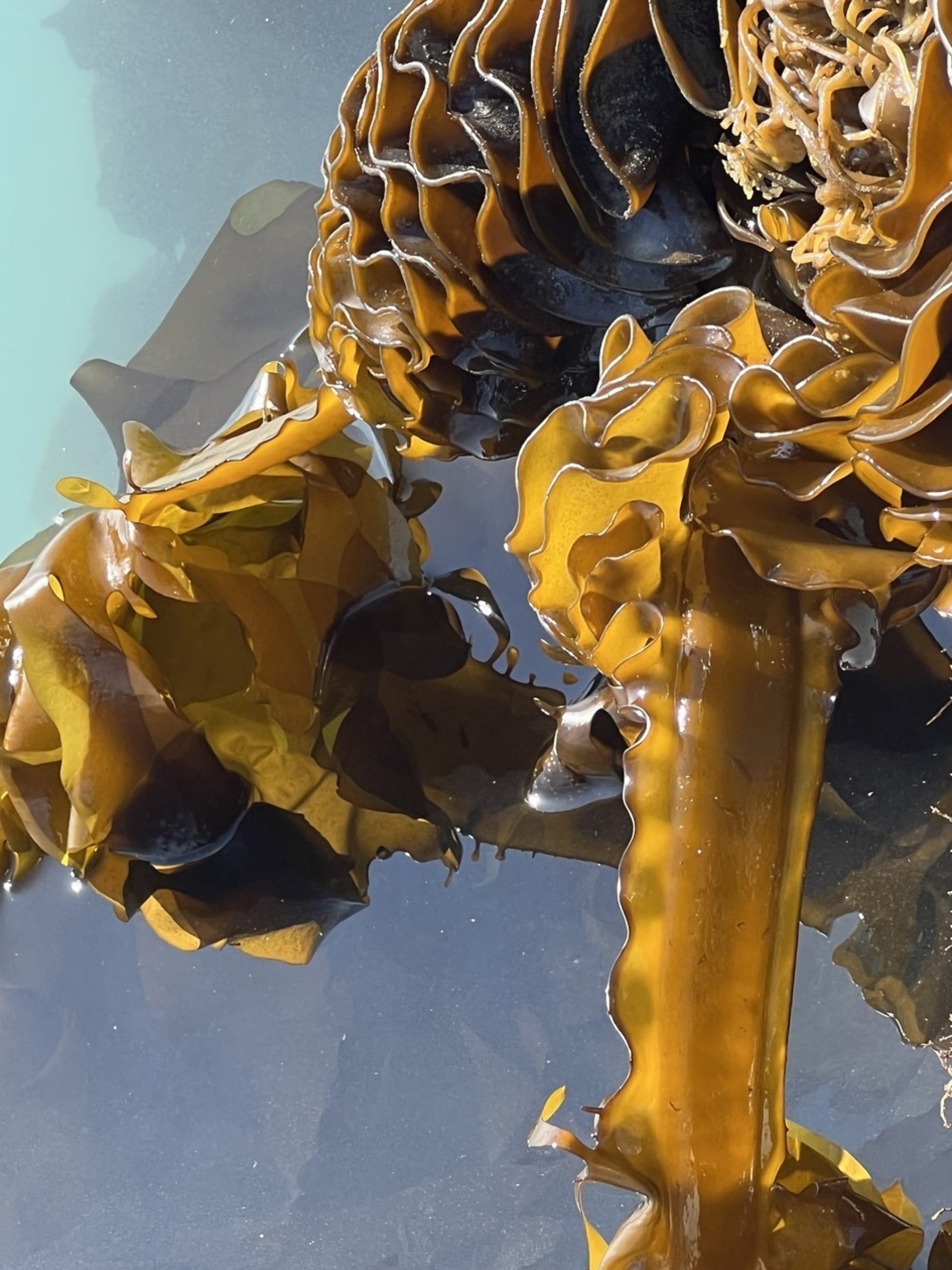
Farmer has to remove filamentous algae and other growth from the ropes. (This picture shows Saccharina, but the same applies for Undaria).
Towards the end of the growing period, the lines are lifted closer to the surface.

High densities during grow out, poor nutrition and poor light can cause diseases. Farmers reported that when a disease occurs, the only way to prevent more damage is to harvest the affected Undaria plants before the disease can spread


In areas with low nutrient content and slow ocean currents in China, fertilisers are sometimes applied to ensure growth and disease resistance of the seaweed. The fertiliser is ammonium nitrate or ammonium chloride and is applied using different methods. In Japan and South Korea these types of growth enhancers are not used.

Technology use

Most Undaria farmers base their farming decisions on intuition and experience. The large corporate farms will use conventional spreadsheets to keep track of their production. 


Communication regarding farm operations is most commonly done through verbal instructions and instant messaging services.

Previous
Next
Seaweed

Contact us:

info@hatch.blue
www.hatch.blue

Copyright © 2026 Hatch Blue Limited. All rights reserved.

  • Terms and conditions
  • Privacy policy

Hatch Blue is a global impact business focussed on farmed and alternative seafood. Hatch Innovation Services is the consultancy arm of Hatch, advising corporates, investors and governments on innovation and investment projects in the global aquaculture industry.

For our Shrimp Farming Insights visit: www.shrimpfarm.tech.