Seaweed
  • Species production
  • Regional production
  • About
  • Reports
  • en
  • es
  • pt
  • Species Production Overview
  • Eucheumatoids
  • Saccharina
  • Undaria
  • Pyropia
  • Gracilaria
  • Macrocystis
  • Global Production Overview
  • East Asia
  • South East Asia
  • Central America & Caribbean
  • South America
  • Species production
    • Species Production Overview
    • Eucheumatoids
      • Production Overview
      • Site selection
      • Farm design
      • Seeding
      • Grow out
      • Harvest
      • Post harvest
      • Sales
      • The farmer
      • Future of farm
    • Saccharina
      • Production Overview
      • Site selection
      • Farm design
      • Seeding
      • Grow out
      • Harvest
      • Post harvest
      • Sales
      • The farmer
      • Future of farm
    • Undaria
      • Production Overview
      • Site selection
      • Farm design
      • Seeding
      • Grow out
      • Harvest
      • Post harvest
      • Sales
      • The farmer
      • Future of farm
    • Pyropia
      • Production Overview
      • Site selection
      • Farm design
      • Seeding
      • Grow out
      • Harvest
      • Post harvest
      • Sales
      • The farmer
      • Future of farm
    • Gracilaria
      • Production Overview
      • Site selection
      • Farm design
      • Seeding
      • Grow out
      • Harvest
      • Post harvest
      • Sales
      • The farmer
      • Future of farm
    • Macrocystis
      • Production Overview
  • Regional production
    • Global Production Overview
    • East Asia
    • South East Asia
    • Central America & Caribbean
    • South America
  • About
  • Reports
Seaweed
  • en
  • es
  • pt
  • Production Overview
  • Site selection
  • Farm design
  • Seeding
  • Grow out
  • Harvest
  • Post harvest
  • Sales
  • The farmer
  • Future of farm

Pyropia Farm Design

Table of contents
  • East Asia
    1. Overview

    2. Farm designs

East Asia

Overview

In the past, bamboo frames were used to grow Pyropia in the mud flats and in the 1970s nets started to be used. Today, Pyropia nets are supported on poles or floating systems, depending on the water column depths. There are three popular cultivation methods:

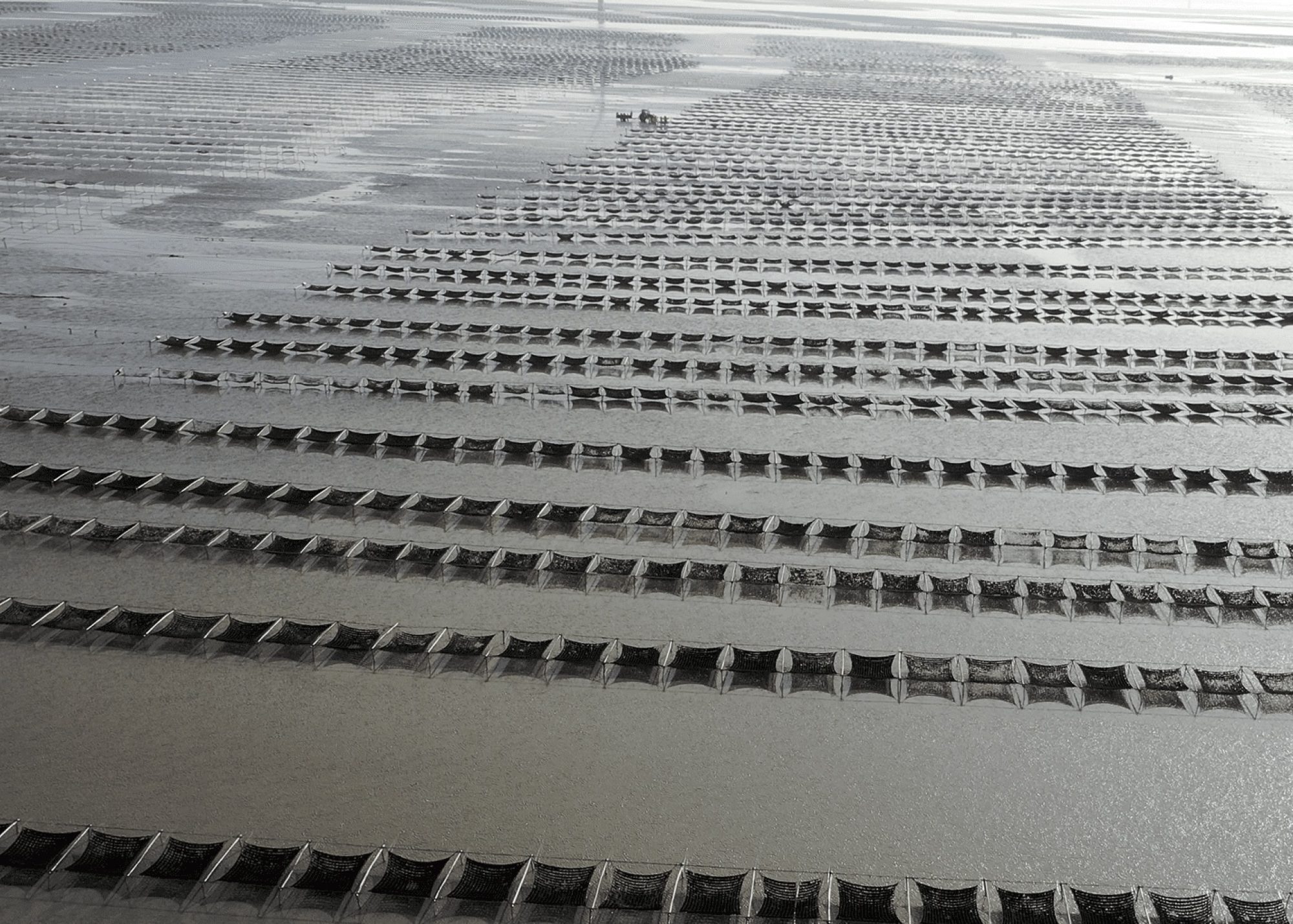
Fixed net cultivation – This method is most suited for the intertidal zones of the Yellow Sea.  At sites with lower water depths, the fixed net method or ‘pole’ method is preferred, as it naturally exposes the nets to air at low tide. This method is limited to the shallow sites on a coastline.
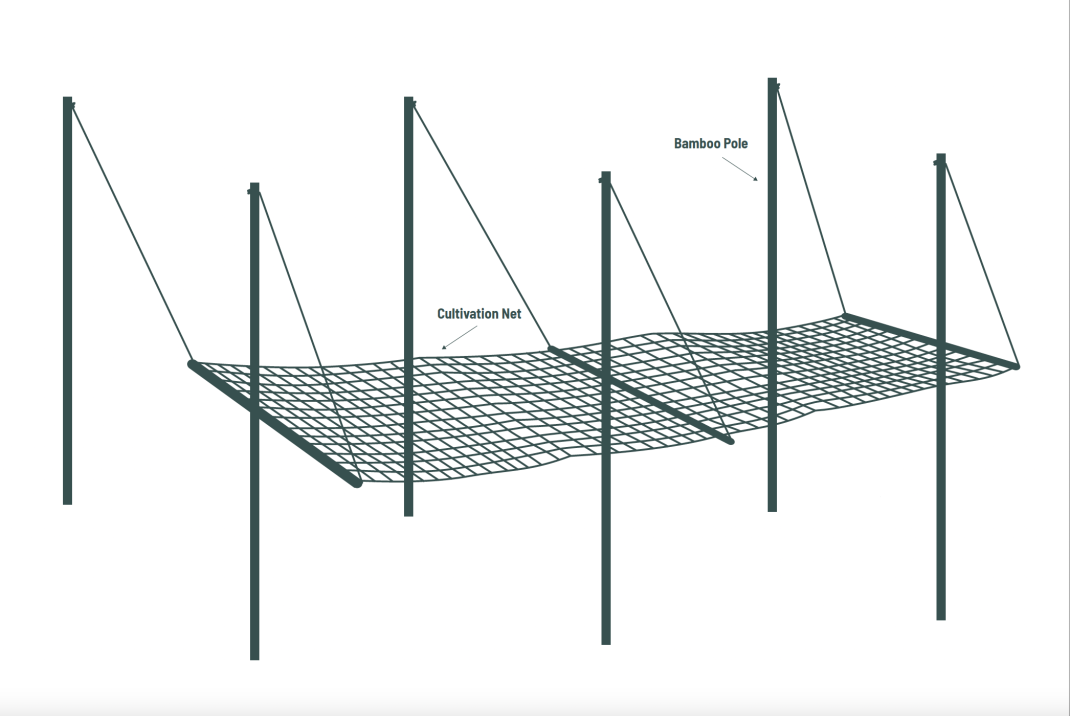
Fixed net cultivation

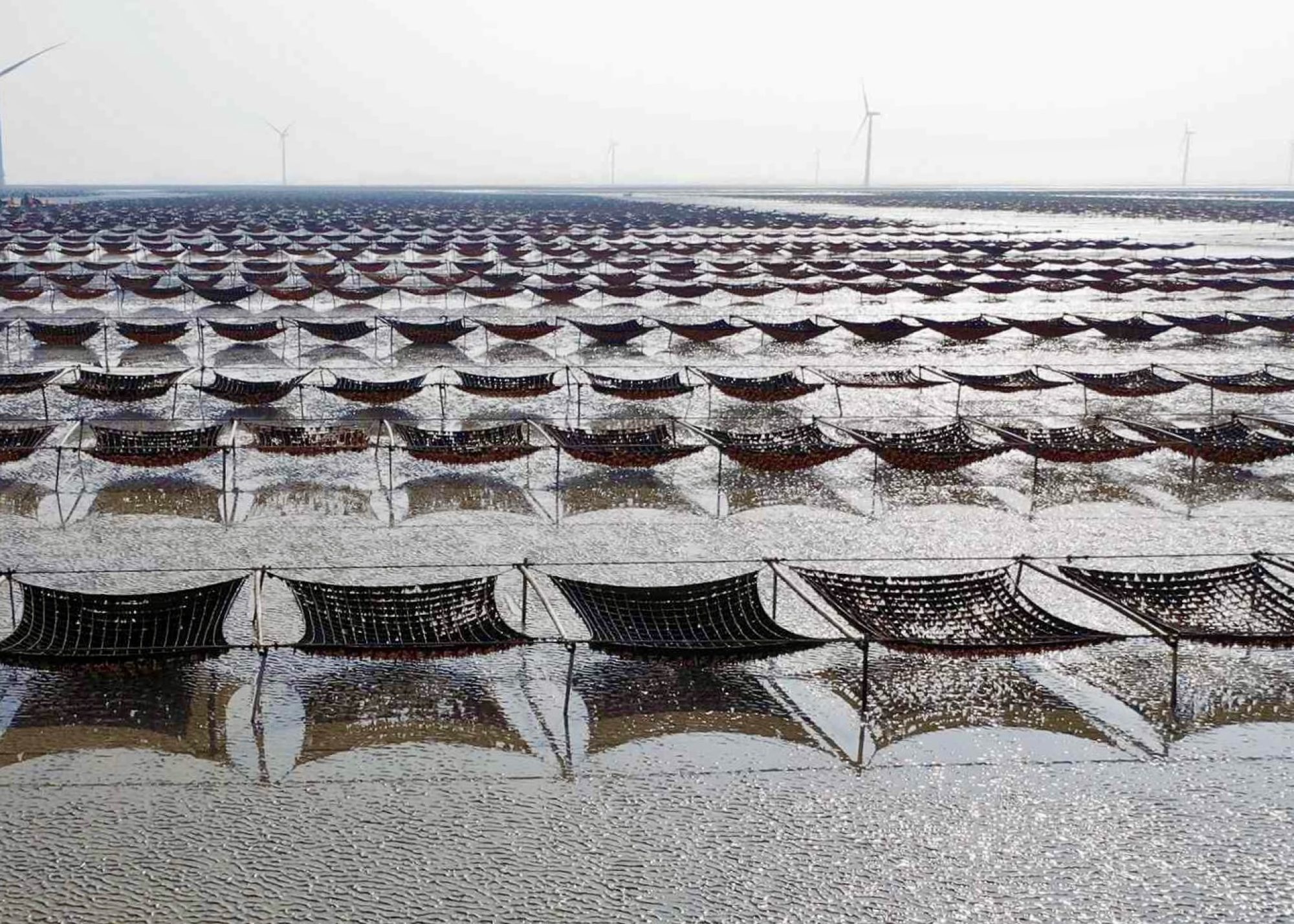
Semi floating net cultivation –Can be placed further away from shore where tidal range and depth is greater (7-8 m). Semi-floating systems are a combination of the fixed and floating system, where at high tide the nets float on the sea surface and during low tide the system stands on land.  
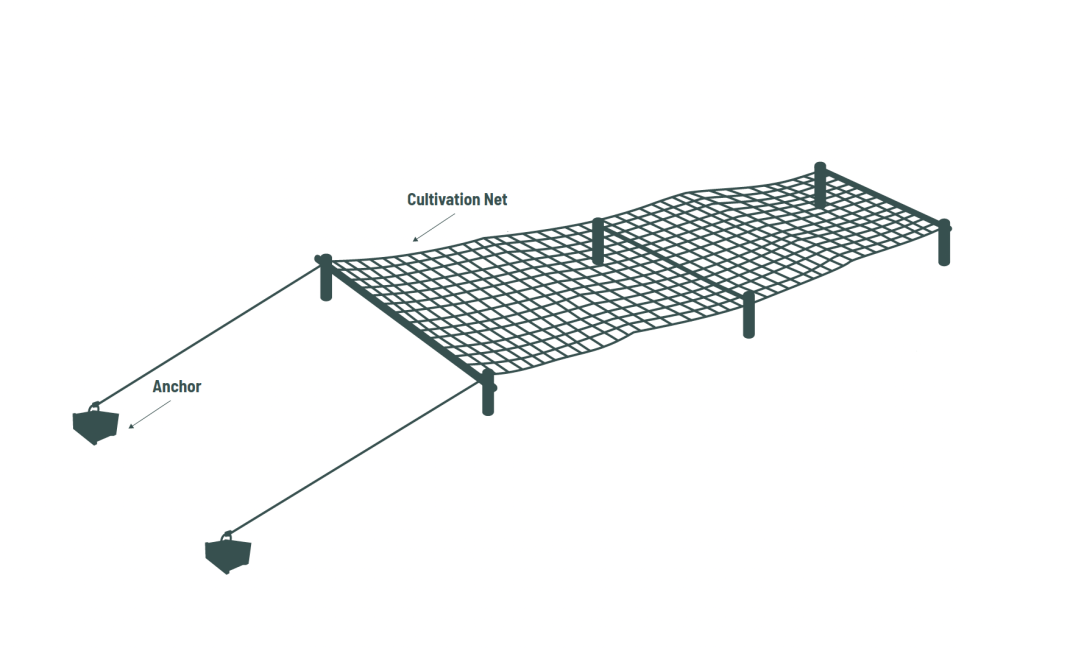
Semi floating net cultivation

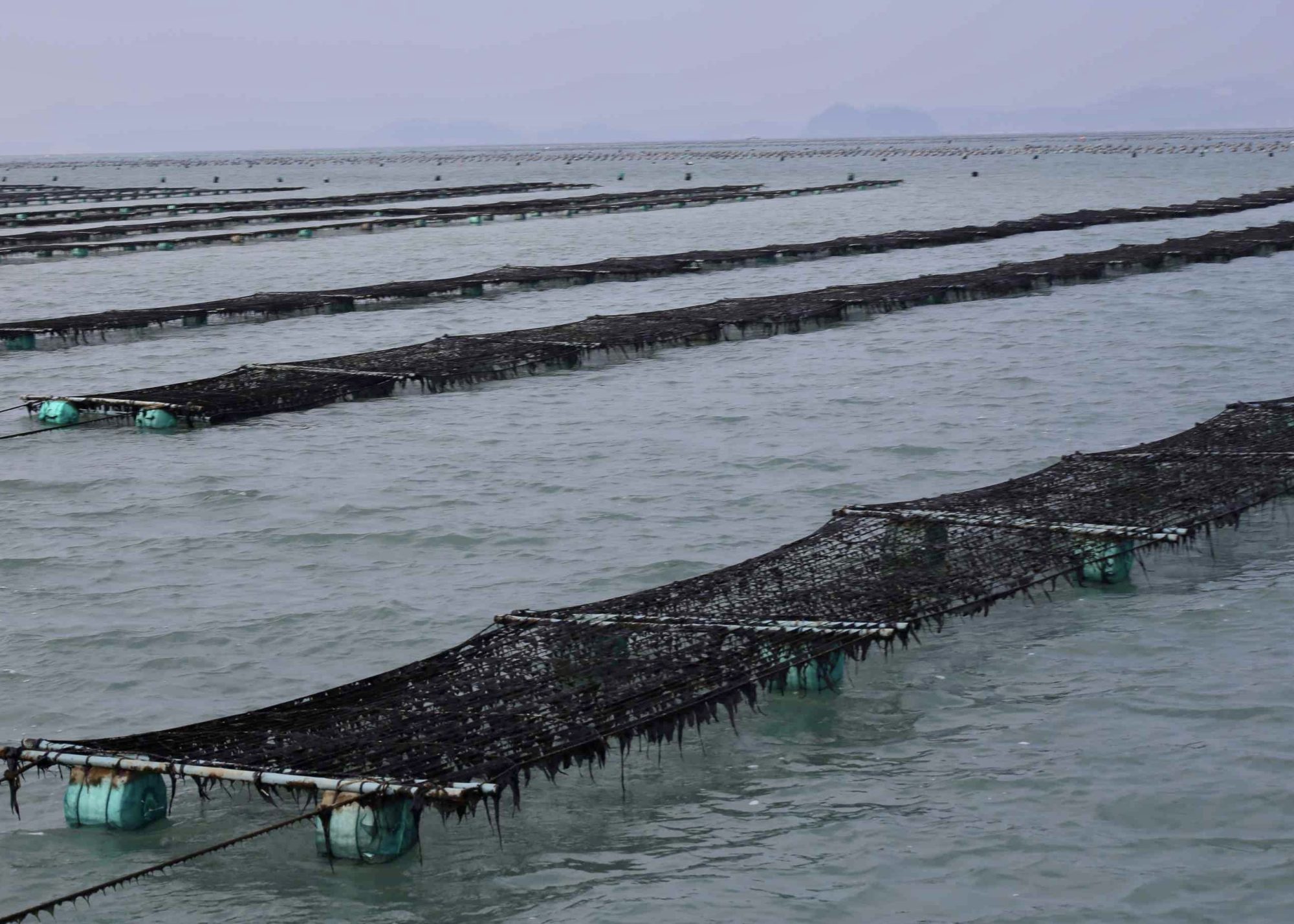
Floating (turnover) net cultivation  – This method can be used further offshore at water depths up to 15 m. Unlike the above methods, the nets won’t be above the water through tide cycles – farmers need to overturn the raft manually when necessary.
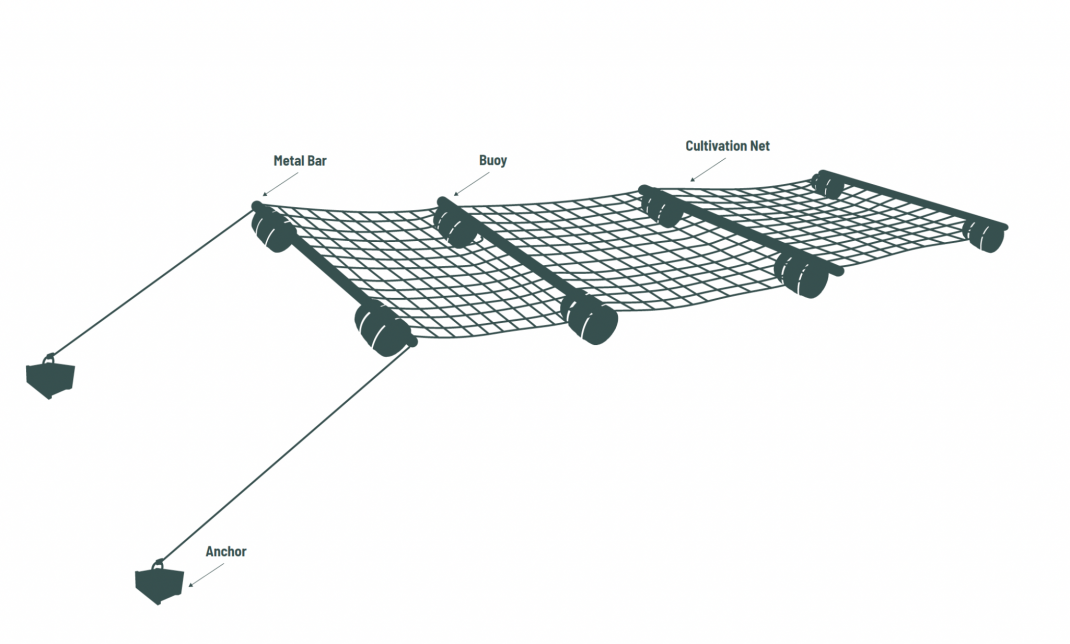
Floating (turnover) net cultivation

Based on tidal phenomenon over the intertidal zones, when the water level is rising the nets with the seaweed are submerged under the water and the water movement should wash the seaweed and remove any foreign material. When the nets uncover from the water at low tide, the sunshine dries of the filamentous algae or other materials to keep the Pyropia clean.

Farm designs

Farm designs are highly dependent on the location's characteristics
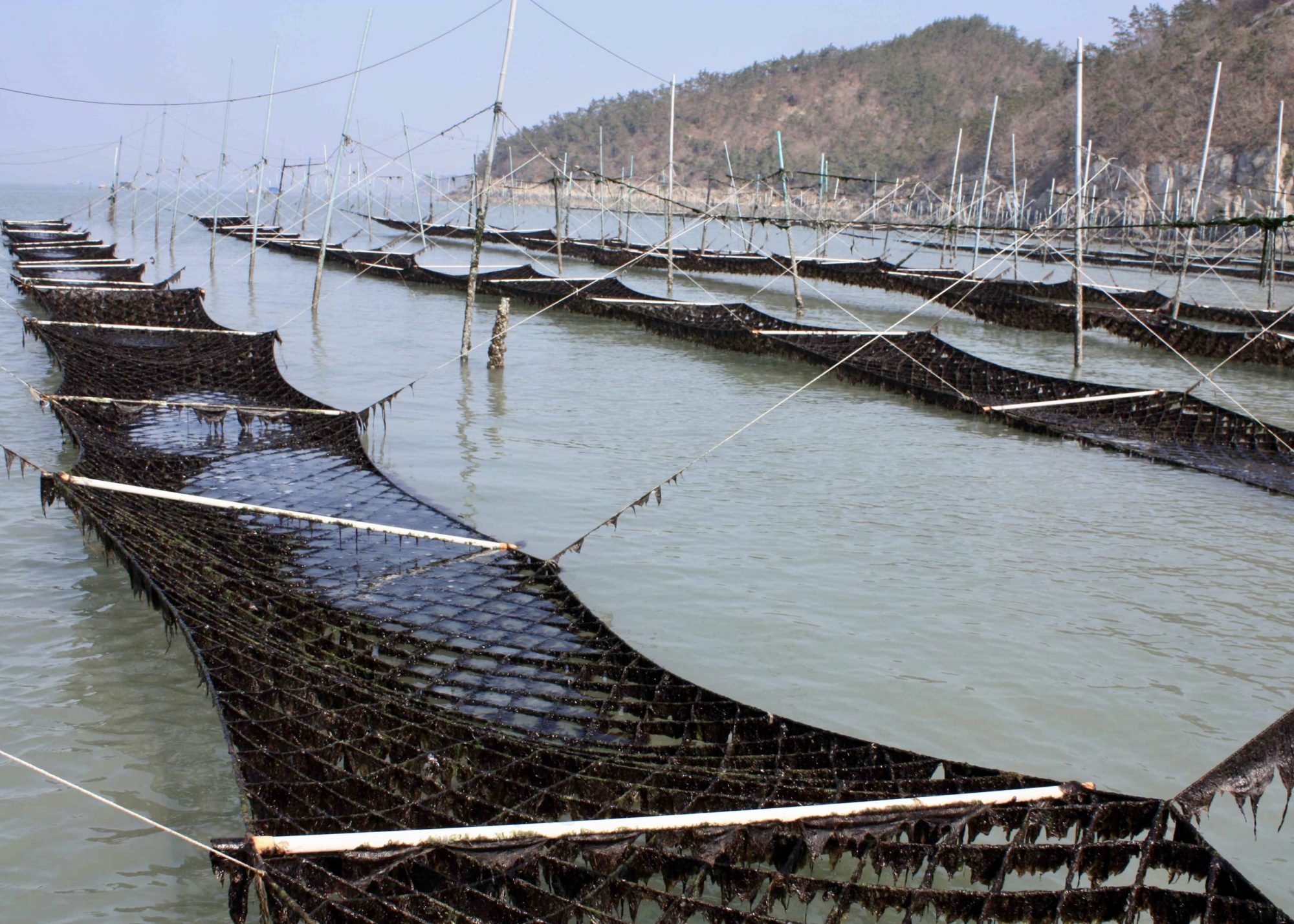
Fixed net method in South Jeolla Province, South Korea. (Photo courtesy of Dr Hwang EK)
Floating turnover net method in South Jeolla Province, South Korea. (Photo courtesy of Dr Hwang EK)
Semi-floating net method at low tide in Jiangsu, China.(Photo courtesy of Li-En Yang)
Semi-floating net method in Jiangsu, China. (Photo courtesy of Li-En Yang)

The size of each net and unit of measurement differs not only between countries and culture method, but even between farms in the same region. 


In South Korea for example, the nets are called a “Gimbal” and the unit size of 10-15 Gimbals connected is called a ‘chaek’. Thus one chaek in South Korea is generally between 2 to 2.5m in width and 40 to 100m in length. 
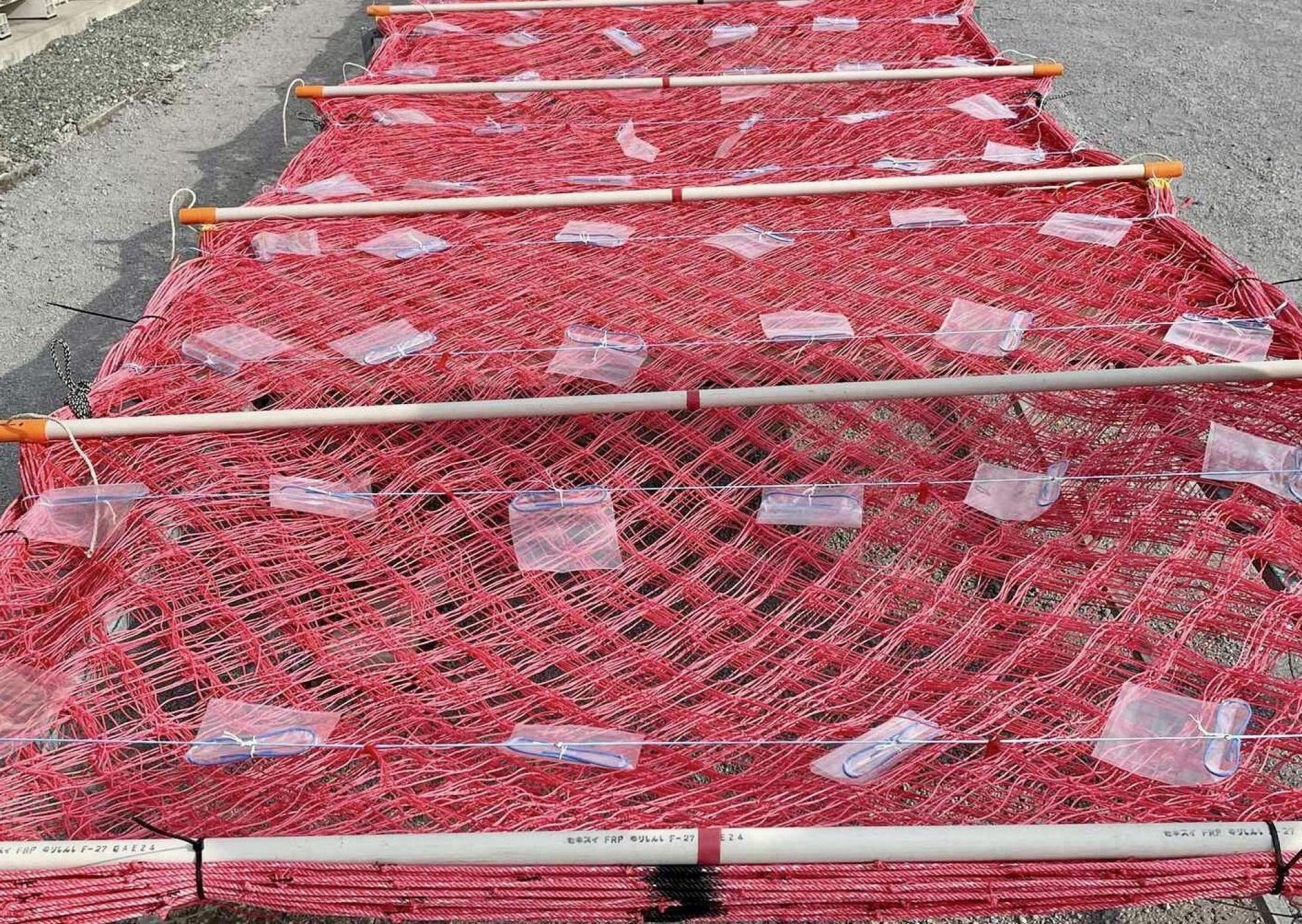
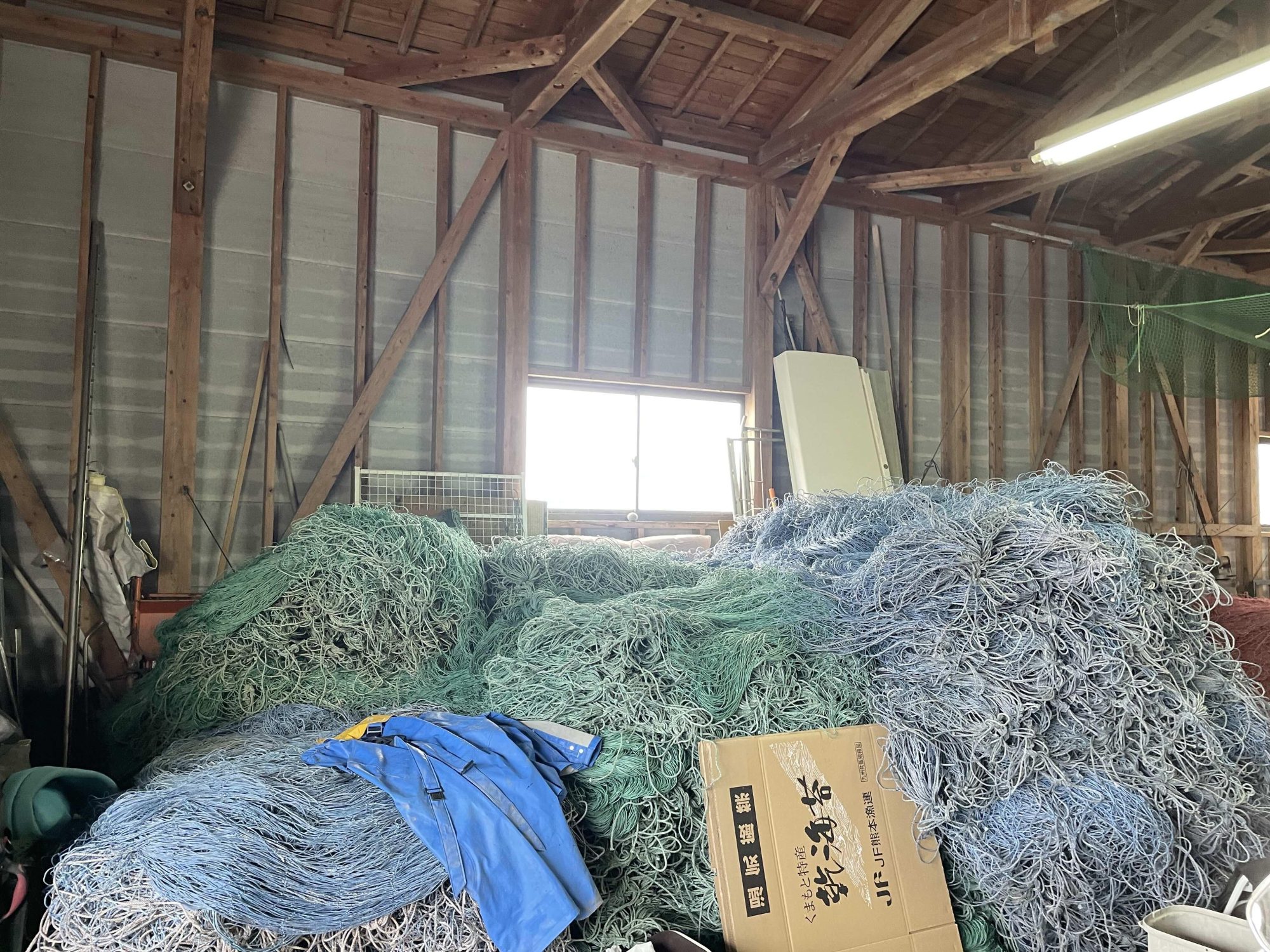
Preparing culture nets for seeding in Japan.
Storing culture nets for next grow out cycle in Japan.
Previous
Next
Seaweed

Contact us:

info@hatch.blue
www.hatch.blue

Copyright © 2026 Hatch Blue Limited. All rights reserved.

  • Terms and conditions
  • Privacy policy

Hatch Blue is a global impact business focussed on farmed and alternative seafood. Hatch Innovation Services is the consultancy arm of Hatch, advising corporates, investors and governments on innovation and investment projects in the global aquaculture industry.

For our Shrimp Farming Insights visit: www.shrimpfarm.tech.