Seaweed
  • Species production
  • Regional production
  • About
  • Reports
  • en
  • es
  • pt
  • Species Production Overview
  • Eucheumatoids
  • Saccharina
  • Undaria
  • Pyropia
  • Gracilaria
  • Macrocystis
  • Global Production Overview
  • East Asia
  • South East Asia
  • Central America & Caribbean
  • South America
  • Species production
    • Species Production Overview
    • Eucheumatoids
      • Production Overview
      • Site selection
      • Farm design
      • Seeding
      • Grow out
      • Harvest
      • Post harvest
      • Sales
      • The farmer
      • Future of farm
    • Saccharina
      • Production Overview
      • Site selection
      • Farm design
      • Seeding
      • Grow out
      • Harvest
      • Post harvest
      • Sales
      • The farmer
      • Future of farm
    • Undaria
      • Production Overview
      • Site selection
      • Farm design
      • Seeding
      • Grow out
      • Harvest
      • Post harvest
      • Sales
      • The farmer
      • Future of farm
    • Pyropia
      • Production Overview
      • Site selection
      • Farm design
      • Seeding
      • Grow out
      • Harvest
      • Post harvest
      • Sales
      • The farmer
      • Future of farm
    • Gracilaria
      • Production Overview
      • Site selection
      • Farm design
      • Seeding
      • Grow out
      • Harvest
      • Post harvest
      • Sales
      • The farmer
      • Future of farm
    • Macrocystis
      • Production Overview
  • Regional production
    • Global Production Overview
    • East Asia
    • South East Asia
    • Central America & Caribbean
    • South America
  • About
  • Reports
Seaweed
  • en
  • es
  • pt
  • Production Overview
  • Site selection
  • Farm design
  • Seeding
  • Grow out
  • Harvest
  • Post harvest
  • Sales
  • The farmer
  • Future of farm

Saccharina The farmer

Table of contents
  • East Asia
    1. Overview

    2. Farmers

East Asia

Overview

In Japan and South Korea, Saccharina farming is done by farmers who belong to the local fisheries cooperatives. In the North of China, mostly large scale companies are involved in farming operations. Farmers associations play a minor role here or are not functioning at all.

Farmers

In South Korea, farmers typically belong to a “fishing village contract” and have private farms. However, these types of farms, especially in the Southern province of Jeonnam, can be large scale with several employees. However, similar demographic developments as in Japan make it more and more difficult to find enough labour locally. Here labour ‘only’ accounts for about 30- 40% of the total production costs.

In Japan, all farmers are cooperative members, while everyone has their own unit where they work. Almost all farmers run small operations in a family-based household industry. The participation fee of being part of a farmers cooperative is 2,000 USD. This will be paid back once the farmer leaves the cooperative. Farmers are getting extremely old and many of them don’t have a successor.
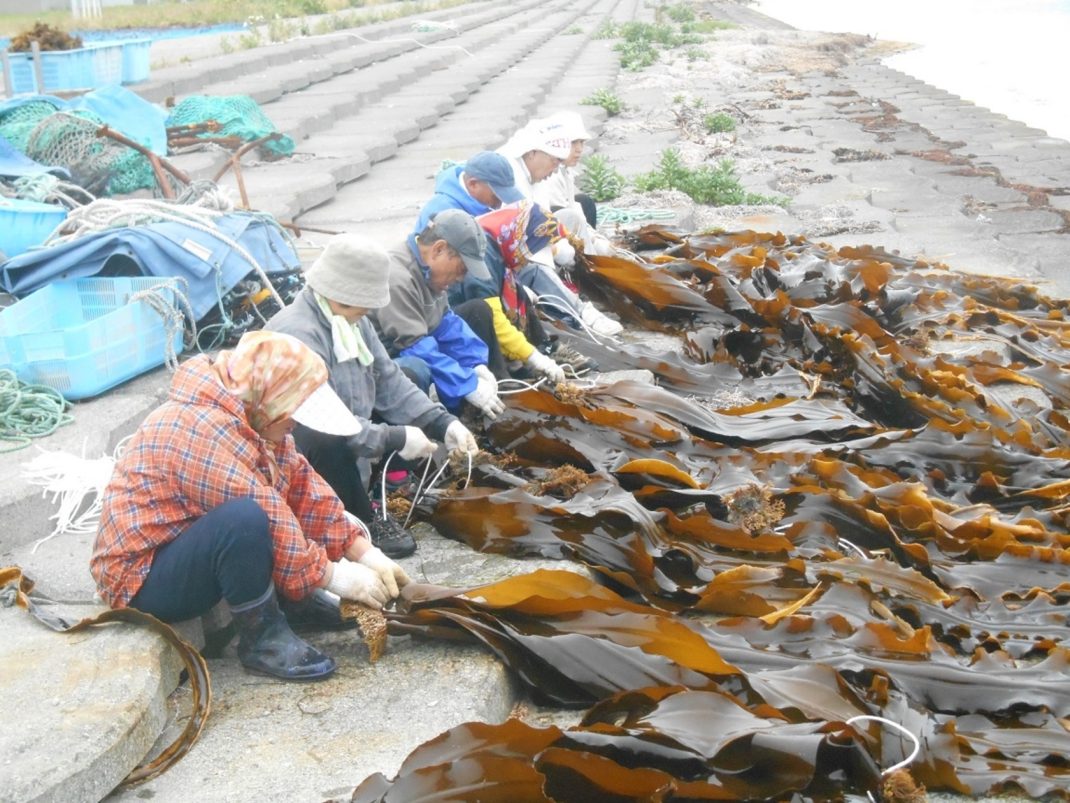
In Japan, 35% of all fishers are over 65 years old, and 76.7% do not have successors.


The companies in China have to employ many workers as operations are large and rely on manual labour for farm tasks. Certain tasks are physically demanding and workers often have to work day and night during peak season. Labour costs have been increasing rapidly (a farm worker currently earns about 28,000 USD  or 200,000 yuan annually). In China, labour costs make up 50-70% of the total cost.

Previous
Next
Seaweed

Contact us:

info@hatch.blue
www.hatch.blue

Copyright © 2026 Hatch Blue Limited. All rights reserved.

  • Terms and conditions
  • Privacy policy

Hatch Blue is a global impact business focussed on farmed and alternative seafood. Hatch Innovation Services is the consultancy arm of Hatch, advising corporates, investors and governments on innovation and investment projects in the global aquaculture industry.

For our Shrimp Farming Insights visit: www.shrimpfarm.tech.