Seaweed
  • Species production
  • Regional production
  • About
  • Reports
  • en
  • es
  • pt
  • Species Production Overview
  • Eucheumatoids
  • Saccharina
  • Undaria
  • Pyropia
  • Gracilaria
  • Macrocystis
  • Global Production Overview
  • East Asia
  • South East Asia
  • Central America & Caribbean
  • South America
  • Species production
    • Species Production Overview
    • Eucheumatoids
      • Production Overview
      • Site selection
      • Farm design
      • Seeding
      • Grow out
      • Harvest
      • Post harvest
      • Sales
      • The farmer
      • Future of farm
    • Saccharina
      • Production Overview
      • Site selection
      • Farm design
      • Seeding
      • Grow out
      • Harvest
      • Post harvest
      • Sales
      • The farmer
      • Future of farm
    • Undaria
      • Production Overview
      • Site selection
      • Farm design
      • Seeding
      • Grow out
      • Harvest
      • Post harvest
      • Sales
      • The farmer
      • Future of farm
    • Pyropia
      • Production Overview
      • Site selection
      • Farm design
      • Seeding
      • Grow out
      • Harvest
      • Post harvest
      • Sales
      • The farmer
      • Future of farm
    • Gracilaria
      • Production Overview
      • Site selection
      • Farm design
      • Seeding
      • Grow out
      • Harvest
      • Post harvest
      • Sales
      • The farmer
      • Future of farm
    • Macrocystis
      • Production Overview
  • Regional production
    • Global Production Overview
    • East Asia
    • South East Asia
    • Central America & Caribbean
    • South America
  • About
  • Reports
Seaweed
  • en
  • es
  • pt
  • Production Overview
  • Site selection
  • Farm design
  • Seeding
  • Grow out
  • Harvest
  • Post harvest
  • Sales
  • The farmer
  • Future of farm

Saccharina Grow out

Table of contents
  • East Asia
    1. Overview

    2. Technology use

    3. Maintenance

East Asia

Overview

Saccharina is only farmed in the winter months. Cultivation lines are deployed starting from early November to December and grow out period lasts until March to April the following year. The exact timing depends on the region.

Technology use

Most Saccharina farmers base their farming decisions on intuition and experience. The large corporate farms use conventional spreadsheets to keep track of their production. 


Communication regarding farm operations is mainly done through verbal instructions and instant messaging services.

Maintenance

In the North of Japan, the grow-out time at sea starts around the end of October and usually takes around 10 months. The harvest takes place between mid June and mid August. 


The deployment of the cultivation lines is highly weather dependent and time-critical. 


Between January and April, when the water temperature and light intensity rises, the depth of the culture lines needs to be adjusted regularly using additional floats. Such work is typically done by two people per boat and is a fairly repetitive and heavy task.


Furthermore, throughout the grow-out time, regular ‘thinning out’ will need to be done, to ensure good growth of high quality blades. This means, small blades will be cut out manually. Japanese farmers usually wait for two months until the blades have grown up to one metre until they conduct the first selection. In March the second selection or thinning out will take place. Farmers also need to clean the lines from any other algae, fouling shellfish or other foreign matter.
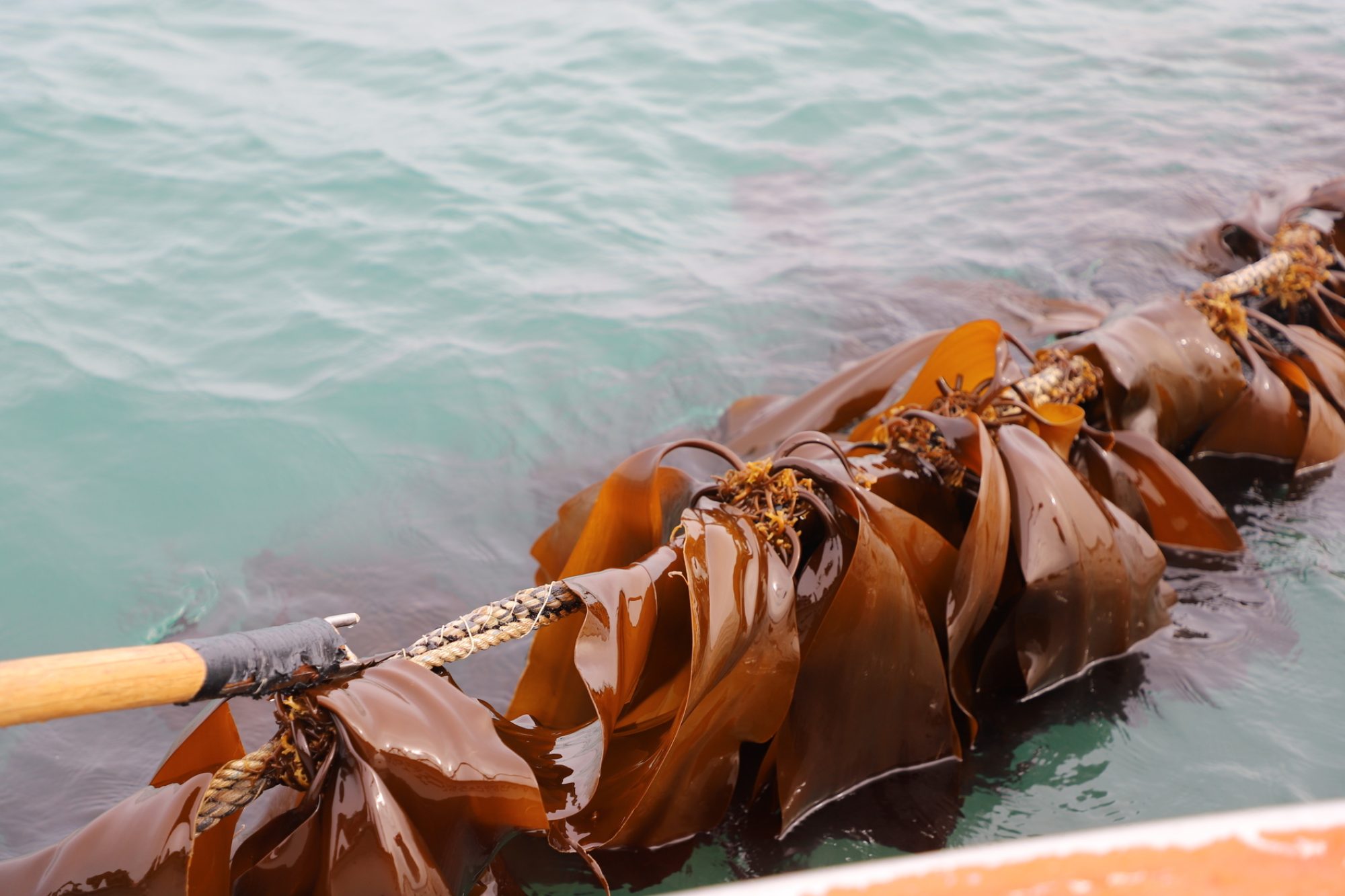
Well distributed Saccharina at a farm site with relatively clear water and high water motion North of Busan in South Korea.
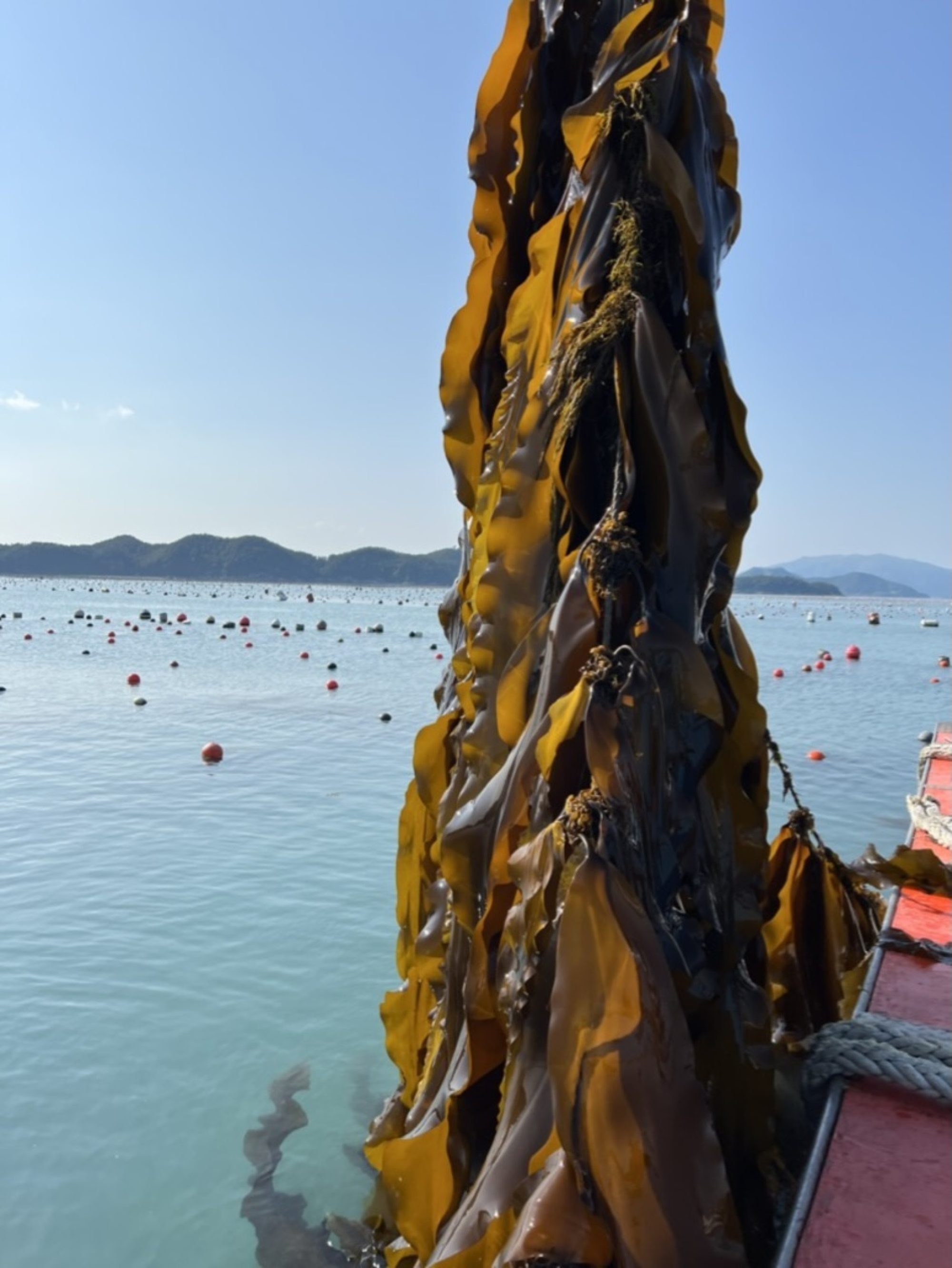
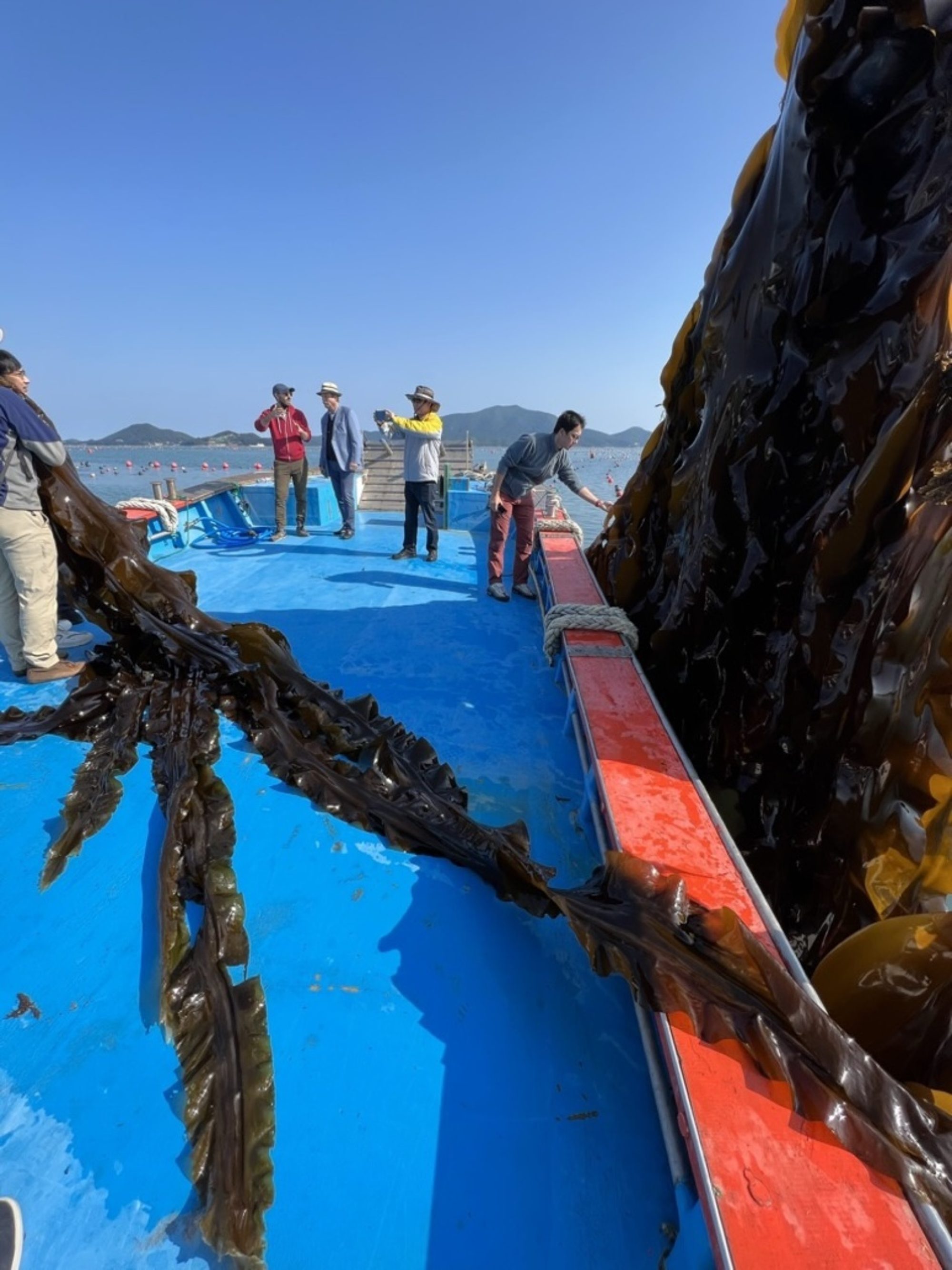
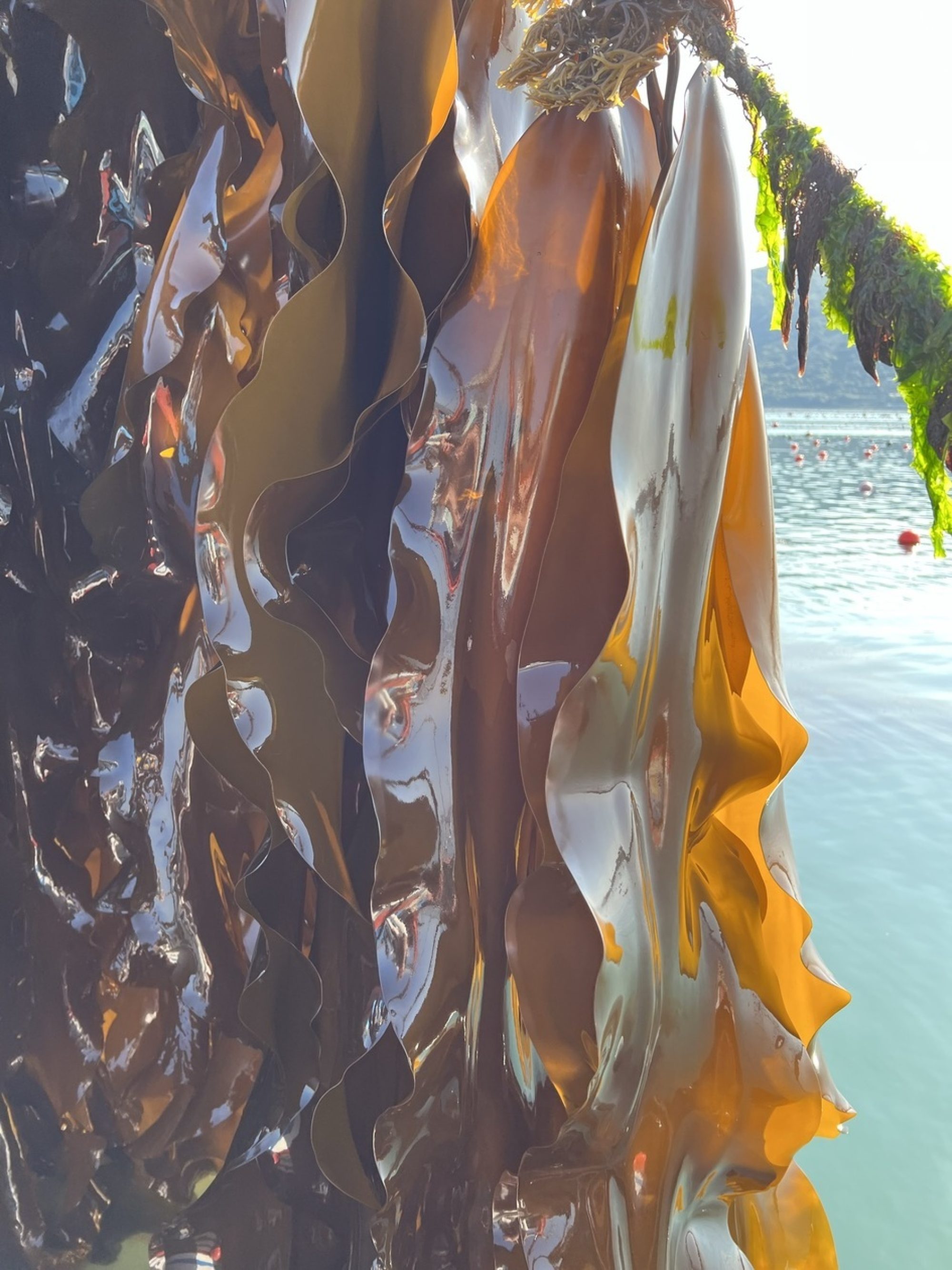
Each Saccharina blade can easily grow up to 8 meters. Farm visit in Wando, South Korea.

In South Korea, the grow-out period is usually not longer than 5 months, from October til February or March. 


The deployment of the cultivation lines is highly weather dependent and time-critical. 


Between January and April, when the water temperature and light intensity rises, the depth of the culture lines needs to be adjusted regularly using additional floats. Such work is typically done by two people per boat and is a fairly repetitive and heavy task.


Furthermore, throughout the grow-out time, regular ‘thinning out’ will need to be done, to ensure good growth of high quality blades. This means, small blades will be cut out manually. In South Korea this happens on a much more regular basis. Farmers also need to clean the lines from any other algae, fouling shellfish or other foreign matter.
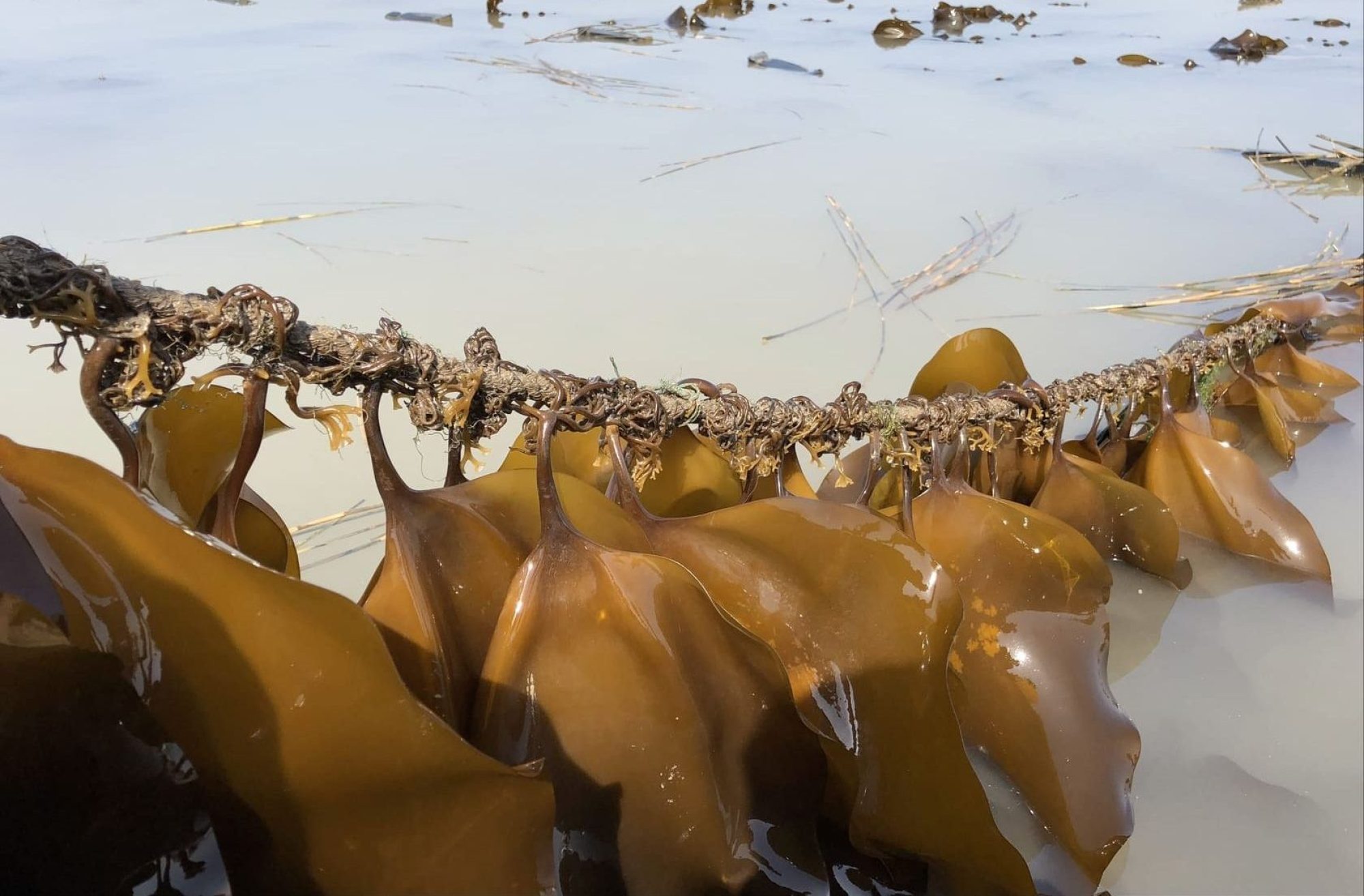
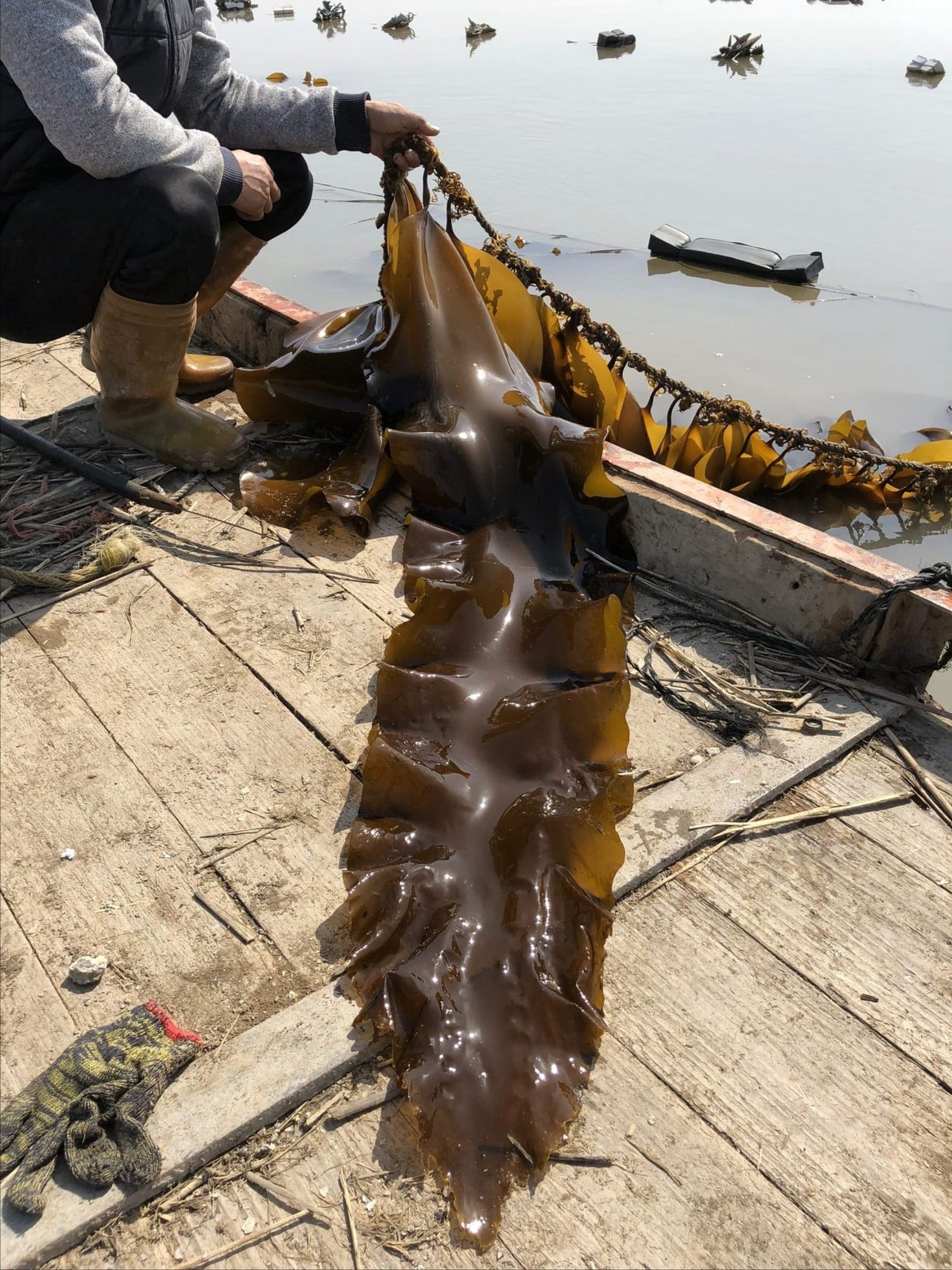
Saccharina growing well at with turbid water at a farm site in China. (Photo courtesy of Innovation Norway)
Saccharina blades start rotting when the water temperature rises in spring. This picture was taken mid March in Xiapu Fujian province, China. (Photo courtesy of Innovation Norway China) I
During the grow out period, the farmer needs to take good care that the blades keep clean and free from any biofouling.
The blades will grow heavy on the culture line to the point, where a crane is essential for working the lines.

In China, the grow-out period is usually not longer than 5 months, from October til February or March. 


The deployment of the cultivation lines is highly weather dependent and time-critical. In Northern China, there are typically can be millions of lines to be deployed on large farms, which can easily take up to 2 months. 


Between January and April, when the water temperature and light intensity rises, the depth of the culture lines needs to be adjusted regularly using additional floats. Such work is typically done by two people per boat and is a fairly repetitive and heavy task.


Furthermore, throughout the grow-out time, regular ‘thinning out’ will need to be done, to ensure good growth of high quality blades. This means, small blades will be cut out manually. Farmers also need to clean the lines from any other algae, fouling shellfish or other foreign matter.
 

Previous
Next
Seaweed

Contact us:

info@hatch.blue
www.hatch.blue

Copyright © 2026 Hatch Blue Limited. All rights reserved.

  • Terms and conditions
  • Privacy policy

Hatch Blue is a global impact business focussed on farmed and alternative seafood. Hatch Innovation Services is the consultancy arm of Hatch, advising corporates, investors and governments on innovation and investment projects in the global aquaculture industry.

For our Shrimp Farming Insights visit: www.shrimpfarm.tech.