Seaweed
  • Species production
  • Regional production
  • About
  • Reports
  • en
  • es
  • pt
  • Species Production Overview
  • Eucheumatoids
  • Saccharina
  • Undaria
  • Pyropia
  • Gracilaria
  • Macrocystis
  • Global Production Overview
  • East Asia
  • South East Asia
  • Central America & Caribbean
  • South America
  • Species production
    • Species Production Overview
    • Eucheumatoids
      • Production Overview
      • Site selection
      • Farm design
      • Seeding
      • Grow out
      • Harvest
      • Post harvest
      • Sales
      • The farmer
      • Future of farm
    • Saccharina
      • Production Overview
      • Site selection
      • Farm design
      • Seeding
      • Grow out
      • Harvest
      • Post harvest
      • Sales
      • The farmer
      • Future of farm
    • Undaria
      • Production Overview
      • Site selection
      • Farm design
      • Seeding
      • Grow out
      • Harvest
      • Post harvest
      • Sales
      • The farmer
      • Future of farm
    • Pyropia
      • Production Overview
      • Site selection
      • Farm design
      • Seeding
      • Grow out
      • Harvest
      • Post harvest
      • Sales
      • The farmer
      • Future of farm
    • Gracilaria
      • Production Overview
      • Site selection
      • Farm design
      • Seeding
      • Grow out
      • Harvest
      • Post harvest
      • Sales
      • The farmer
      • Future of farm
    • Macrocystis
      • Production Overview
  • Regional production
    • Global Production Overview
    • East Asia
    • South East Asia
    • Central America & Caribbean
    • South America
  • About
  • Reports
Seaweed
  • en
  • es
  • pt
  • Production Overview
  • Site selection
  • Farm design
  • Seeding
  • Grow out
  • Harvest
  • Post harvest
  • Sales
  • The farmer
  • Future of farm

Saccharina Seeding

Table of contents
  • East Asia
    1. Overview

    2. Seed production

    3. Seeding

East Asia

Overview

Seed production

In South Korea dedicated seed companies supply seed material to the farmers. In Japan, the Cooperatives run centralised hatcheries. In Northern China, farms are usually integrated companies and have their own hatchery facilities, sometimes even more than one.

Due to the complex life cycle of Saccharina a dedicated hatchery is required to produce seed for cultivation at scale. In the hatchery process, zoospores from the mature plants will be collected on either seed frames or curtains made from palm fibre or vinolyn fibres. The production of these ‘seed collectors’ is very time-consuming and labour intensive and currently mostly done by hand.
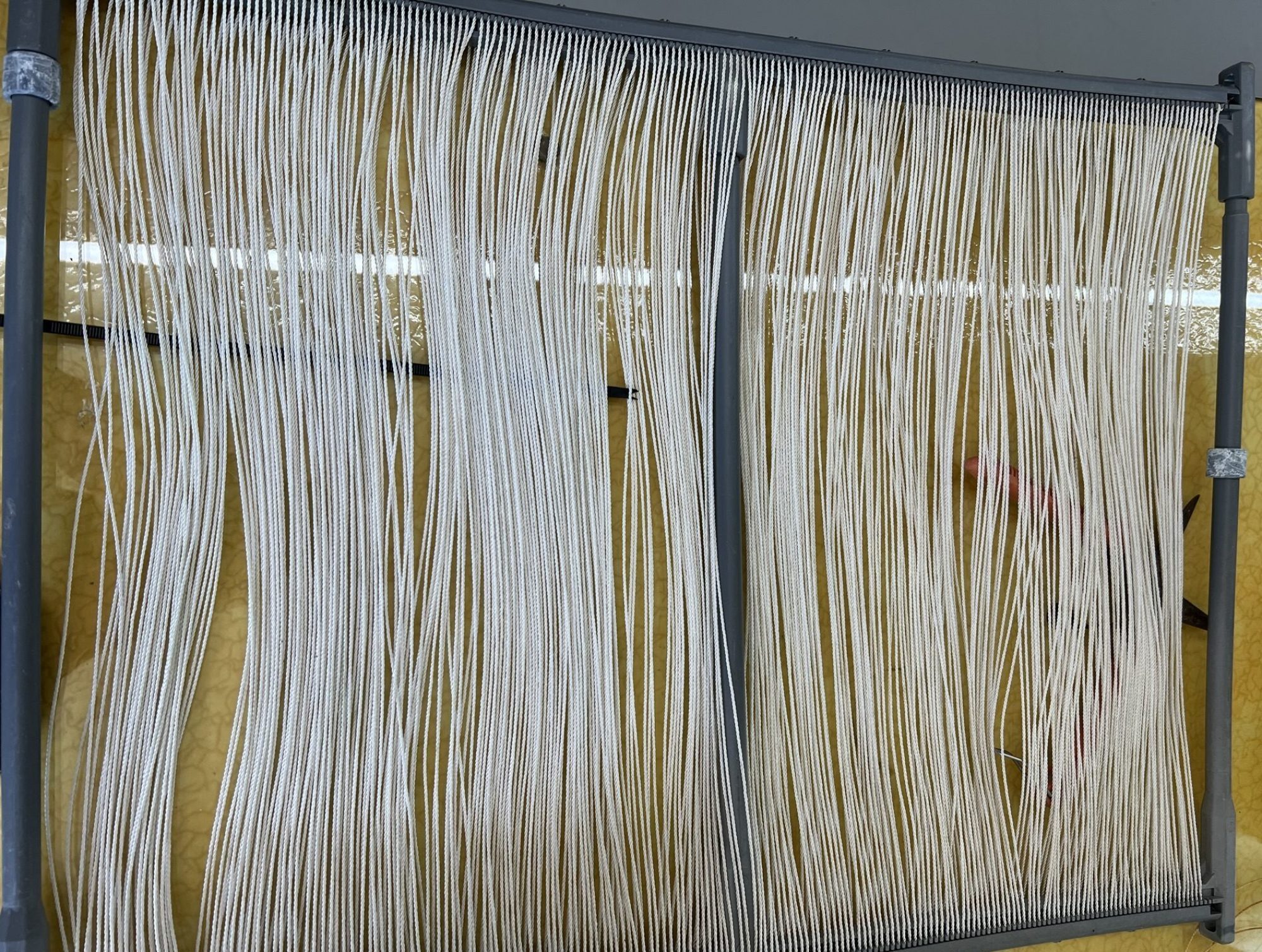
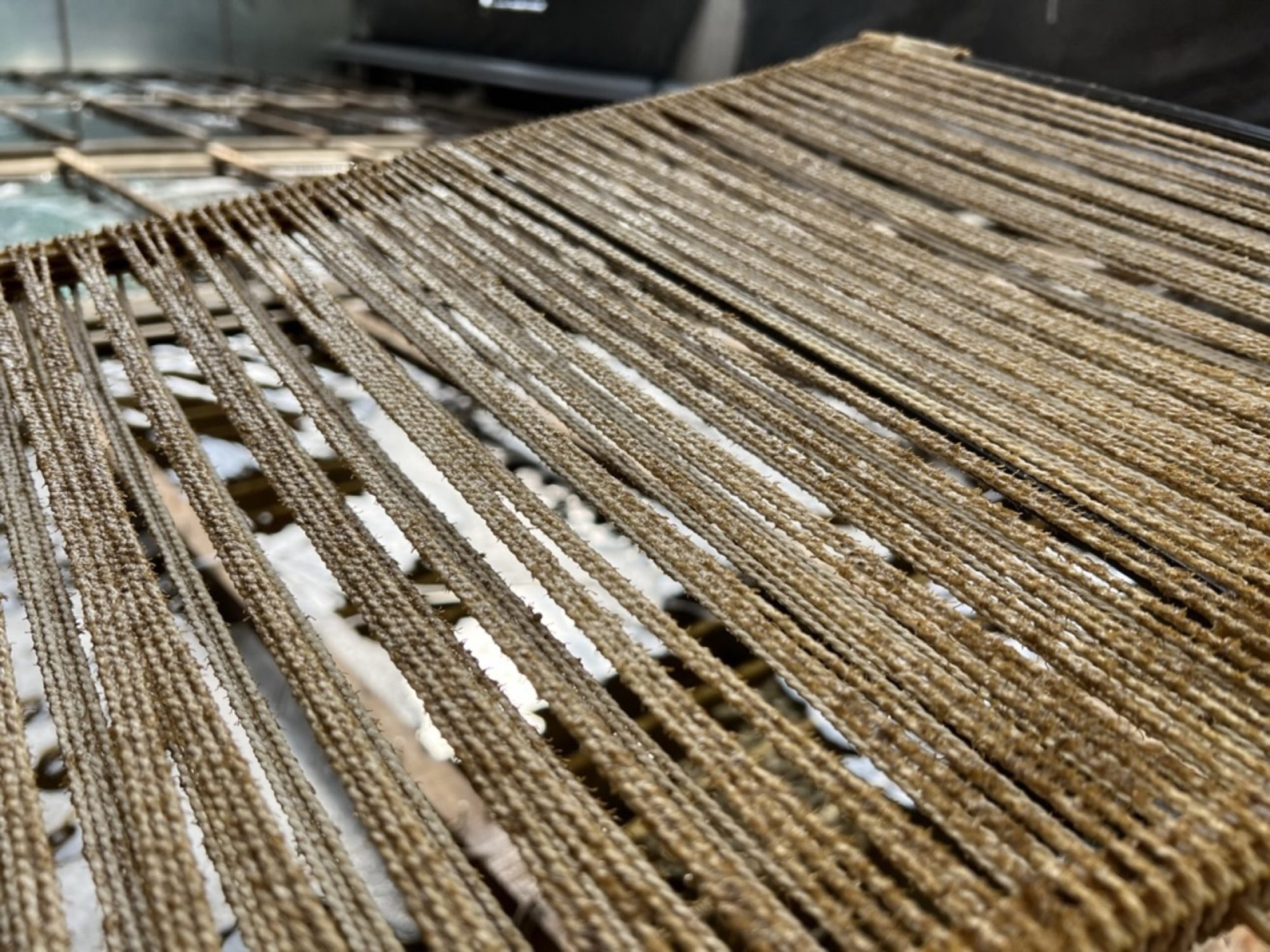
The seed collector frames (45x55cm) for 150-200m of seeded fibers is the common unit in South Korea.
Preparing seed frames at a small hatchery in South Korea.
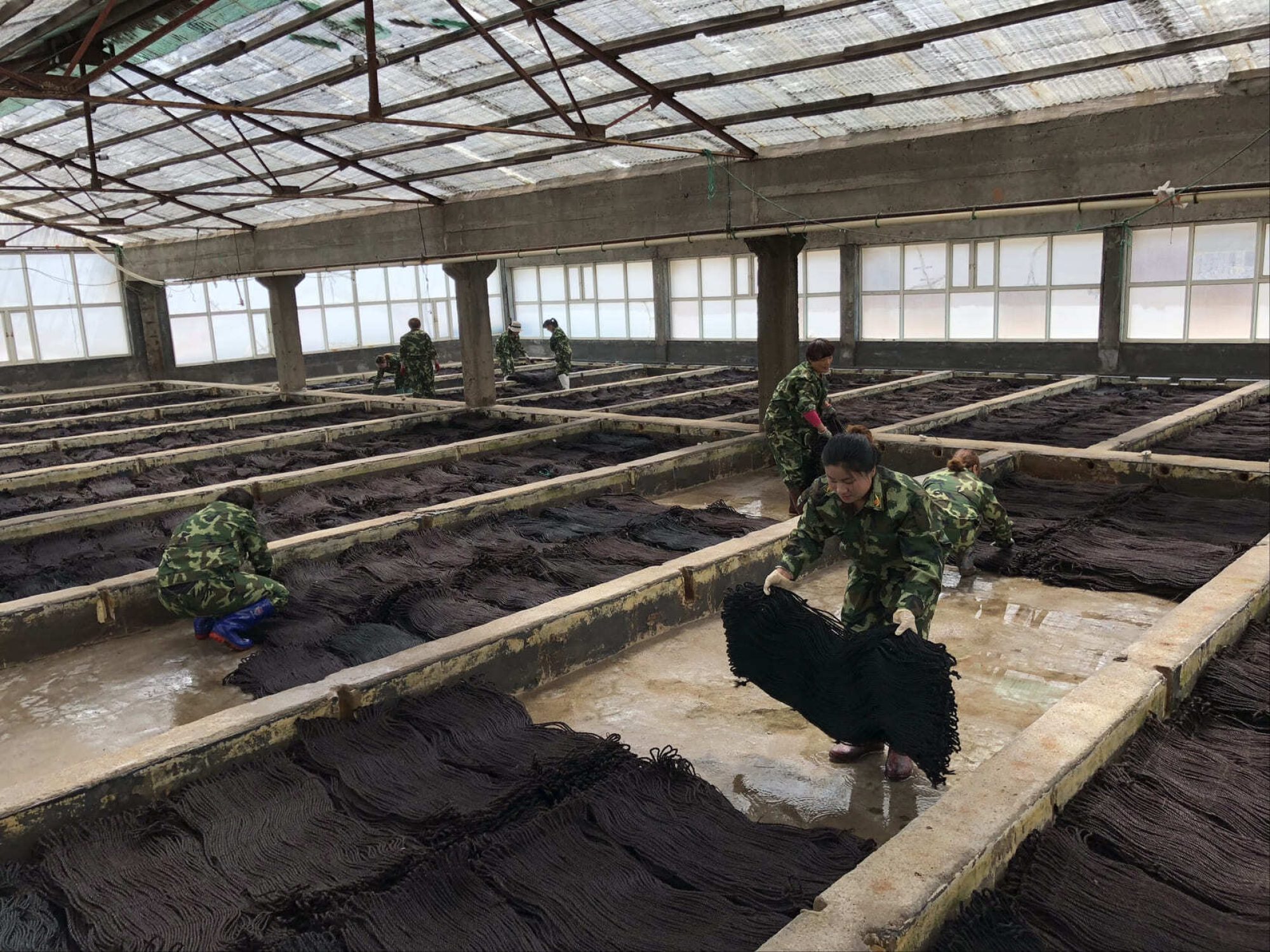
Prepared seed curtains are stored in recirculating water tanks in dedicated hatchery facilities in China. (Photo courtesy of Innovation Norway China)
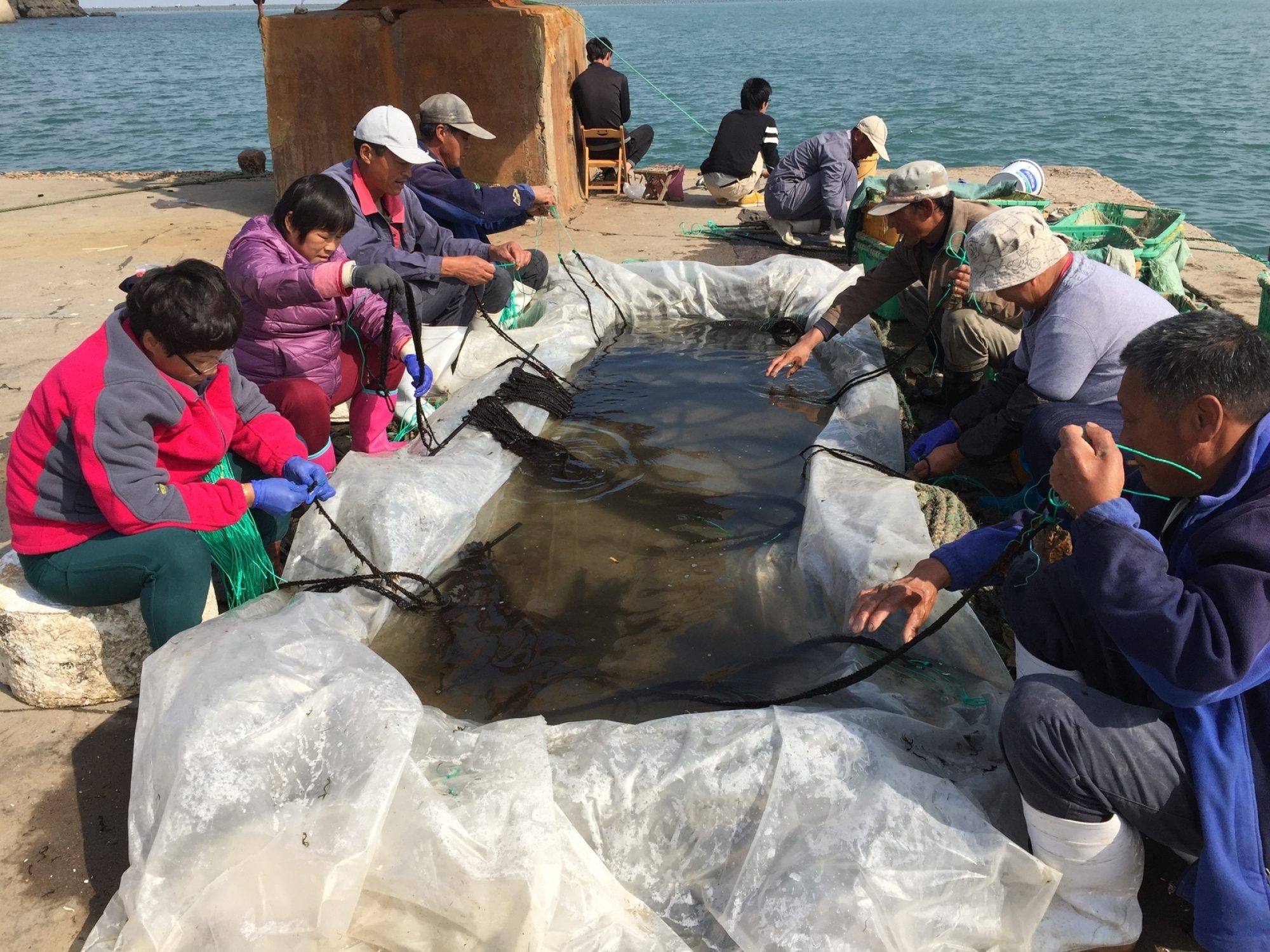
Preparing seedlings ropes before transferring to offshore kelp farm, Late October in Rongcheng Shandong province, China. (Photo courtesy of Innovation Norway China)
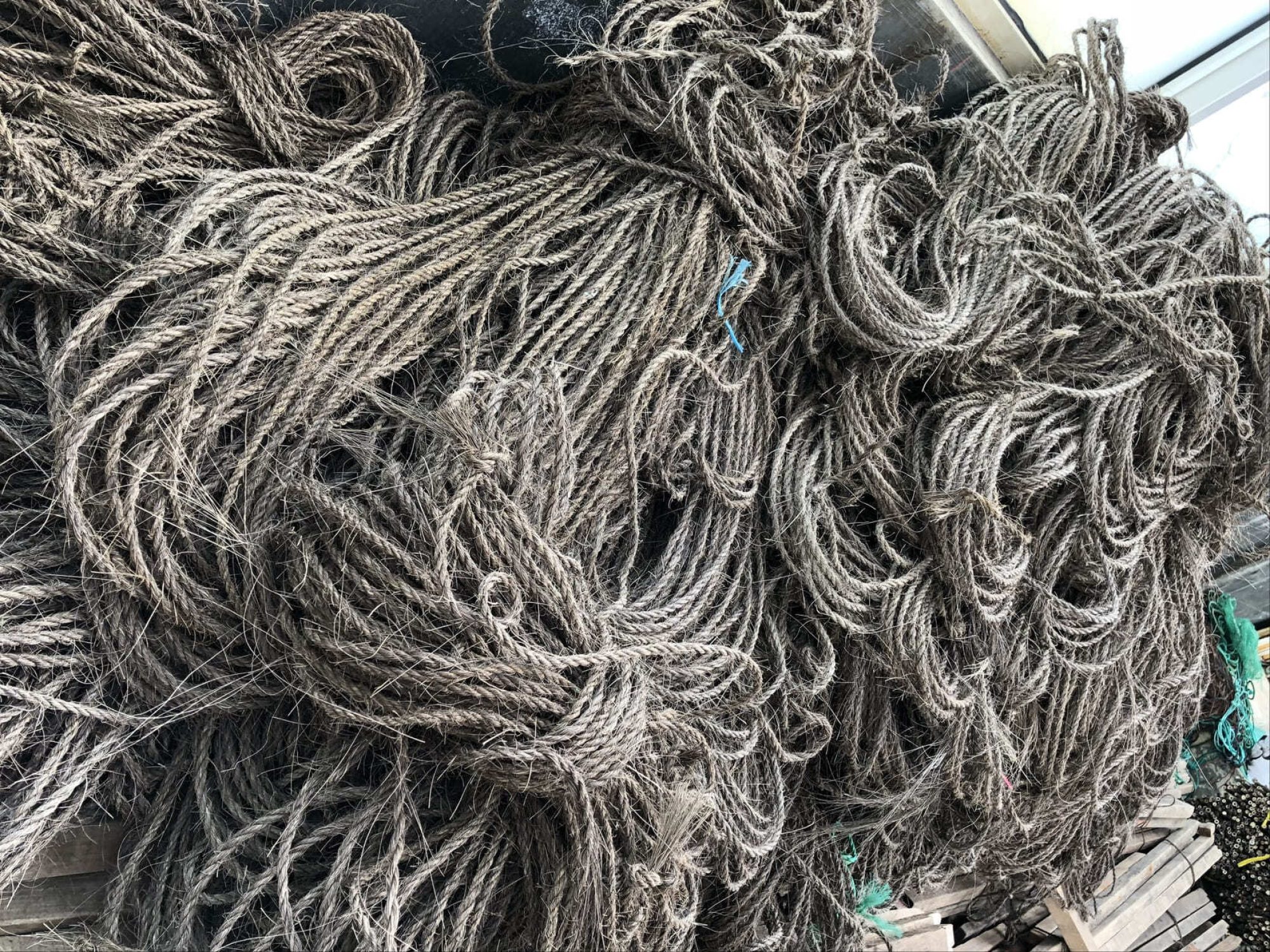
(Manila) coir rope used for seedling production in China. (Photo courtesy of Innovation Norway China)
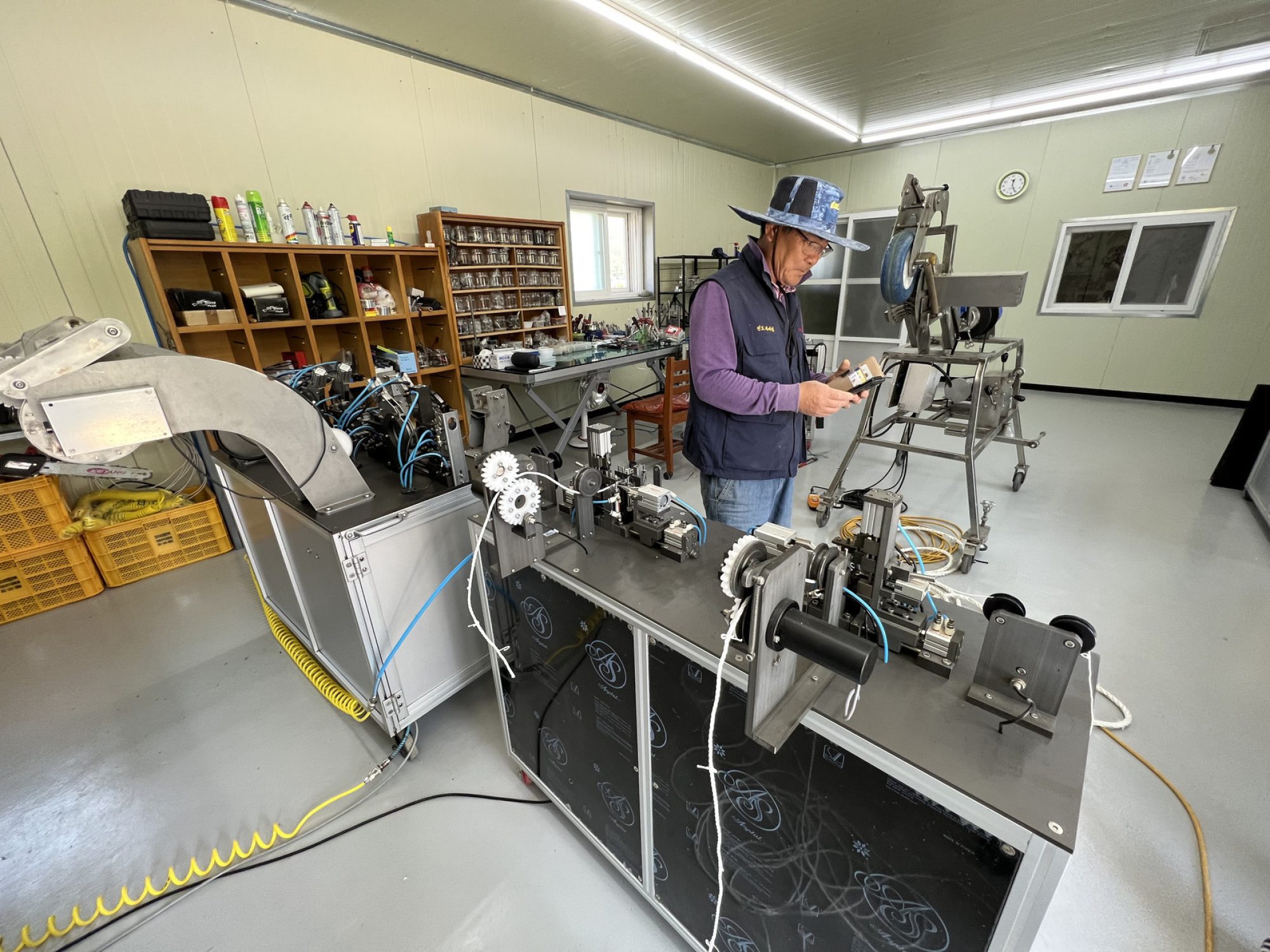
Automatic ‘sewing machine’ for insertion of seed fibers to cultivation rope, at the inventor’s garage in South Korea.

Seeding

In South Korea, a common method of attaching the seed material to the culture line is by inserting small pieces of the seed string (2-3cm) into the culture line. Roughly 70% of the farmers already use a machine that automatically cuts and inserts 2-3 cm of seed strings into the culture line. The seeding machine enables old ropes to be reused, because it can work with different rope sizes/strengths. 


Another method that is sometimes used is twine seeding, in which the seedling rope is wrapped around the cultivation rope without the manual attachment of individual seedlings. However in this method, seedlings are easily damaged and final yields tend to be lower.


The seeded lines with young sporelings will be moved to a nursery site when the temperatures at sea drop below 20°C before being deployed at the farm site. 


The seed material will be produced between early June till October (while sea water temperatures are above 20°C). 

In Japan, a common method of attaching the seed material to the culture line is by inserting small pieces of the seed string (2-3cm) into the culture line. Roughly 70% of the farmers already use a machine that automatically cuts and inserts 2-3 cm of seed strings into the culture line. The seeding machine enables old ropes to be reused, because it can work with different rope sizes/strengths. 


Another method that is sometimes used is twine seeding, in which the seedling rope is wrapped around the cultivation rope without the manual attachment of individual seedlings. However, in this method, seedlings are easily damaged and final yields tend to be lower.


The seeded lines with young sporelings will be moved to a nursery site when the temperatures at sea drop below 20°C before being deployed at the farm site. 
 

In Japan, the seed material will be produced between early June till October (while seawater temperatures are above 20°C).

Saccharina was the first seaweed species for which artificial breeding in indoor systems over summer was developed. These seedling rearing technologies have since been used for other seaweed species.

In China, the seedling material is grown at the nursery site until they reach about 15 – 20 cm and they are then clamped onto the rope and cultivated at the grow out site. This process is done manually and consequently it is very labour intensive. 


The seeded lines with young sporelings will be moved to a nursery site when the temperatures at sea drop below 20°C before being deployed at the farm site. 
 

The hatchery season can start as early as mid/late August in Shandong province and last into mid November in Fujian.

Previous
Next
Seaweed

Contact us:

info@hatch.blue
www.hatch.blue

Copyright © 2026 Hatch Blue Limited. All rights reserved.

  • Terms and conditions
  • Privacy policy

Hatch Blue is a global impact business focussed on farmed and alternative seafood. Hatch Innovation Services is the consultancy arm of Hatch, advising corporates, investors and governments on innovation and investment projects in the global aquaculture industry.

For our Shrimp Farming Insights visit: www.shrimpfarm.tech.