Eucheumatoids Harvest
South East Asia
Overview
Eucheumatoids, due to their fast growth cycles, can be harvested many times a year, typically every 30-45 days.
Yield
The region and season help determine how many harvests are possible. Overall peak production in the Philippines is from March to May for example, which falls in the dry season. In a lot of regions in Indonesia, the South of the Philippines and Malaysia, farming takes place throughout the entire year. There are months with lower yields, however farmers generally continue farming activities. Producers often try to maximise cycles of cottonii for as long as possible, but if conditions become too challenging, they switch over to spinosum.
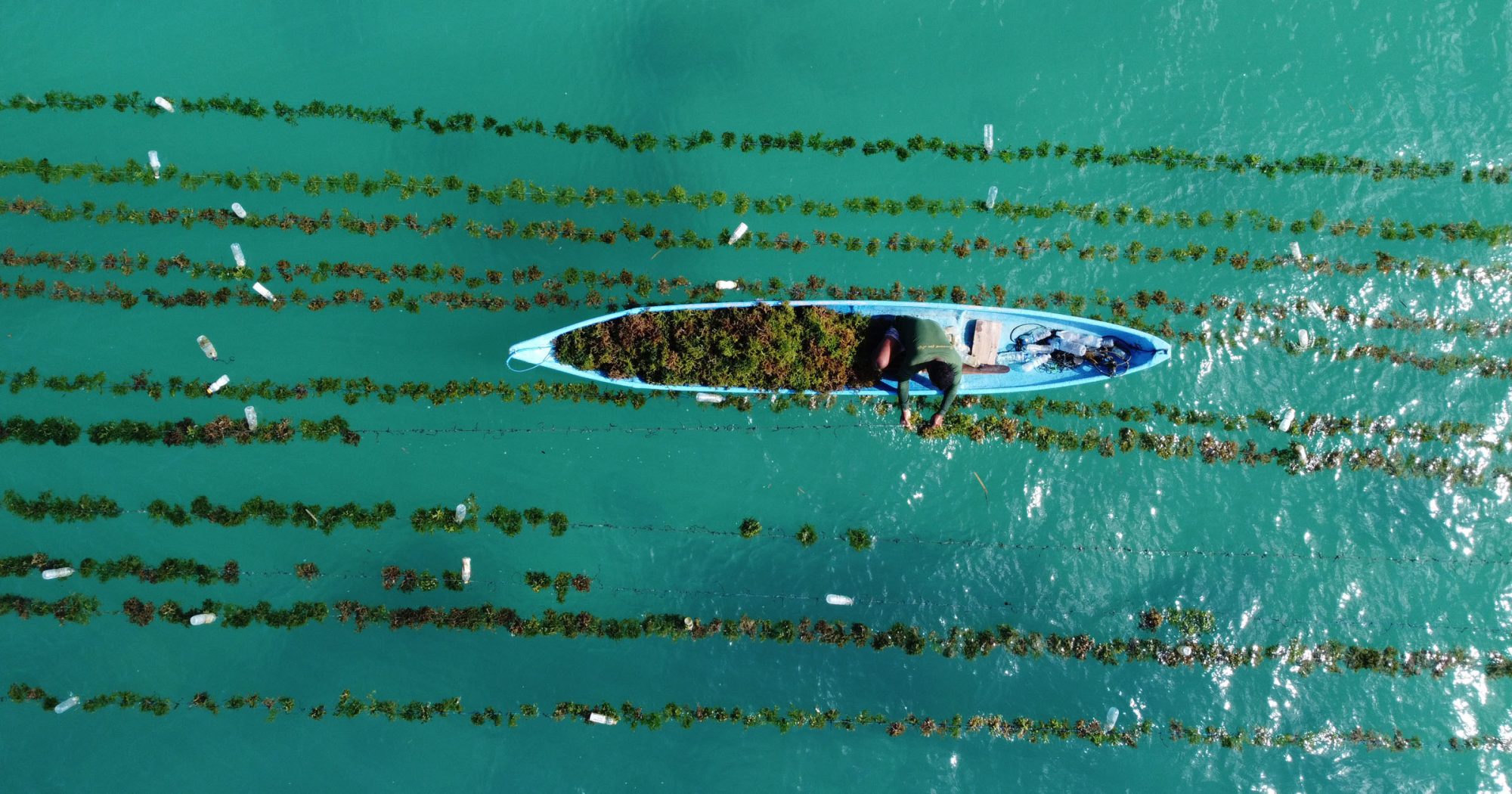
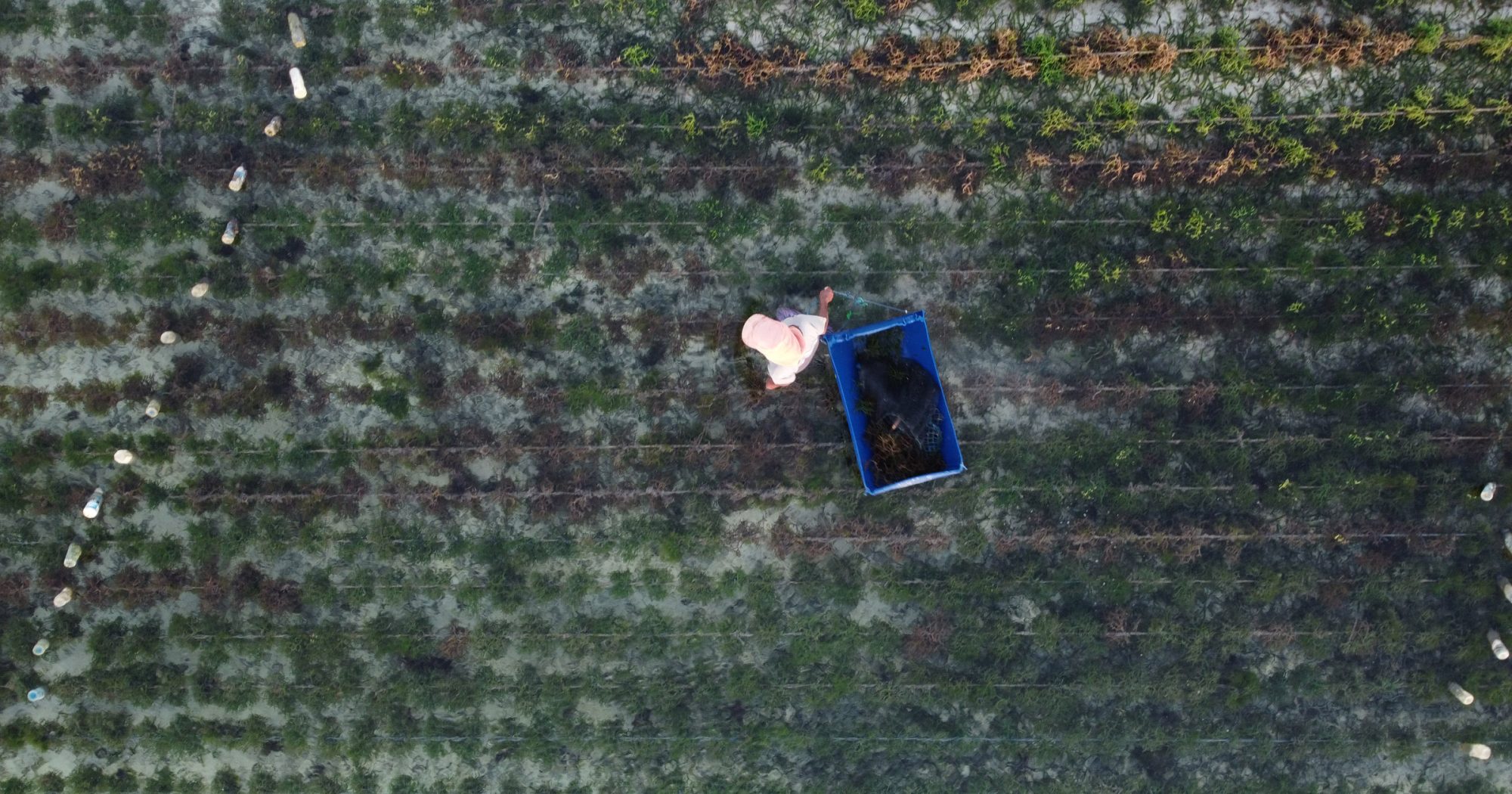
Within about one month the weight of the seedlings can be multiplied between 3 to 5 times. The actual fresh weight yield per metre of line is the weight of the total harvest minus the initial weight of the seedlings. It can only be roughly calculated, since farmers rarely measure the fresh weight of the harvested seaweed nor the initial weight of seedlings deployed. However, the farmers usually estimate their yield increase based on the dry yield and the size of the seedlings times the number of seedlings per metre.
Although an average yield per hectare could be calculated based on the number and length of culture lines per hectare and the yield per metre of line, it would not be representative for Eucheumatoid farming.The amount and density of culture lines fluctuates a lot between different farms, regions and methods applied.
Biomass transportation
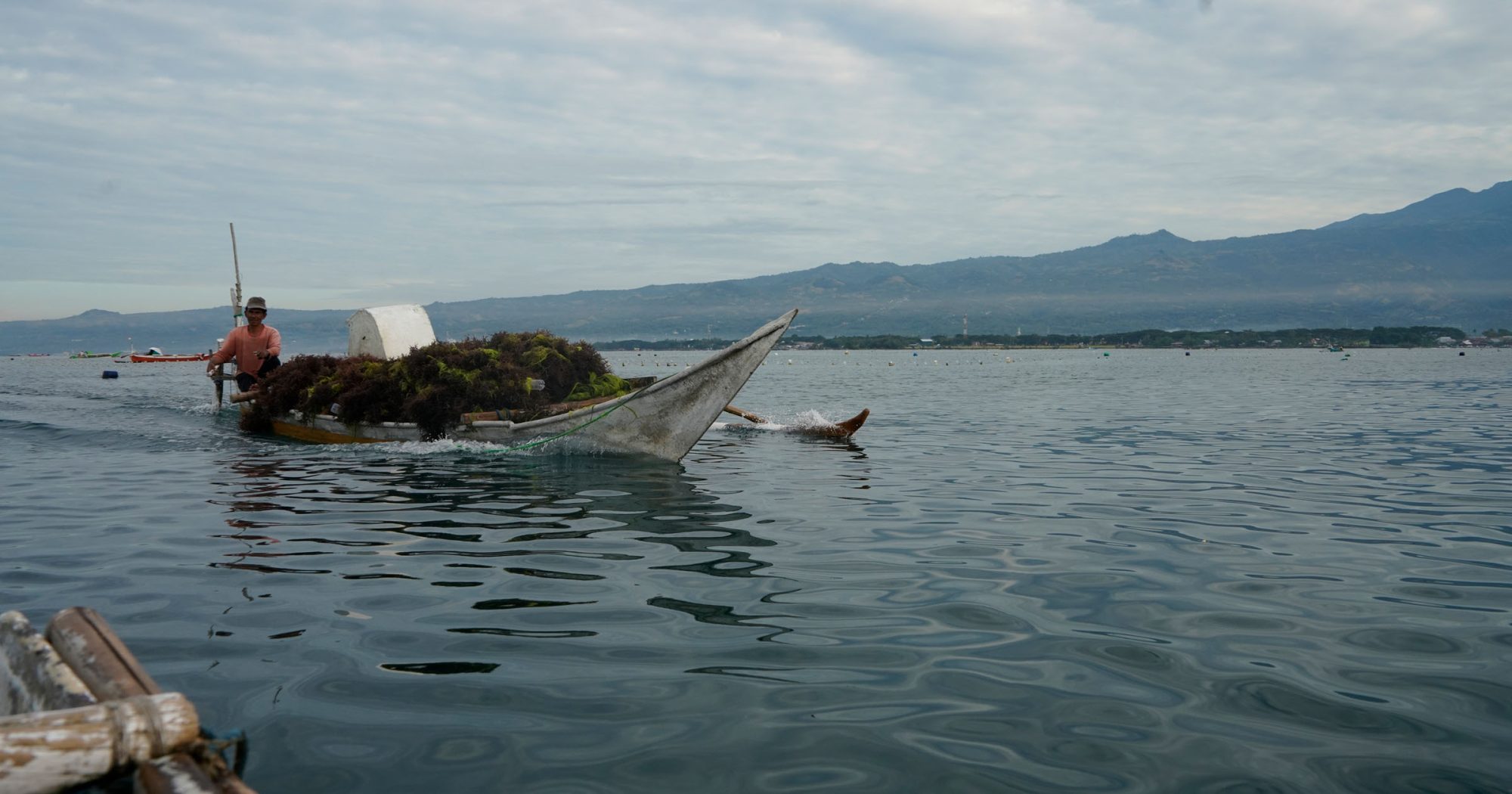
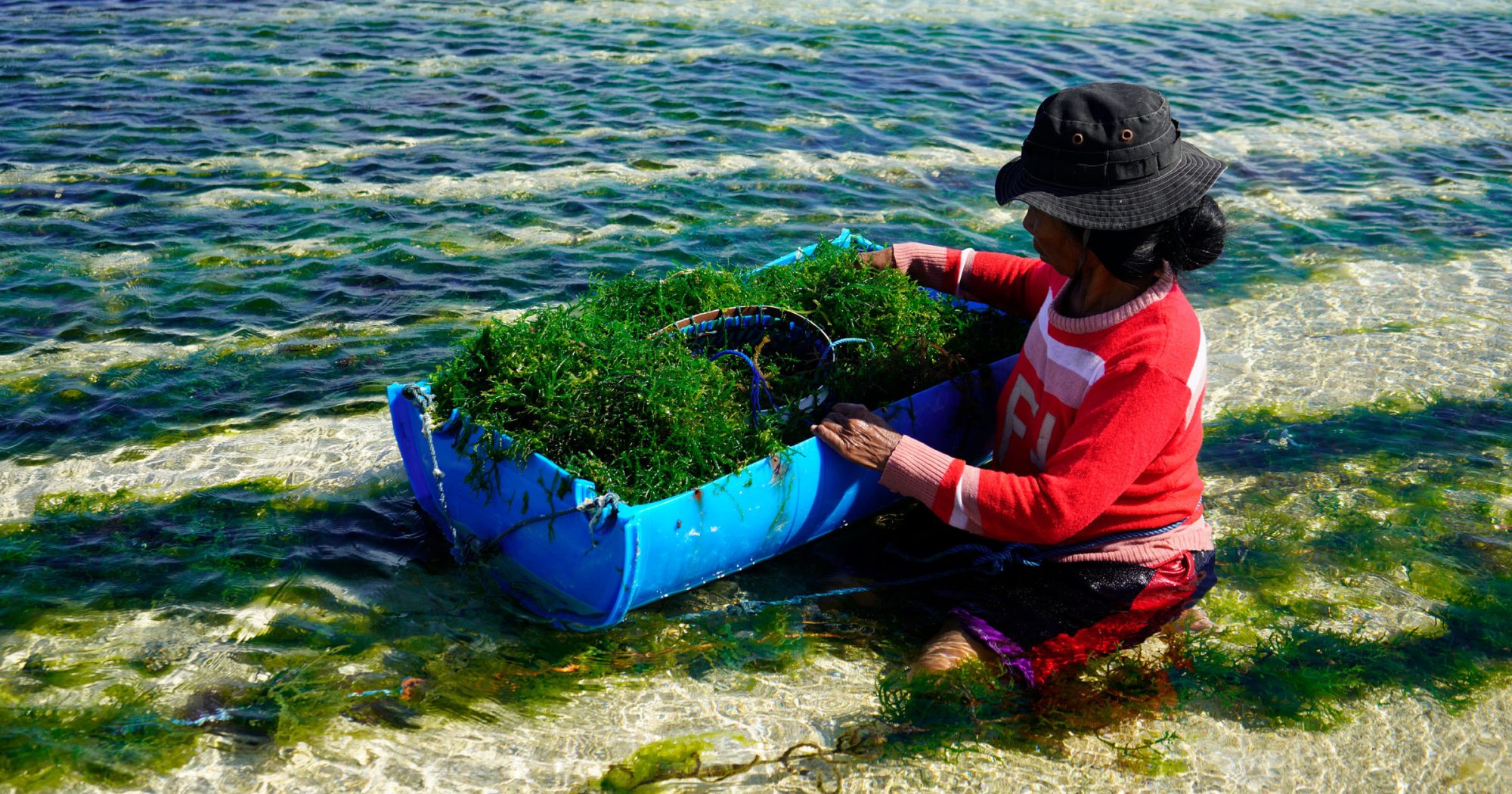
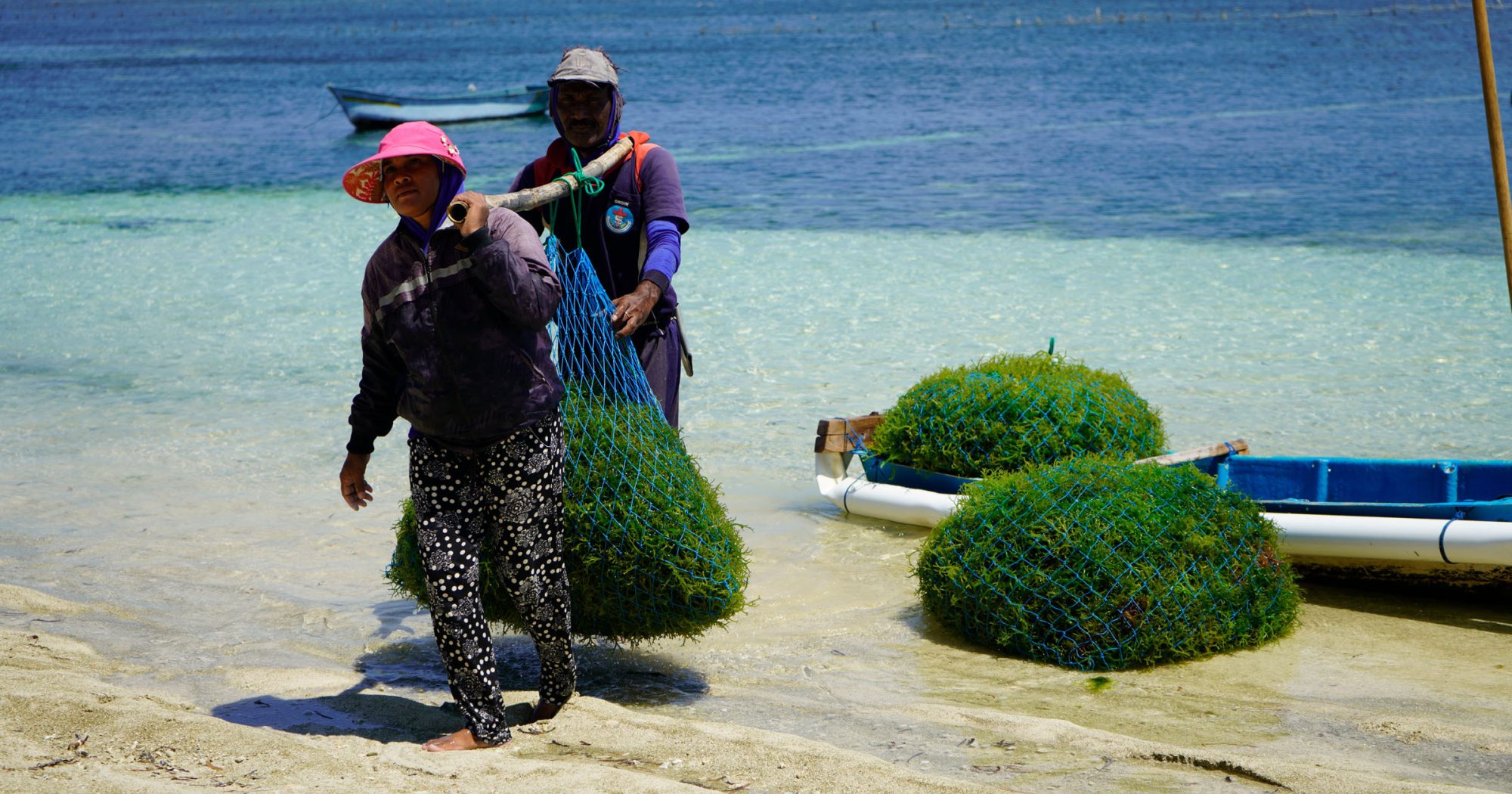
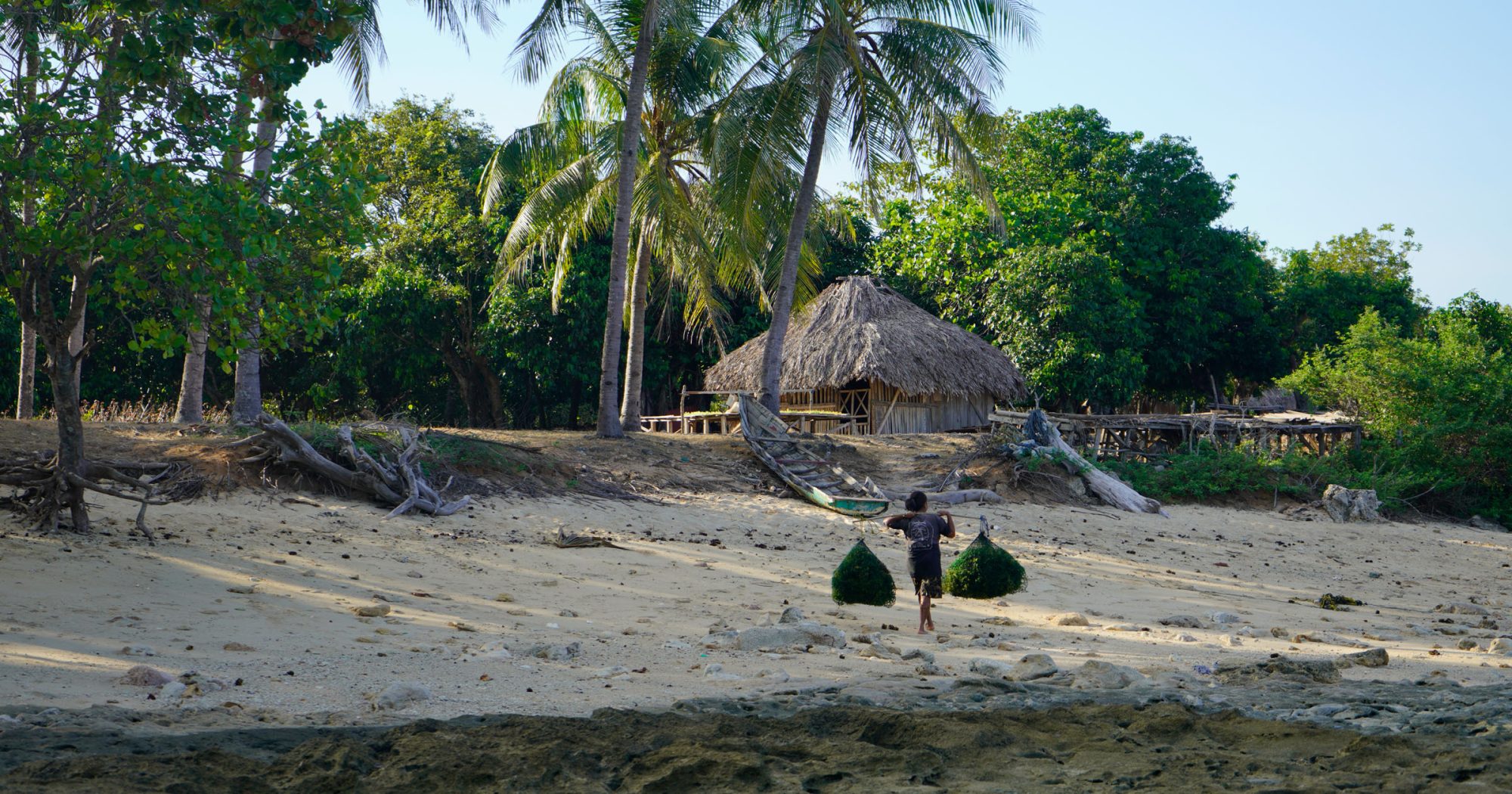
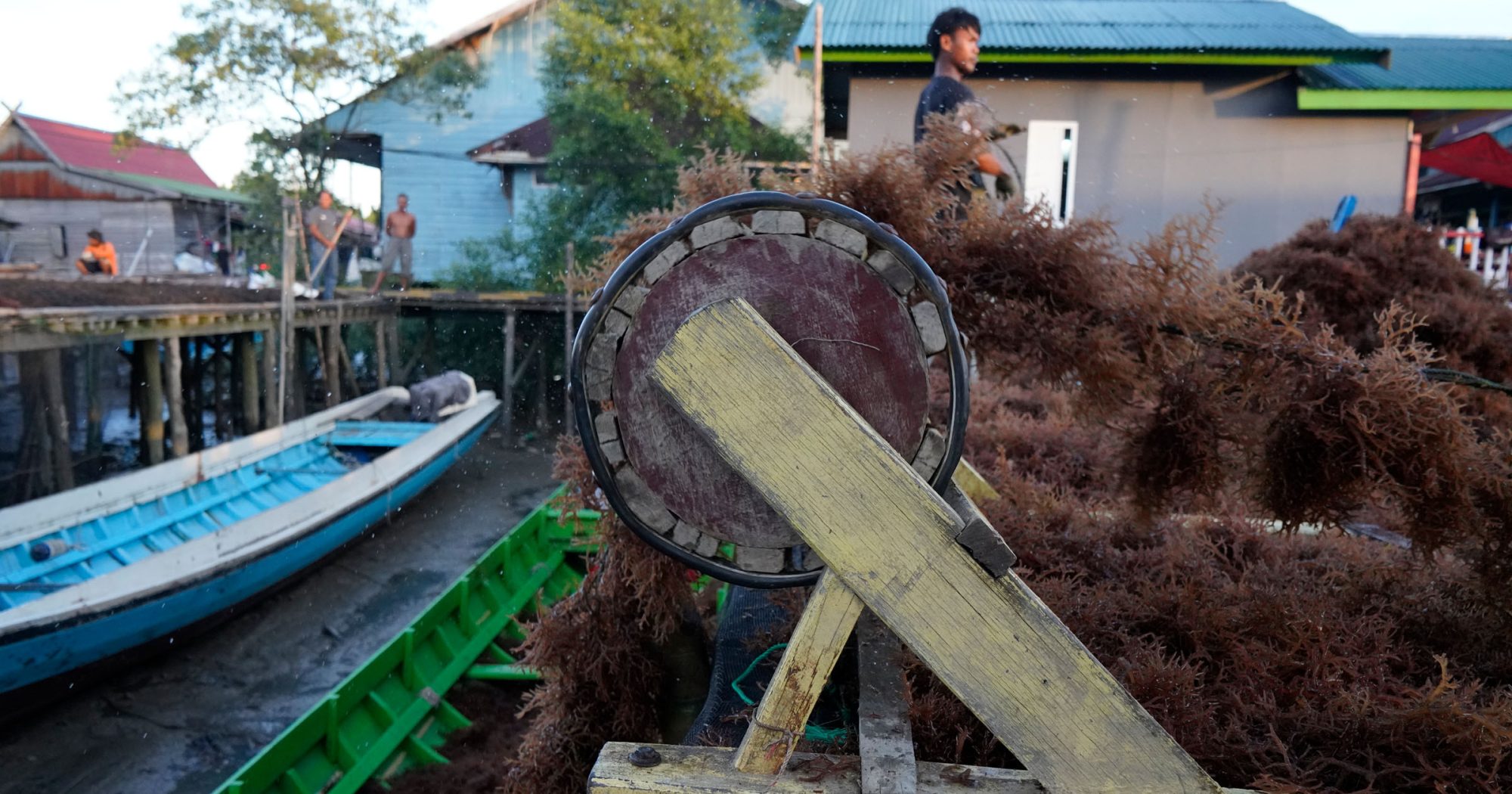
The amount of labour needed for harvesting will depend on the operations, farming method and size of the boat. The size of the boat in turn depends on the operations and capital availability of the farmer. Boats are not always powered by an engine and some need to be paddled. In off-bottom cultivation the harvesting is usually done at low tide and smaller buckets of all types are used to collect the harvested seaweed from the lines or even entire lines.
Caribbean
Overview
Yield
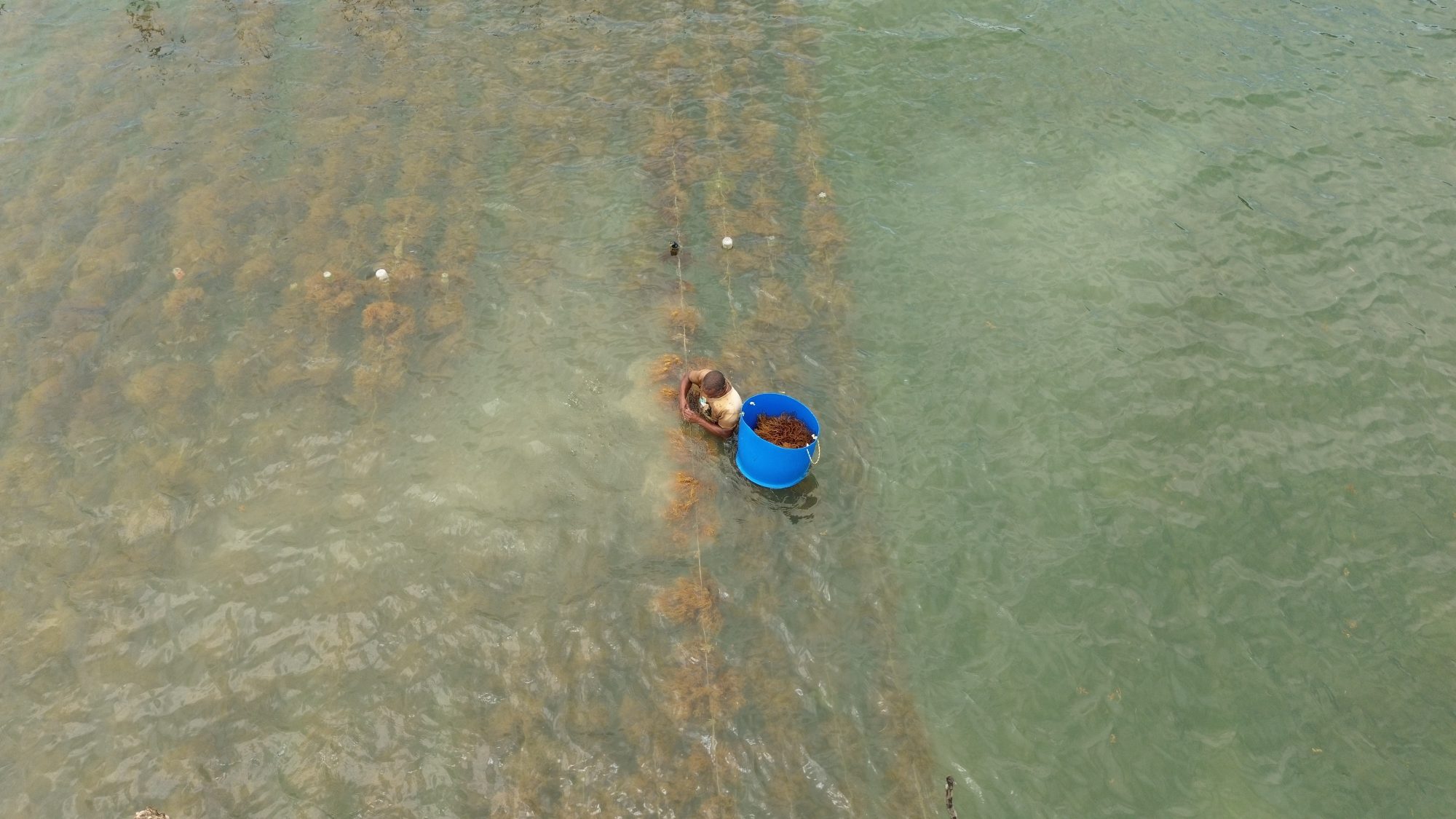
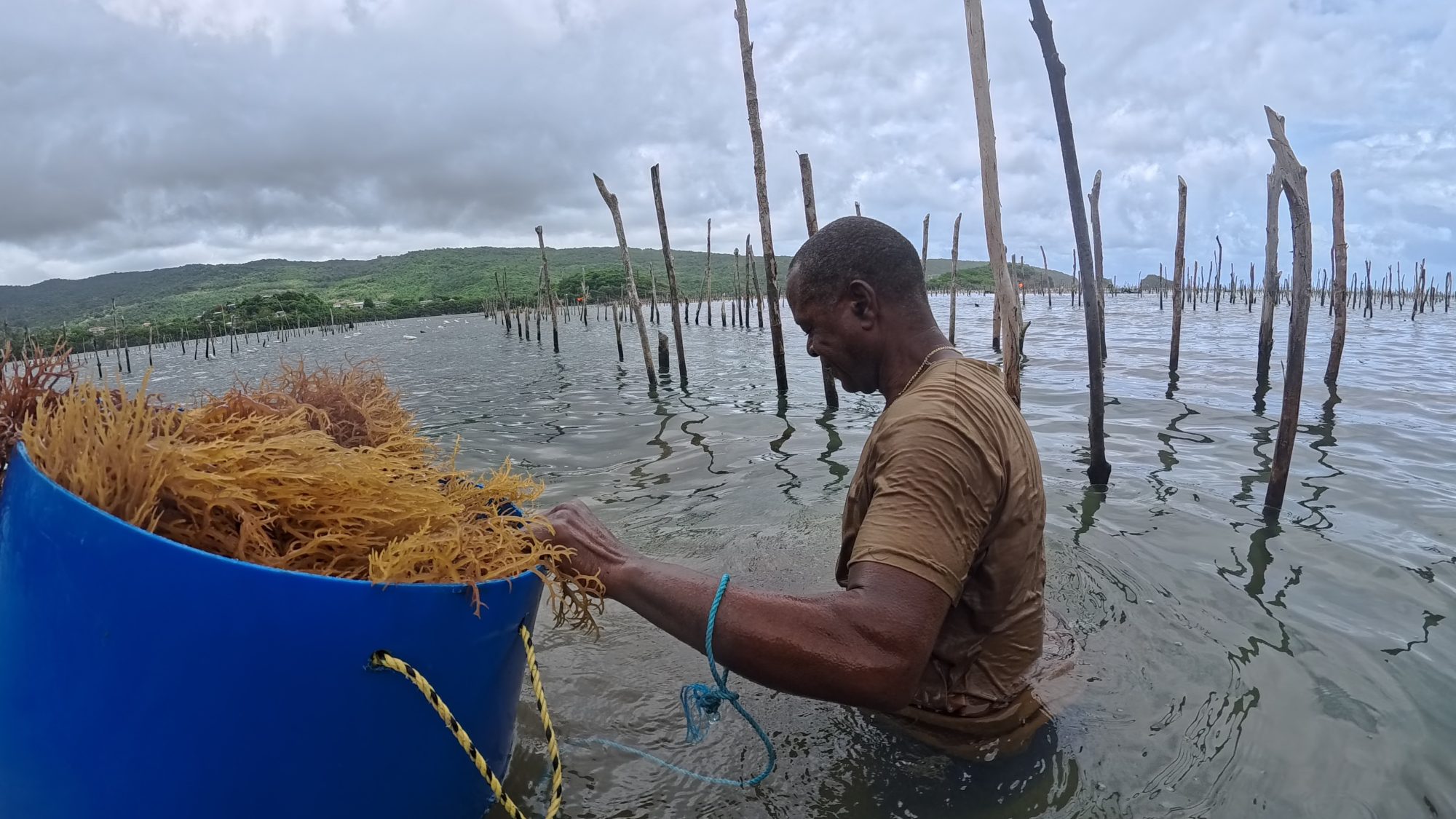
Caribbean island farmers (St Lucia, St Vincente and the Grenadines, Grenada) practice partial harvesting year-round, typically every 30 to 42 days, though in some cases cycles extend to two months depending on schedules and conditions. In the region, Eucheumatoids are found in three colours: purple, green, and gold. Purple shows better colour during colder, rainy periods, while gold grows more slowly but is easier to manage in sunny months. Yields are usually estimated visually at five to six times the starting biomass, with farmers noting the best production period between June and December.
Biomass transportation
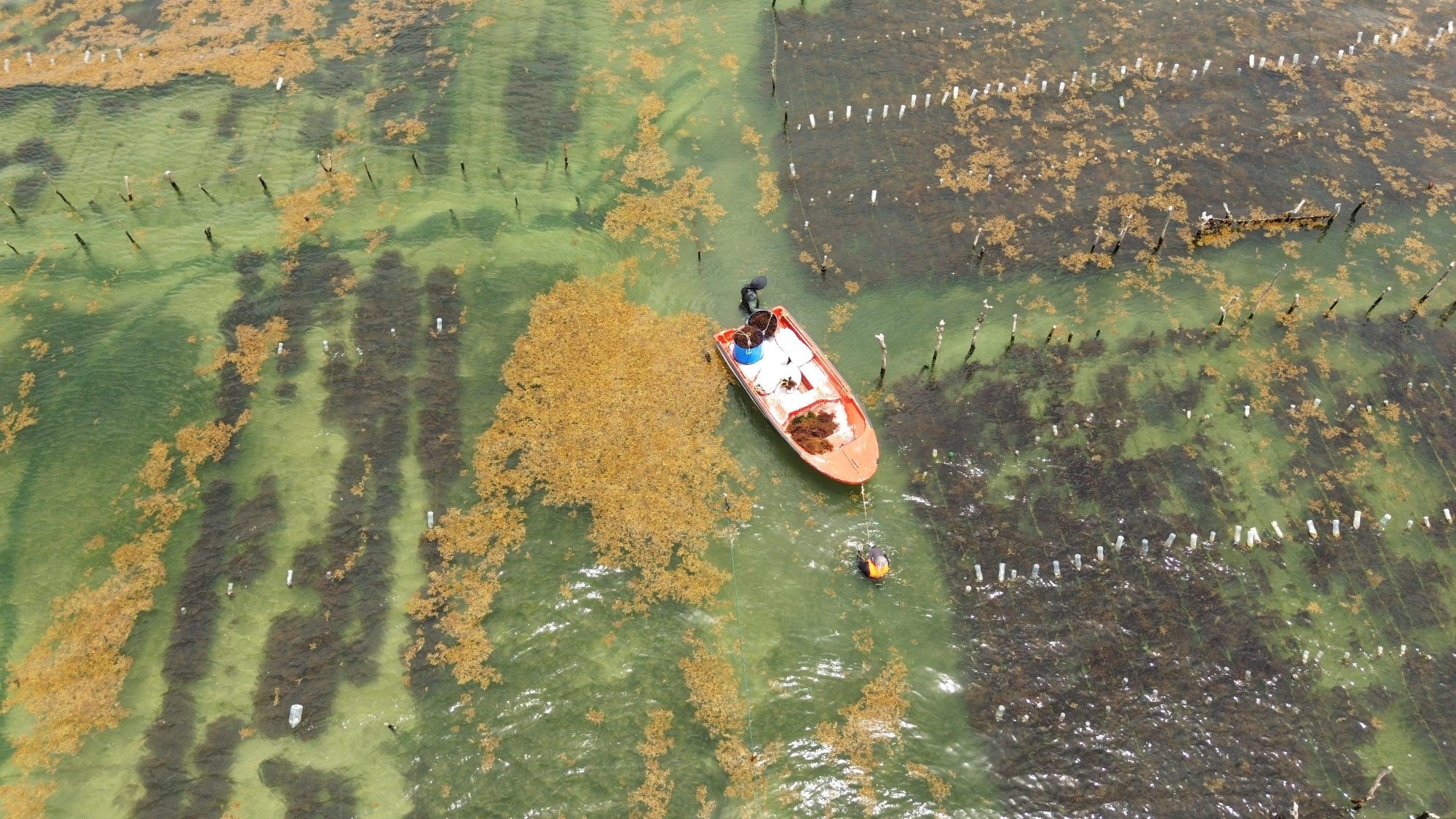
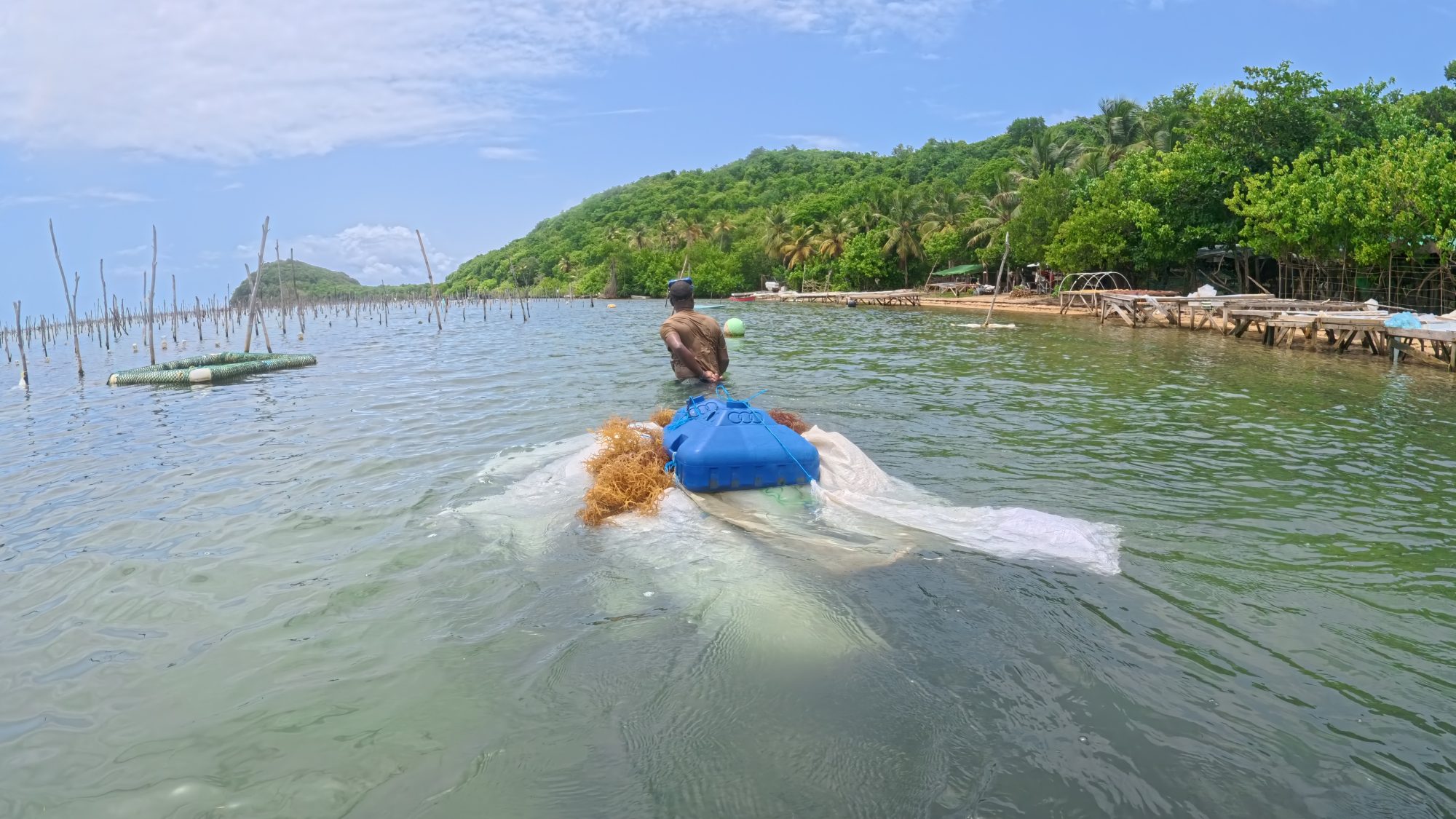
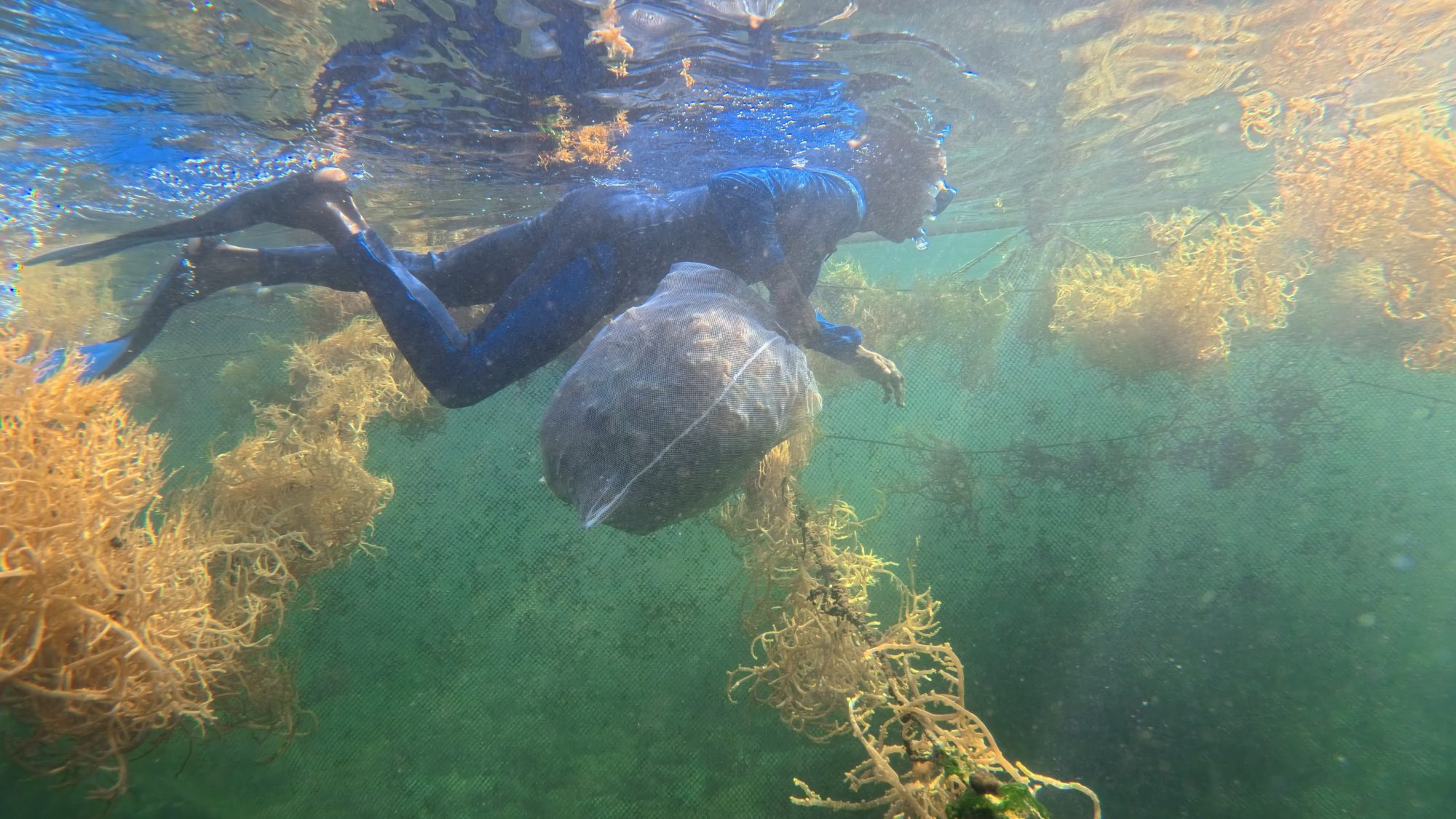
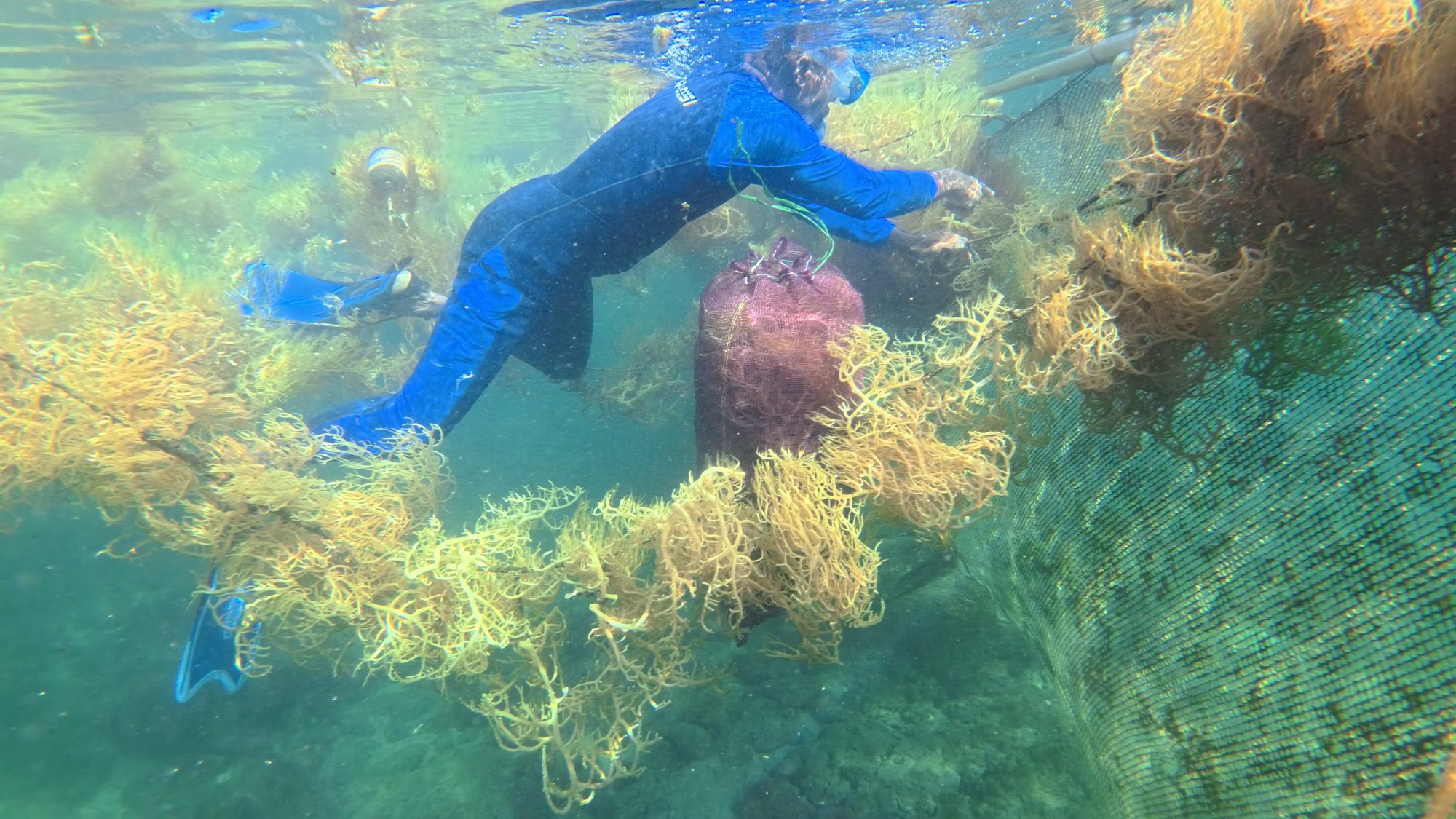
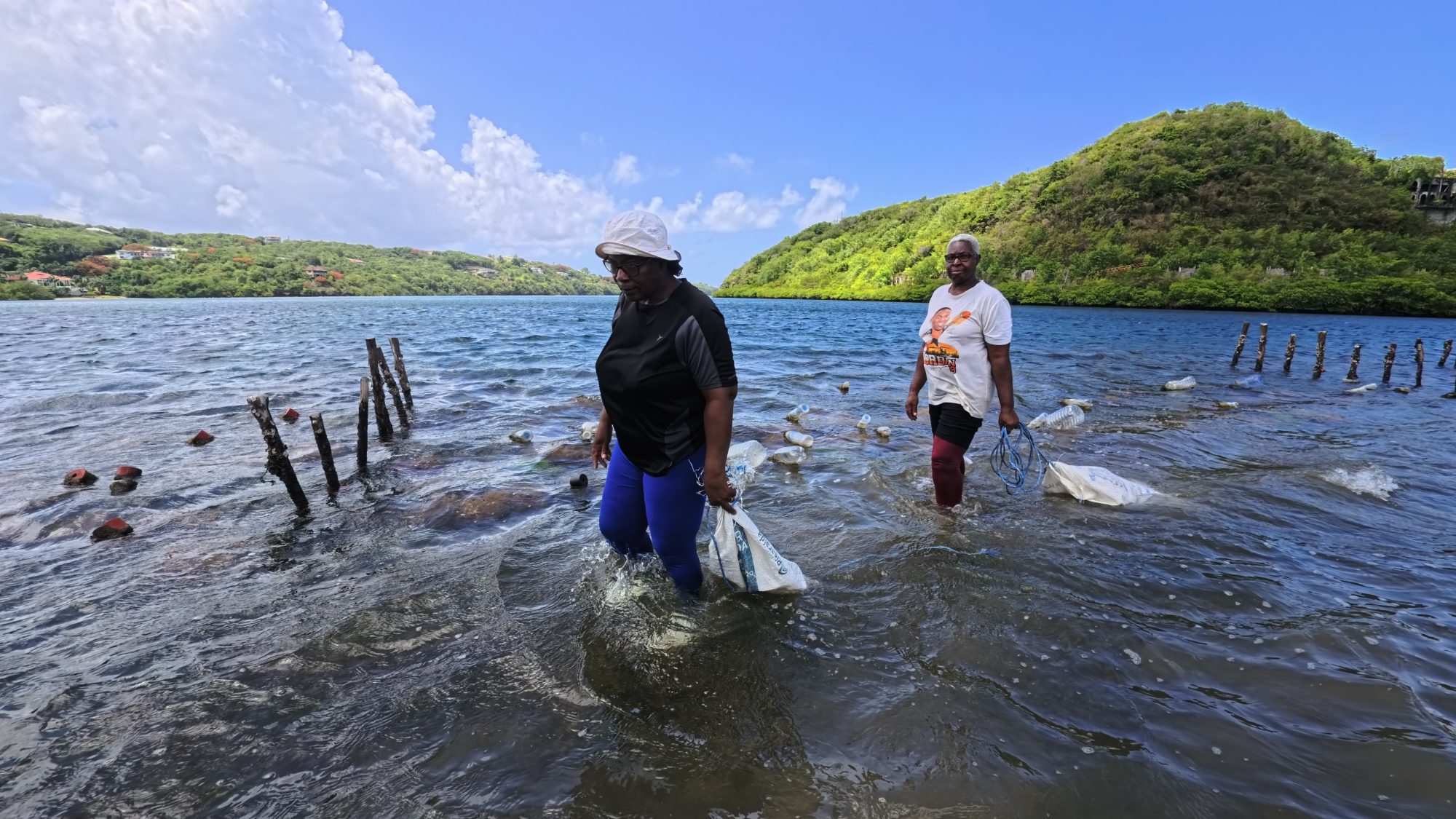
Transporting harvested seaweed from farms to drying areas in the Caribbean islands is both labor-intensive and costly. Farmers often swim with net sacks, walk with floating containers, or depend on personal, hired, or association boats. The weight of wet seaweed makes the process physically demanding, while land transport adds further expense. Delays, damage during handling, and the lack of mechanisation make transportation one of the sector’s major bottlenecks.
South America
Overview
Yield
Farm productivity in South America is primarily measured by the daily growth rate, with cuttings multiplying their weight several times over short cycles. In Venezuela and Rio de Janeiro, Brazil, stable, warm conditions enable rapid growth of 6-10% and 5-8% per day, respectively. In seasonal Santa Catarina, Brazil, growth starts slowly at 2-3% and peaks at 10% during the summer, averaging 5-6% for the season.
These growth rates determine the number of possible harvests. Tropical Venezuela and Rio de Janeiro achieve year-round production, with cycles of 45 to 60 days allowing for seven or eight harvests annually. In temperate Santa Catarina, the growing season is confined to September through May, typically yielding four to five cycles, as winter cold prevents large-scale cultivation.
Full harvest is the standard practice in major companies of Venezuela and Rio de Janeiro, Brazil. Some farmers partially harvest, pruning mature portions, but this can lead to issues with epiphytes on the remaining biomass.
Yield is calculated through wet weight increase, where a 40-50 gram cutting grows to 400-500 grams within 35-40 days. However, actual yield is often constrained not by biology but by market forces. In Santa Catarina most farmers operate under processor quotas and lack the buyers to justify maximum production, leaving potential yield unrealised.
Biomass transportation
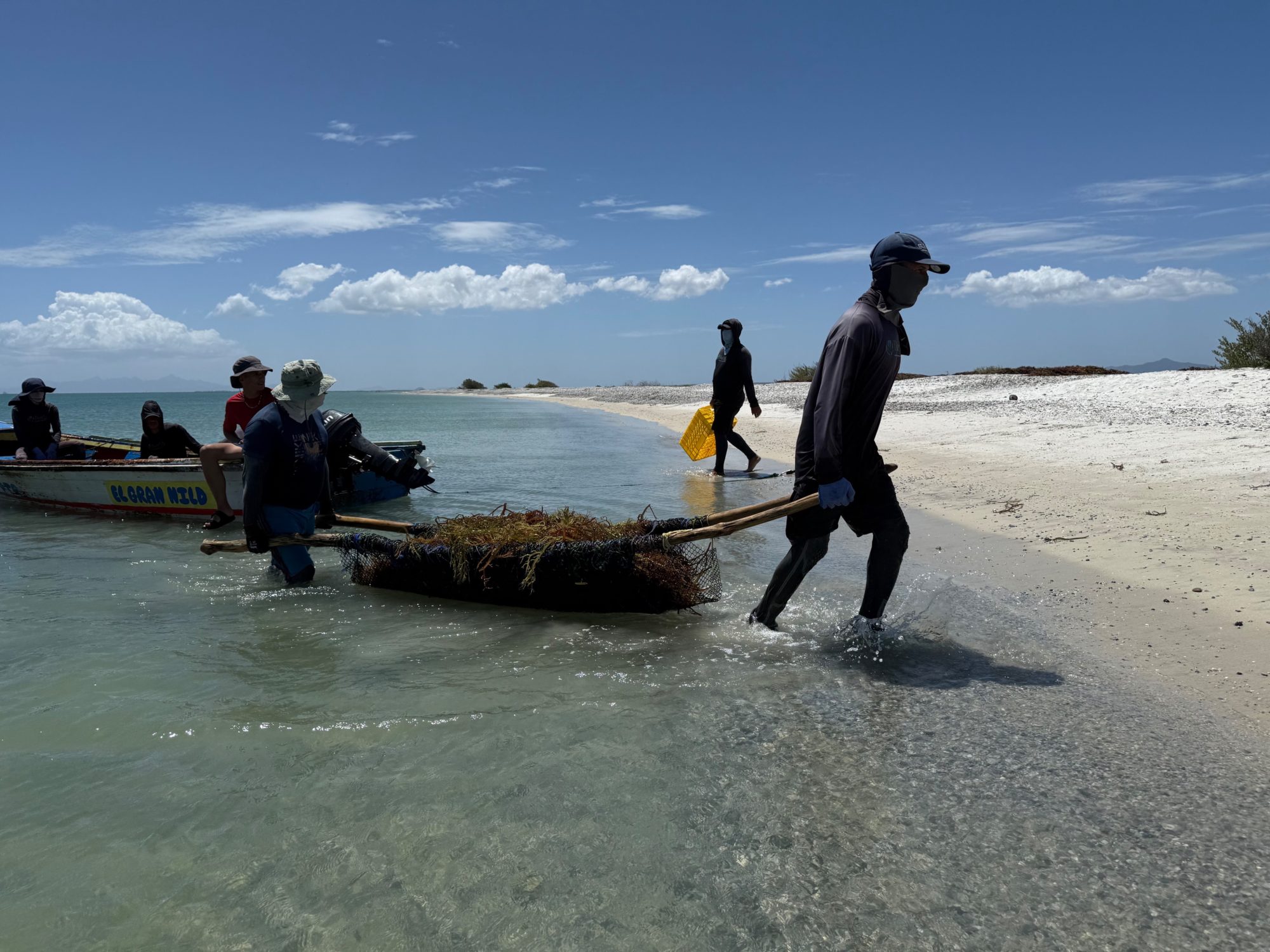
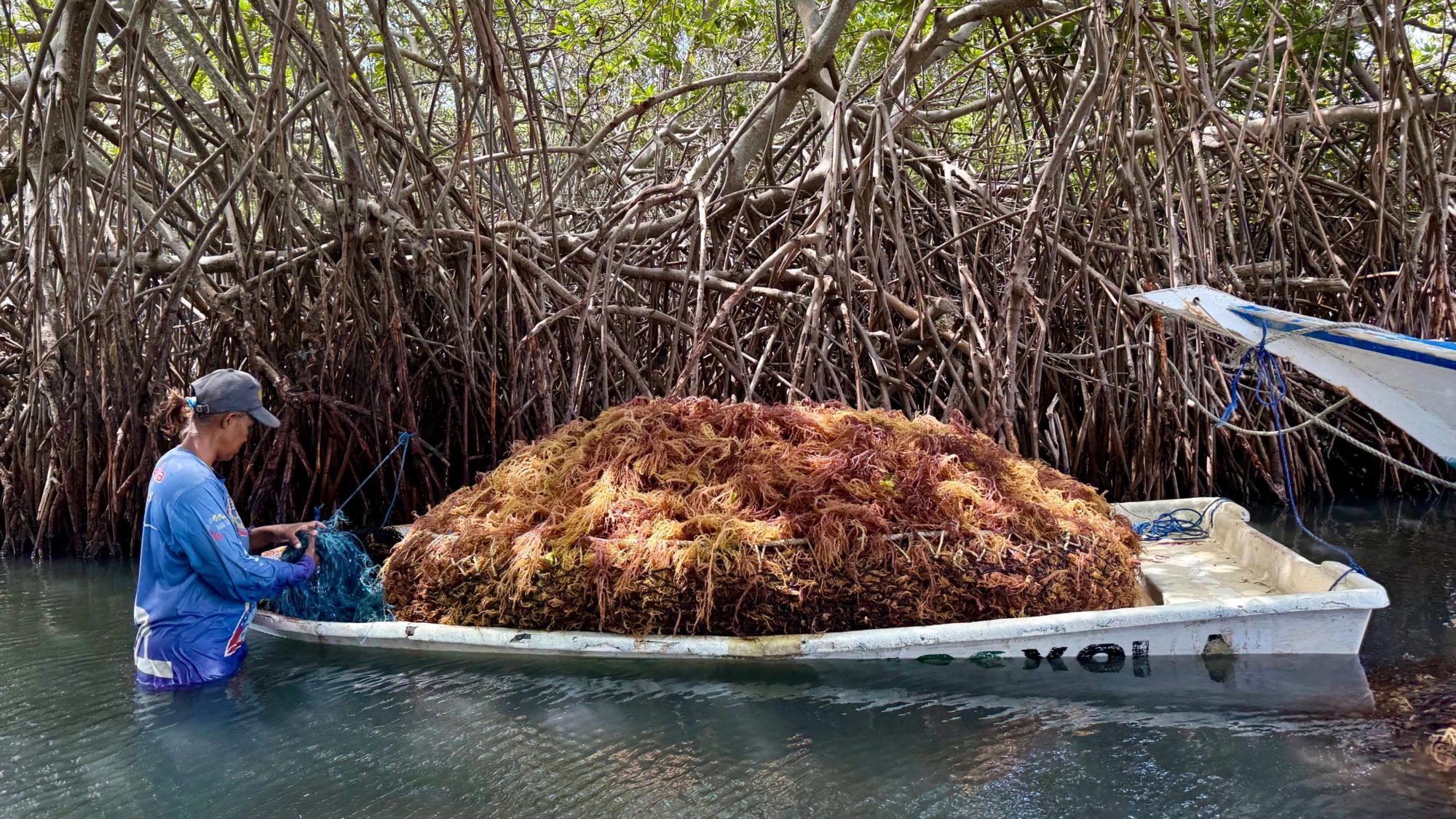
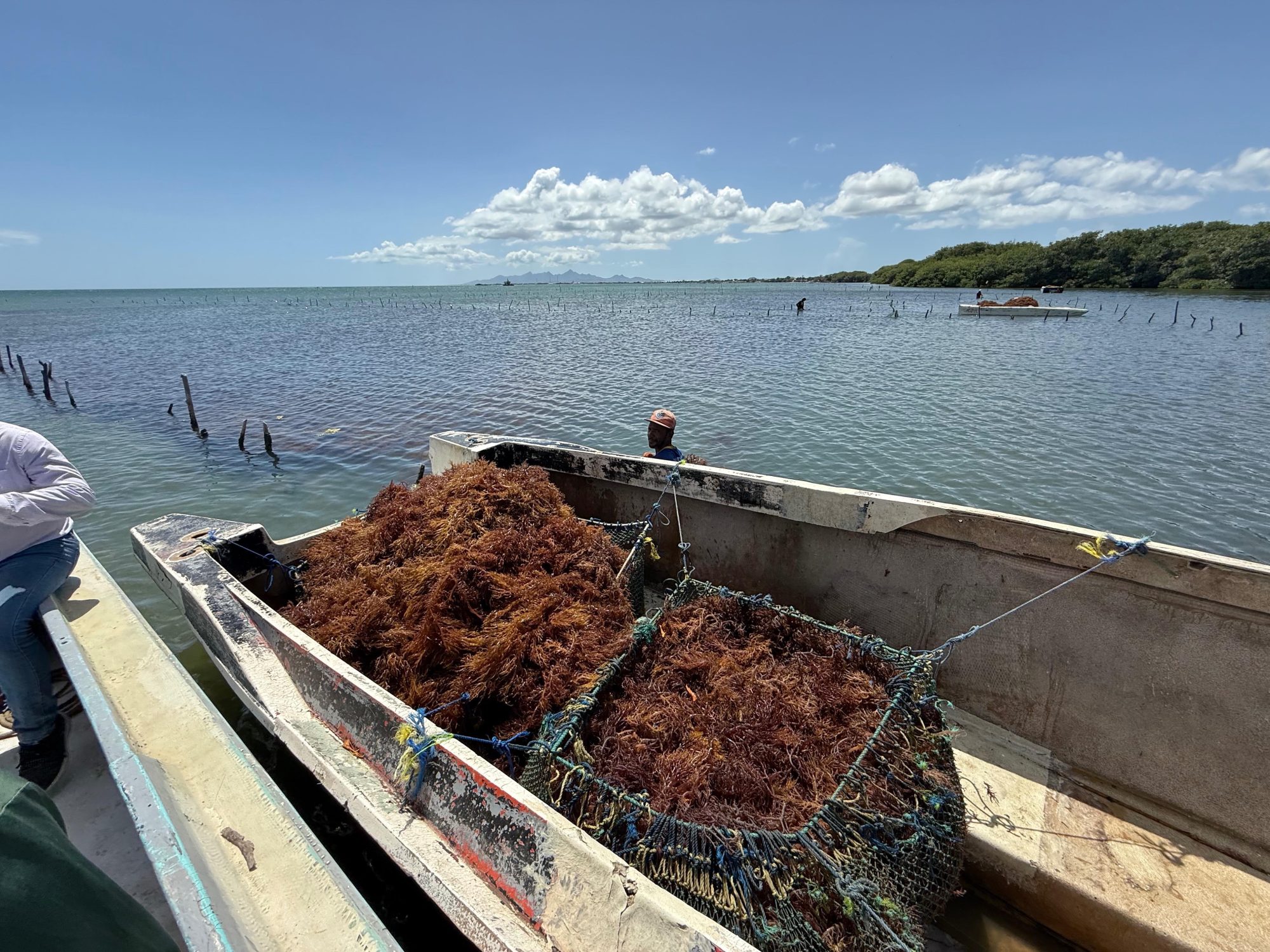
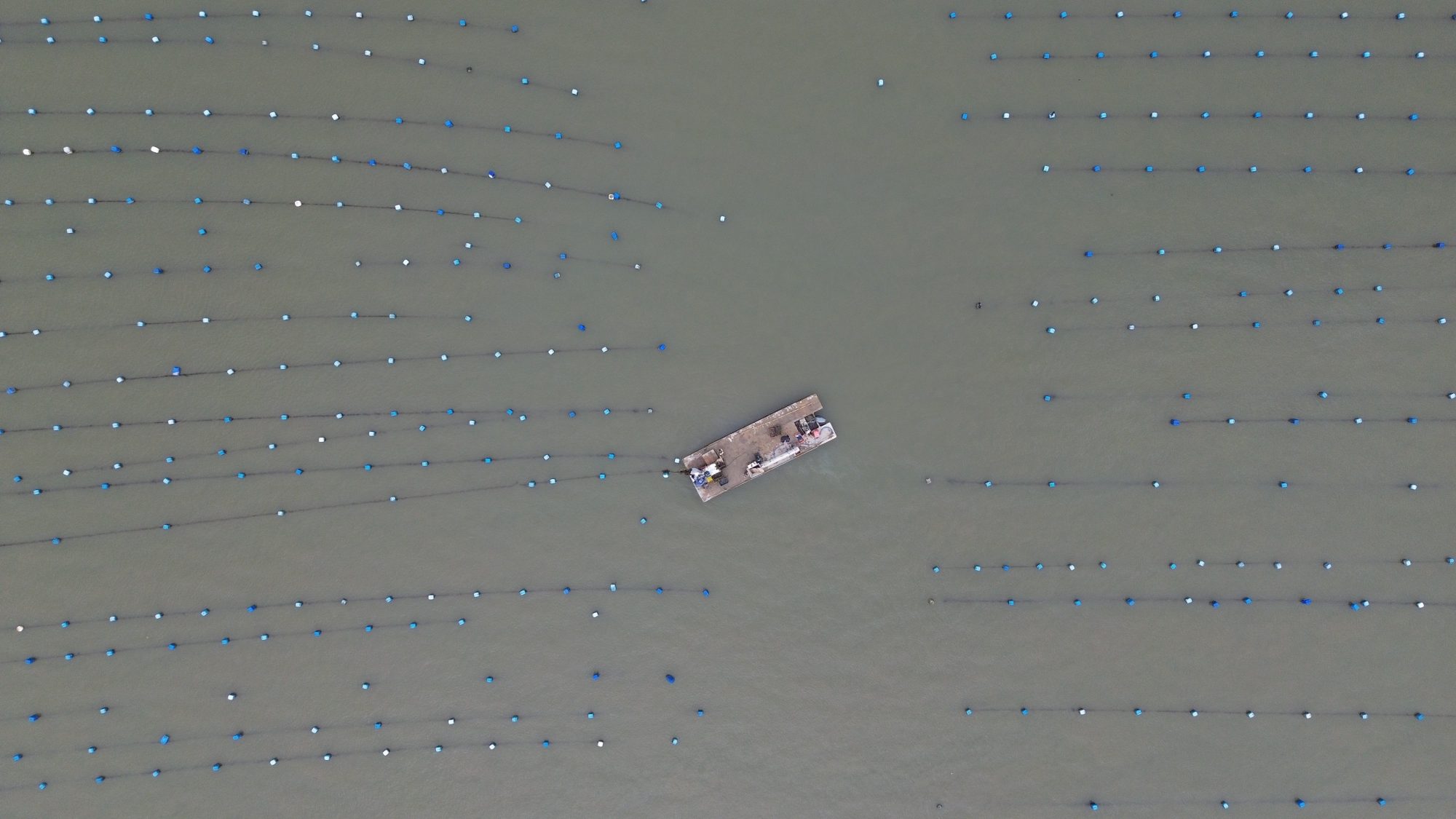
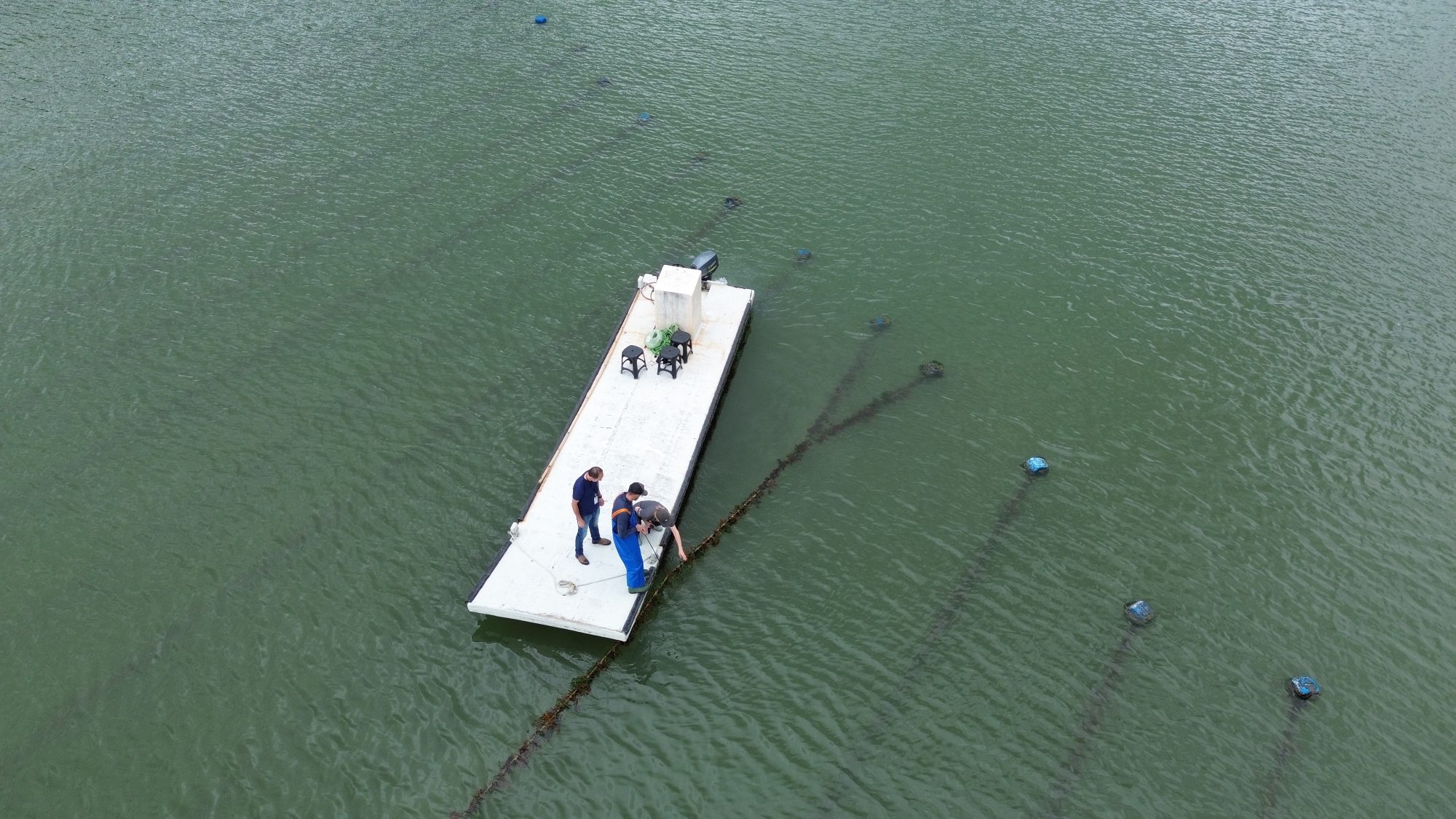
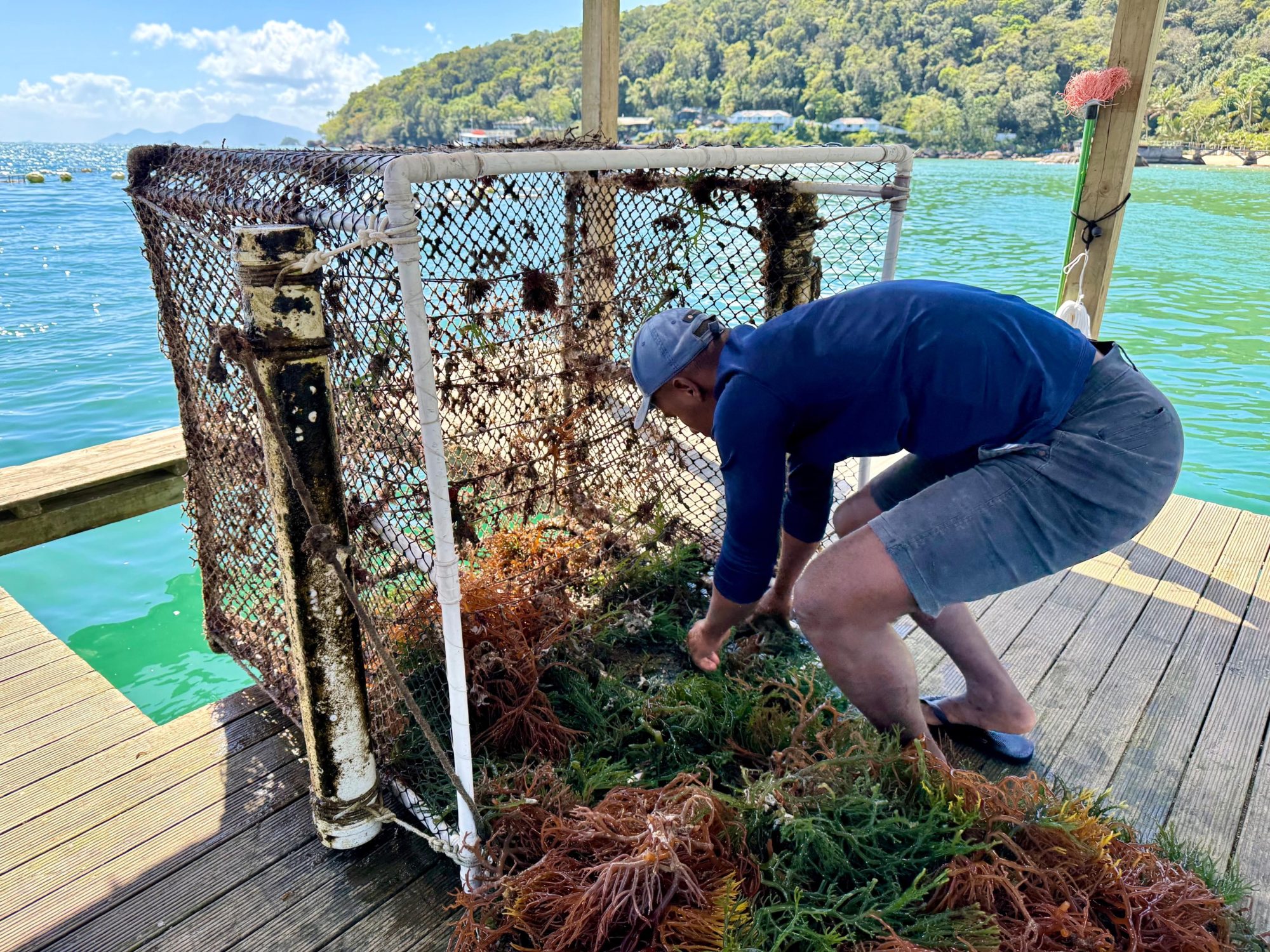
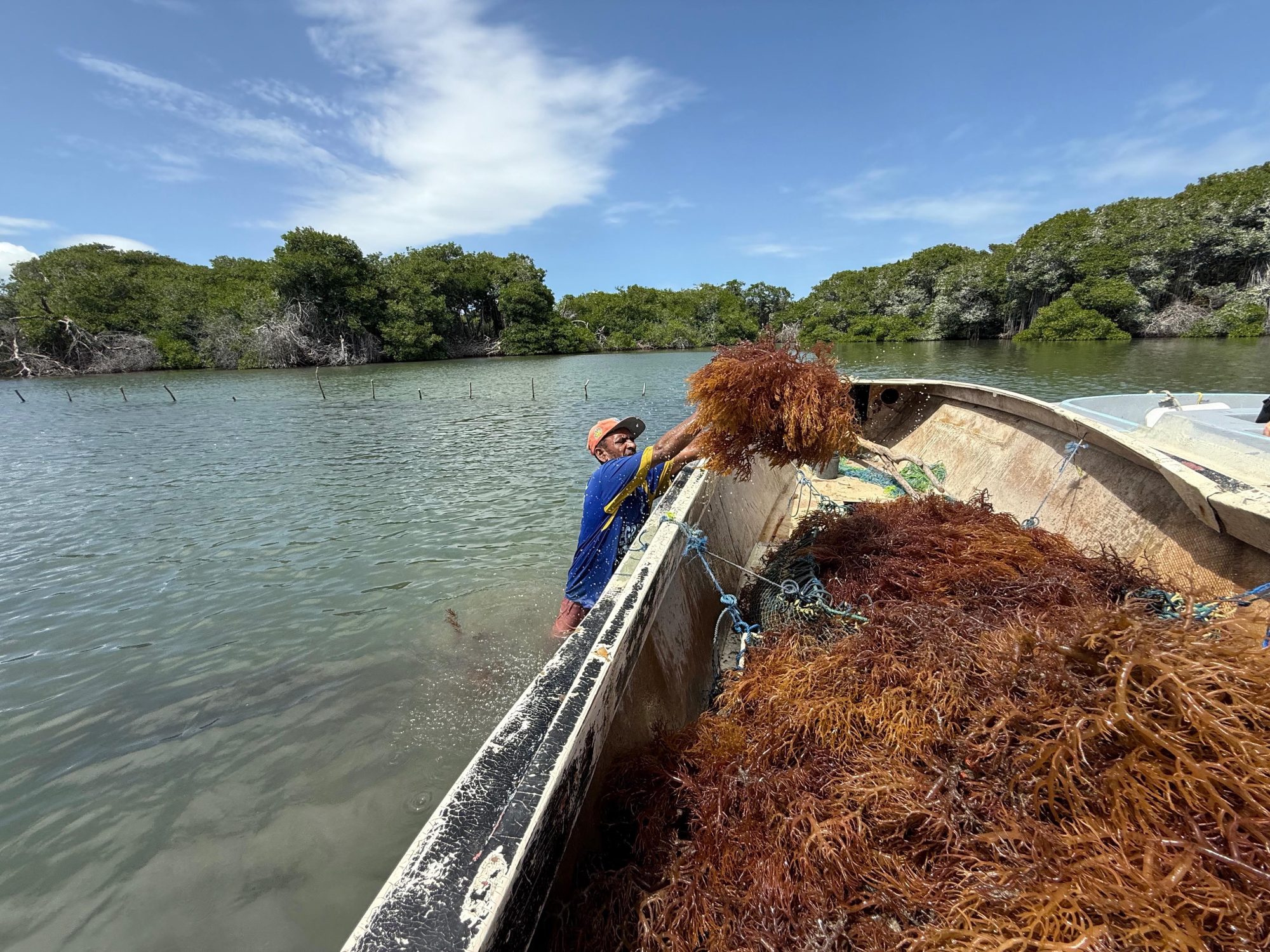
The harvesting process is logistically demanding, with the work being conducted from boats, floating raft systems which double as work platforms, or accessed on foot at low tide. The seaweed is in most cases manually cut from the lines and immediately placed into floating baskets or large floating bags positioned alongside the workers to keep the biomass in the water and prevent deterioration.
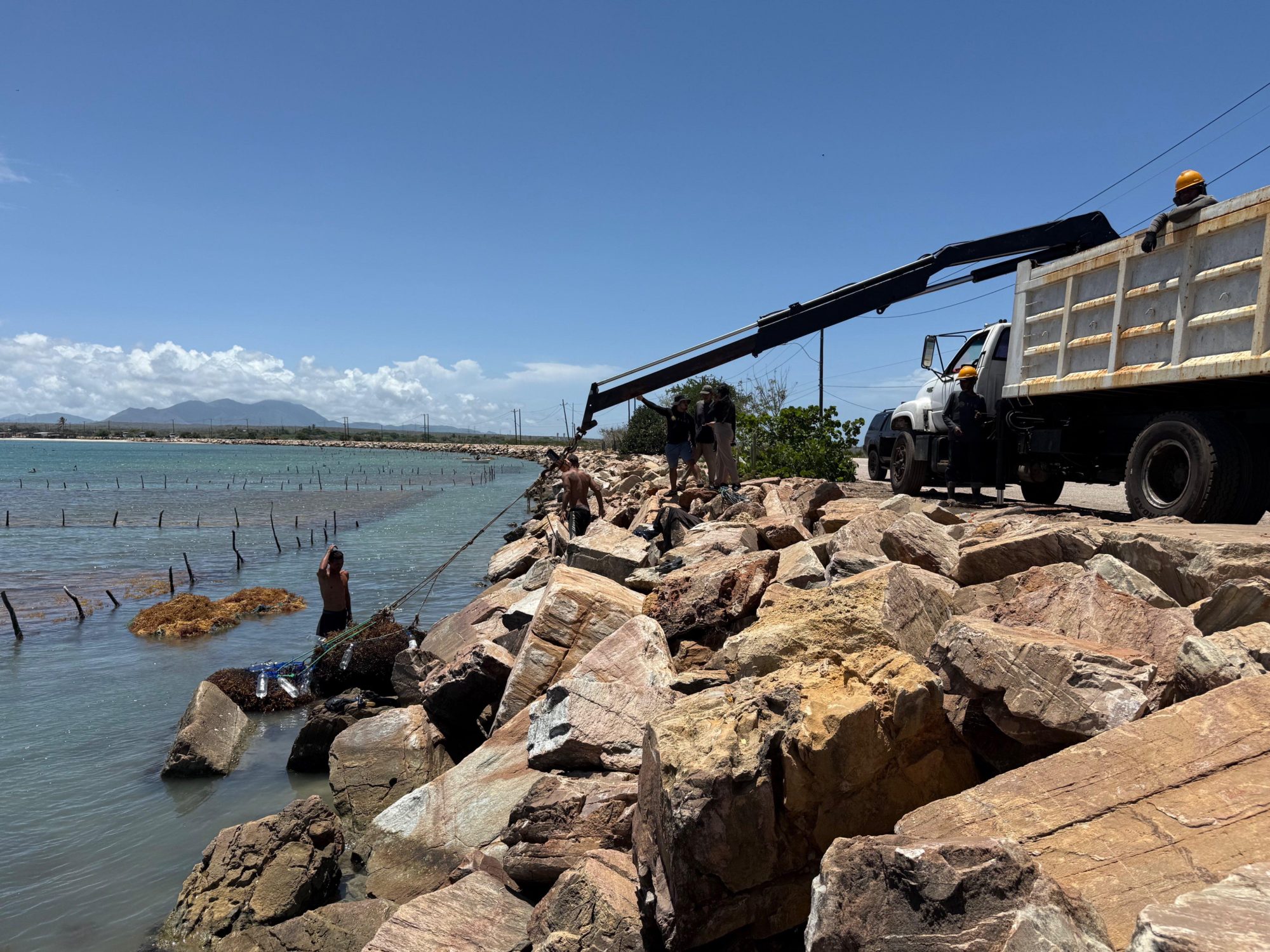
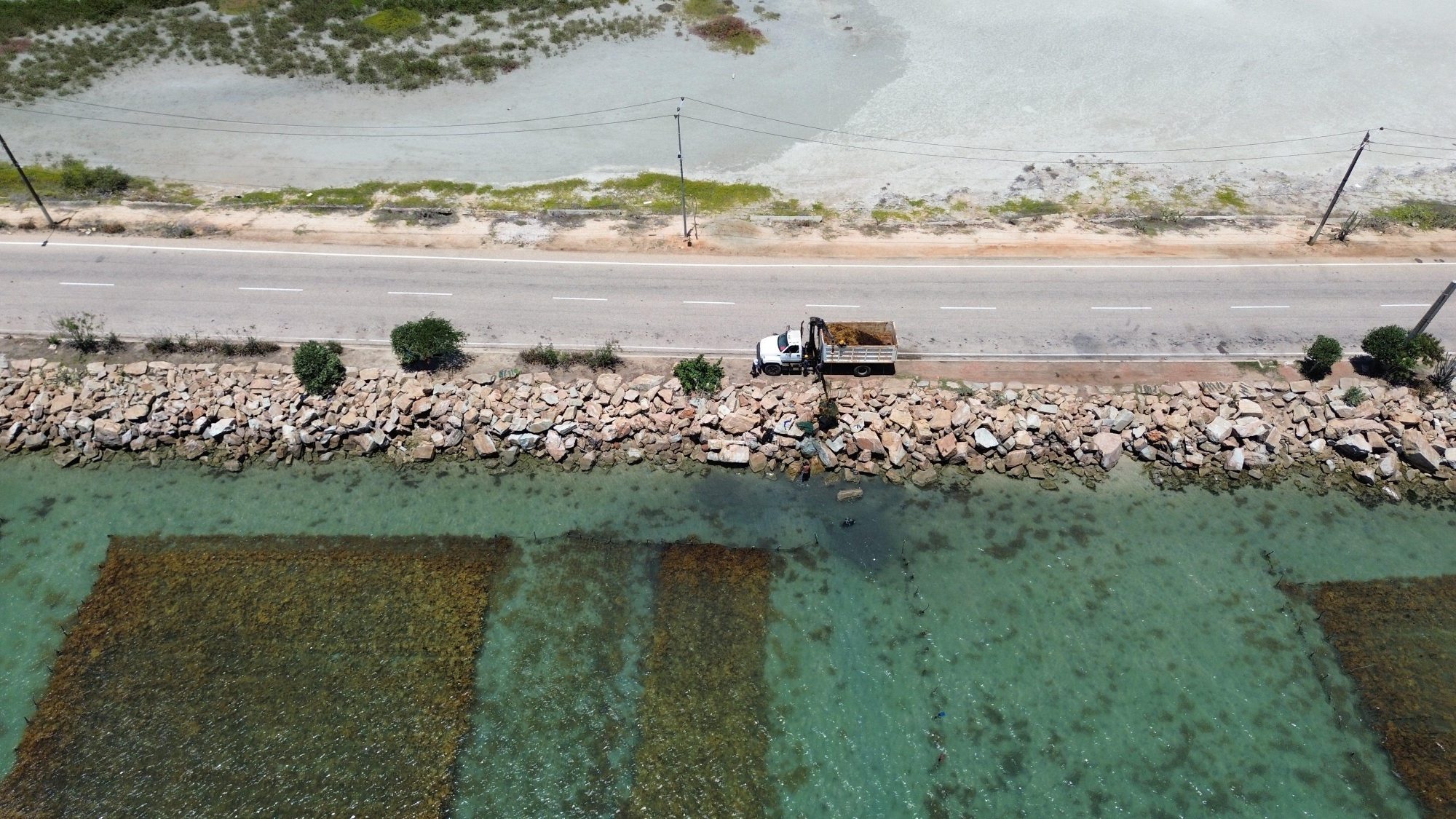
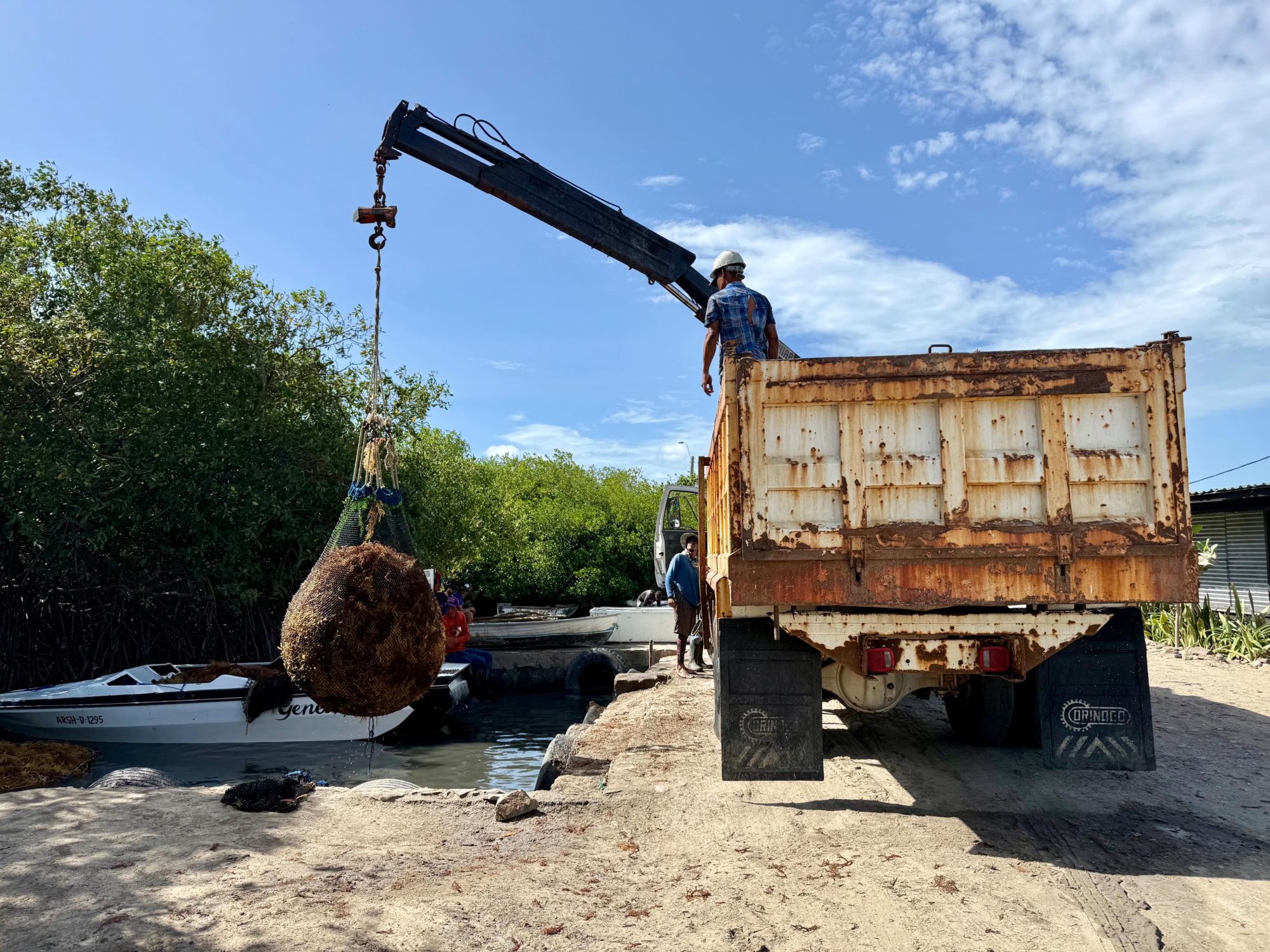
Once collected, transportation to shore varies according to scale. In Venezuela, independent farmers may use simple non-motorised canoes or paddled boats. While the farming enterprises provide farmers with larger, powered vessels. At TIDE, the largest producer in South America, the wet biomass is moved by crane and weighed, using a tractor with a built-in scale.
For larger operations in Santa Catarina, the harvest is transferred from these bags onto large, flat-bottomed barges capable of carrying several tons. The final leg to distant processing plants, which can be up to 400 km away in Santa Catarina, is done by refrigerated trucks to preserve the fresh seaweed. The most complex logistics involve transporting live seedstock from Rio de Janeiro to Santa Catarina in specialised containers over a 20-hour drive, requiring careful moisture control to ensure survival.