Seaweed
  • Species production
  • Regional production
  • About
  • Reports
  • en
  • es
  • pt
  • Species Production Overview
  • Eucheumatoids
  • Saccharina
  • Undaria
  • Pyropia
  • Gracilaria
  • Macrocystis
  • Global Production Overview
  • East Asia
  • South East Asia
  • Central America & Caribbean
  • South America
  • Species production
    • Species Production Overview
    • Eucheumatoids
      • Production Overview
      • Site selection
      • Farm design
      • Seeding
      • Grow out
      • Harvest
      • Post harvest
      • Sales
      • The farmer
      • Future of farm
    • Saccharina
      • Production Overview
      • Site selection
      • Farm design
      • Seeding
      • Grow out
      • Harvest
      • Post harvest
      • Sales
      • The farmer
      • Future of farm
    • Undaria
      • Production Overview
      • Site selection
      • Farm design
      • Seeding
      • Grow out
      • Harvest
      • Post harvest
      • Sales
      • The farmer
      • Future of farm
    • Pyropia
      • Production Overview
      • Site selection
      • Farm design
      • Seeding
      • Grow out
      • Harvest
      • Post harvest
      • Sales
      • The farmer
      • Future of farm
    • Gracilaria
      • Production Overview
      • Site selection
      • Farm design
      • Seeding
      • Grow out
      • Harvest
      • Post harvest
      • Sales
      • The farmer
      • Future of farm
    • Macrocystis
      • Production Overview
  • Regional production
    • Global Production Overview
    • East Asia
    • South East Asia
    • Central America & Caribbean
    • South America
  • About
  • Reports
Seaweed
  • en
  • es
  • pt
  • Production Overview
  • Site selection
  • Farm design
  • Seeding
  • Grow out
  • Harvest
  • Post harvest
  • Sales
  • The farmer
  • Future of farm

Undaria Farm Design

Table of contents
  • East Asia
    1. Overview

    2. Farm designs

    3. Anchors and floats

East Asia

Overview

The speed and direction of the ocean current at the farm site tends to determine the type of farm structure (rig) and direction it faces.

Farm designs
Horizontal raft type cultivation
Vertical long line method
Horizontal long line method

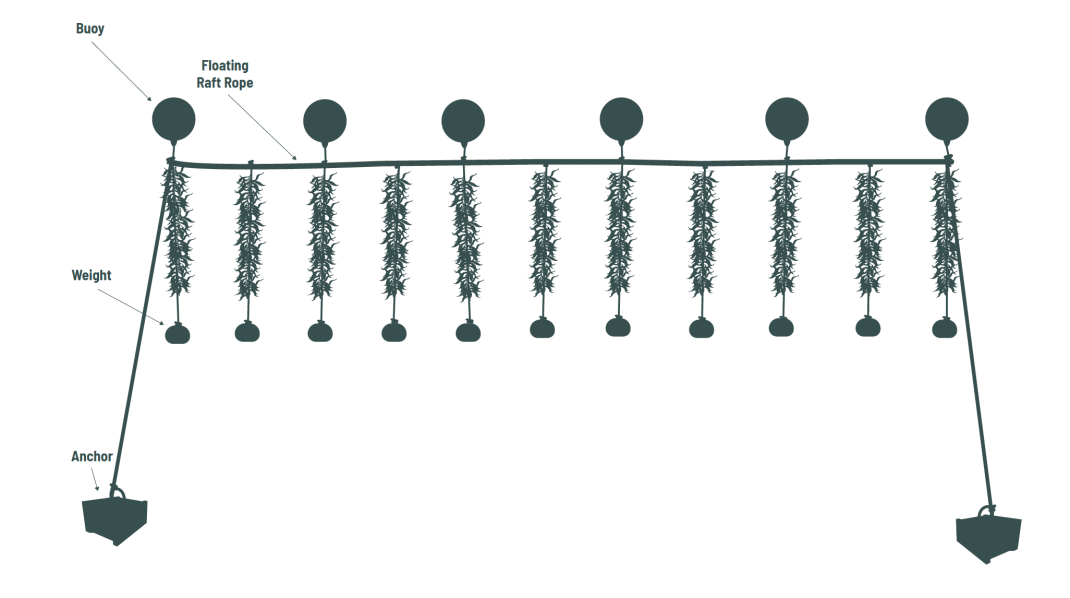
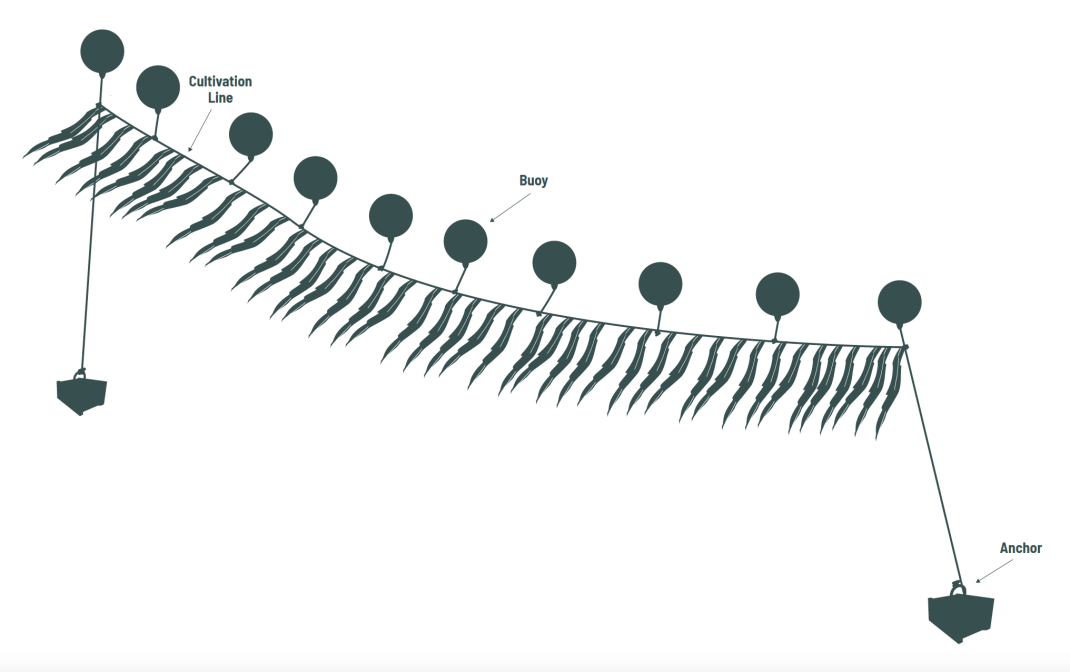
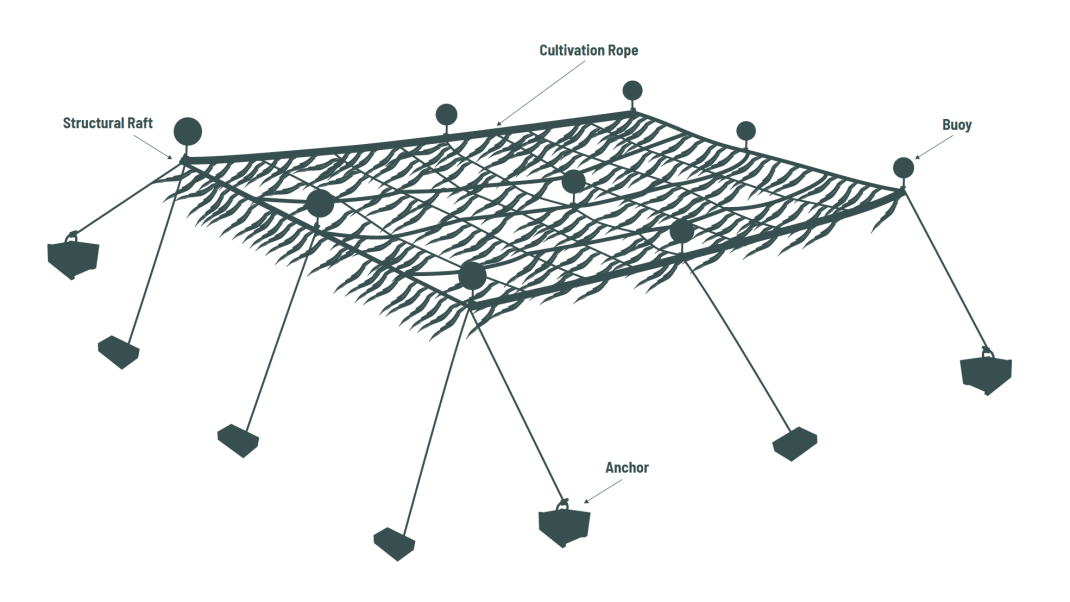
The farm design differs between countries and regions and can generally be categorised in floating raft type or single or double long line systems.


Within these, cultivation lines are either set up in a vertical or horizontal rope method. The benefits of using the horizontal rope method are that the seaweed can receive light evenly and can utilise space efficiently, resulting in higher yields. 


In the vertical rope method, a seeded rope will hang vertically from the floating rope. The advantage of this method is the utilisation of vertical space. The disadvantages are that it is more work intensive and that the seaweed at the bottom receives hardly any light. Depending on the turbidity of a site the main ropes are installed up to 2 m beneath the water surface and will be adjusted during the grow out cycle, depending on the intensity of sunlight.
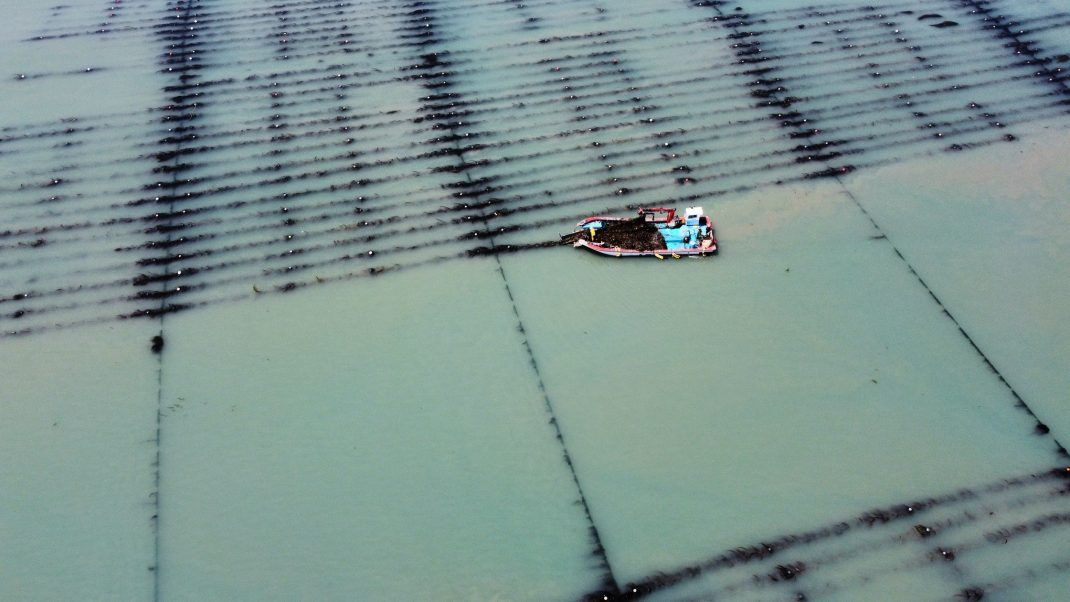
Horizontal raft type setup of an Undaria farm near Jindo, South Korea.

In general the raft style methods, compared to the long lines, can achieve highest densities but are not very suitable for highly exposed locations. 

Anchors and floats

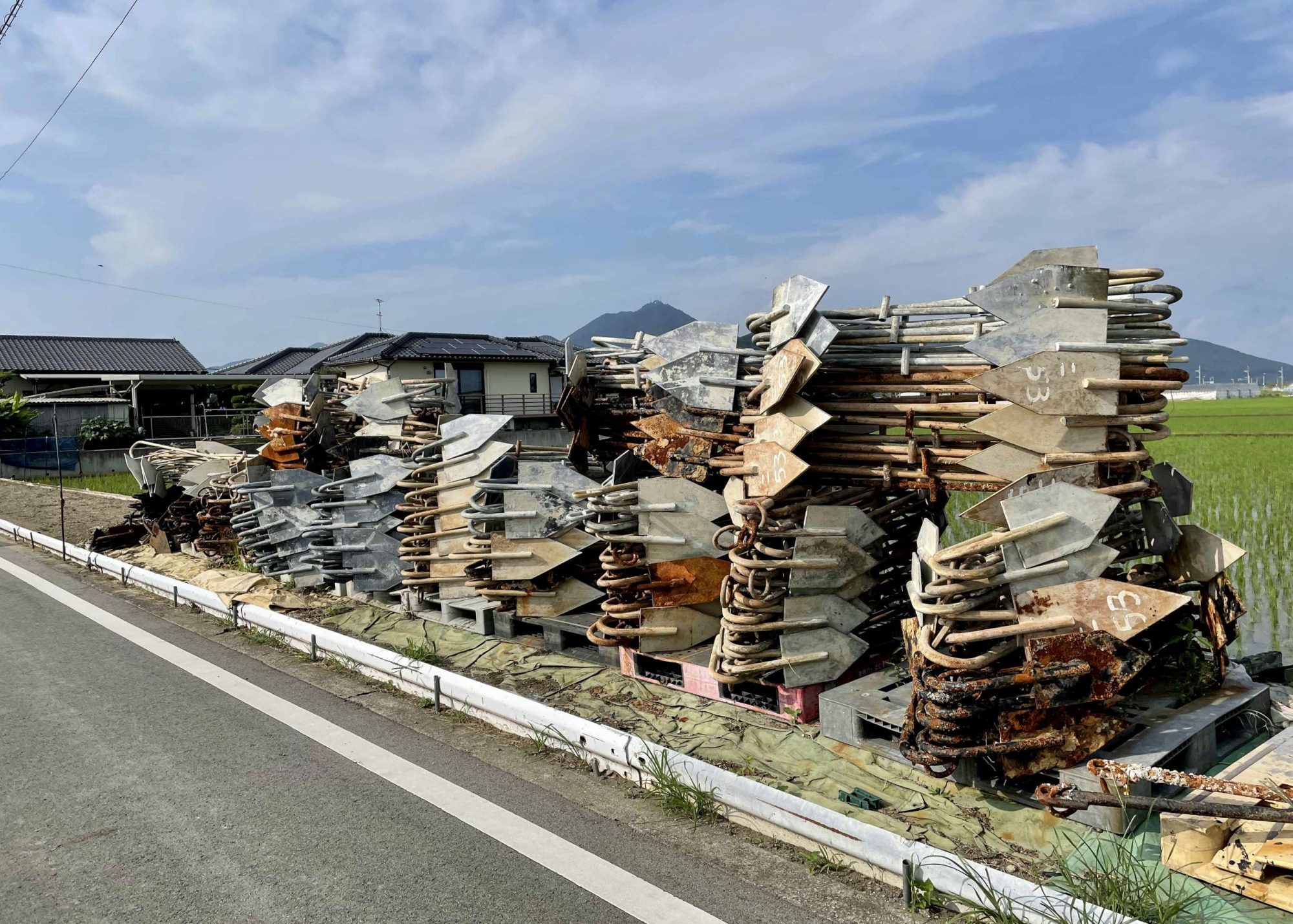
Undaria farms in Japan use the horizontal longline method, often with double long lines per anchor. In Sanriku, a line length of 100 – 150 metres is most common. Since the substrate beneath the farms varies substantially from farm site to farm site, different types of anchors are used. 


In South Korea, horizontal raft type method is more common, however single lone line systems are used in some region like Gijang, where open ocean conditions prevail. The government is trying to promote more environmentally friendly farm equipment. Especially the floats should all be replaced with proper buoys instead of styrofoam.


In Dalian, the main Undaria producing region in China, pretty much all farms use the horizontal raft type method. Each raft consists of 50 culture lines that are 8 m long and installed horizontally with 1.8 m intervals in between. Thus, each raft holds 400 m of culture lines in total. Here, wooden stakes are commonly used as anchors, since the substrate beneath the farms is mainly mud.
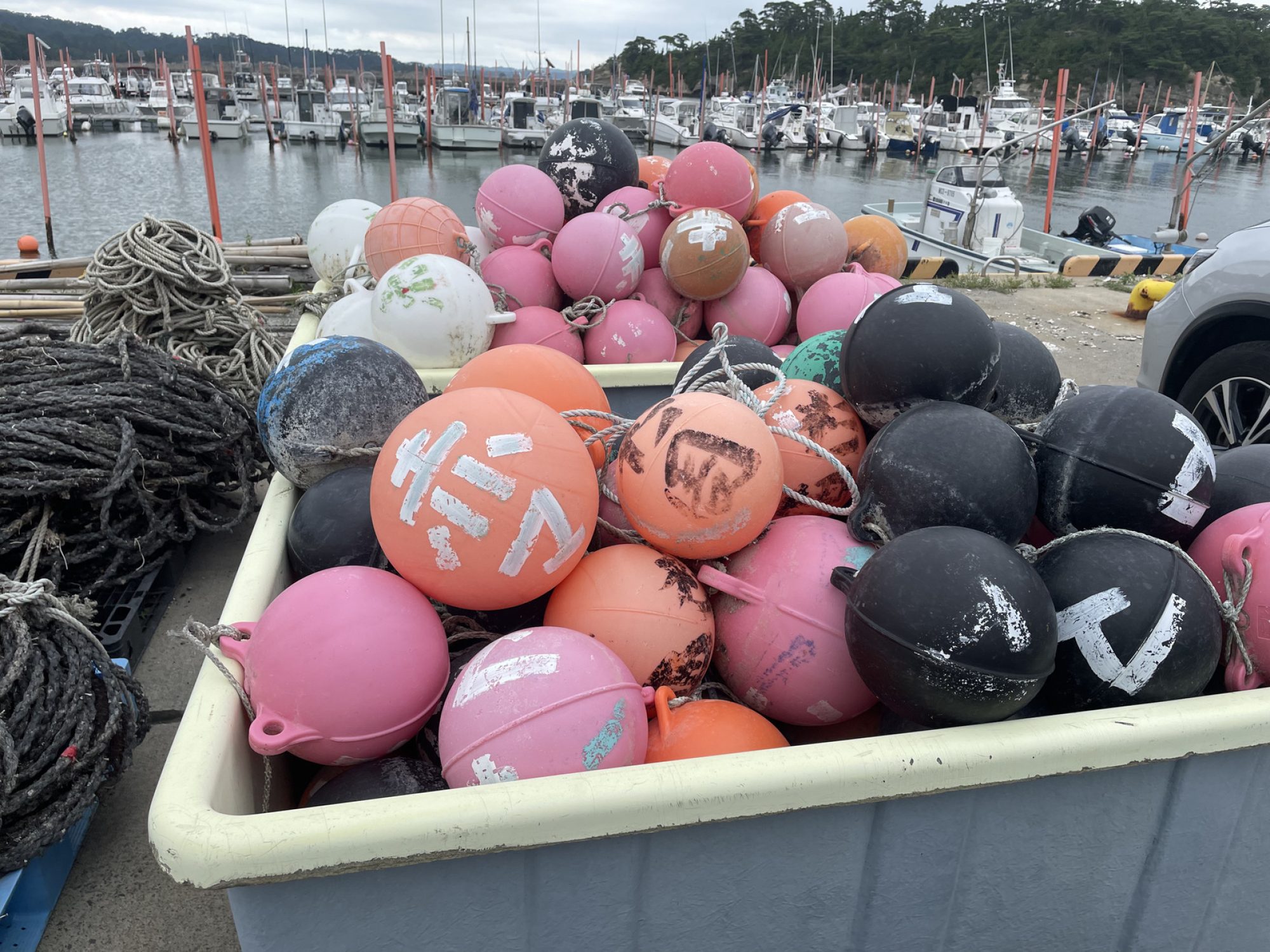
Storage of buoys on land during summer in Japan.
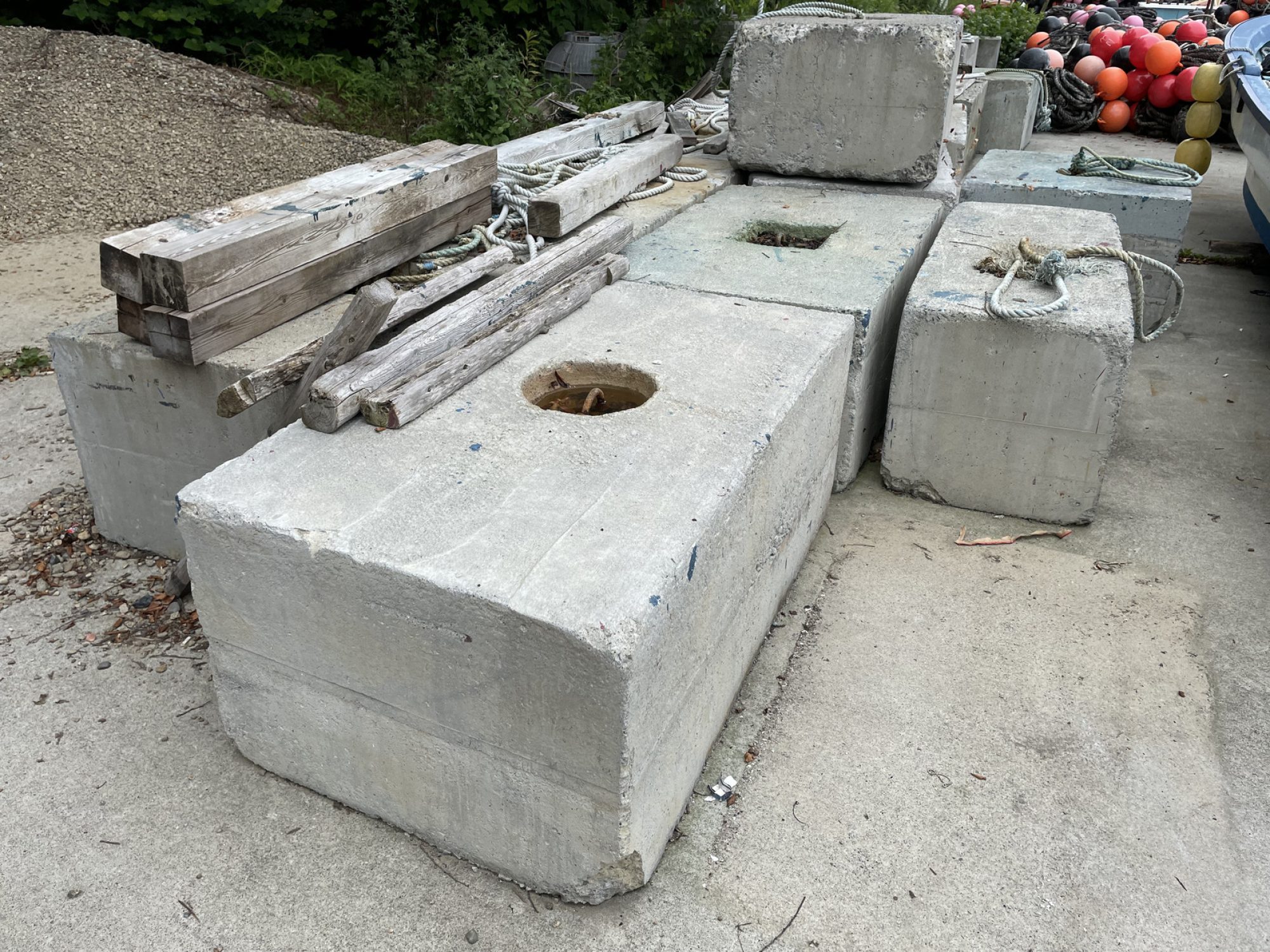
Concrete blocks are commonly used as anchors in Japan and South Korea.
Metal anchors stored during summer on road side in Sanriku, Japan
Previous
Next
Seaweed

Contact us:

info@hatch.blue
www.hatch.blue

Copyright © 2026 Hatch Blue Limited. All rights reserved.

  • Terms and conditions
  • Privacy policy

Hatch Blue is a global impact business focussed on farmed and alternative seafood. Hatch Innovation Services is the consultancy arm of Hatch, advising corporates, investors and governments on innovation and investment projects in the global aquaculture industry.

For our Shrimp Farming Insights visit: www.shrimpfarm.tech.