Eucheumatoids Seeding
South East Asia
Seed production
Eucheumatoid farmers use propagules (seedlings) from their own harvest as seed material or trade them between farms.
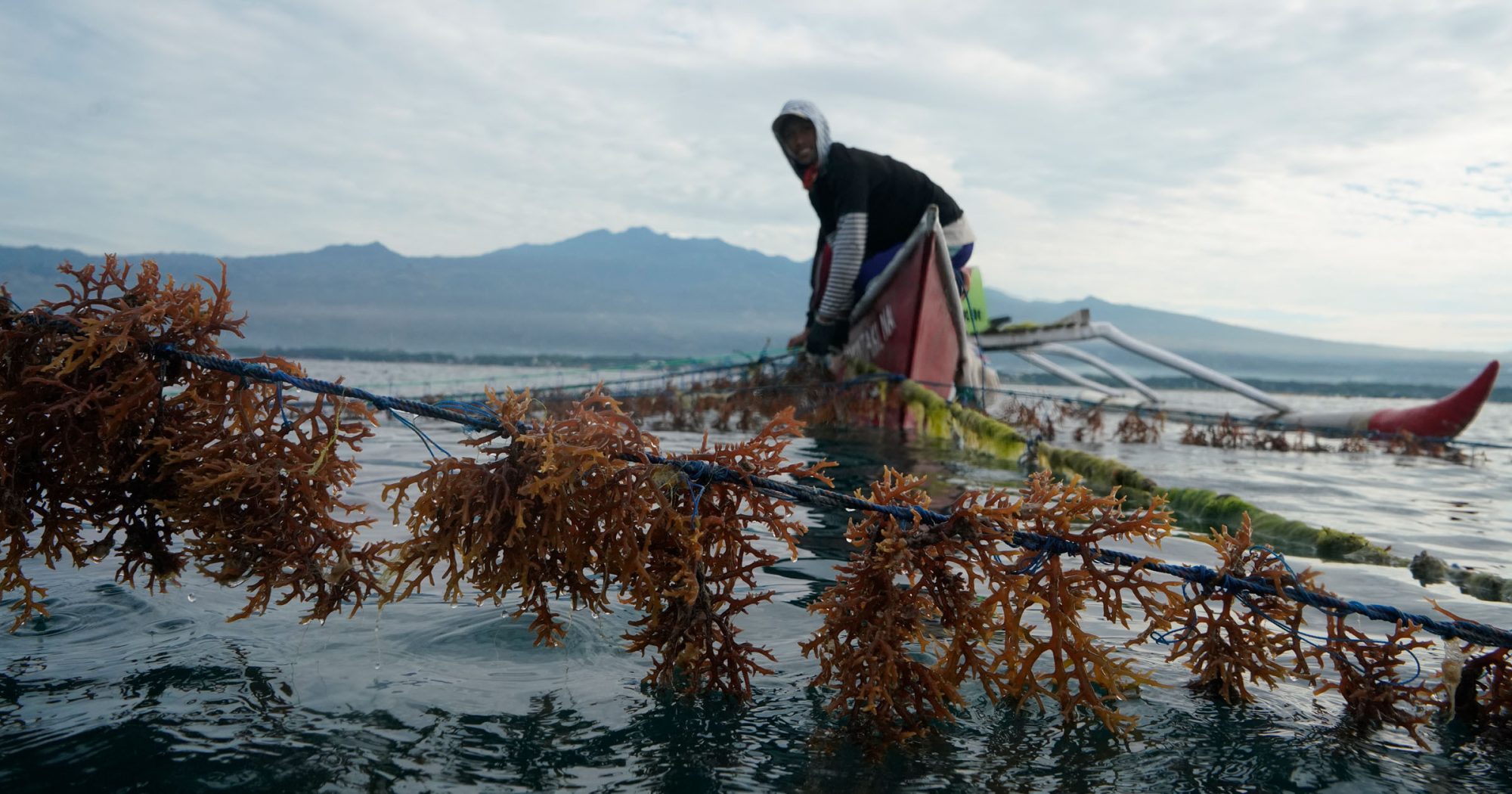
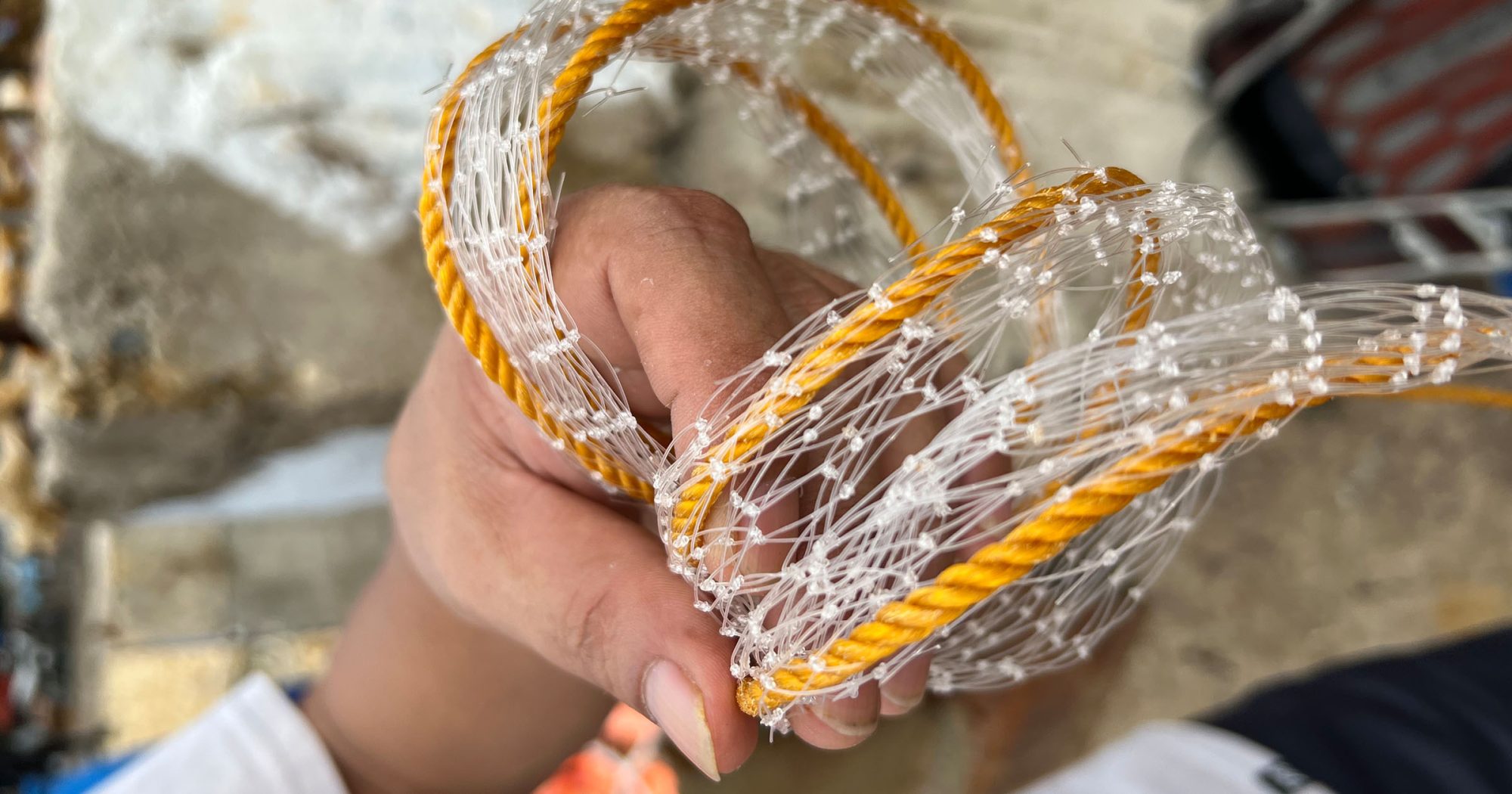
Seed production for Eucheumatoids, compared to most other commercially farmed seaweed species, is fairly simple. Individual plants are vegetatively propagated via cuttings or through micropropagation techniques, resulting in clones. The farmers can simply break off parts of the mature seaweed resulting in smaller plantlets or propagules. These propagules can be directly tied to the cultivation (or culture) line.
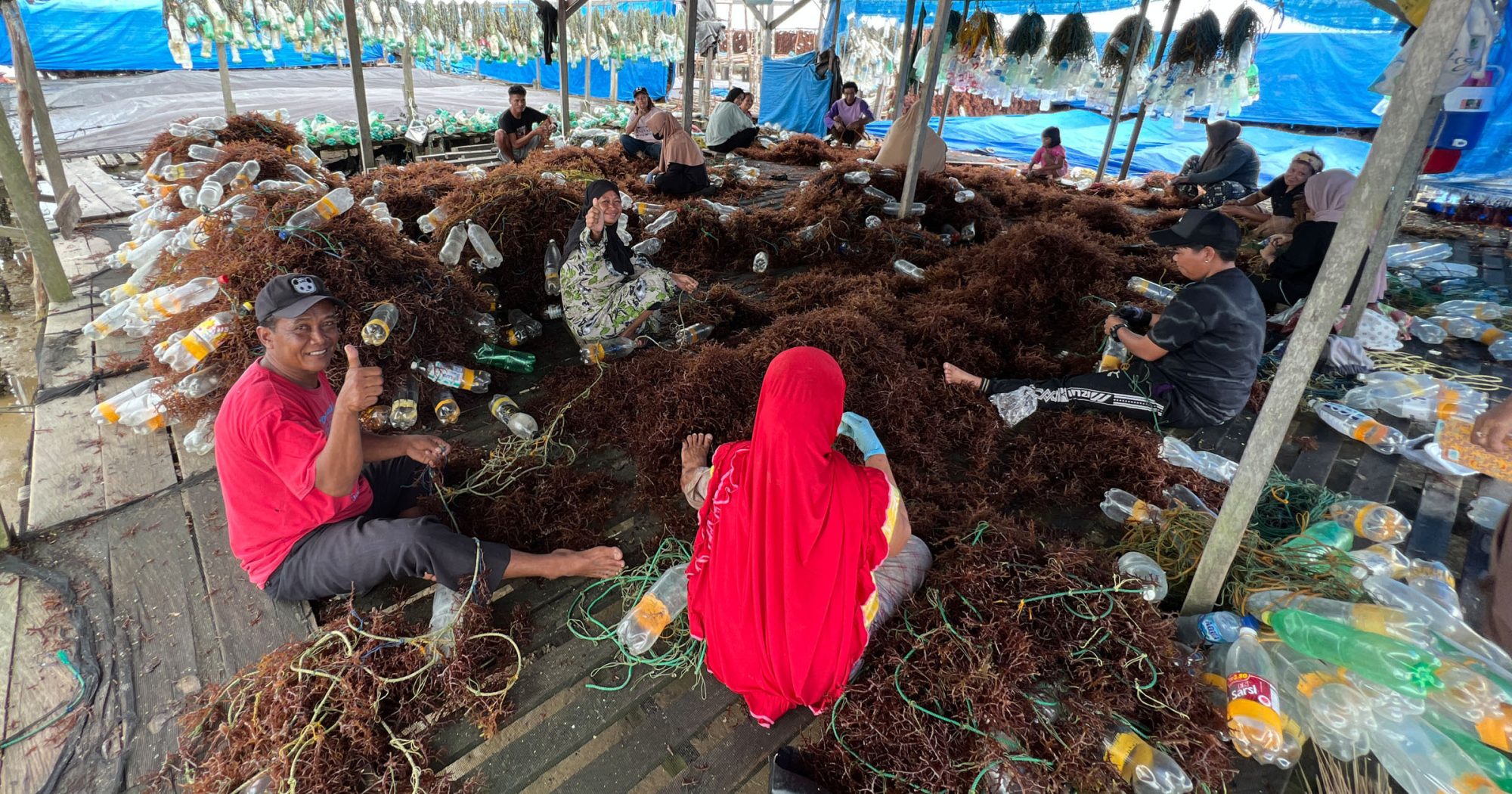
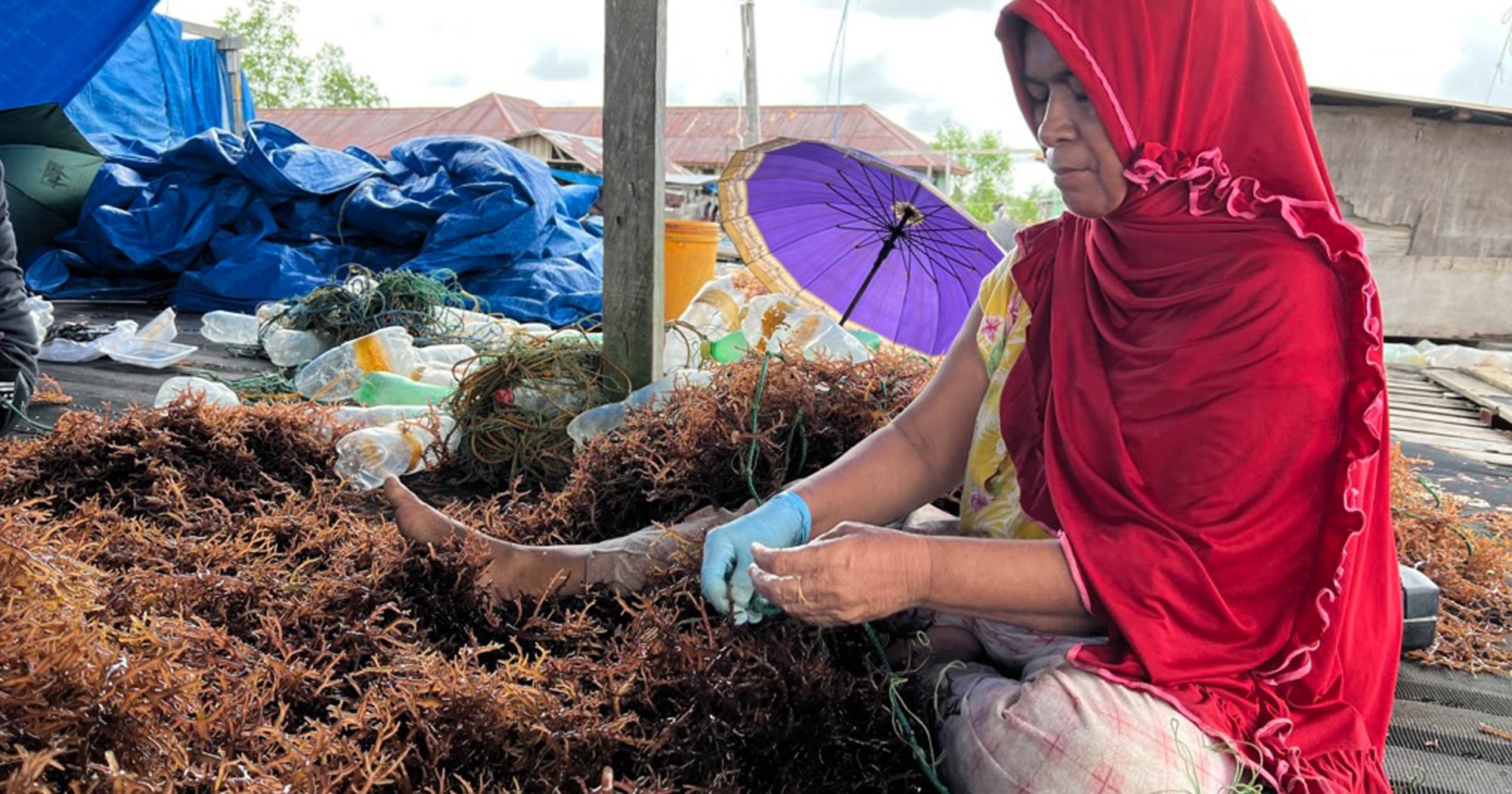
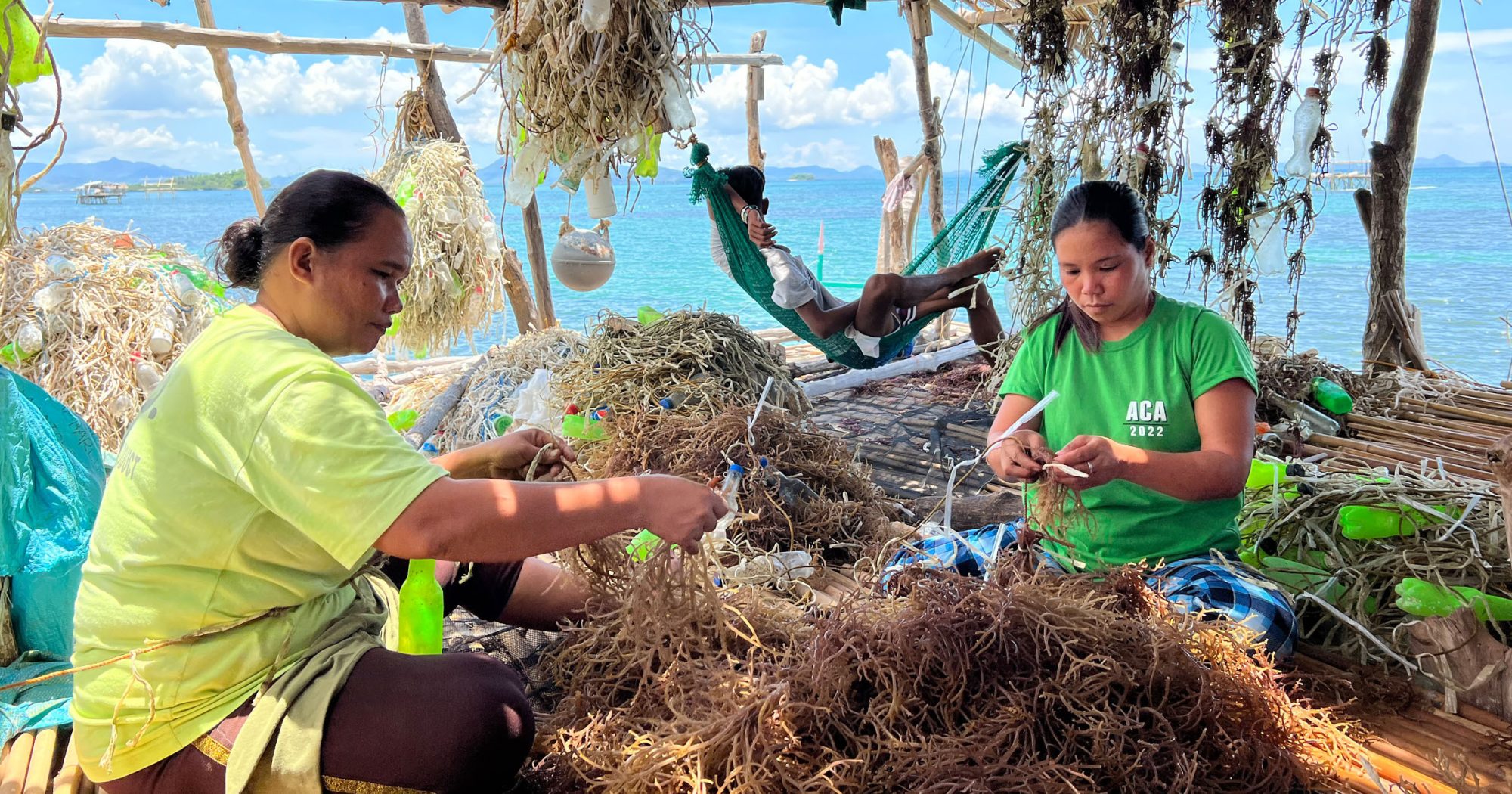
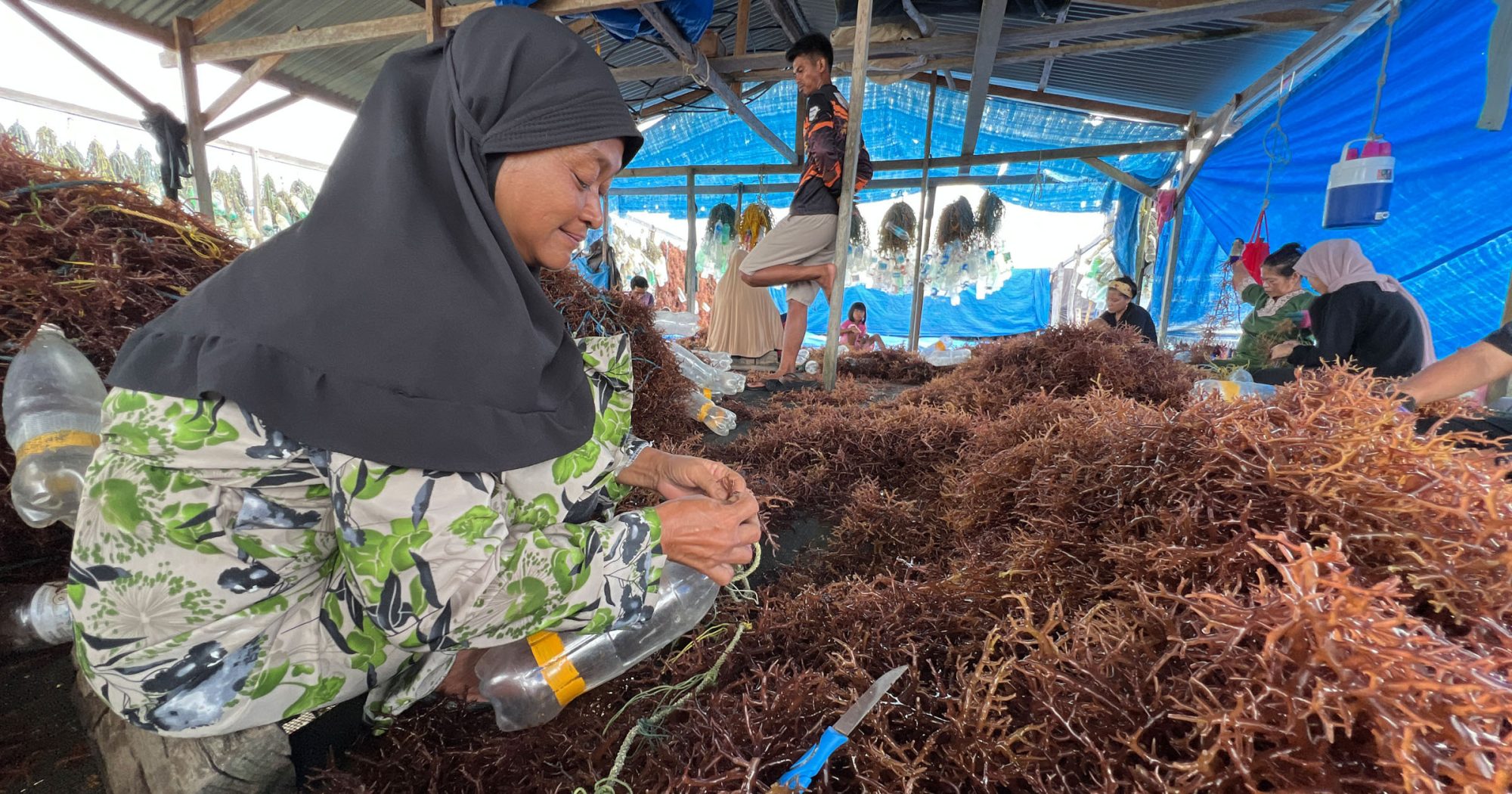
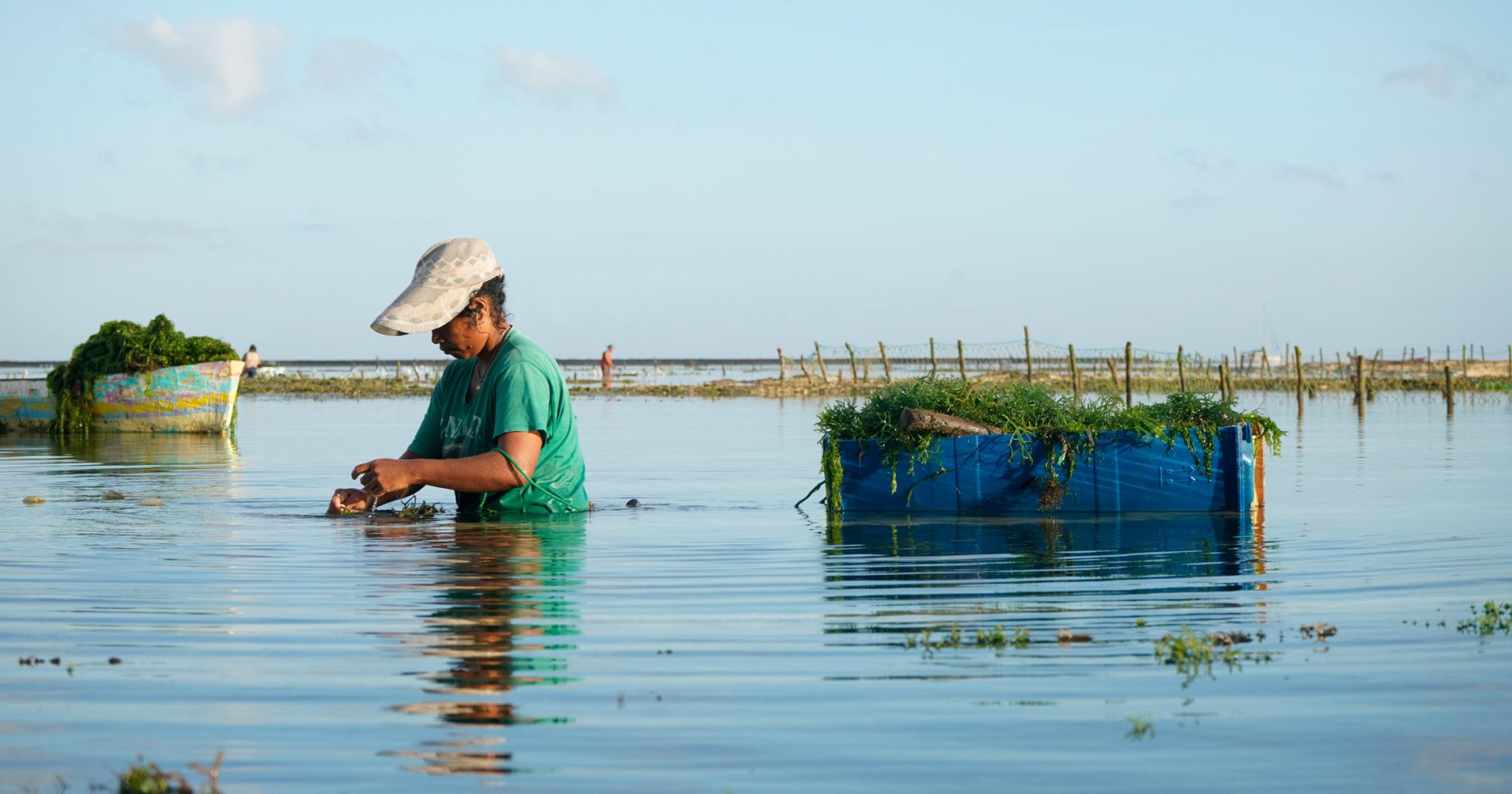
Tying the seedlings to the culture line is either done by family members or paid workers, in most cases from the same community, that are paid per piece or line. It is the most labour intensive process in Eucheumatoid farming. Anyone can do the tying, but across all regions, women do the majority of tying.
The tying activity usually takes place on land or on a platform, however the farmers need to make sure that the seed material does not stay out of the water for too long.
If seedlings are purchased externally, the price typically correlates with the current market price of seaweed and is traded fresh between farms.
Deployment
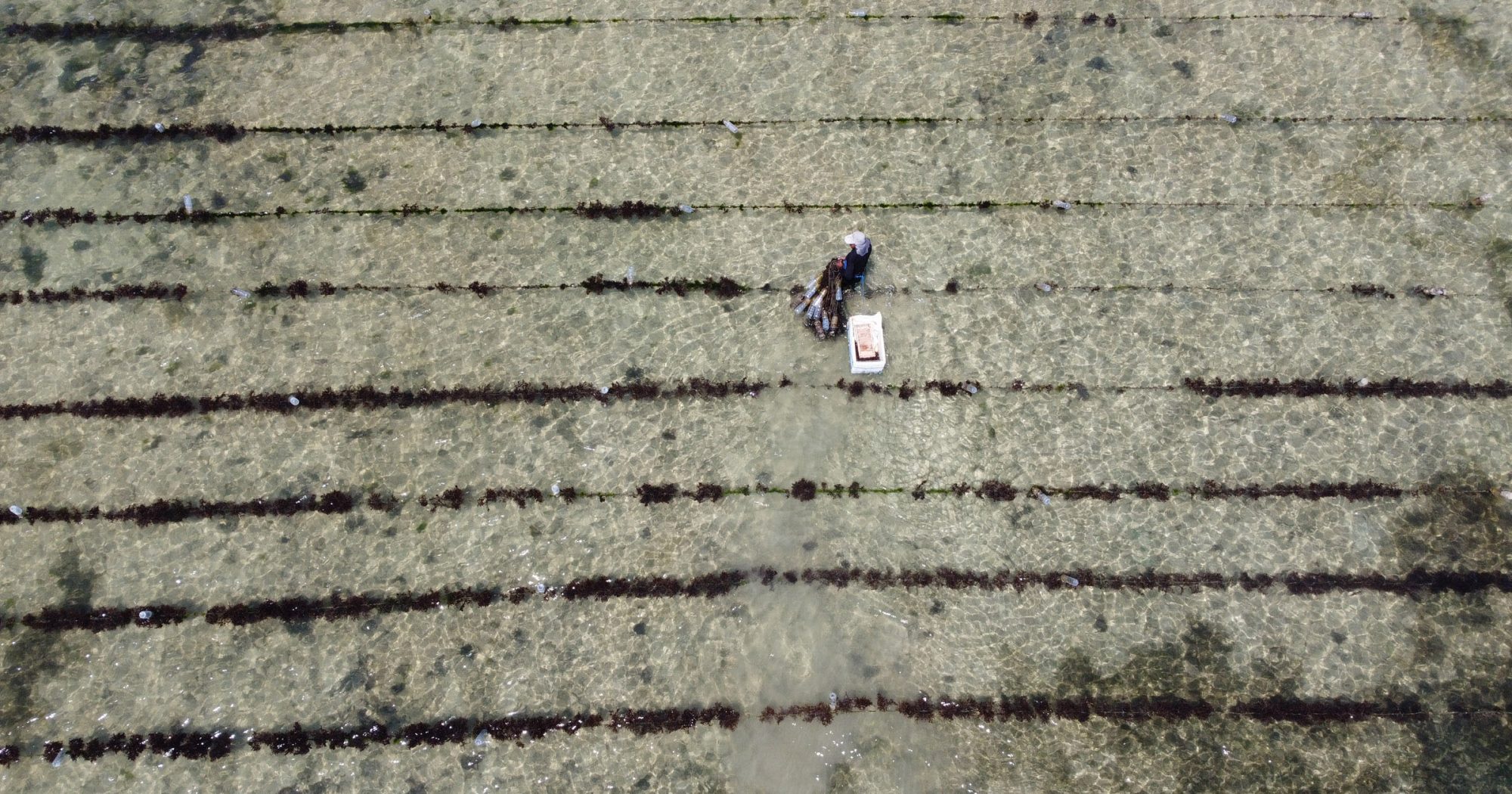
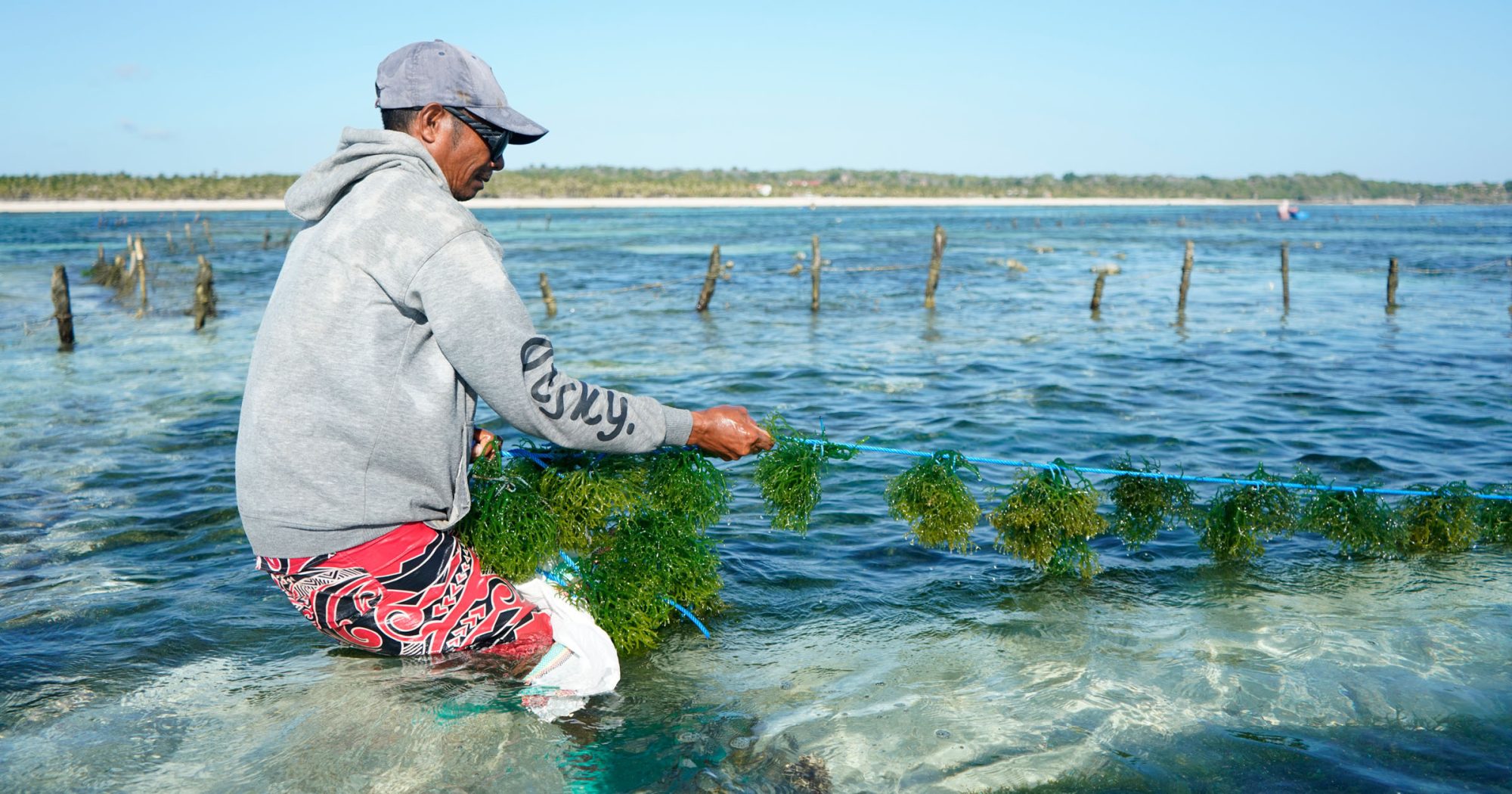
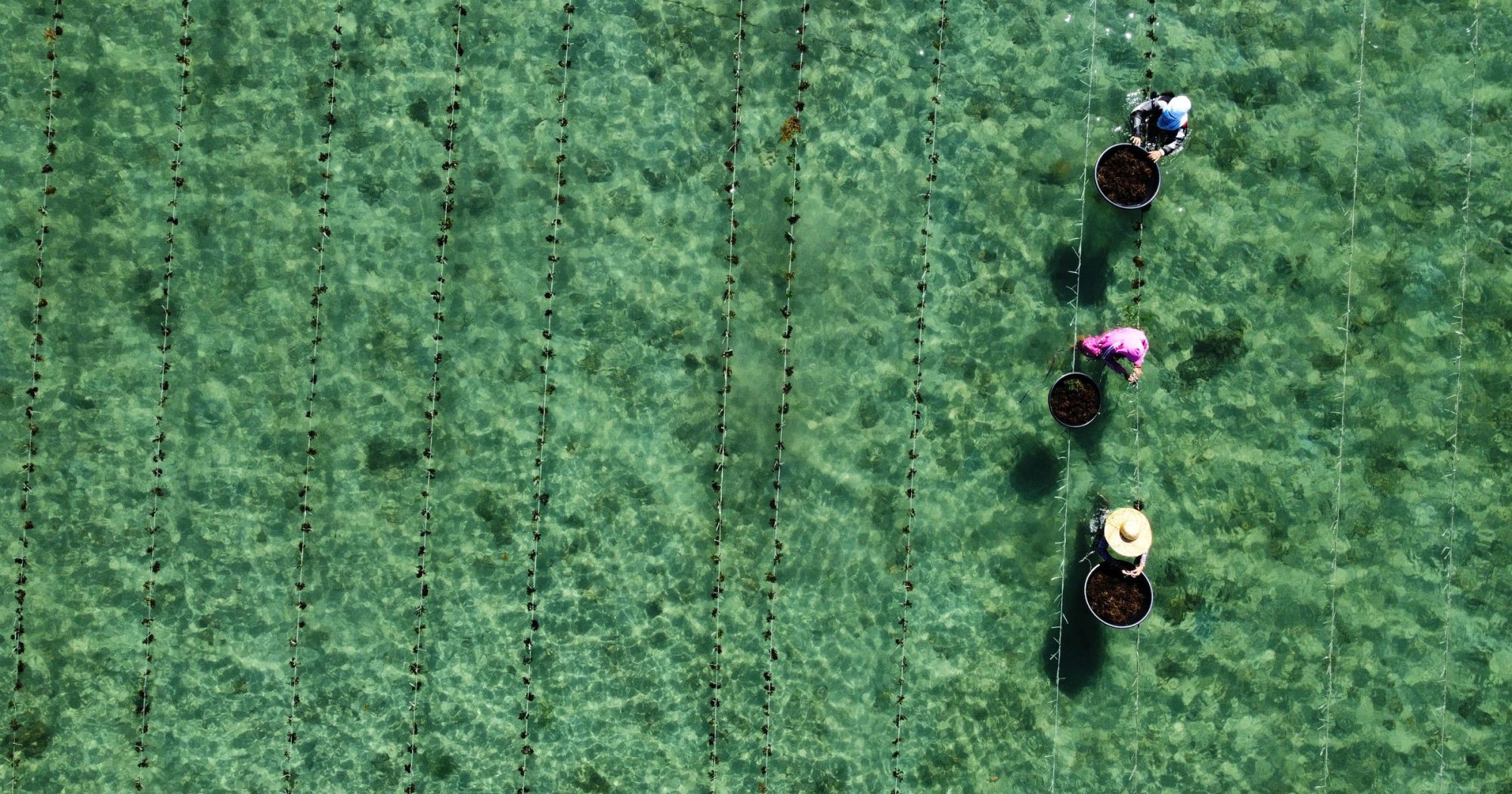
In a second step the line with tied seedlings is attached to the farm infrastructure at sea. Alternatively the tying can also take place directly on the farm site, either by boat or on foot, if the water depths at low tide allows for it.
Seed quality
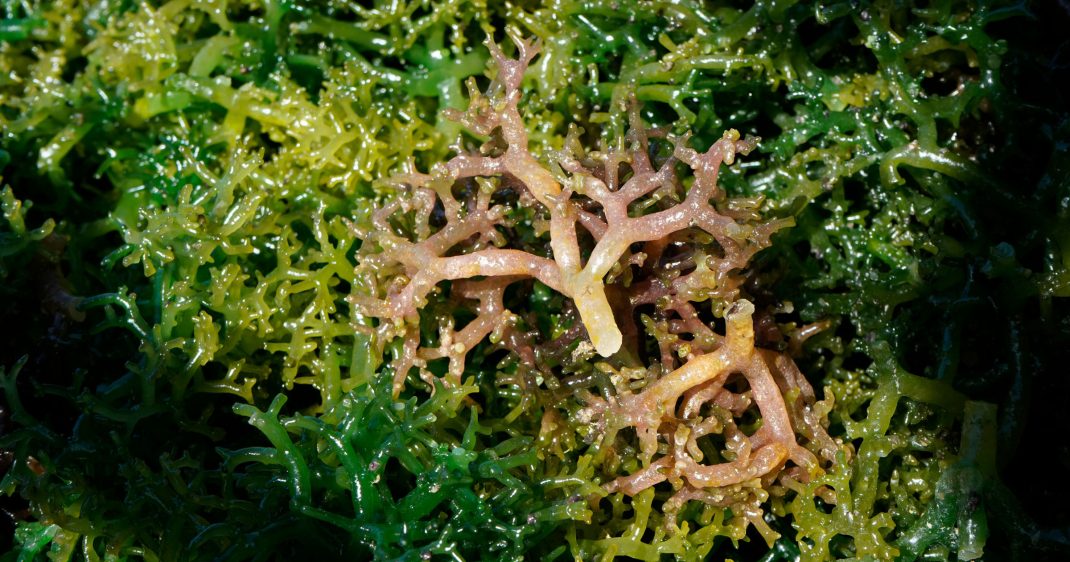
Only propagules that are young, vigorous and visually healthy, with no signs of epiphytes, spots, biofilm, bleaching and wounds from grazing, should be used as seed material. However, these are not always available.
In case of disease, poor quality or too little harvest, farmers also buy seed material from other farmers in the village or receive new stocks from local collectors. In some locations we witnessed a lack of seedling material altogether, especially in some locations in the Philippines, where strong typhoons have wiped out the entire seaweed production; or in the farm locations around Semporna, Malaysia where strong impacts from grazers diminish seaweed stocks.
Not having (quality) seed available inhibits farming activities at scale and is a major challenge across the Coral Triangle region.
Caribbean
Seed production
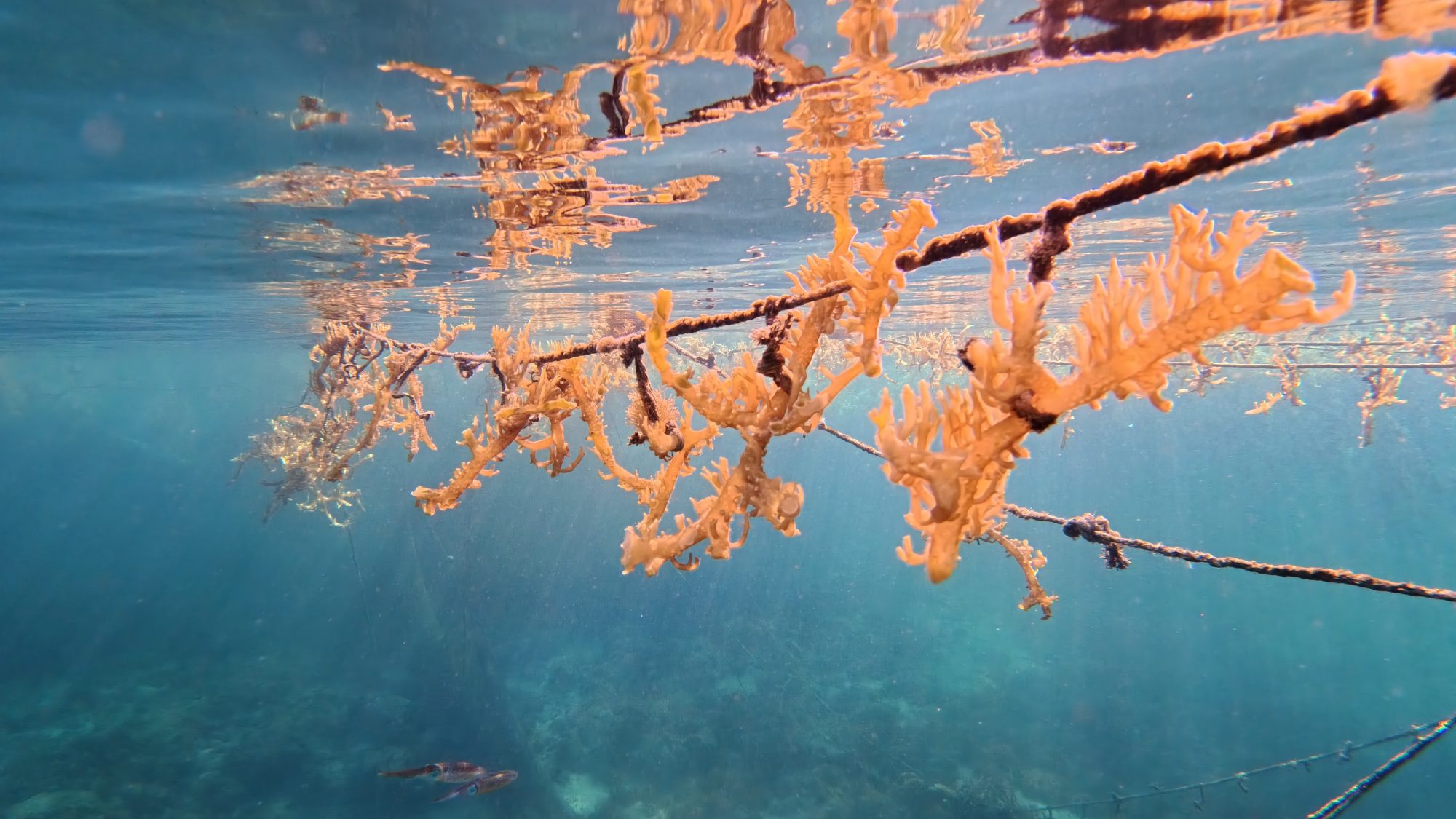
For seeding, Caribbean farmers typically use vegetative propagules from their own harvests. Only when the stock on their own farm are very low or in hurricanes, they obtain seedlings from nearby farms, often within the same community or from other islands.
Deployment
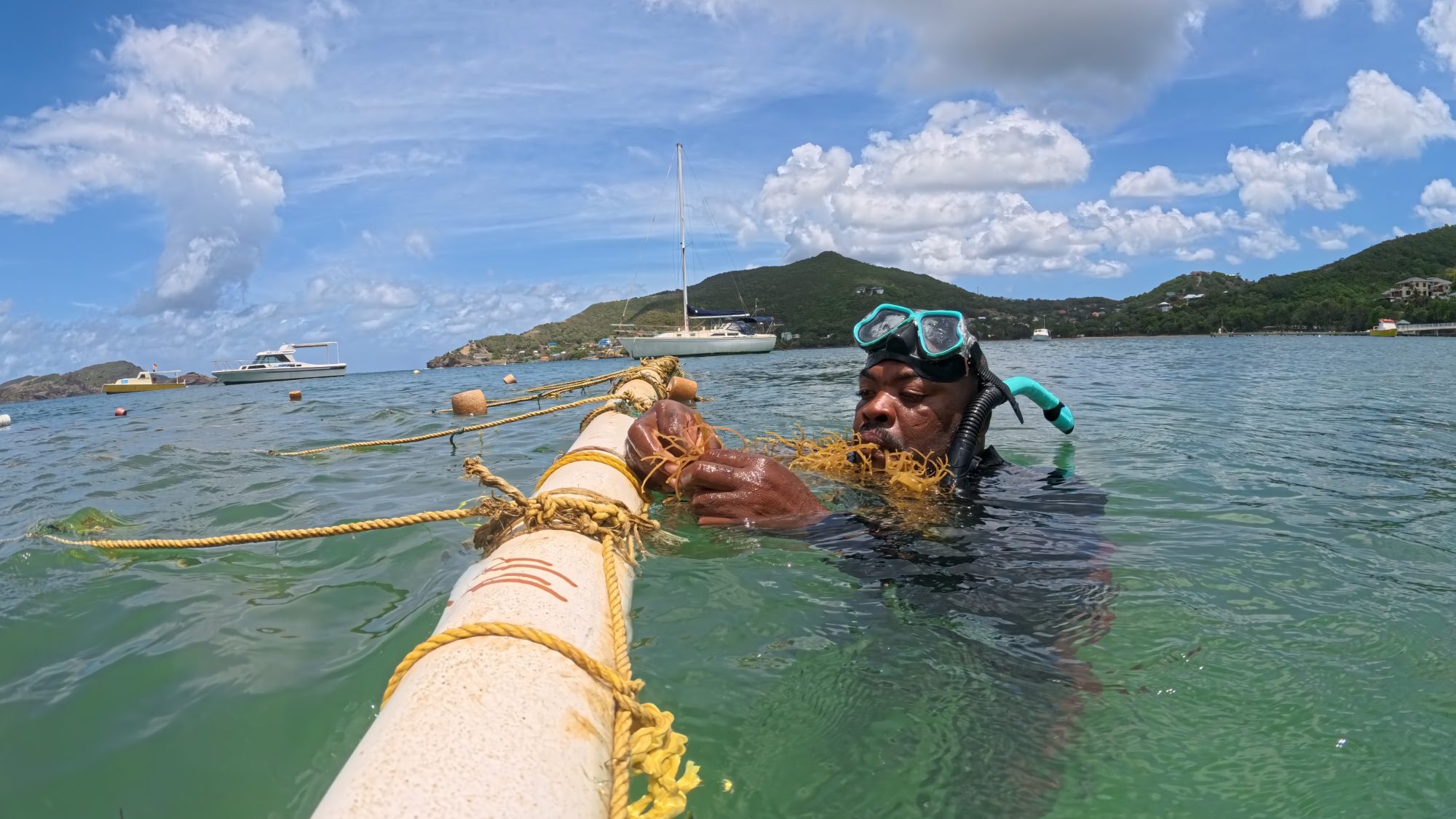
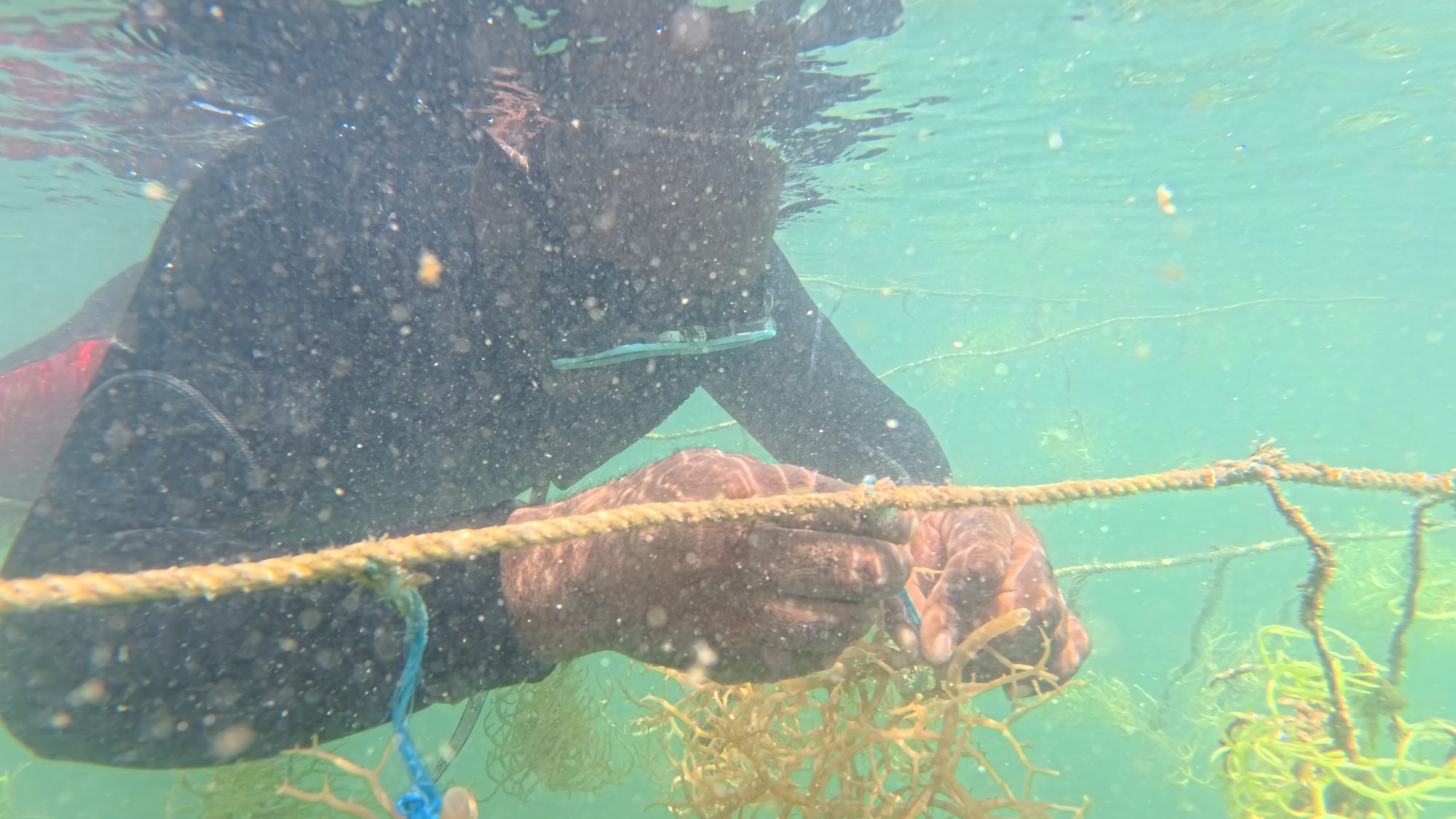
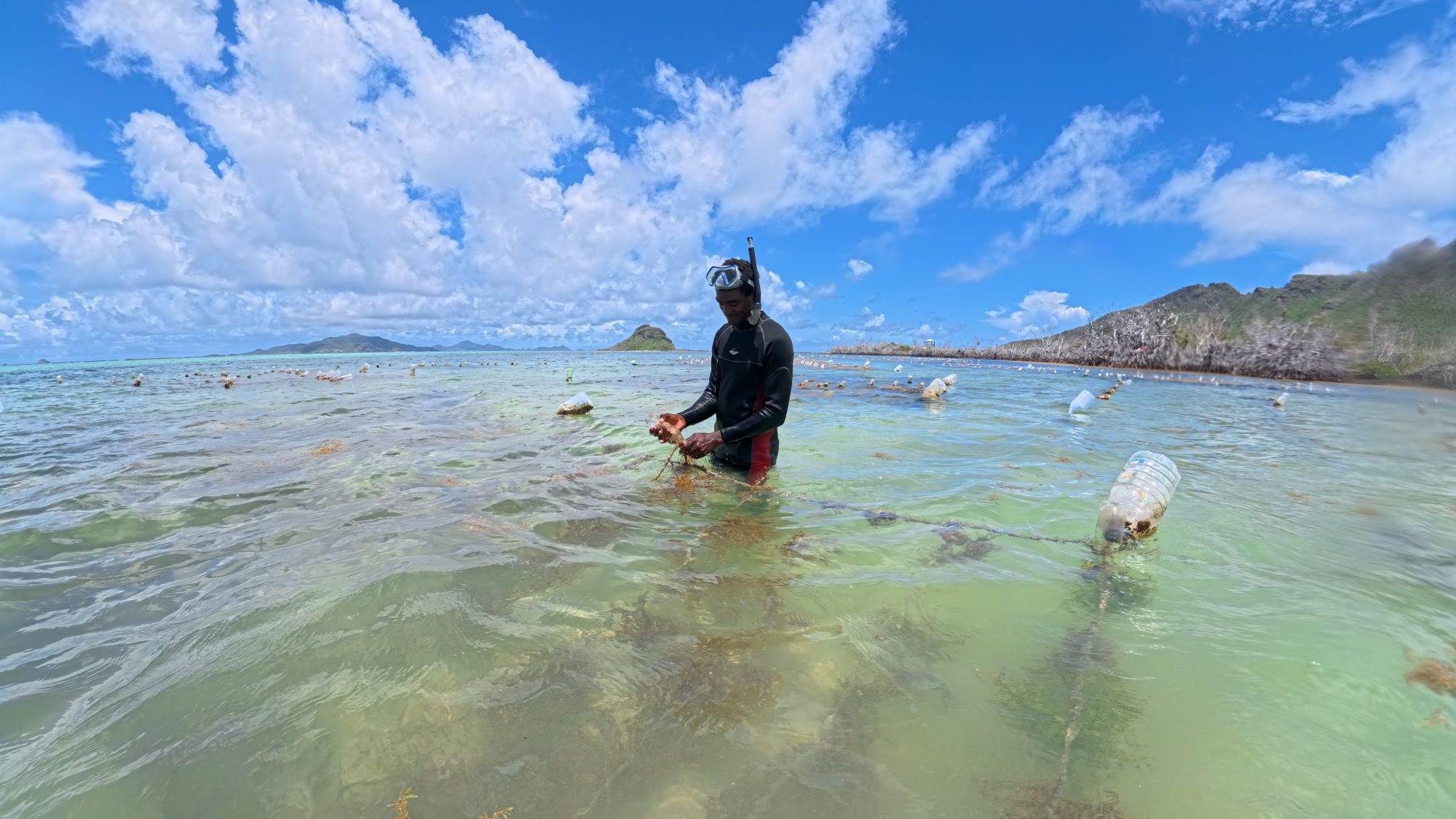
Tying seedlings to culture lines is labor-intensive. This work is often carried out by family members or local workers, with women frequently leading the tying. On most Caribbean islands it’s done at sea.
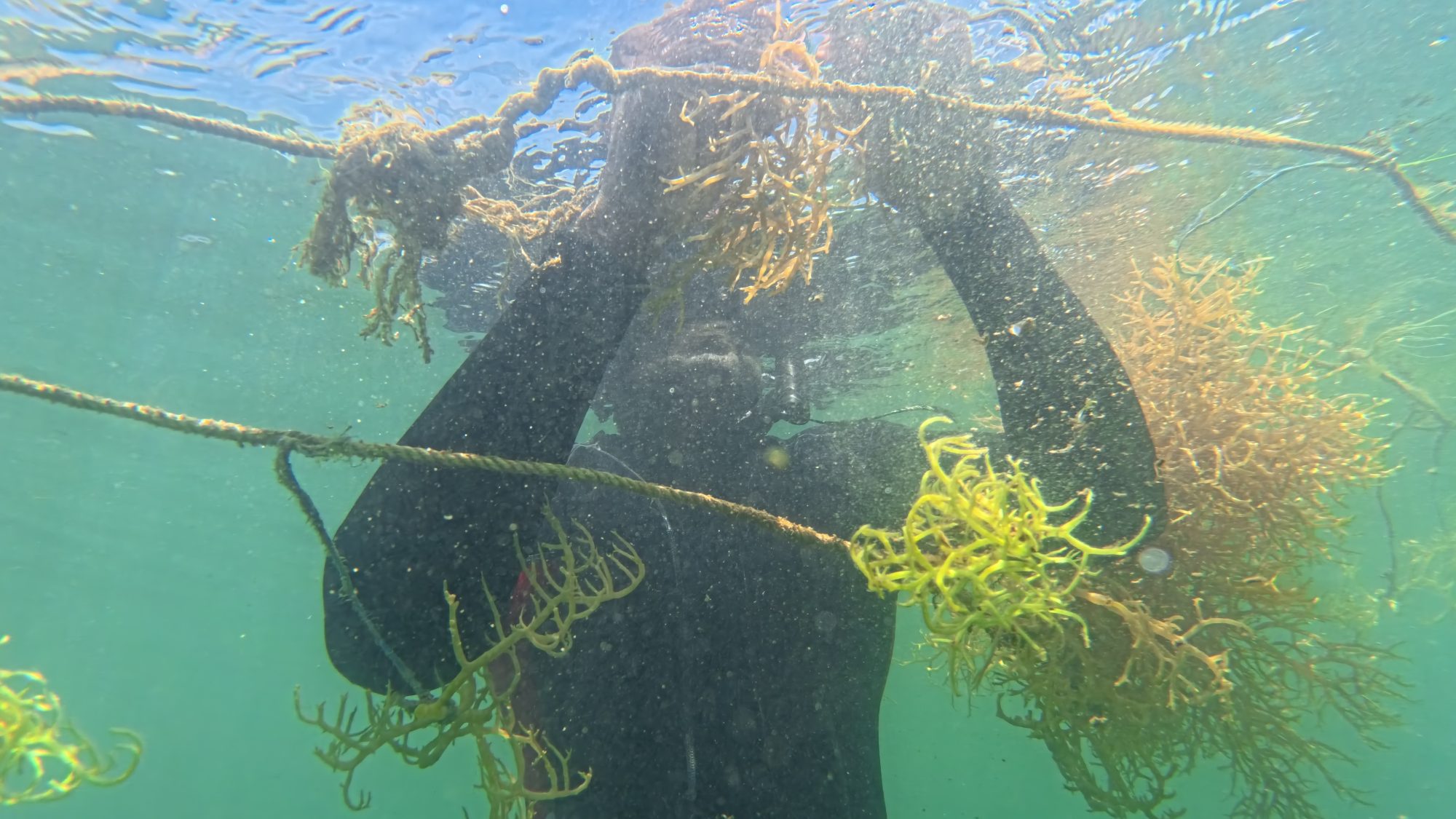
Seed quality
Low genetic diversity is a significant concern for Caribbean Eucheumatoid farming. Because production relies on vegetative propagation, farmers repeatedly clone existing stocks or exchange cuttings, steadily narrowing the genetic pool. The result is greater vulnerability to disease, declining yields, and reduced adaptive capacity to climate change. Experts urge public and private-sector investment in seed banks and breeding programs.
South America
Seed production
Eucheumatoid farmers in South America, similar to South East Asia, source seed material for replanting primarily from their own harvests. The biological process relies on simple vegetative propagation, where small cuttings of 40-50 grams from mature plants are used to create new clones.
Deployment
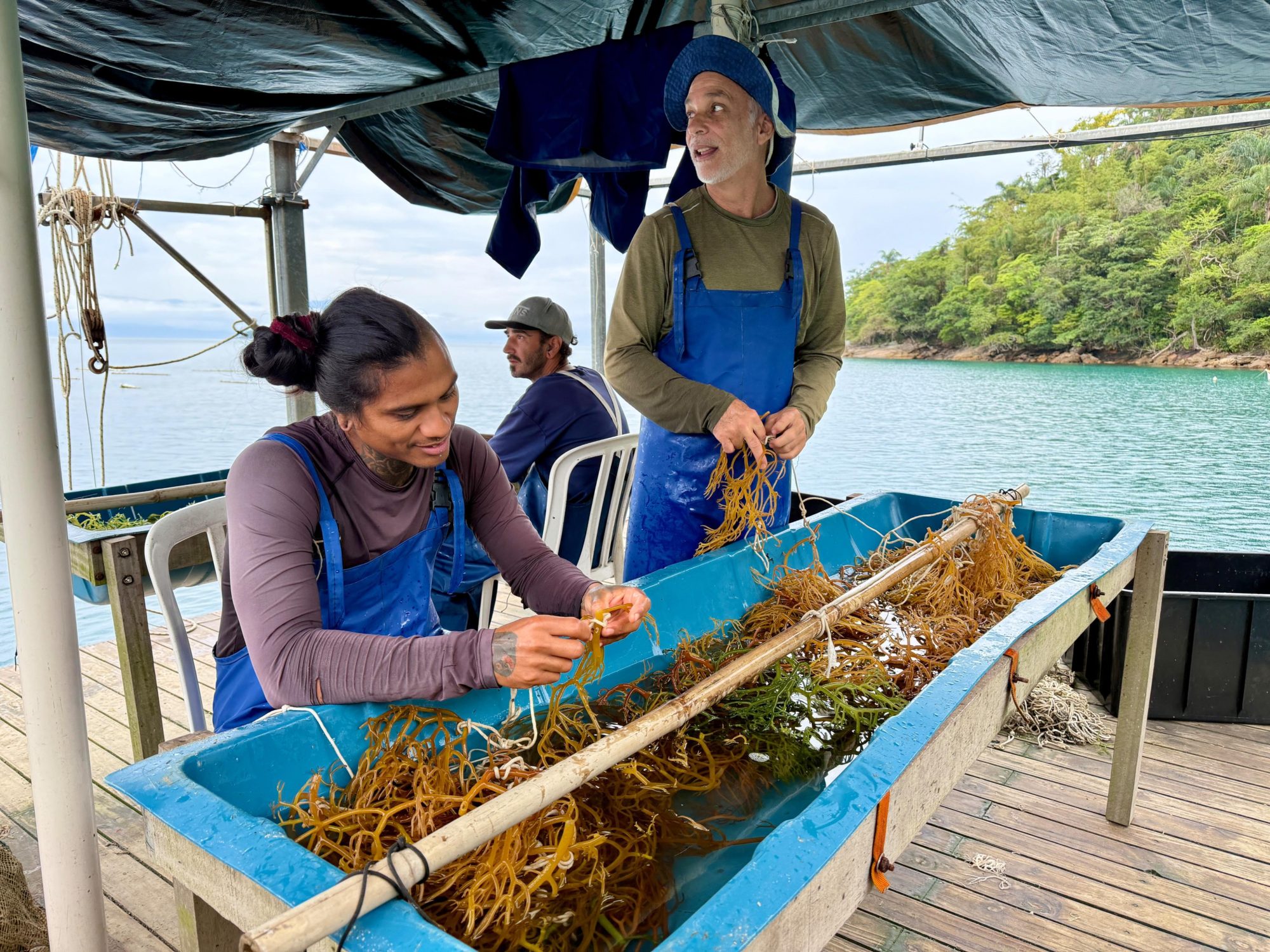
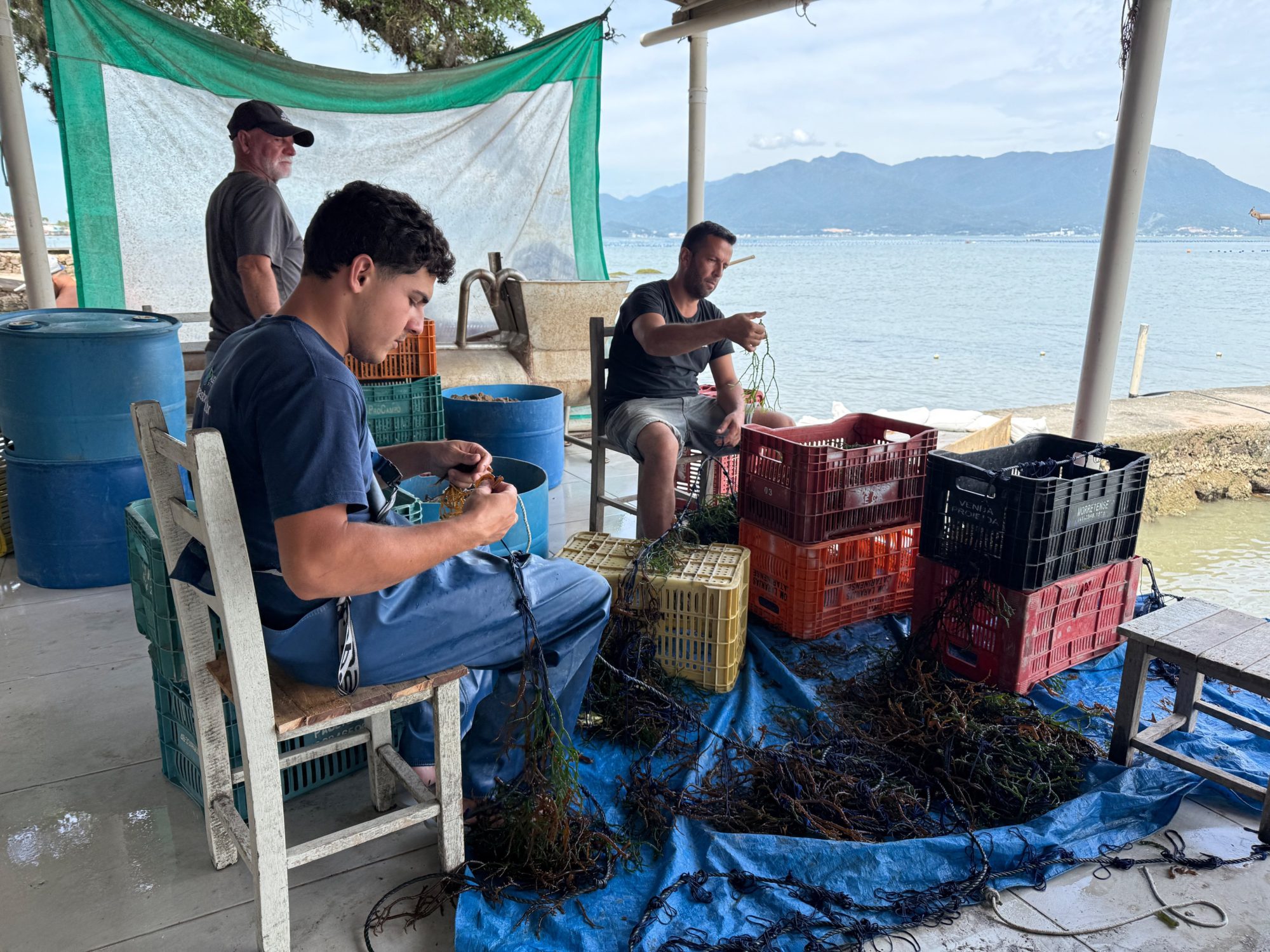
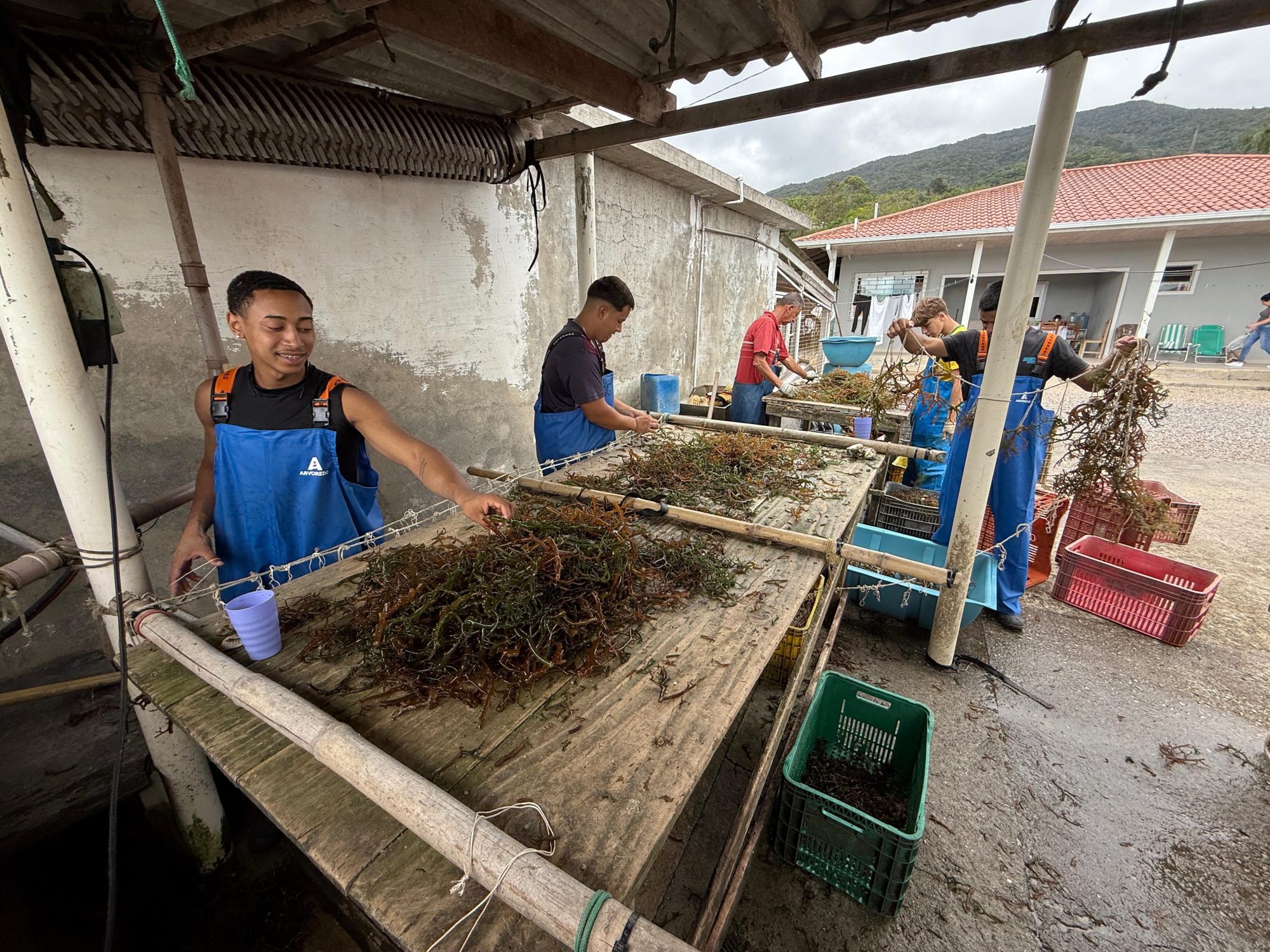
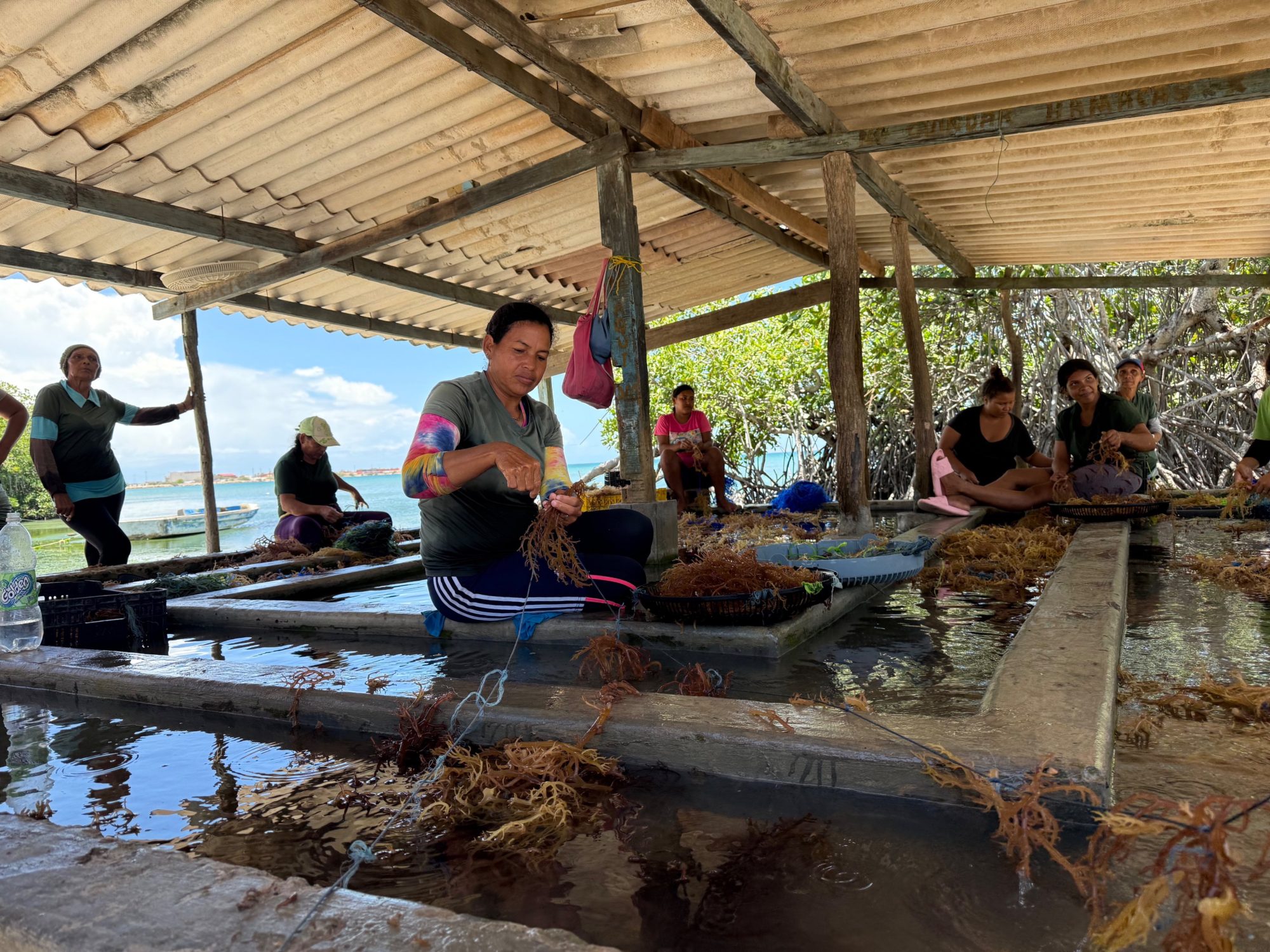
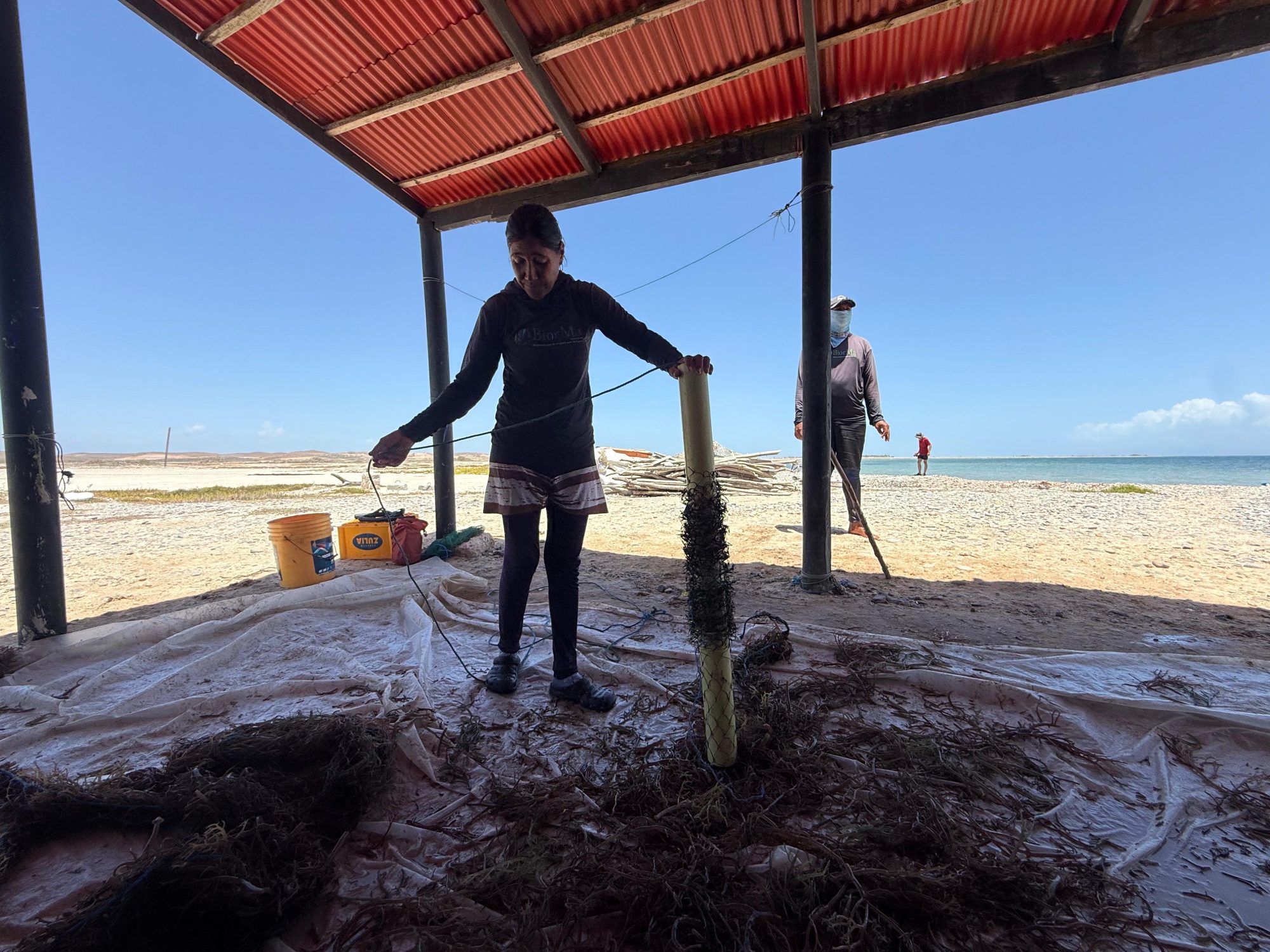
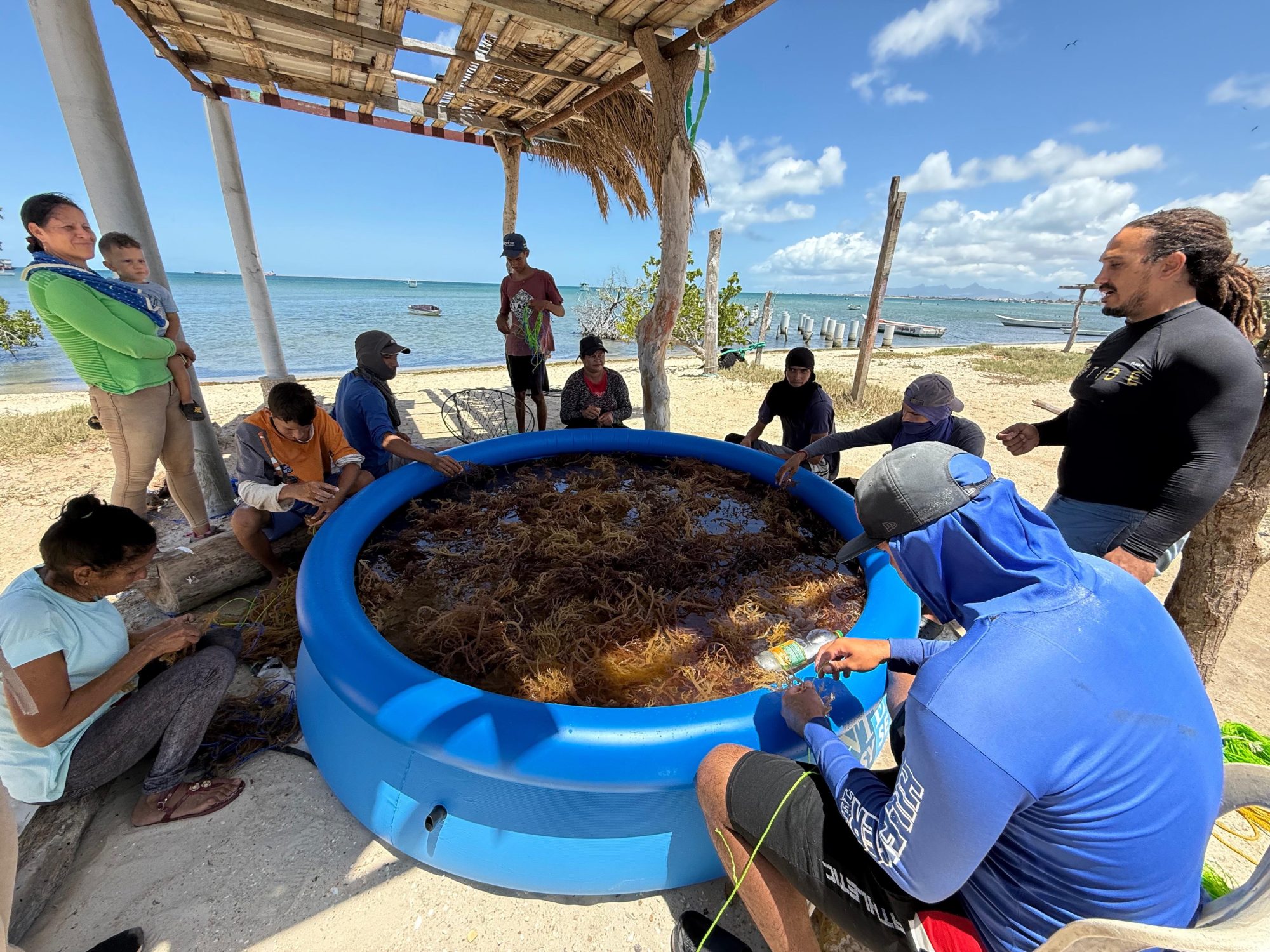
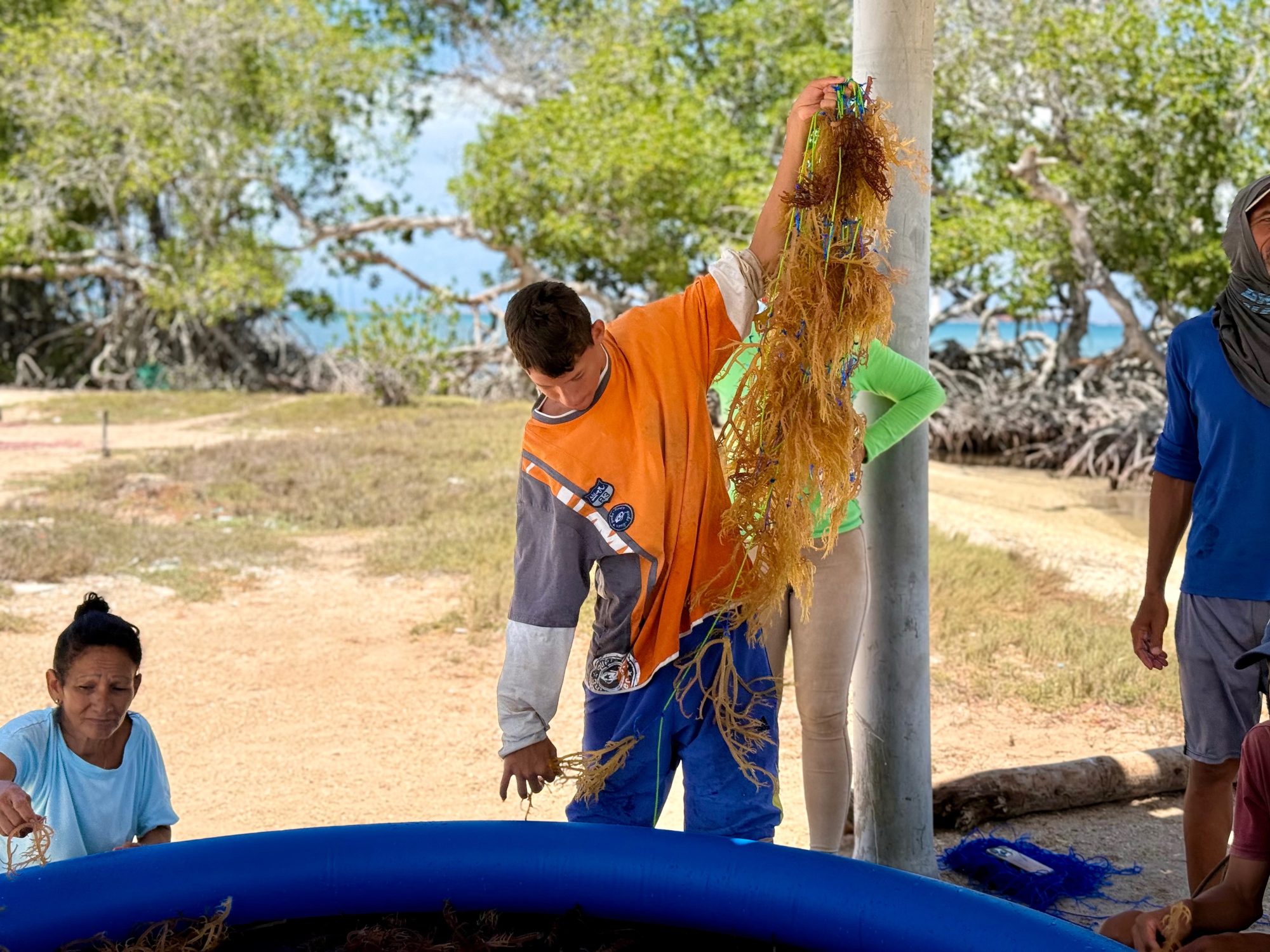
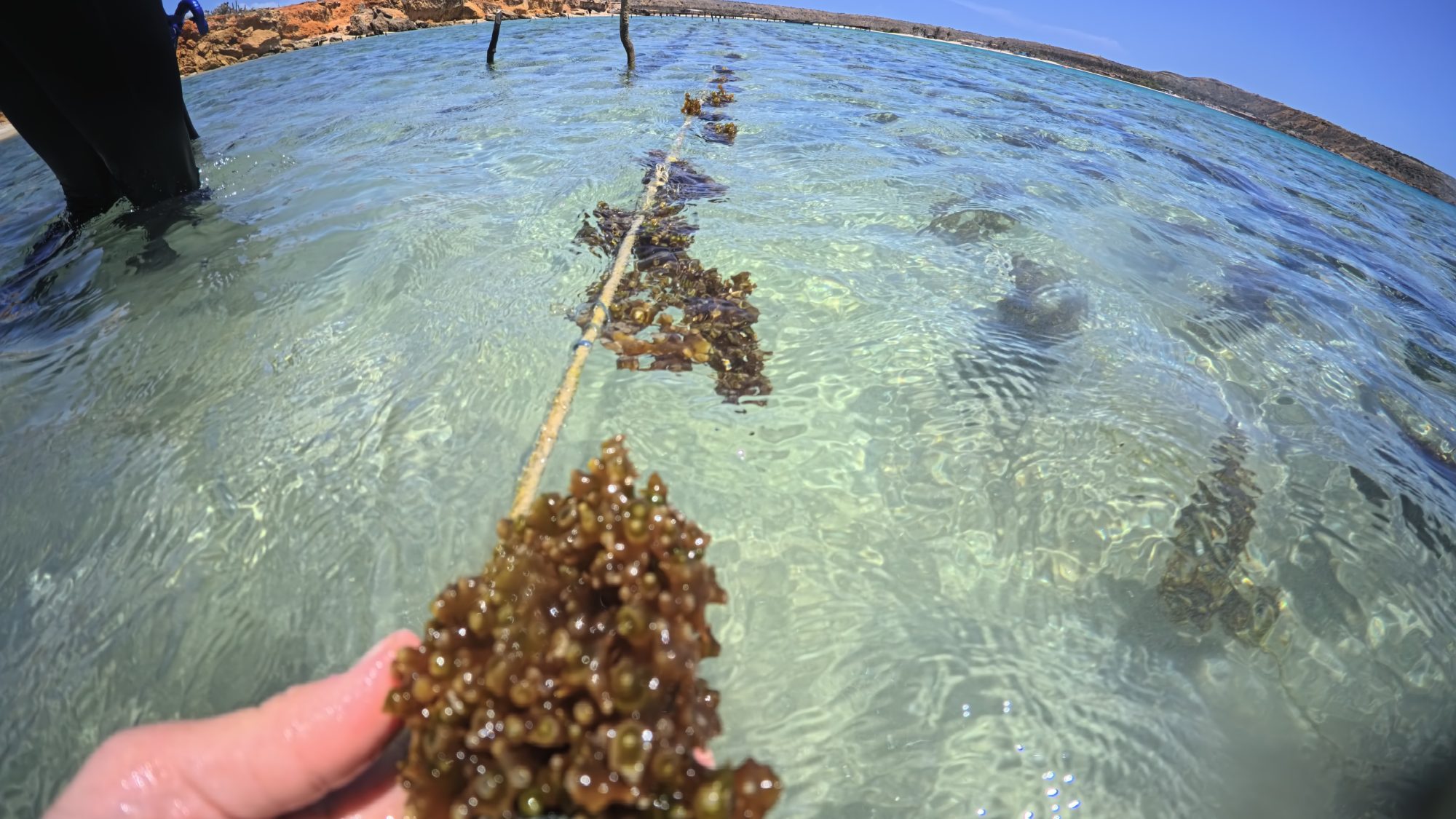
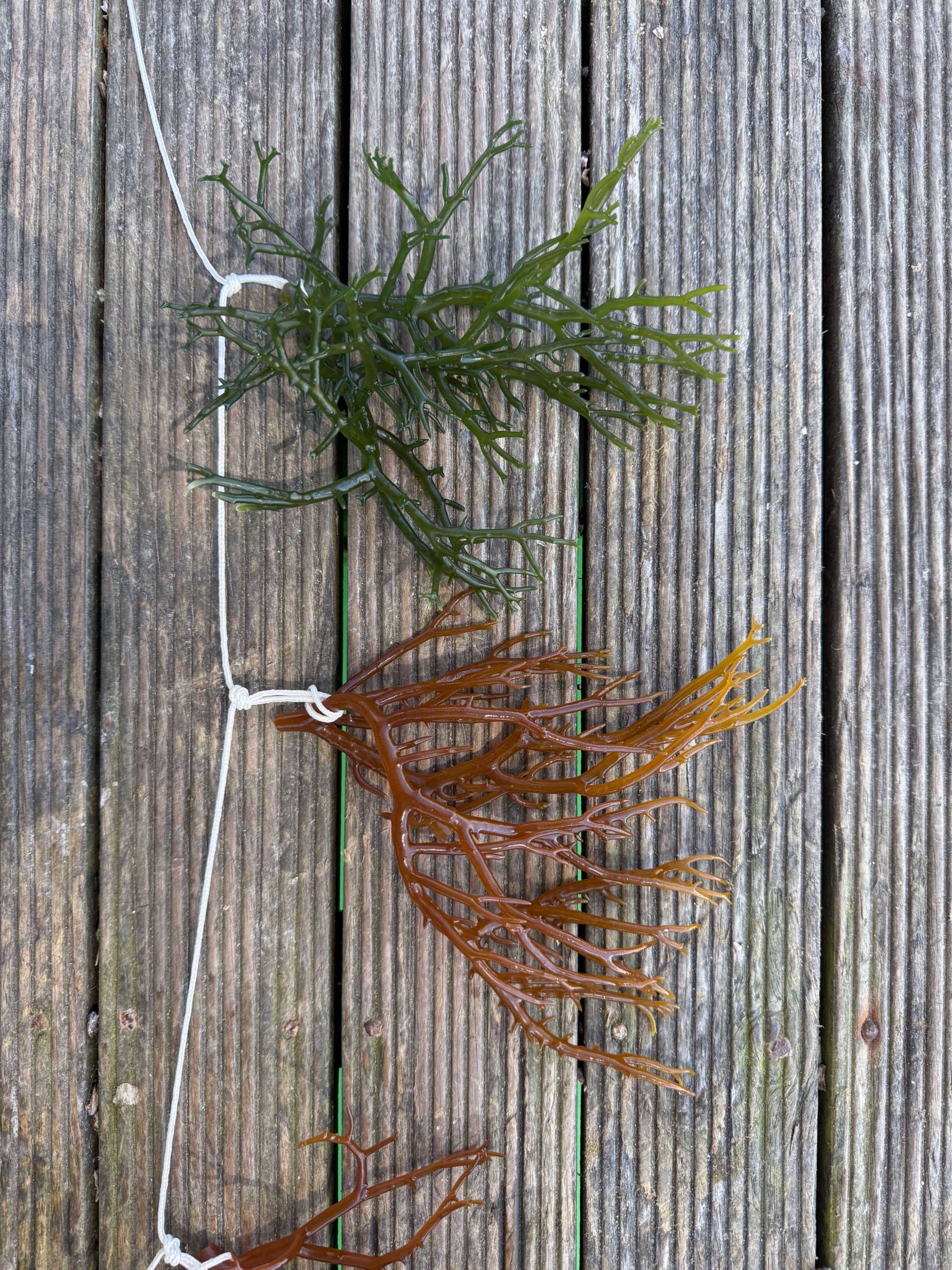
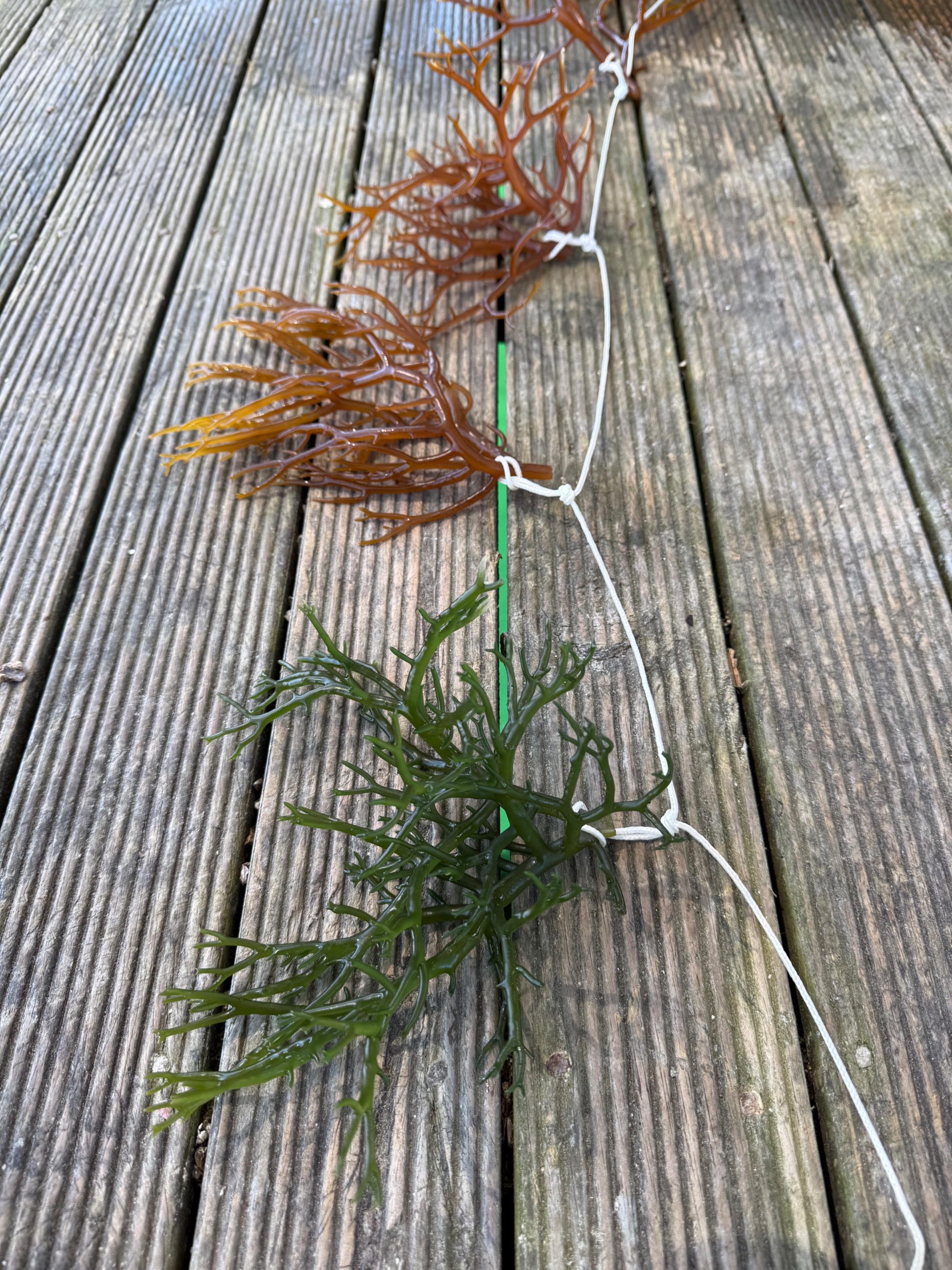
In Venezuela, this labor-intensive task is predominantly carried out by women on land, mirroring practices in Asia. TIDE conducts this work on land using specialized structures designed for comfort and to minimize seed damage, by keeping the seed material hydrated. At TIDE's seedling nurseries, teams of 25 to 30 women prepare an average of 500 lines (each 25m) per day. For tying the propagule on to the cultivation lines, the slipknot method is the most widely used technique across the country, with the exception of Biorma, which uses the tubular net method.
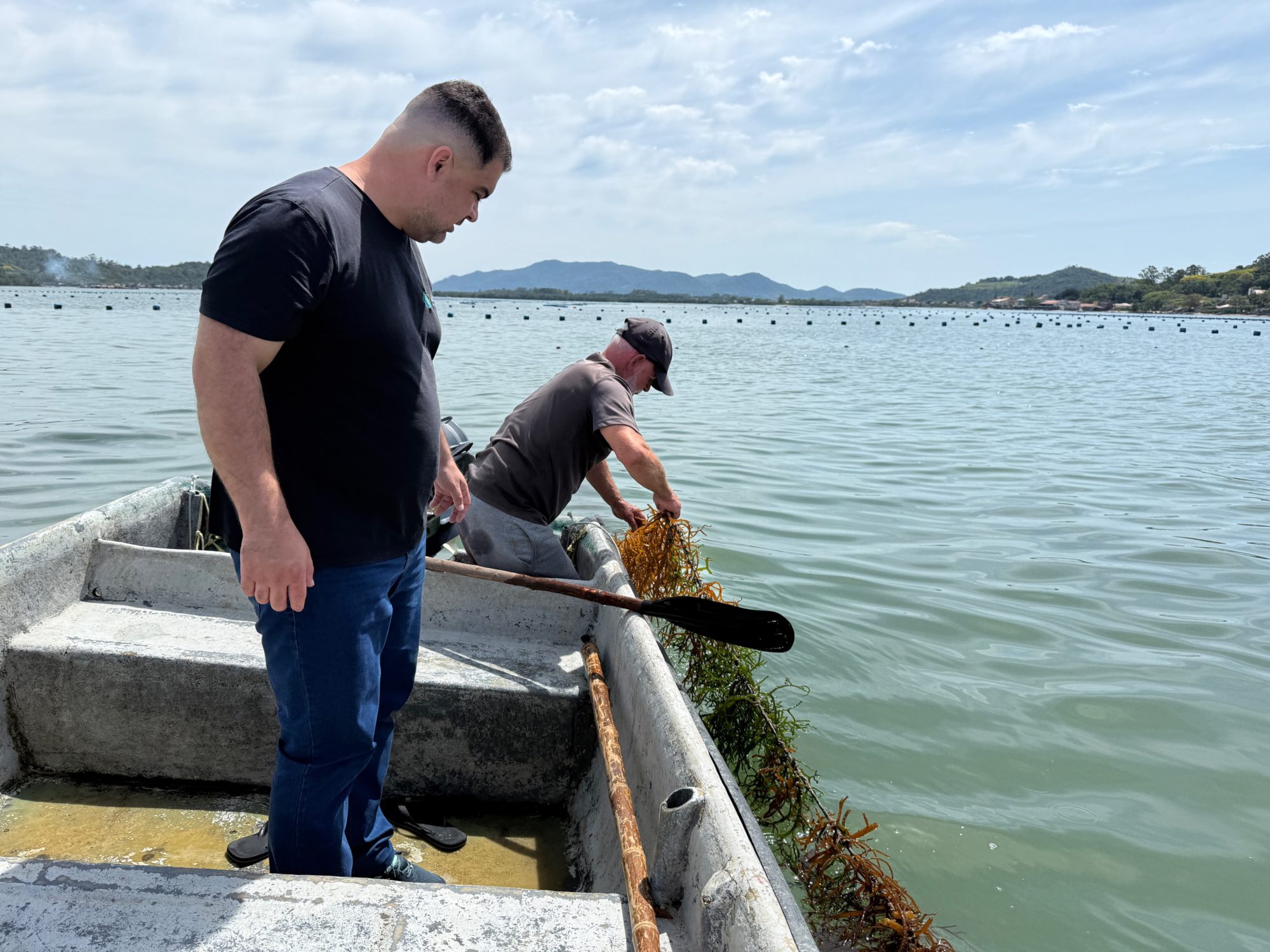
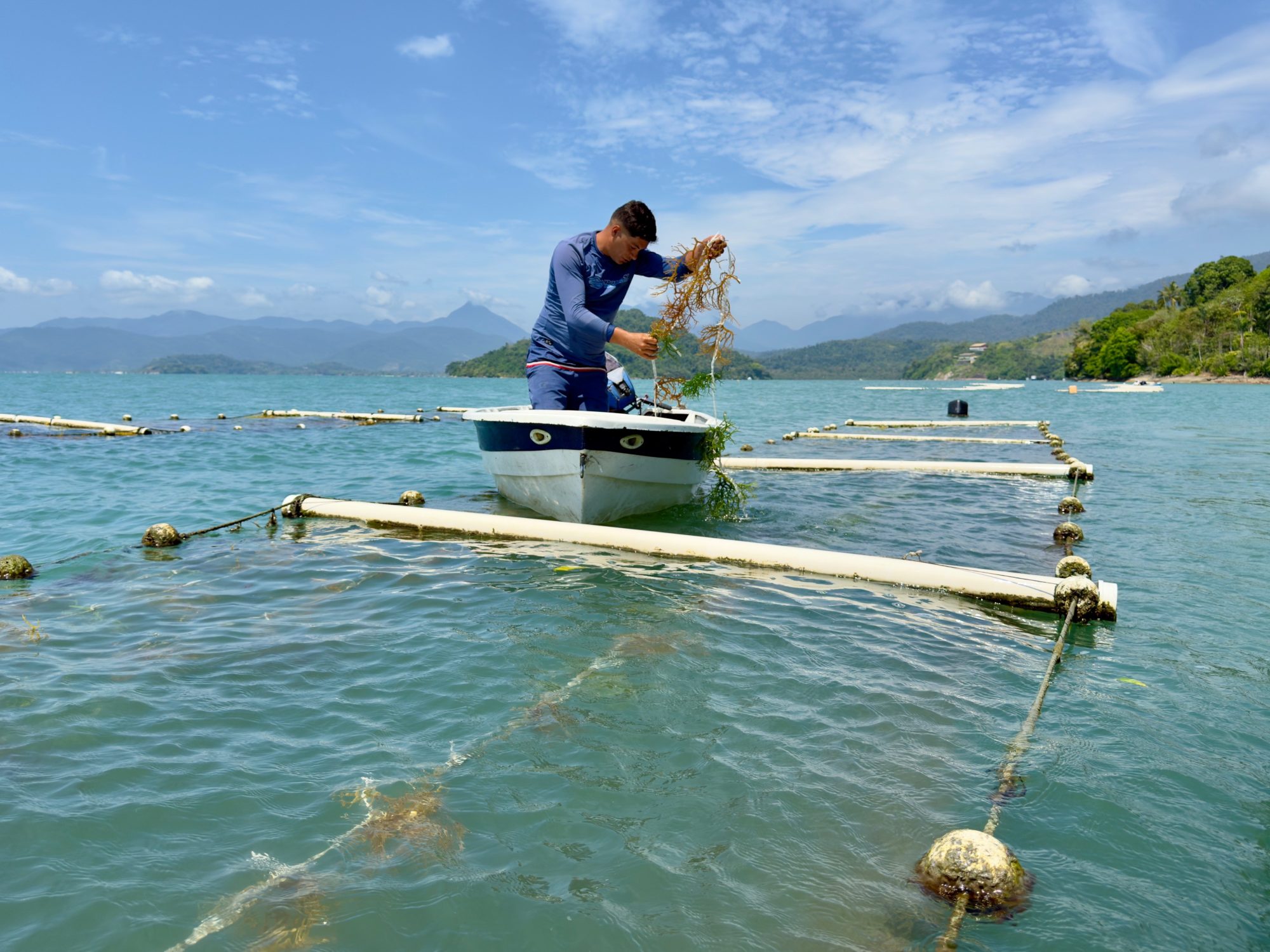
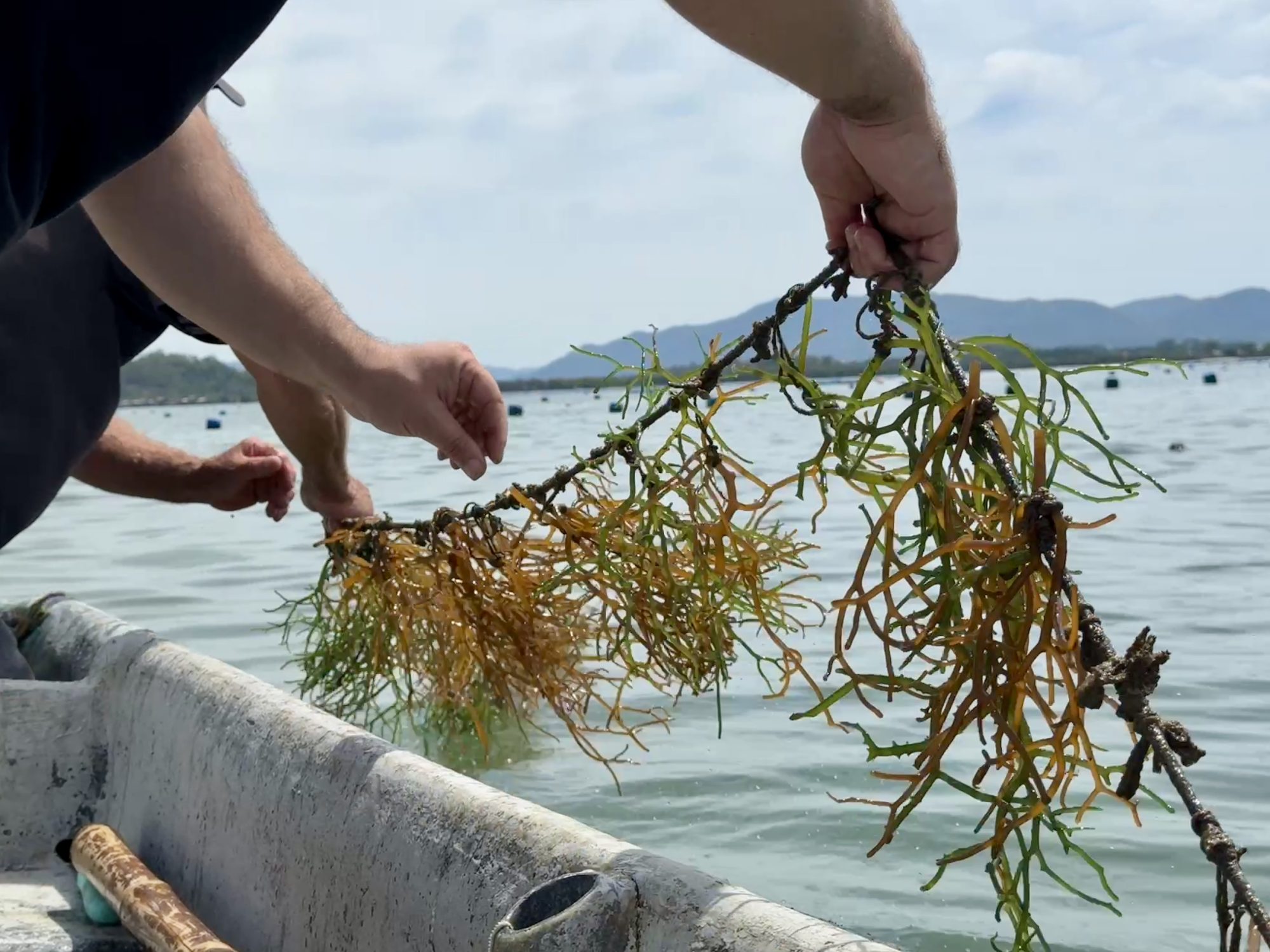
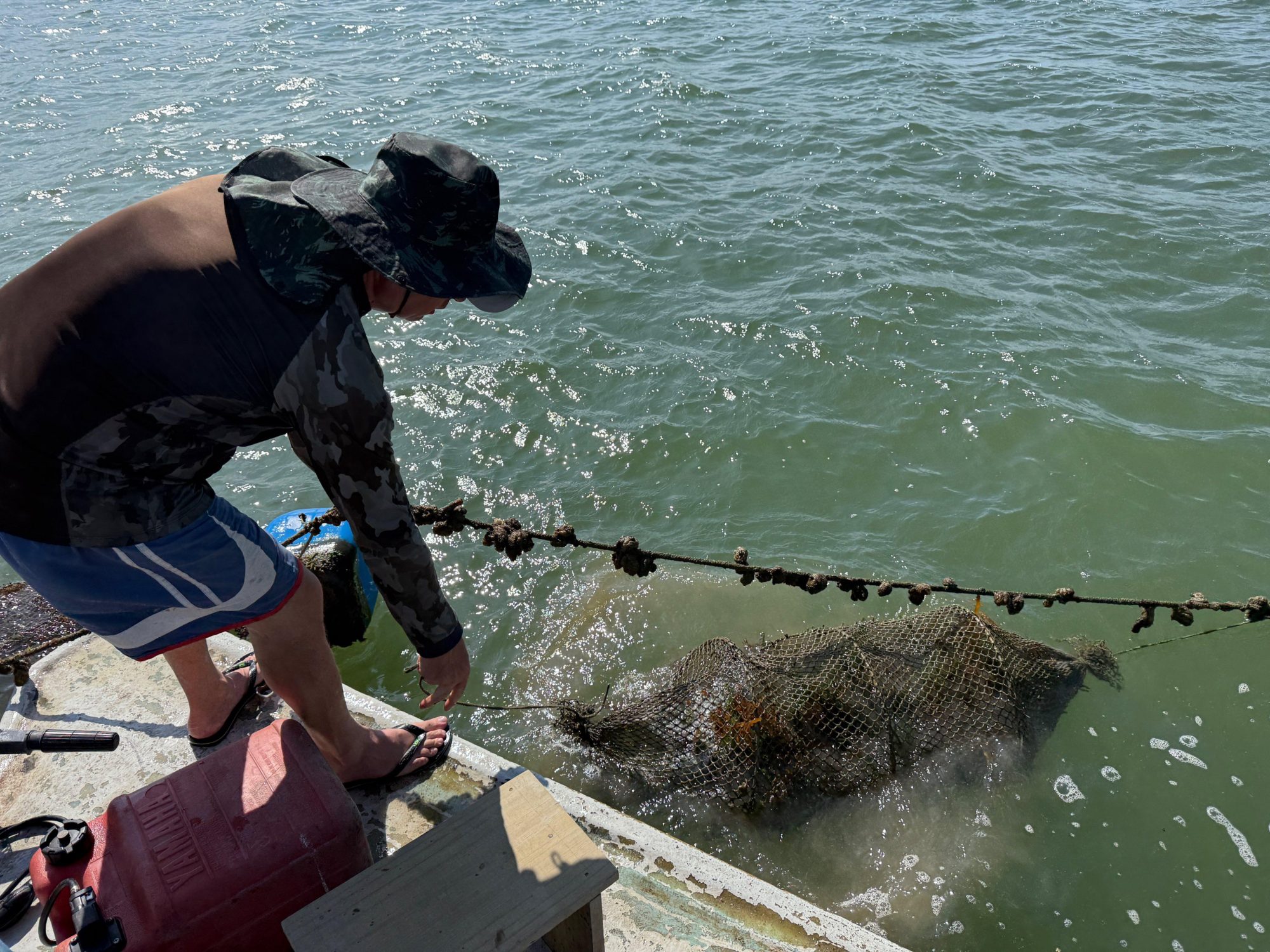
In Brazil, the standard tie-tie method is employed, though its application varies. In Rio de Janeiro, tying occurs on land, floating platforms, or in containers to keep the seaweed hydrated. In Santa Catarina, are typically paid one Real for every meter of line they plant, and a single worker can produce around 200 meters per day, providing significant community income.
Once prepared, the seeded lines are deployed to marine farms.
Seed quality
Tropical Venezuela and Rio de Janeiro, Brazil, achieve continuous self-supply with year-round growth. In subtropical Brazil, Santa Catarina, a key strategy is placing seedstock on the seafloor during winter months, where the seaweed enters a dormant state to survive the cold. Despite this progress and some use of local seed, most farmers still import seeds from the region of Rio de Janeiro in November at the season start. However, recent research initiatives aim to advance seed banking and strain selection to develop winter-resistant varieties.
Biobanking
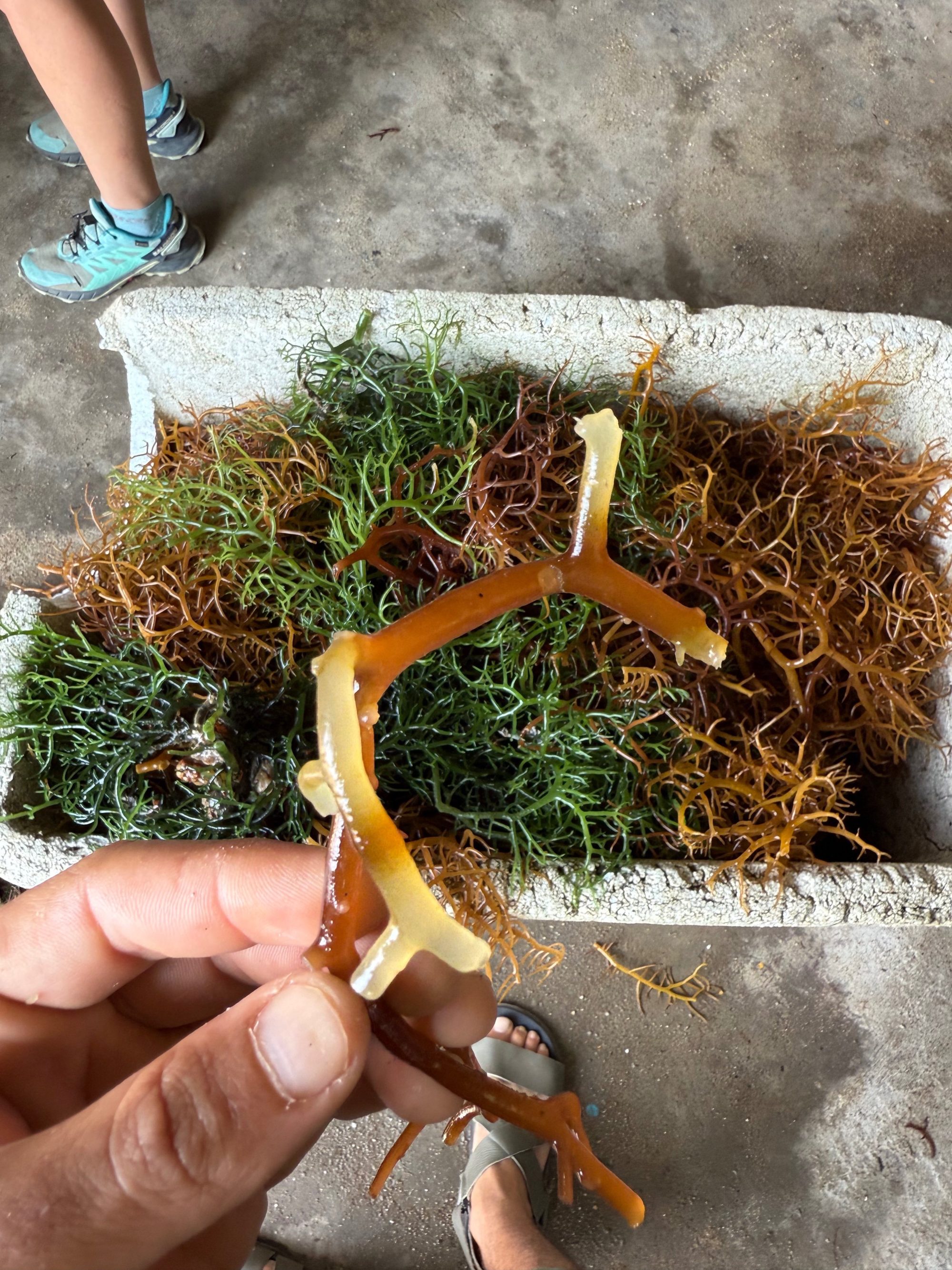
A key challenge is ensuring seed quality and genetic diversity.
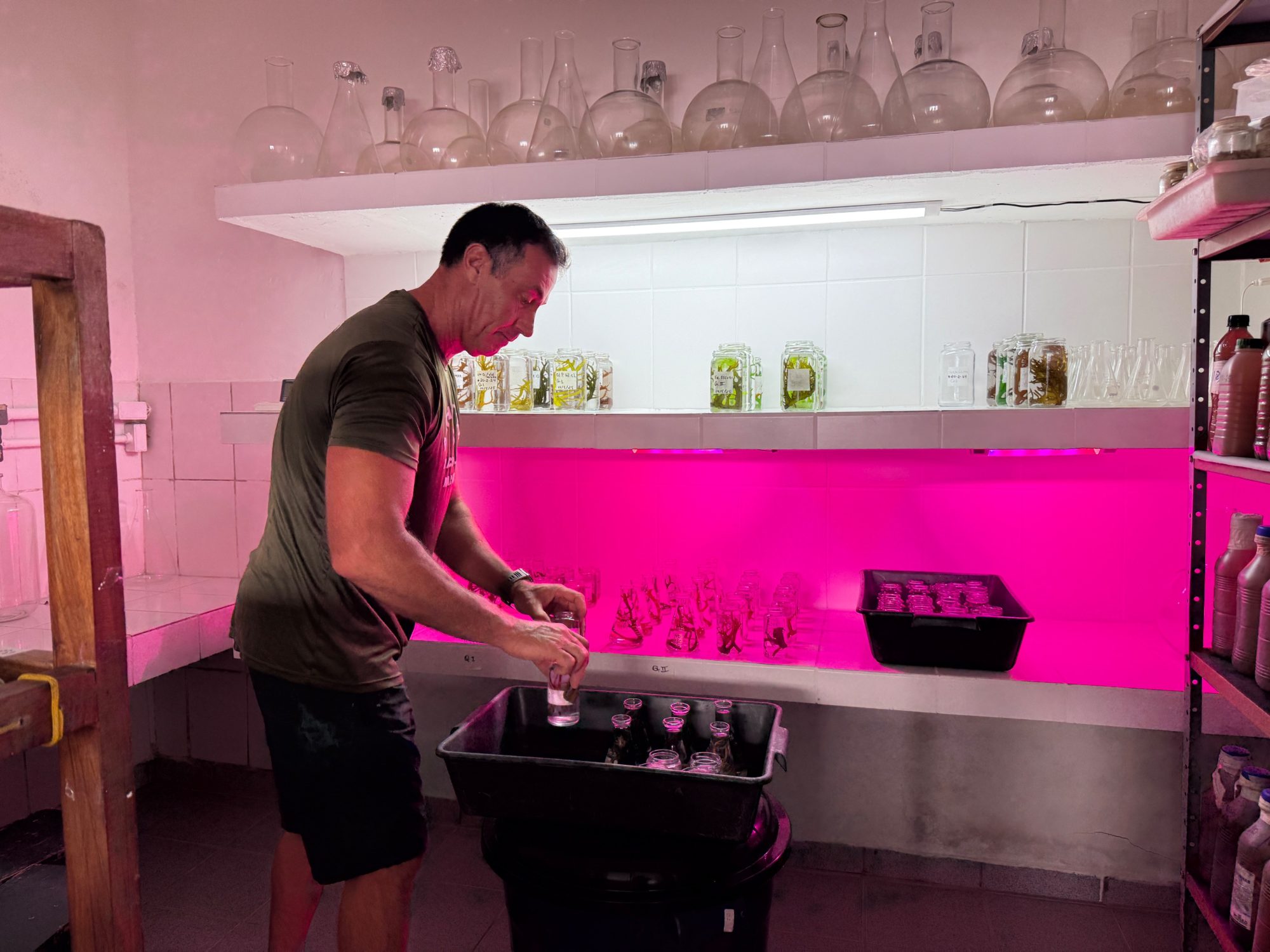
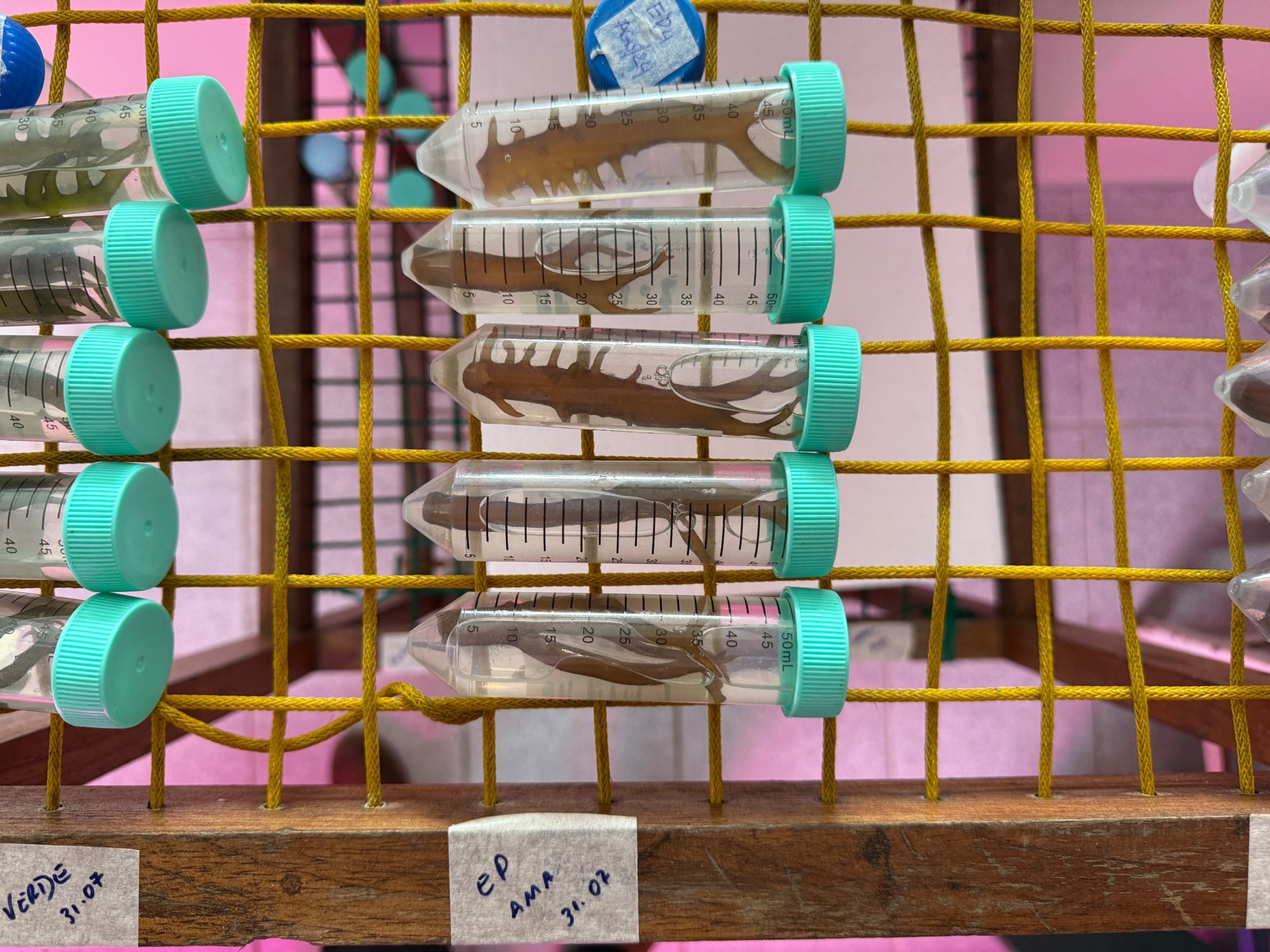
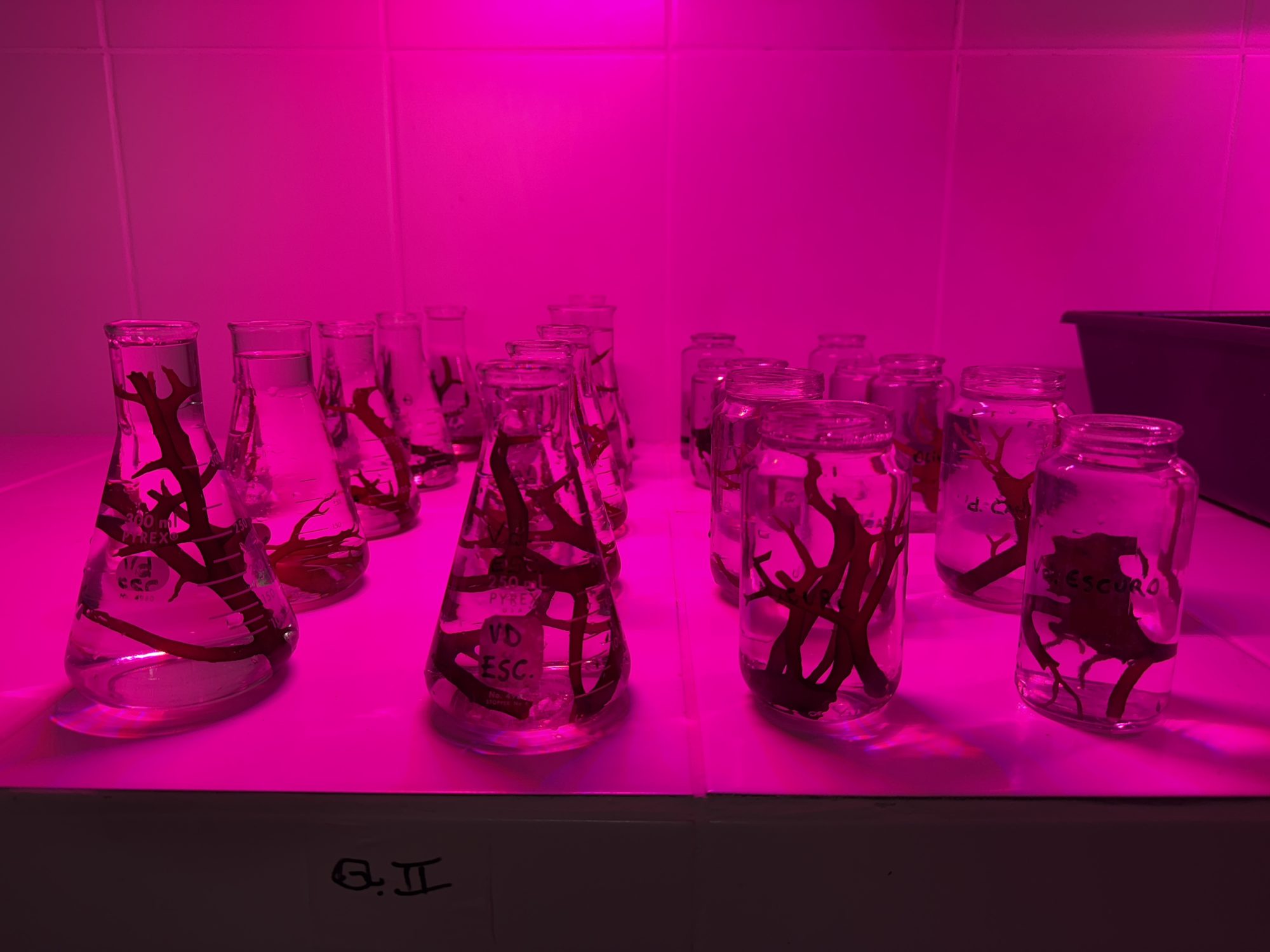
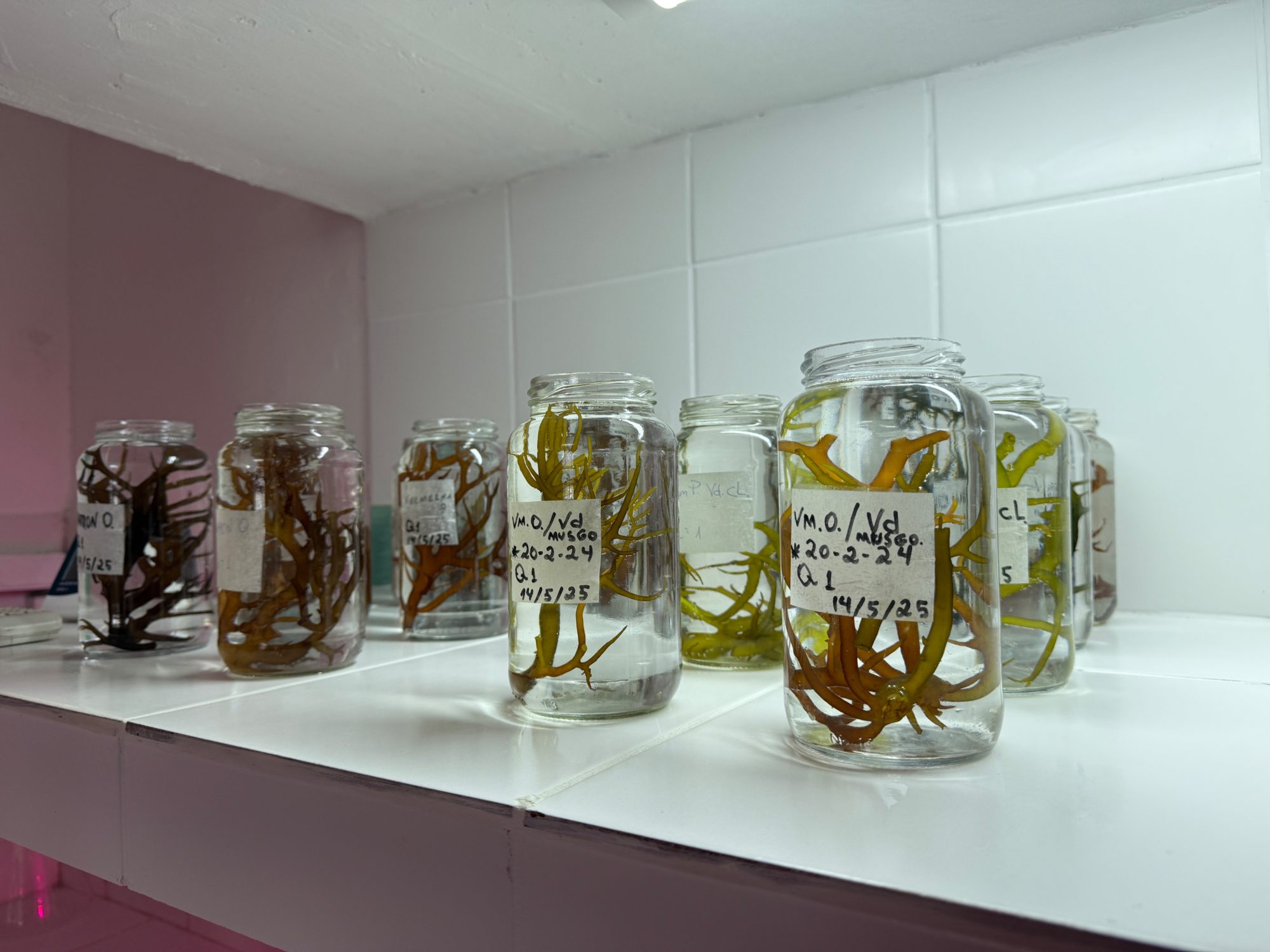
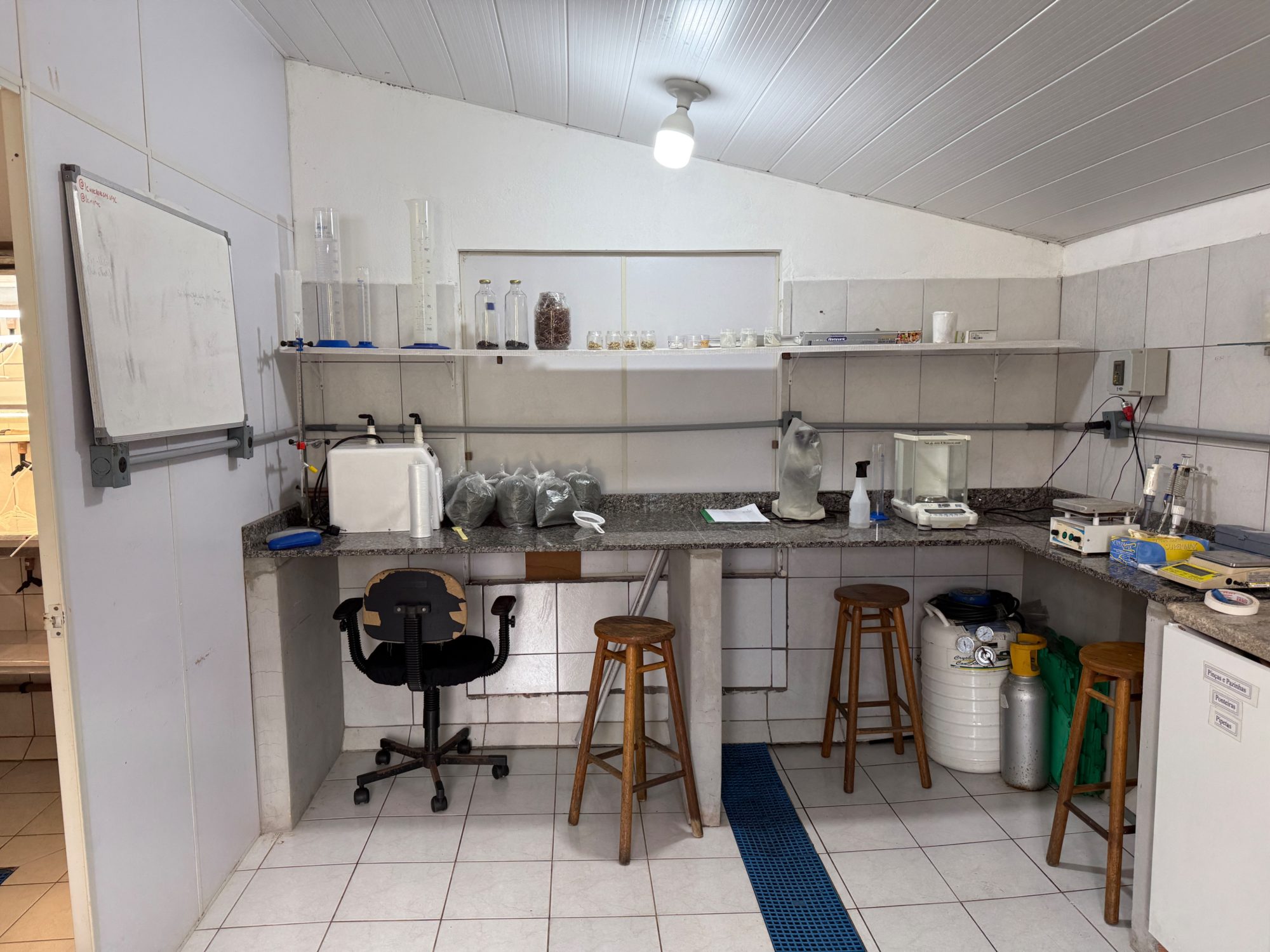
In Brazil, the process of domestication of the seaweed Kappaphycus alvarezii (Doty) L.M. Liao has been taking place since 1995 and 1996 with the introduction of a brown tetrasporophyte and a pale brown gametophyte, respectively, in the experimental marine farm of the Fisheries Institute, Ubatuba Bay, São Paulo State, Brazil. From these initial strains, spontaneous strains were generated with different colours. This cultivation site is currently the only active biobank for Eucheumatoids in the region.
Venezuela's fisheries ministry actively aims to address this through a dedicated seaweed program focused on improving genetic quality. The reliance on clonal material over time otherwise presents a systemic risk to crop health, with important lessons learned from South East Asia.