Seaweed
  • Species production
  • Regional production
  • About
  • Reports
  • en
  • es
  • pt
  • Species Production Overview
  • Eucheumatoids
  • Saccharina
  • Undaria
  • Pyropia
  • Gracilaria
  • Macrocystis
  • Global Production Overview
  • East Asia
  • South East Asia
  • Central America & Caribbean
  • South America
  • Species production
    • Species Production Overview
    • Eucheumatoids
      • Production Overview
      • Site selection
      • Farm design
      • Seeding
      • Grow out
      • Harvest
      • Post harvest
      • Sales
      • The farmer
      • Future of farm
    • Saccharina
      • Production Overview
      • Site selection
      • Farm design
      • Seeding
      • Grow out
      • Harvest
      • Post harvest
      • Sales
      • The farmer
      • Future of farm
    • Undaria
      • Production Overview
      • Site selection
      • Farm design
      • Seeding
      • Grow out
      • Harvest
      • Post harvest
      • Sales
      • The farmer
      • Future of farm
    • Pyropia
      • Production Overview
      • Site selection
      • Farm design
      • Seeding
      • Grow out
      • Harvest
      • Post harvest
      • Sales
      • The farmer
      • Future of farm
    • Gracilaria
      • Production Overview
      • Site selection
      • Farm design
      • Seeding
      • Grow out
      • Harvest
      • Post harvest
      • Sales
      • The farmer
      • Future of farm
    • Macrocystis
      • Production Overview
  • Regional production
    • Global Production Overview
    • East Asia
    • South East Asia
    • Central America & Caribbean
    • South America
  • About
  • Reports
Seaweed
  • en
  • es
  • pt
  • Production Overview
  • Site selection
  • Farm design
  • Seeding
  • Grow out
  • Harvest
  • Post harvest
  • Sales
  • The farmer
  • Future of farm

Eucheumatoids Post-harvest

Table of contents
  • South East Asia
    1. Drying the seaweed

    2. Laying to dry

    3. Hanging to dry

    4. Treatment of cultured lines

  • Caribbean
    1. Drying the seaweed

    2. Laying to dry

    3. Hanging to dry

    4. Treatment of culture lines

  • South America
    1. Liquid seaweed extraction

    2. Laying to dry

    3. Treatment of culture lines

South East Asia

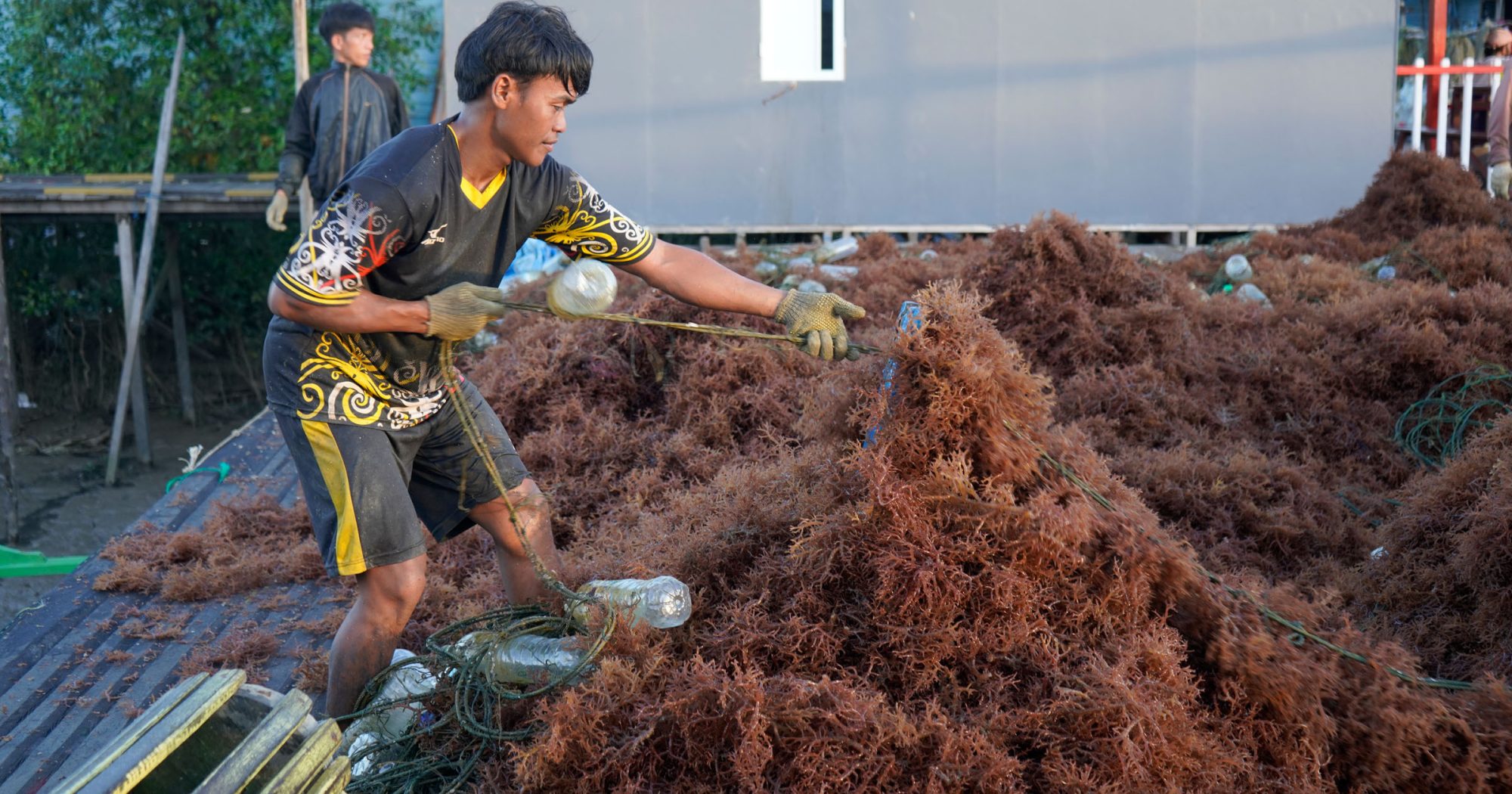
Once the harvested seaweed is brought to shore, it often has to be cleaned from filamentous algae, oyster spat or other epibiotic organisms that may attach to the seaweed in certain seasons. Farmers have developed different methods to get rid of those. 


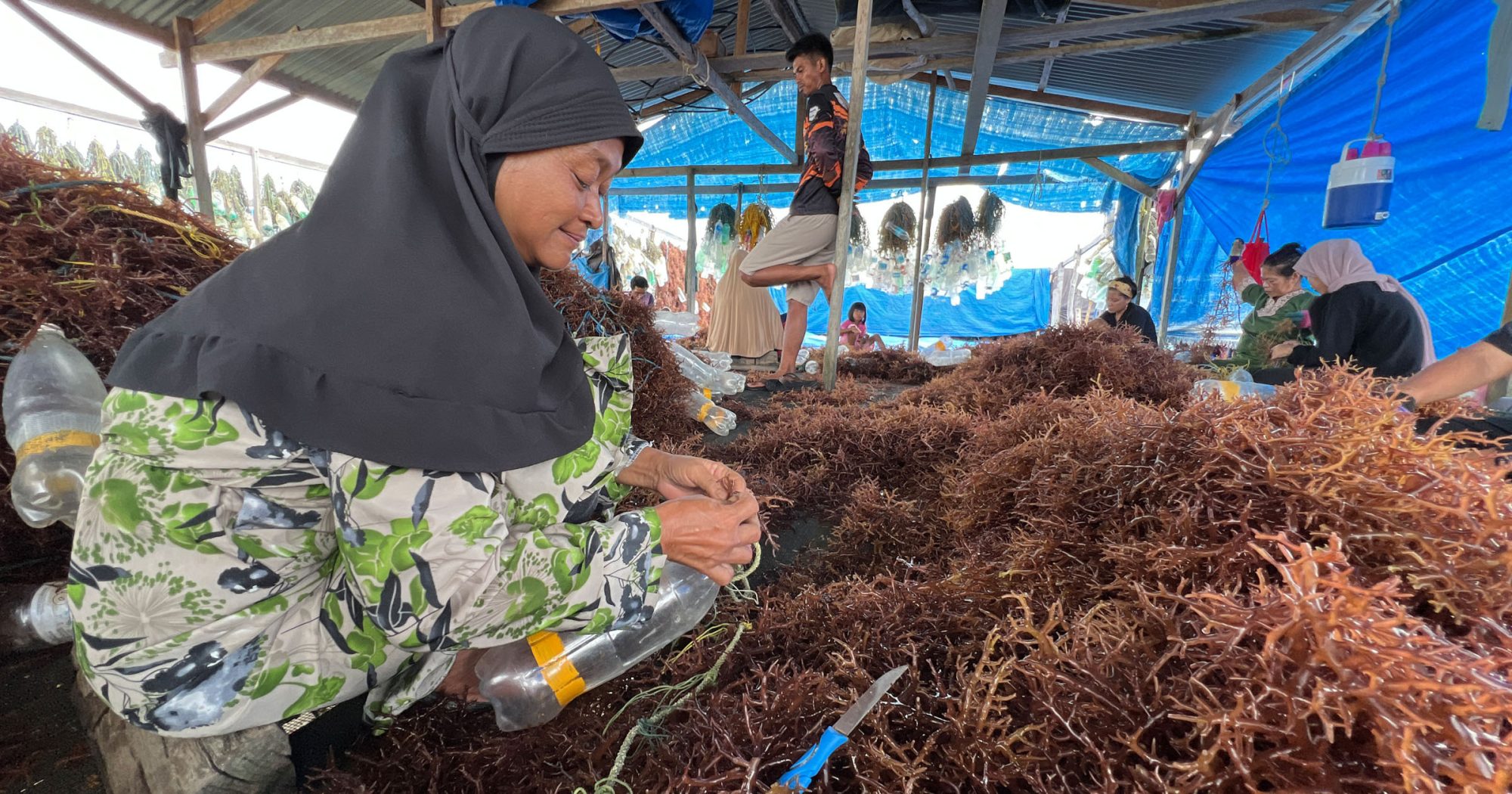
At this point, the farmer also selects the portion of the harvest that is best used for seedlings for the next cycle. The key to a successful seaweed harvest is producing good-quality seedlings for the next cycle. Normally, younger plants that are robust and free of ice-ice syndrome and endophytes are selected as seedlings for the next cropping season.


Up to a quarter of the harvested biomass may be kept by the farmer as seed material for the new cycle.
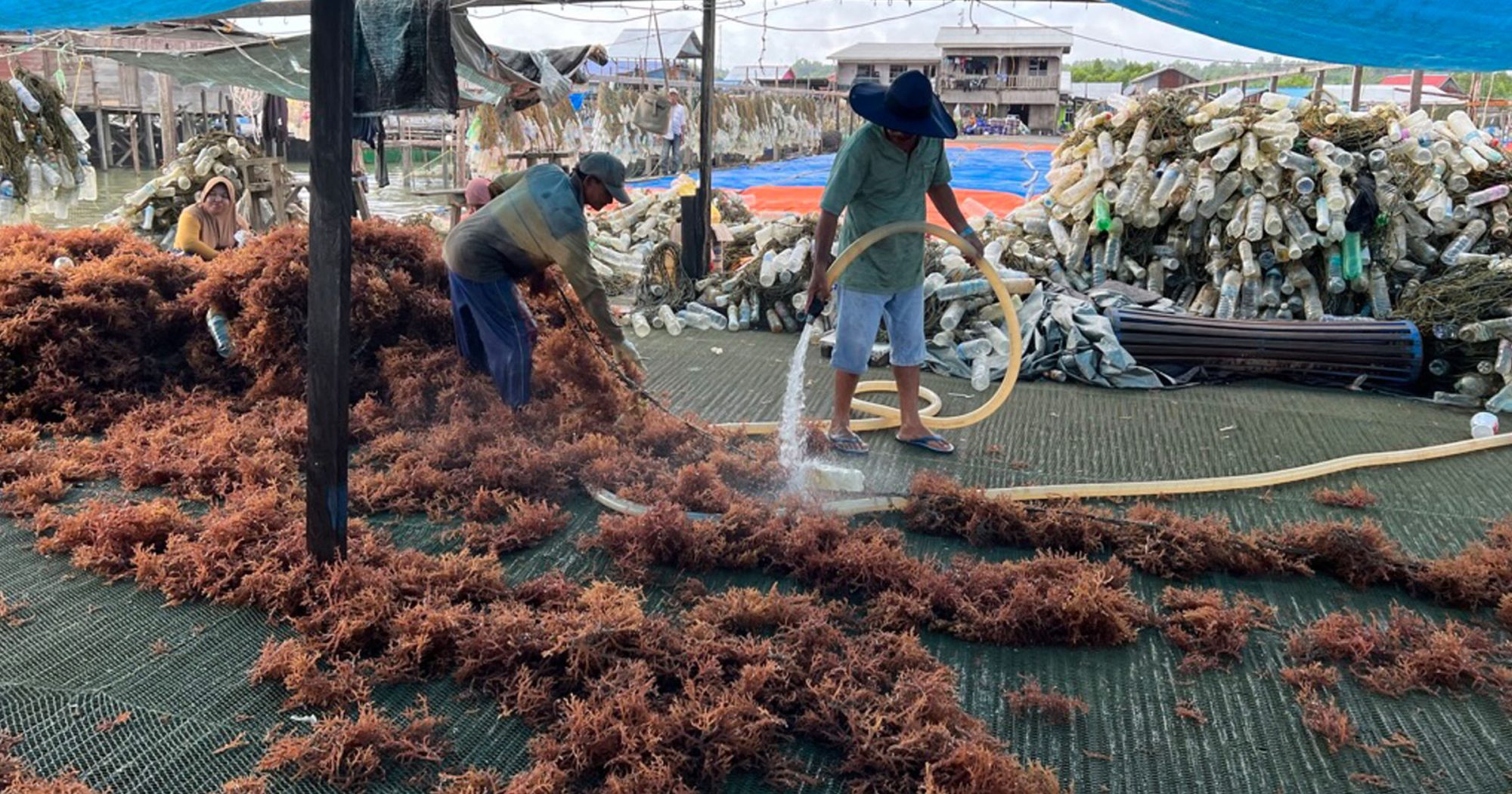
On Nunukan Island in Indonesia, farmers use a high pressure water hose to spray off most of the unwanted material, in this case mainly oyster spat.
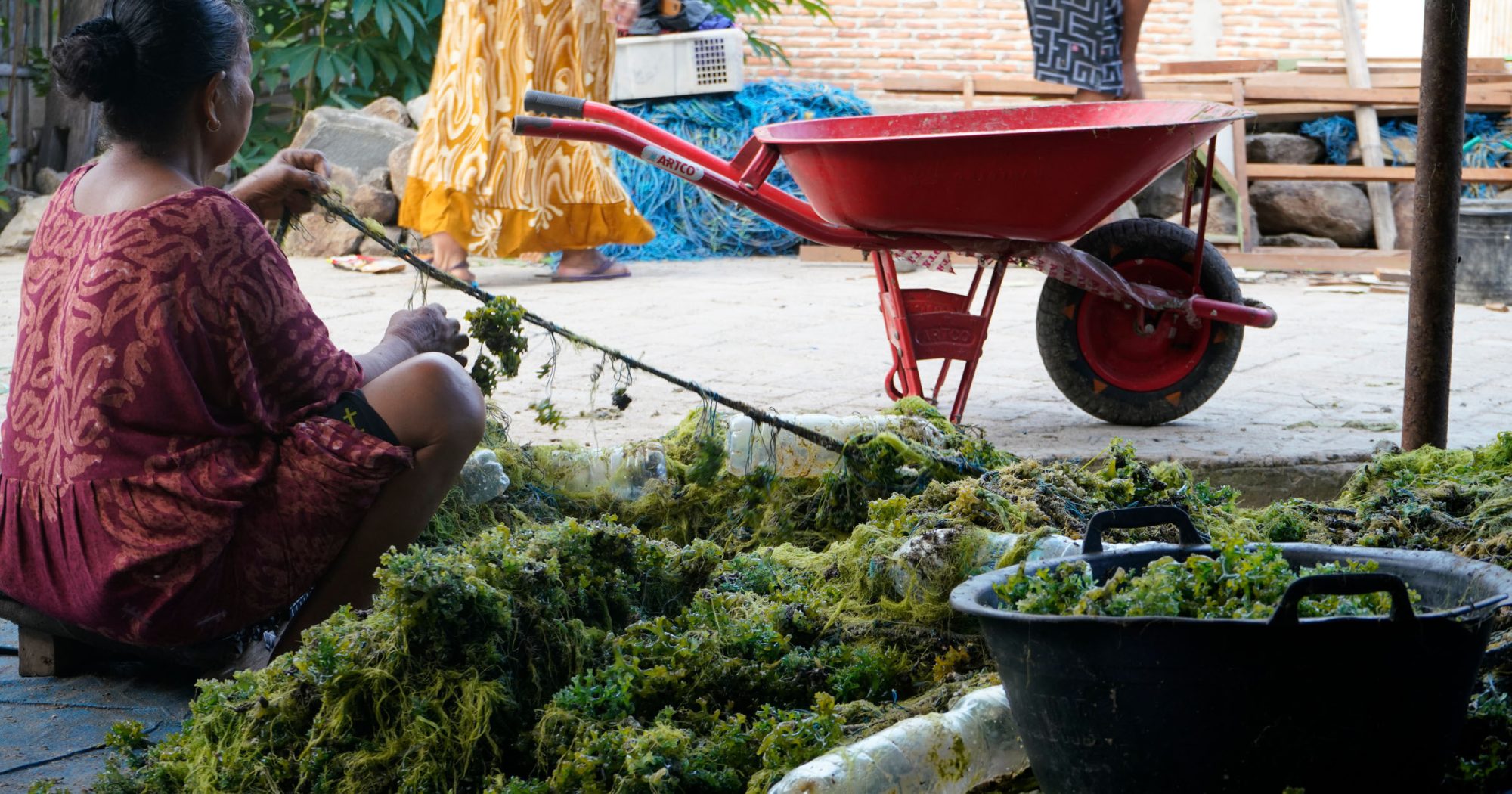
Removing filamentous algae is highly labour intensive since it needs to be removed by hand.
On Nunukan Island, some farmers strip the seaweed from the cultivation lines using. Although this process is faster than untying every plant individually, the seaweed is broken into smaller pieces, which is usually a lower quality parameter.
The speed of tying not only depends on the tying method and the skill of the individual, but also the social circumstances.

Drying the seaweed

In the Eucheumatoid industry, the majority of biomass is dried by the farmers. The wet-to-dry ratio may be as low as 6:1 when it leaves the farm, but by the time the raw dried seaweed is dried to the export-quality level of 35% moisture content, the wet-to-dry ratio is about 8.5:1. 
Numbers may vary between cultivars, farm locations and seasons, but are known as general industry standards.
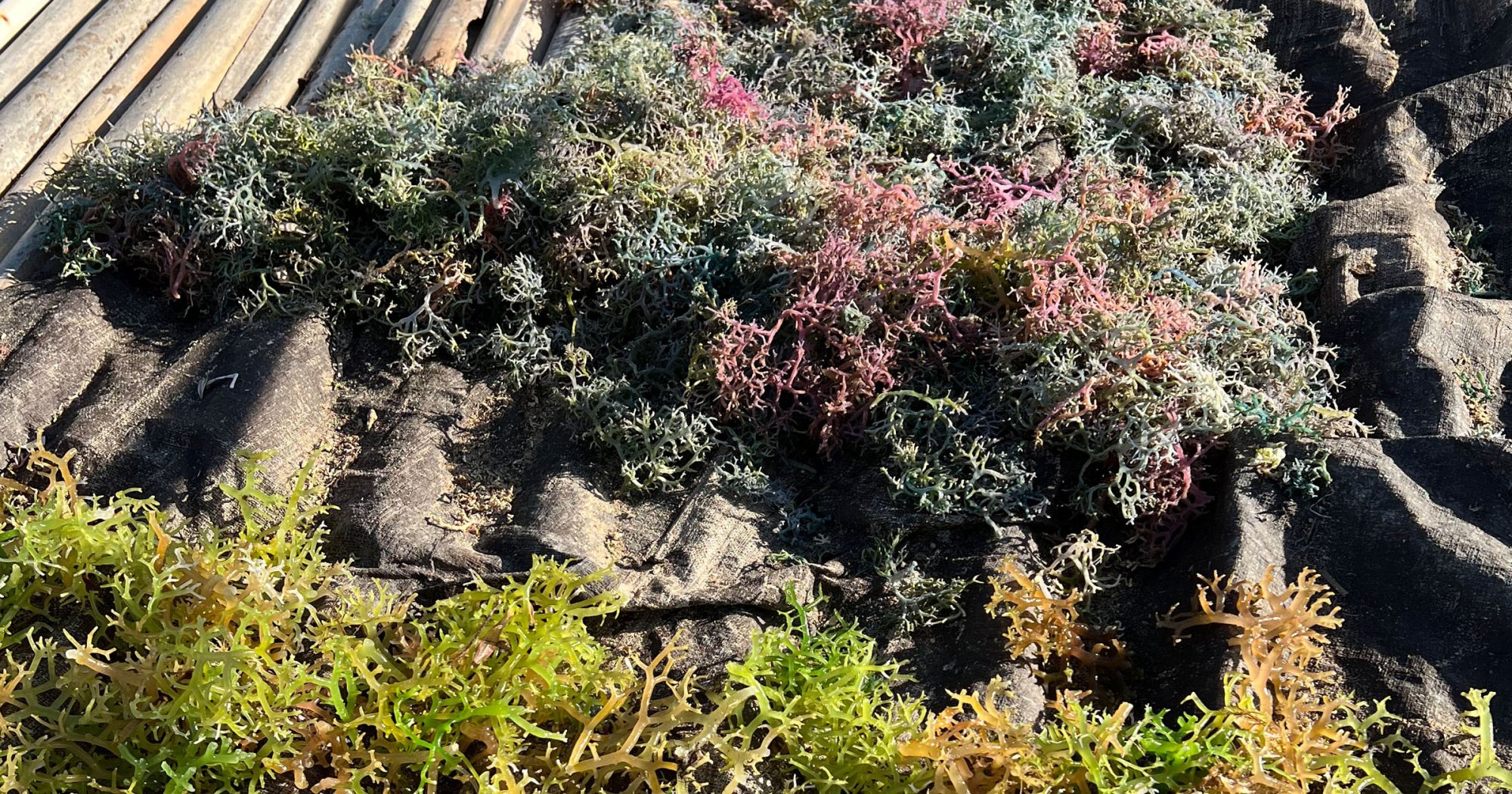
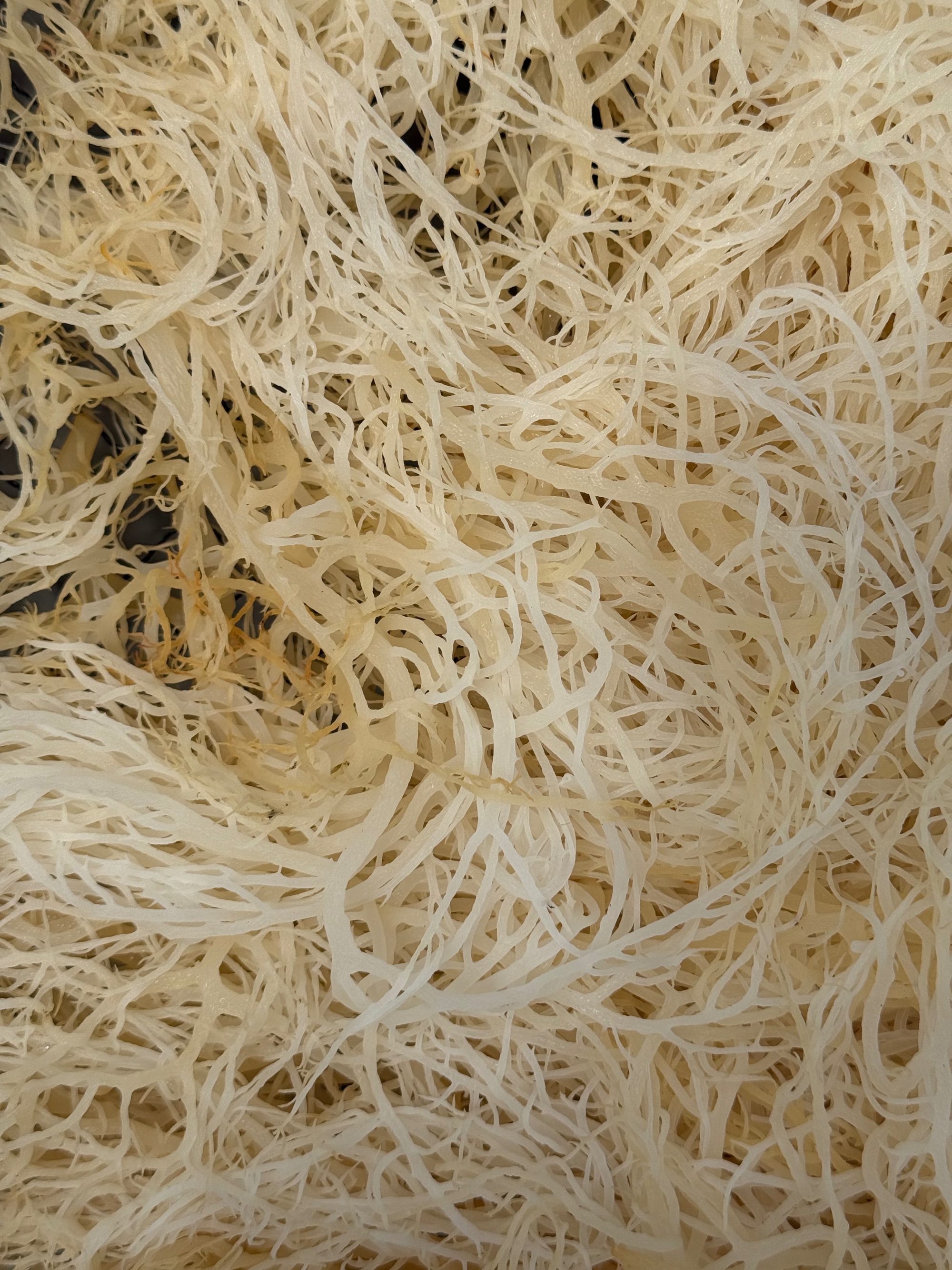
Sun-dried seaweed not only significantly shrinks in size and weight, but also in the natural colouring.

Under good weather conditions, meaning sunshine, crops usually take 2 to 4 days to dry. During the rainy months of the wet season, the process can take up to 7 days. 

Drying is often a major bottleneck as it requires ample space and – especially during the rainy season – time. Different methods of drying will be applied given the space availability. Generally speaking, there are several ways to lay the seaweed or hang the seaweed.

Laying to dry

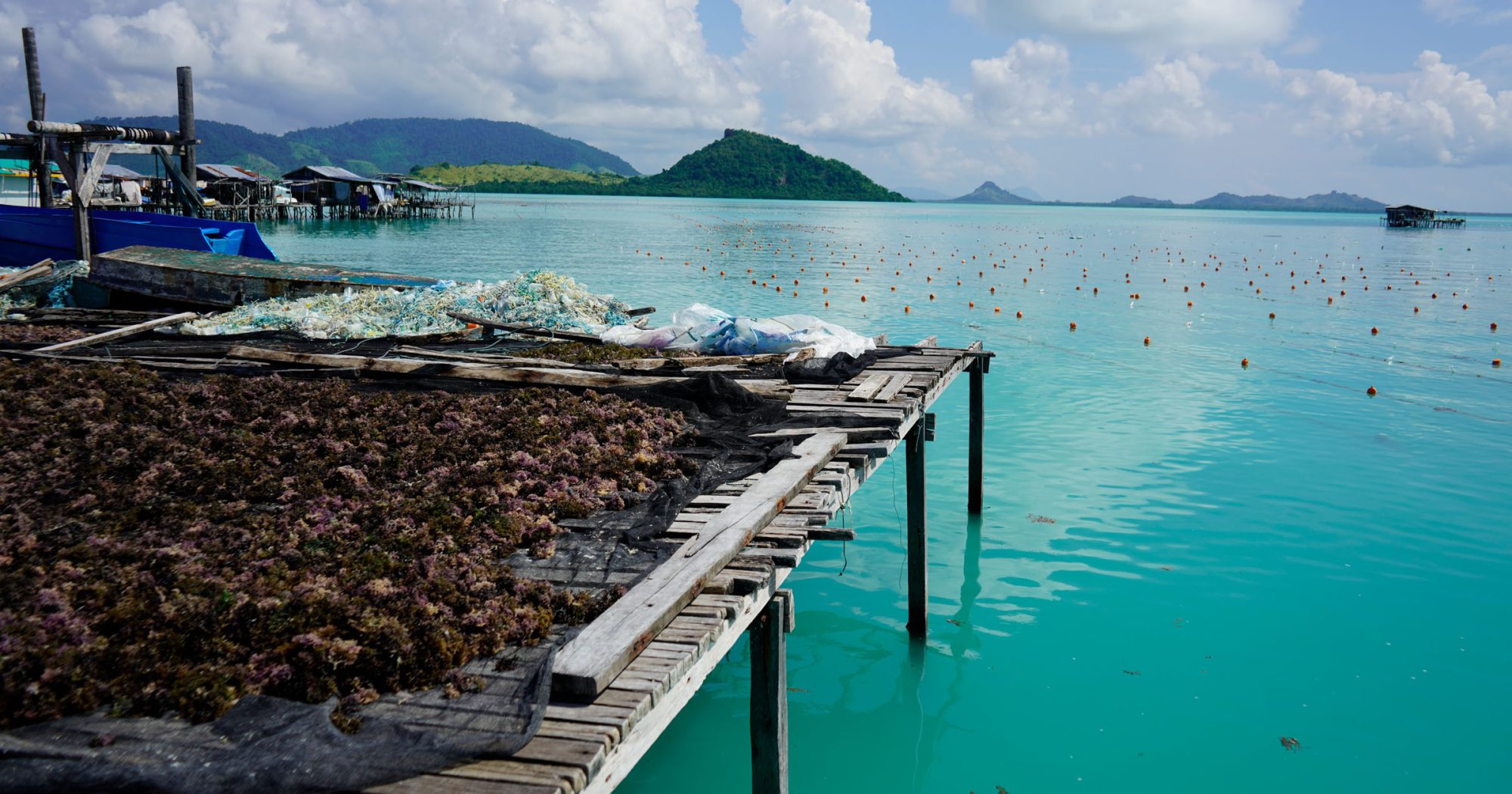
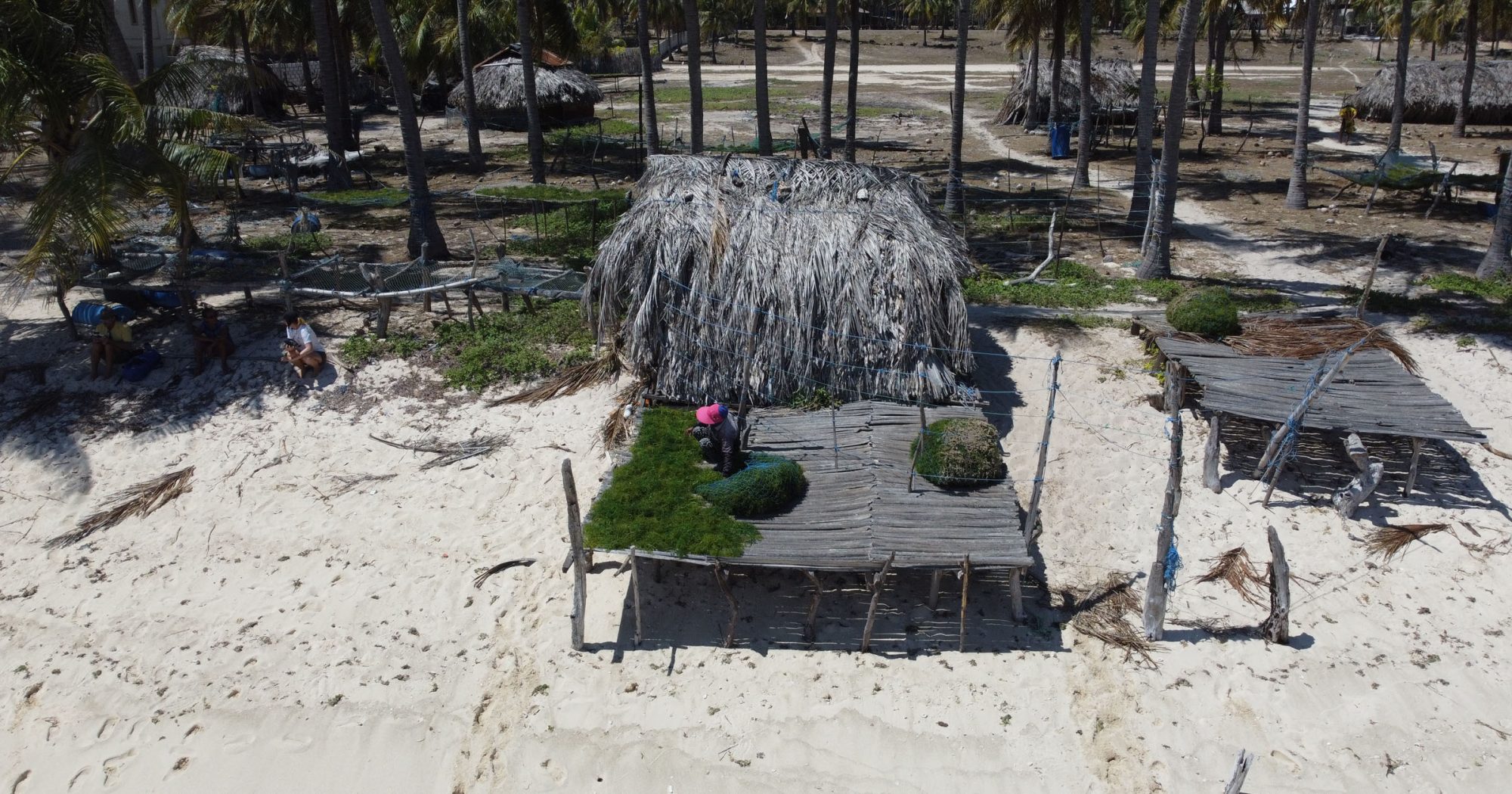
When seaweed is laid out, it is either placed directly on the ground, on a fish net or on a rack / bed type platform. For seaweed farming communities at sea, the plants are dried on the available space on their stilt houses or on dedicated drying platforms at sea.
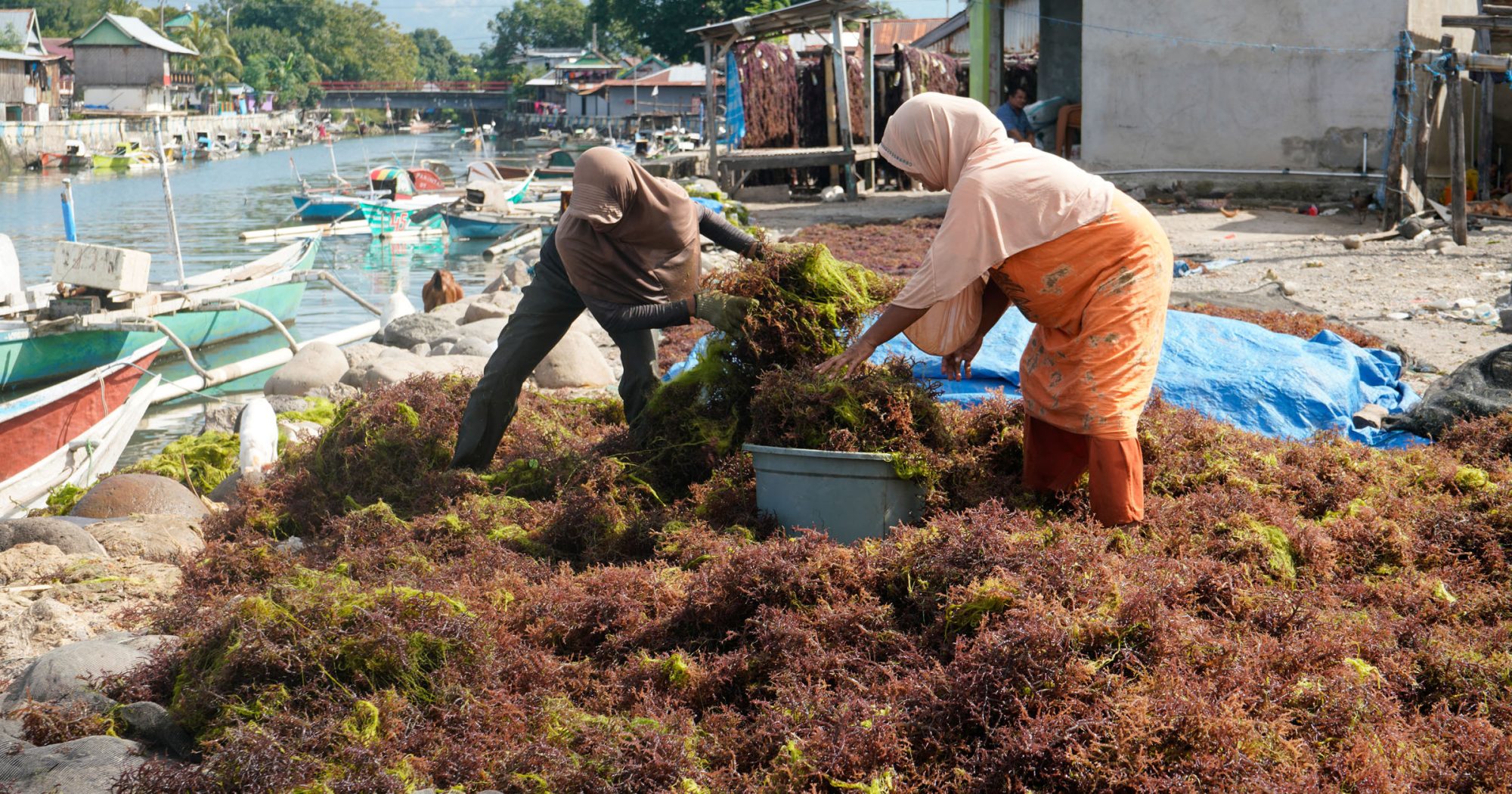
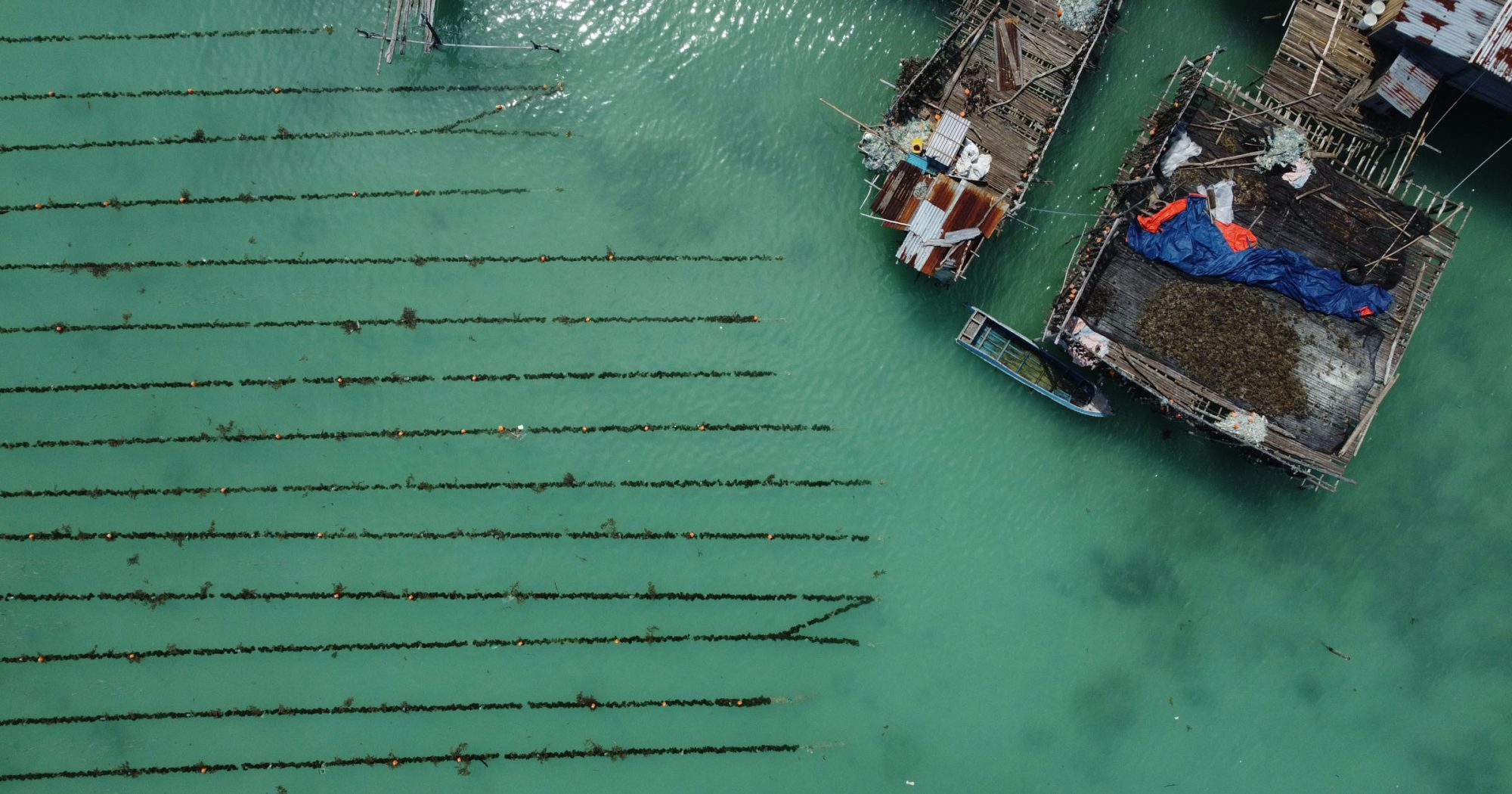
Seaweed laying on the ground in Janaeponto, South Sulawesi, Indonesia.
Close to Semporna, in Malaysia, the drying platforms are usually an extension of the houses on stilts.
The farm site is sometimes only a few meters away from the drying platforms.
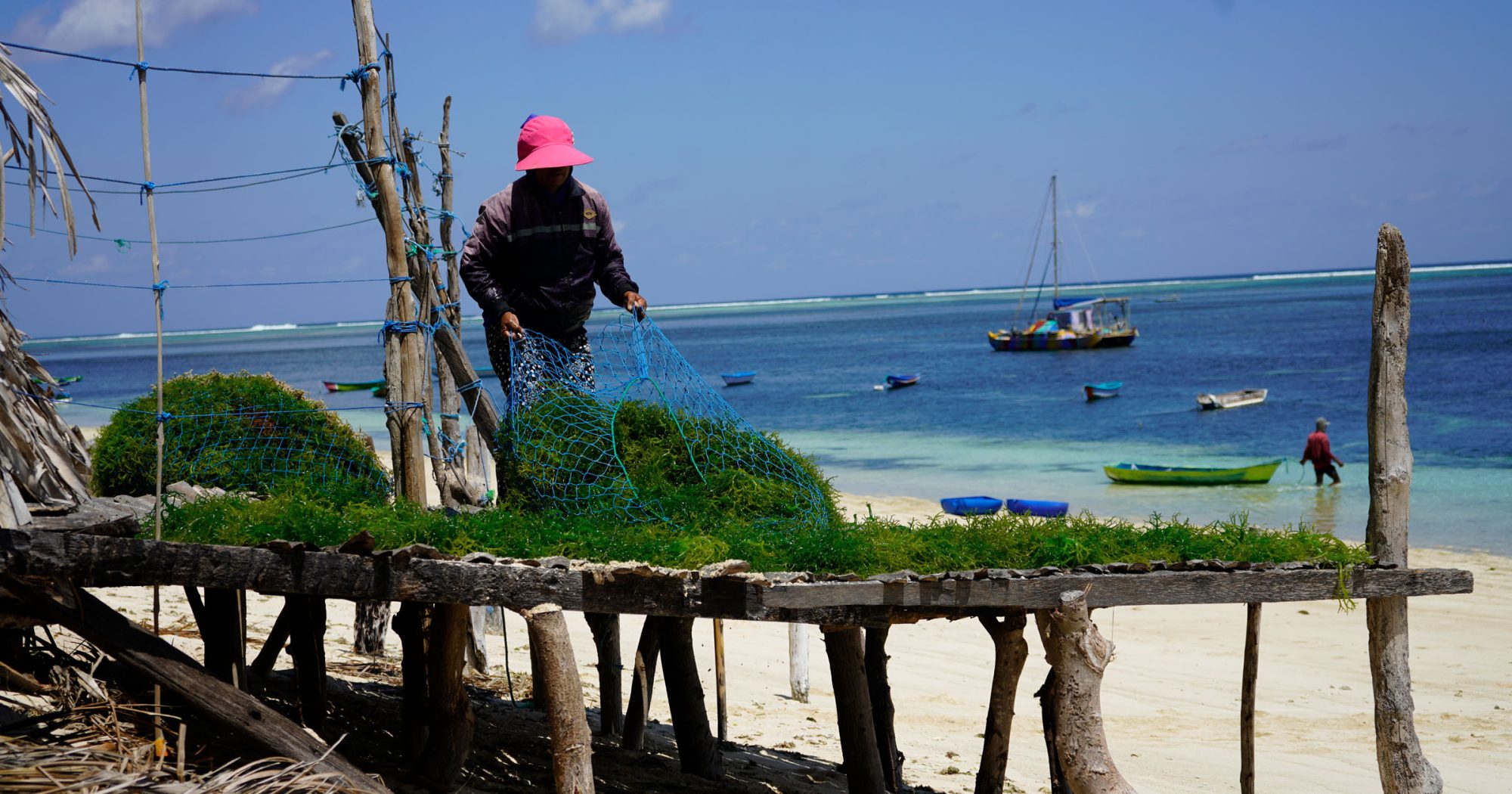
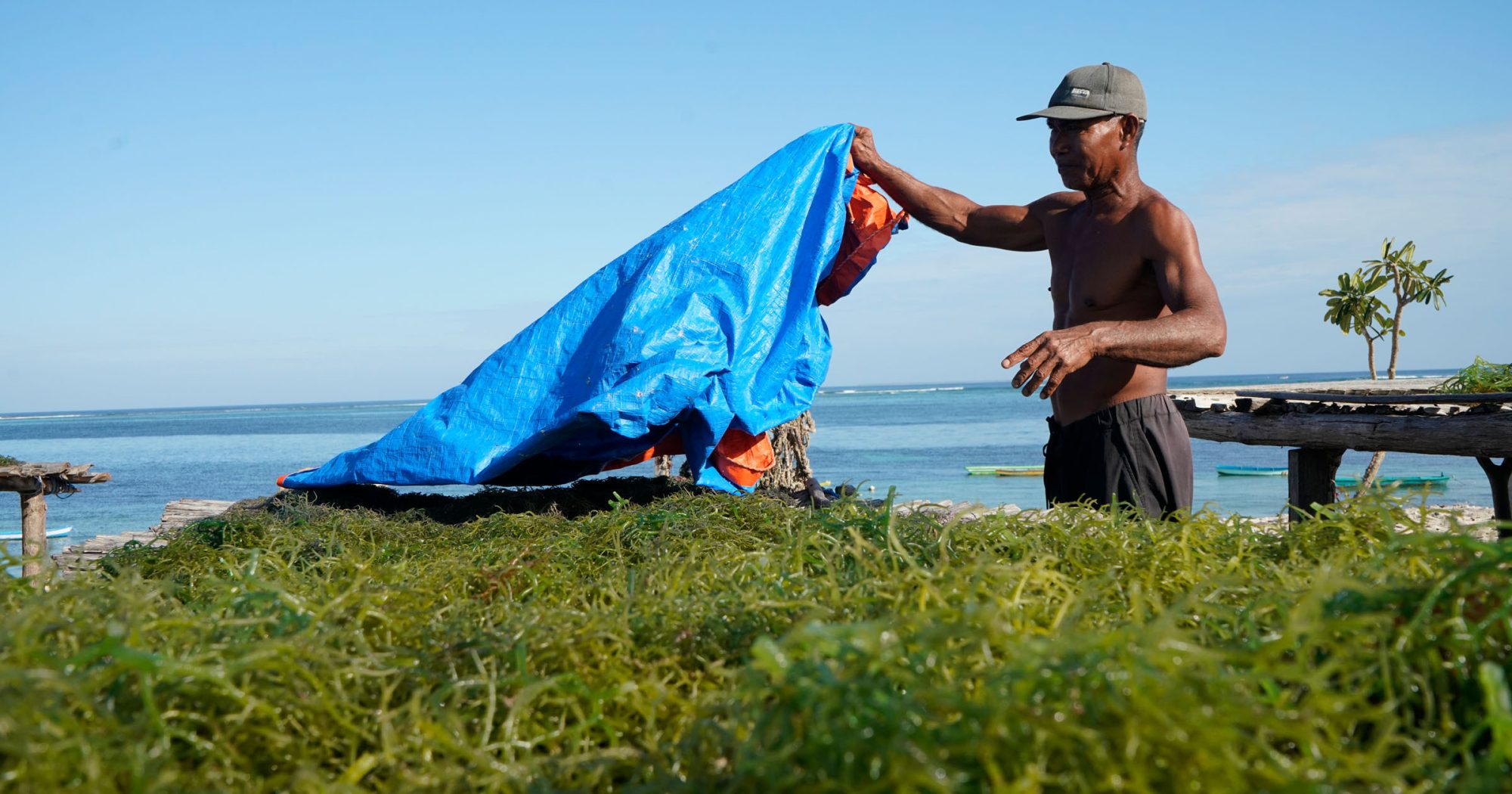
On Rote Island in Indonesia, there are drying beds in public areas, such as the beach. Theft is not a problem here.
The harvested seaweed is spread out and dried under the sun for a couple of days.
A tarp is typically used to cover the seaweed every end of the day or on rainy days.

Hanging to dry

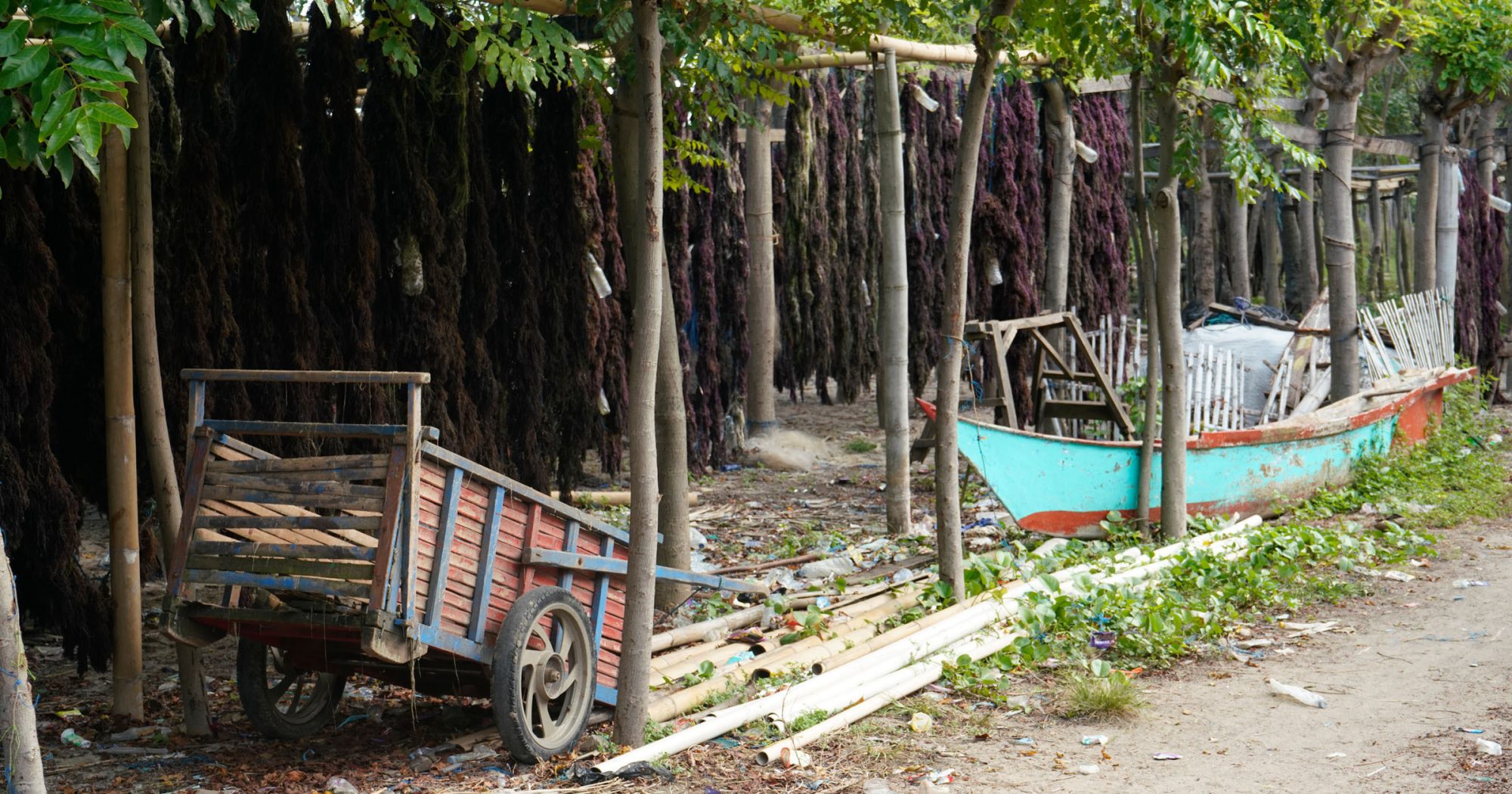
Farmers told us that hanging the harvested seaweed lines above the ground was the best drying method. Doing this ensures that the seaweed dries quickly and prevents it from getting contaminated from lying on the ground.
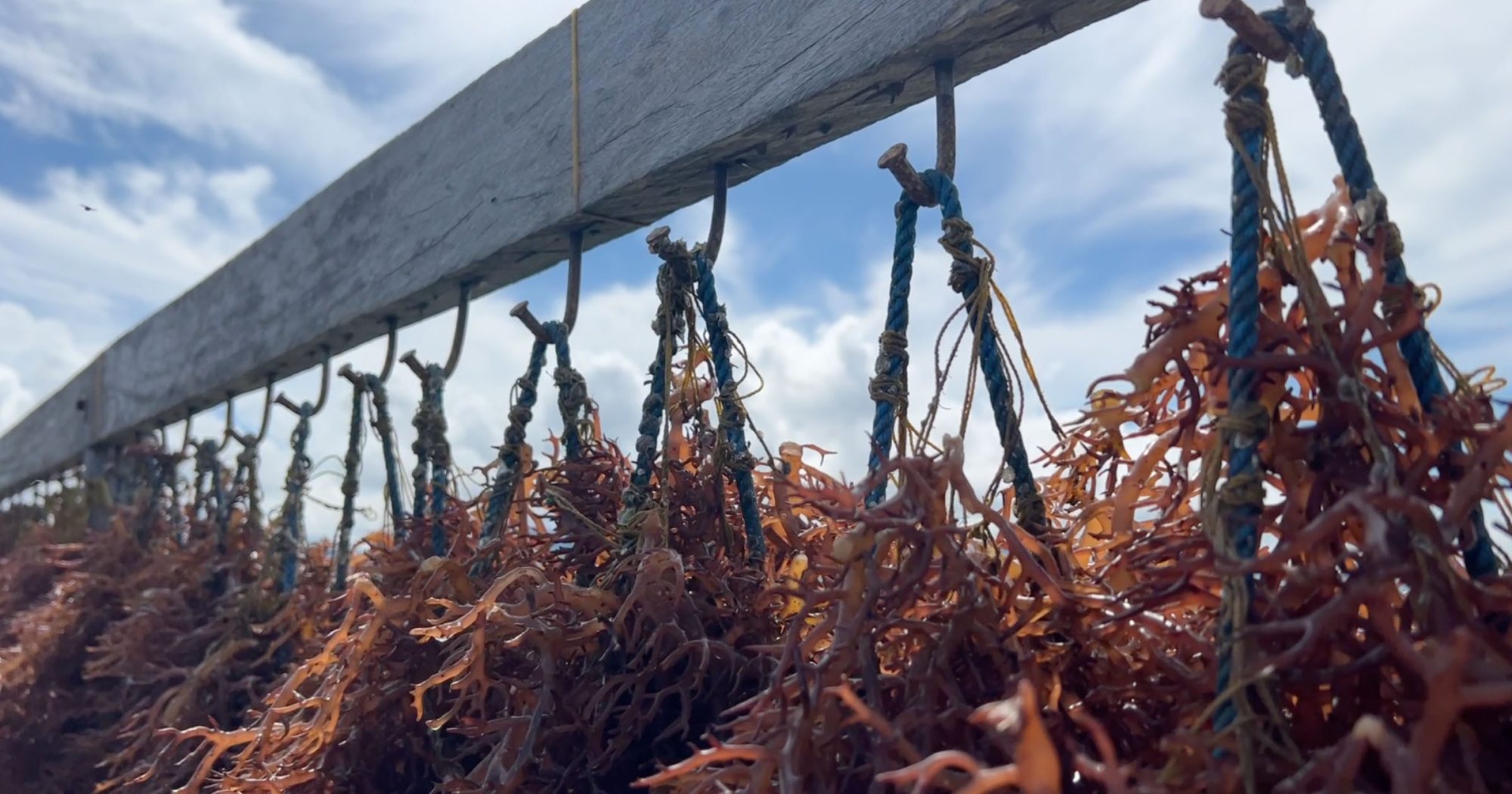
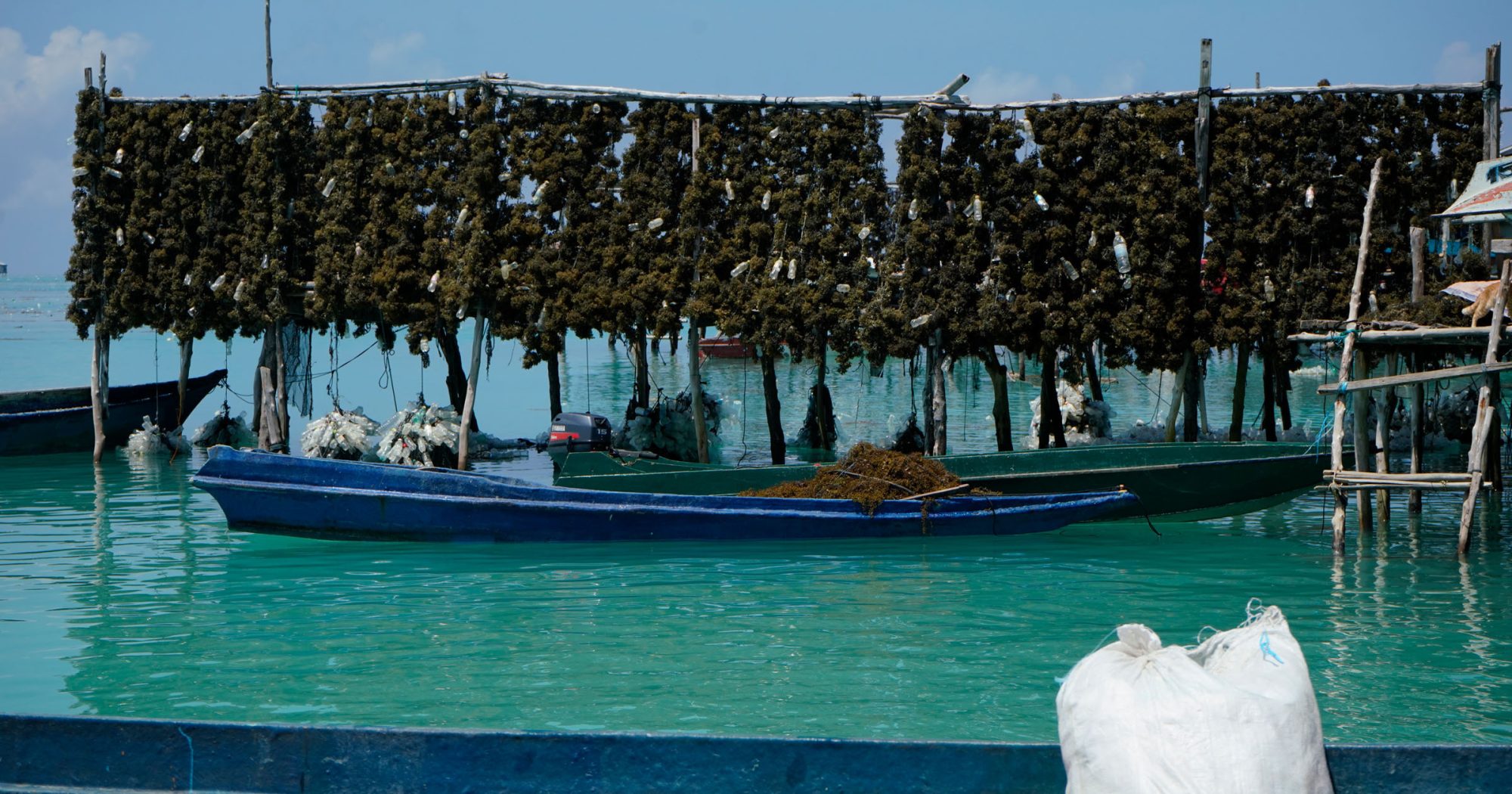
The seaweed can easily be dried by hanging it up on the same lines it had been attached to.
Drying racks surrounding stilts houses in Semporna region, Malaysia.
In Bantaeng, South Sulawesi, the community has build drying racks that all seaweed farmers can freely use.
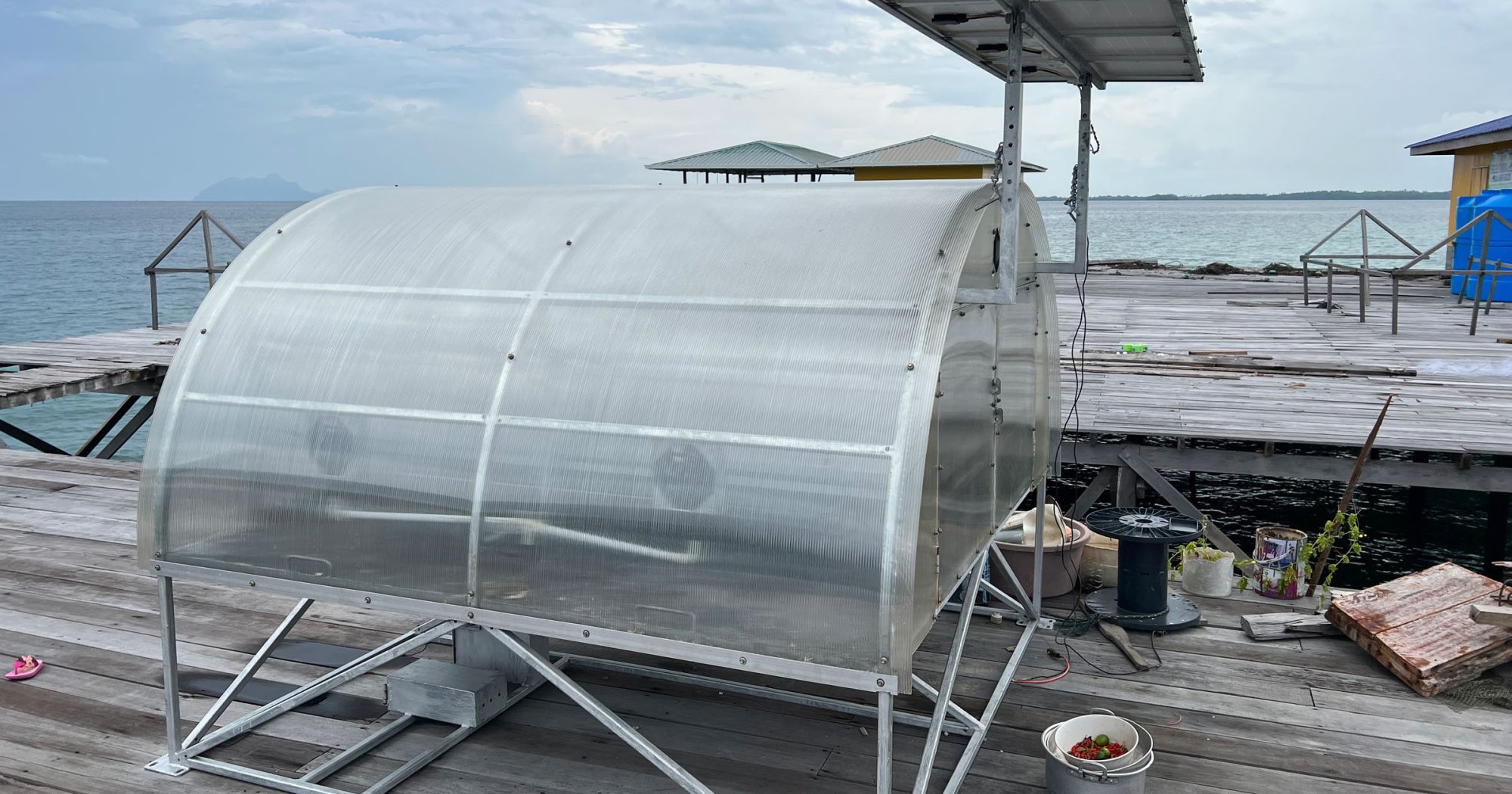
In Sabah, the Malaysian government trialed solar-powered sun drying ‘ovens’. However, the farmers prefer the coventional sun-drying method.

Treatment of cultured lines

Cleaning the culture line after each cycle not only keeps the material intact, it also reduces contamination from disease, epiphytes or similar impurities across farm cycles. When PE ropes remain in ocean environments, they are prone to biofouling. There are several different ways the farmer cleans the ropes:
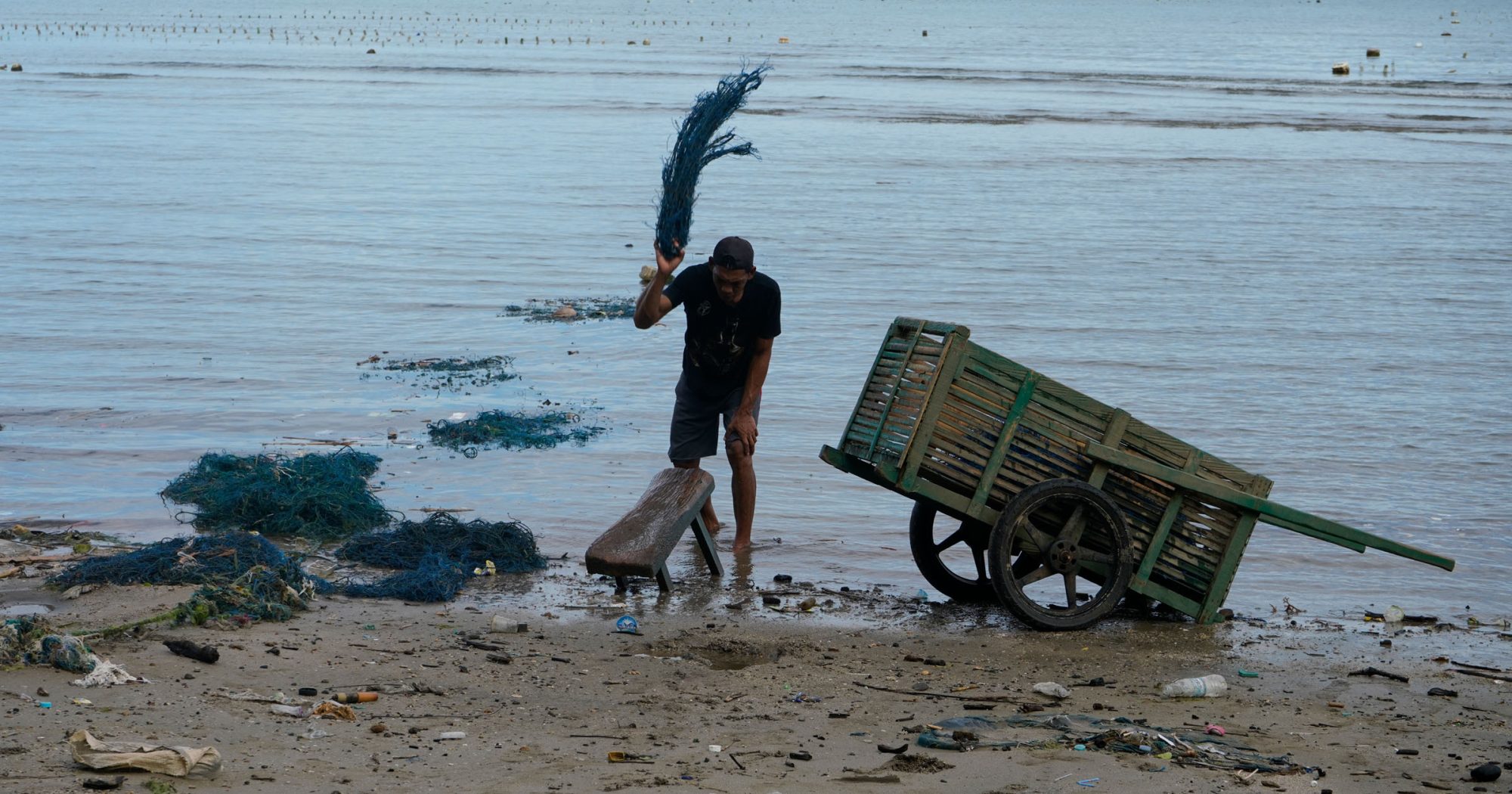
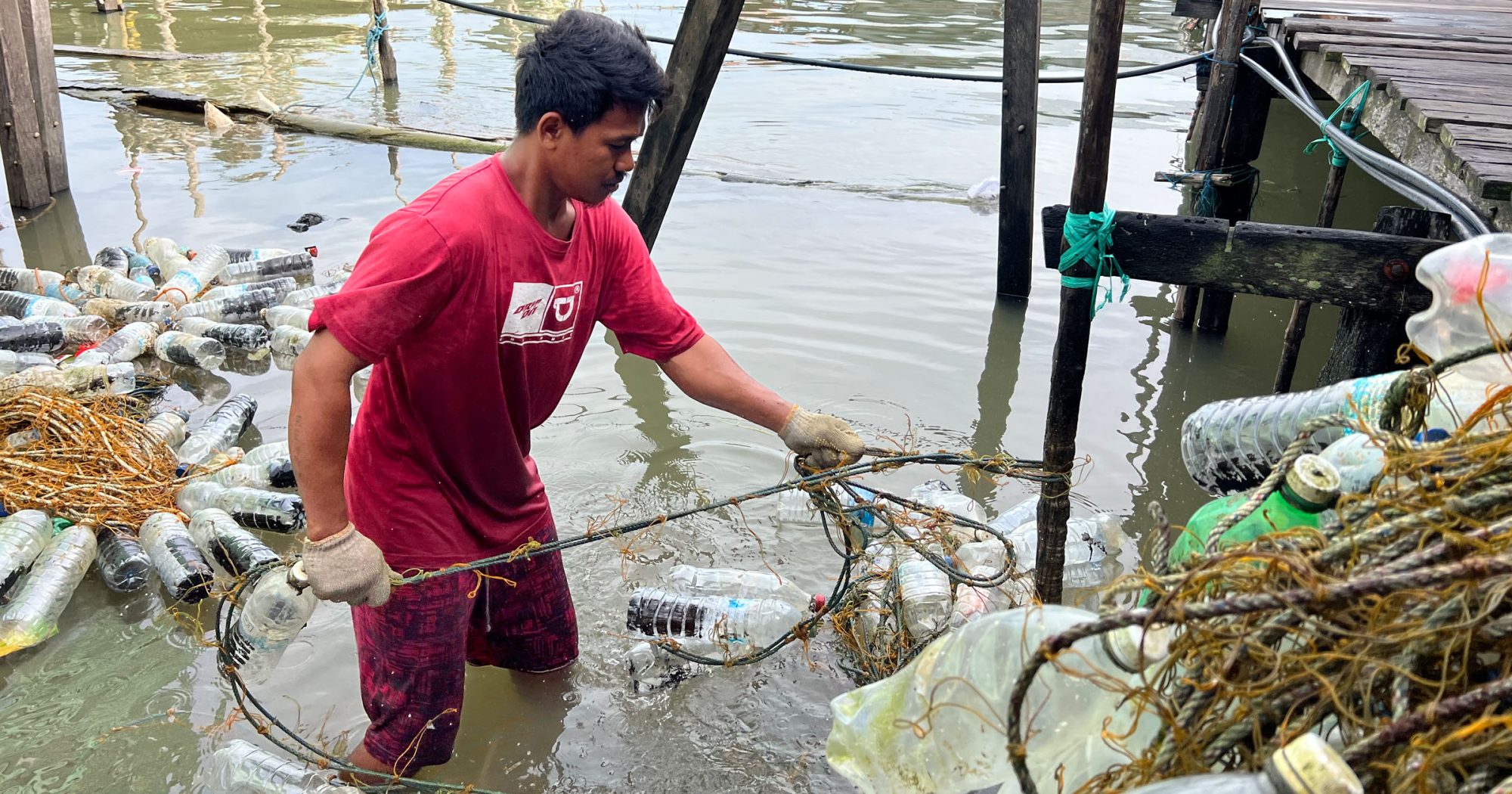
In Bantaeng Regency, South Sulawesi in Indonesia, farmers smash used lines on wood in order to remove any unwanted residues on the line.
On Nunukan Island, in Indonesia, it is common practice to rub the lines to get rid of any unwanted residues. Farmers struggle in particular with small oyster spat in certain seasons.
On Rote Island, in East Indonesia, the cleaning is done by simply rubbing parts of the rope on to each other. A fairly time intensive task.
Close up picture of the lines that are treated post-harvest.
Cleaning the ropes can also be done in between cycles at sea.
Laying the lines under direct sun light for a day or two will also help to limit biofouling. Takalar, South Sulawesi.
Caribbean

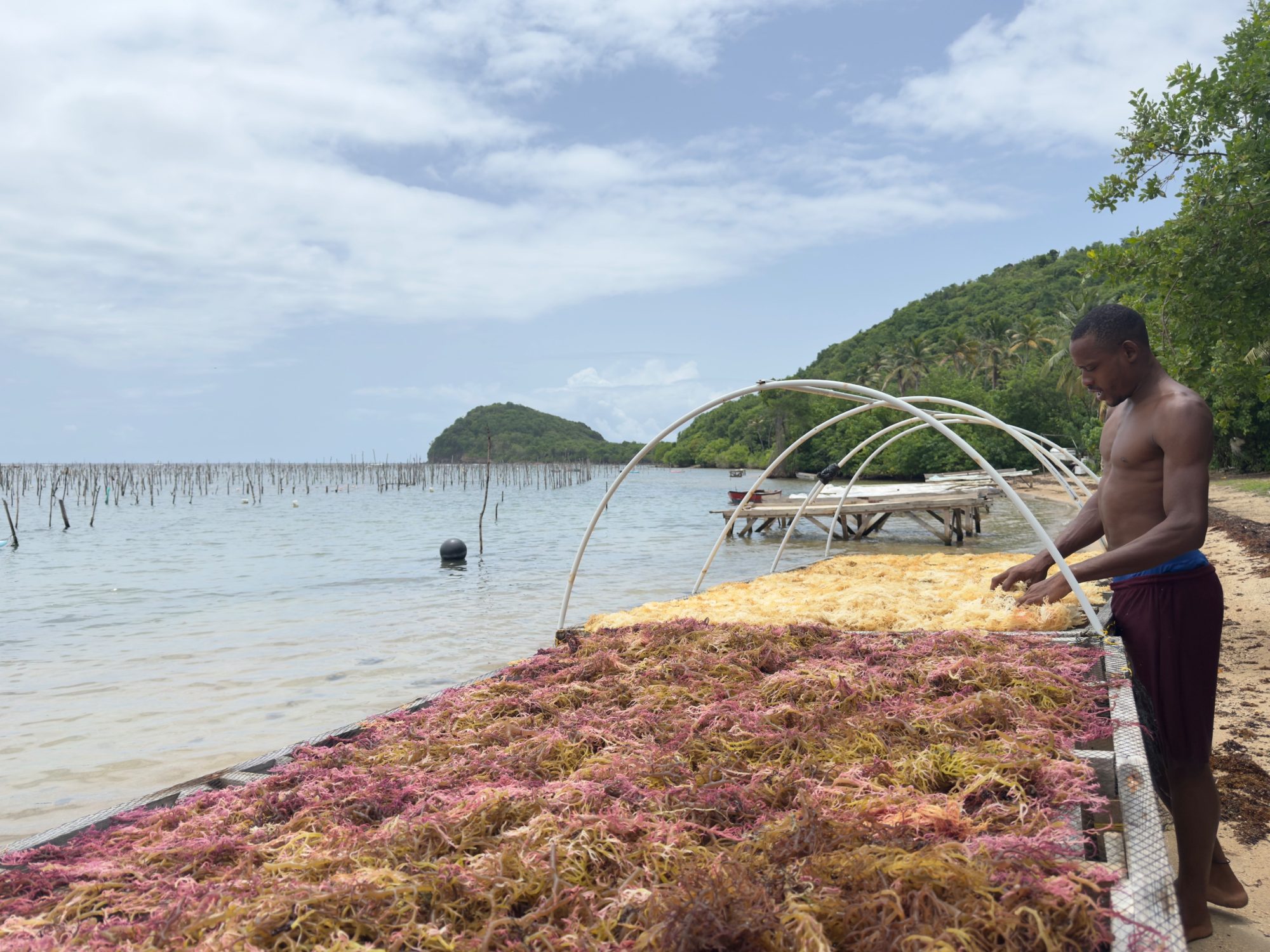
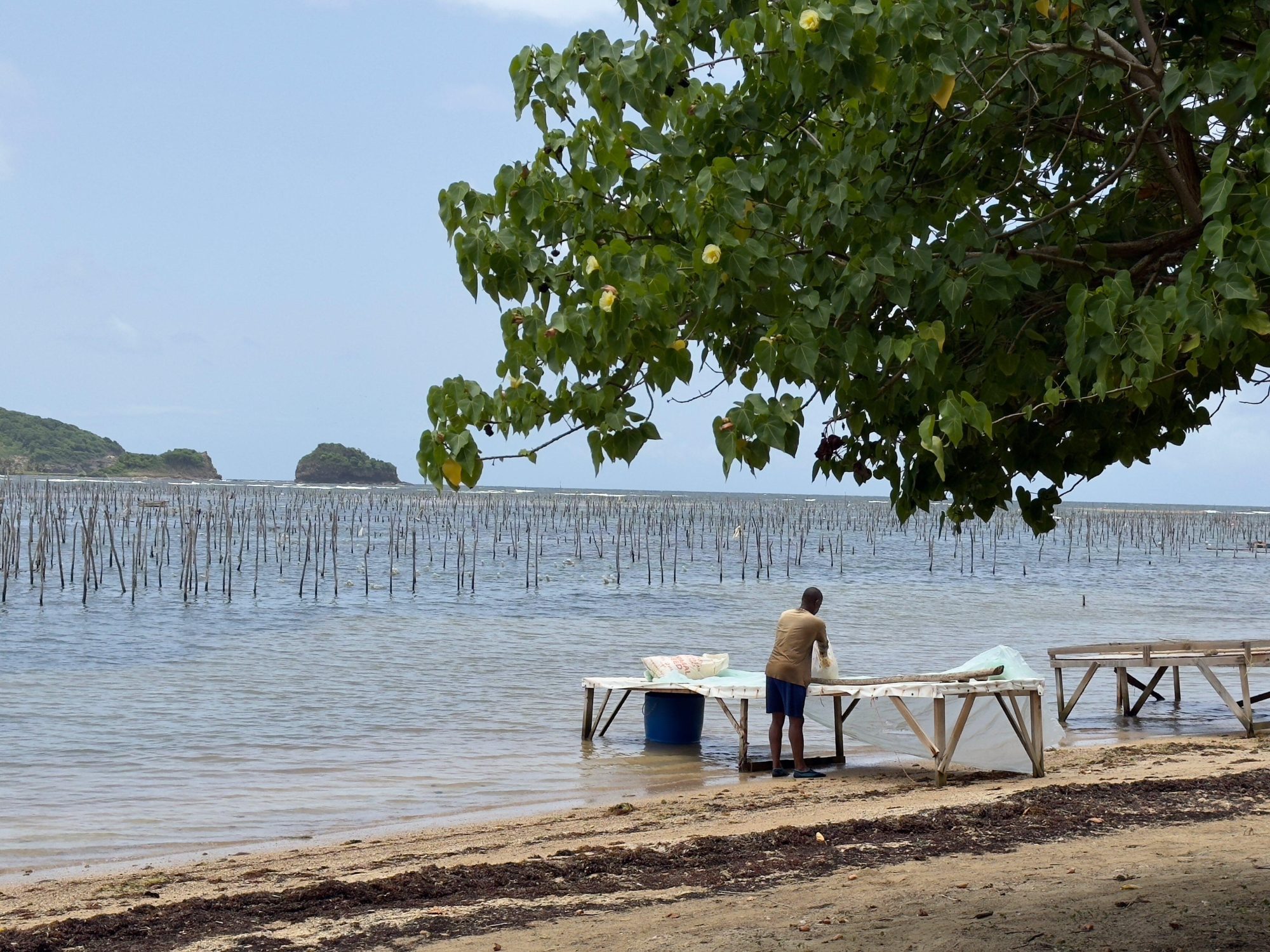
Due to the different color varieties, post-harvest processes in the Caribbean islands include additional steps before drying. Farmers bleach gold seaweed by placing it directly under the sun, sometimes covered with plastic sheeting, to enhance appearance and secure quality. Seaweed is graded from A to C, from highest to lowest. In St. Vincent and the Grenadines and in Grenada, farmers rinse seaweed with freshwater to remove impurities and salt—purple and green varieties before drying, and gold after bleaching.
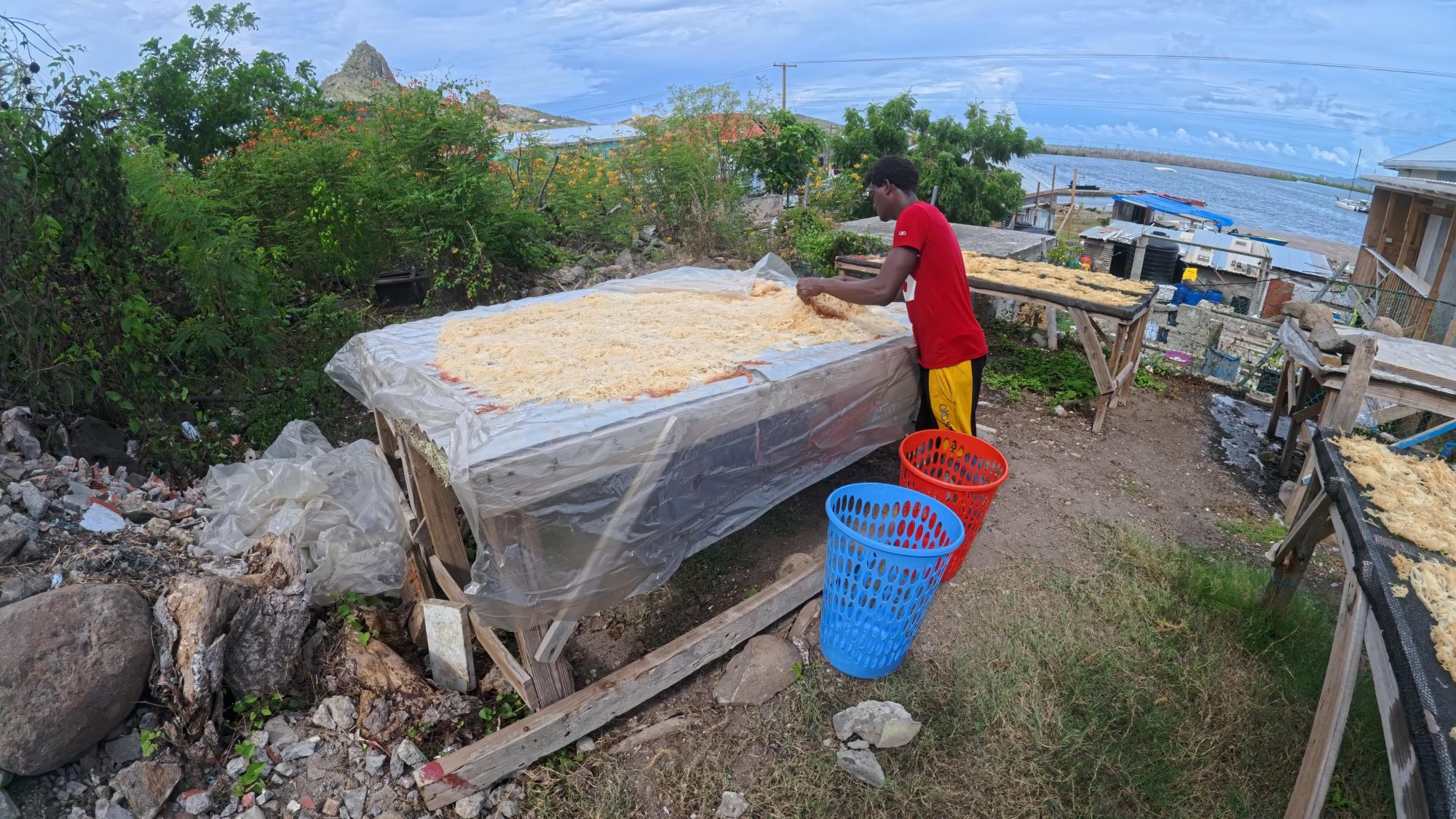
St Vincente: Freshly bleached seaweed spread evenly over raised beds and covered with plastic sheeting to protect from unexpected rain.
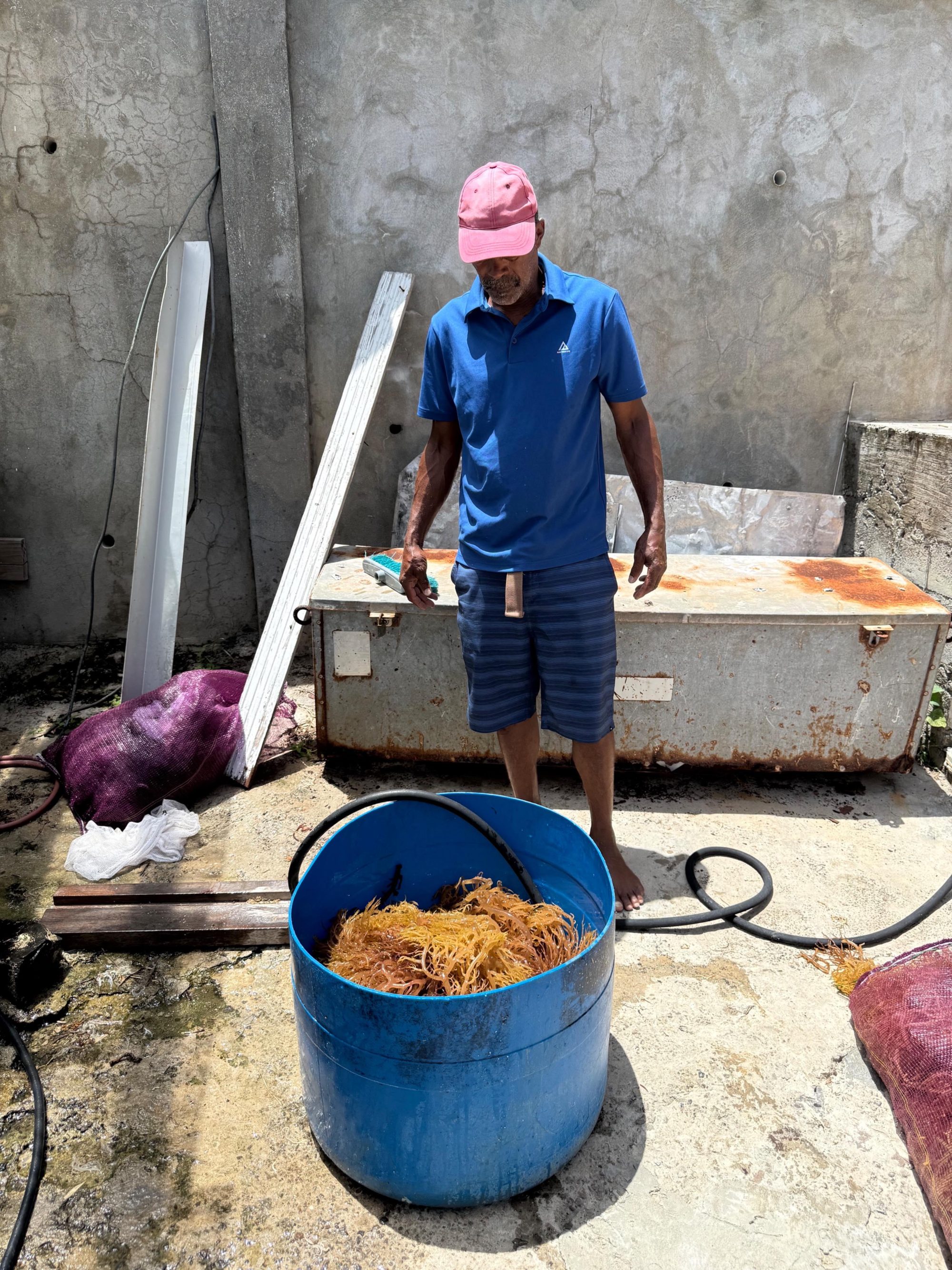
St Vincente: Rinsing harvested seaweed with freshwater in a plastic drum to remove salt and impurities.
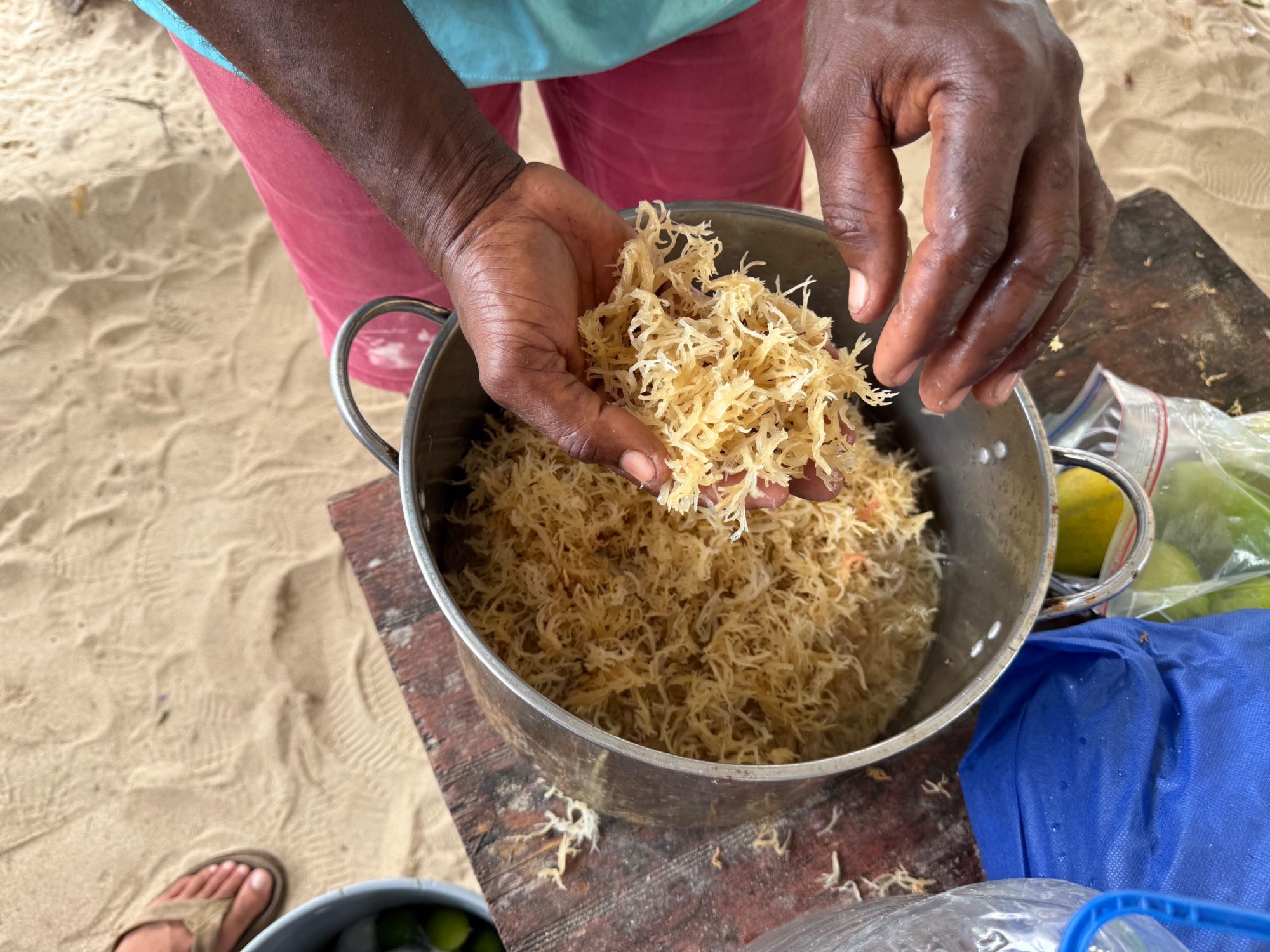
Grenada: Freshly harvested seaweed being rinsed and cleaned  before making a seamoss drink.
Grenada: Freshly harvested seaweed being rinsed and cleaned before making a seamoss drink.

Drying the seaweed

Moisture content is not formally measured; farmers judge dryness visually and by feel, aiming for a crispy, non-sticky texture that signals market readiness. Drying usually takes around three days under good conditions and is often carried out at farmers’ homes, which limits capacity and leaves crops vulnerable to sudden rainfall. Some farmers have built joined drying beds, but surveillance remains in several areas a major issue, as stealing of biomass that is drying is not unusual. 
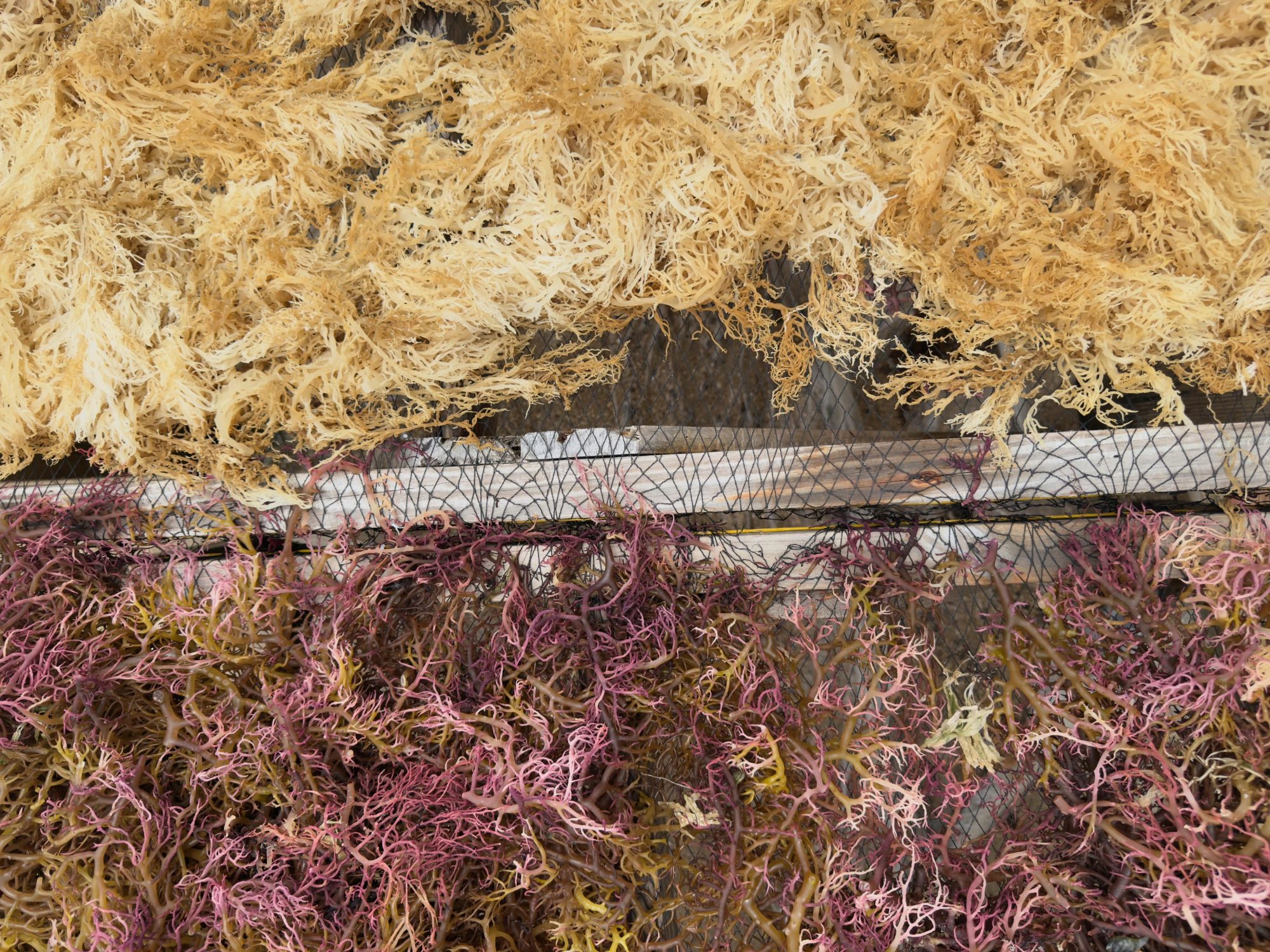
St Lucia: Blanched and purple seaweed, sorted for quality and market needs
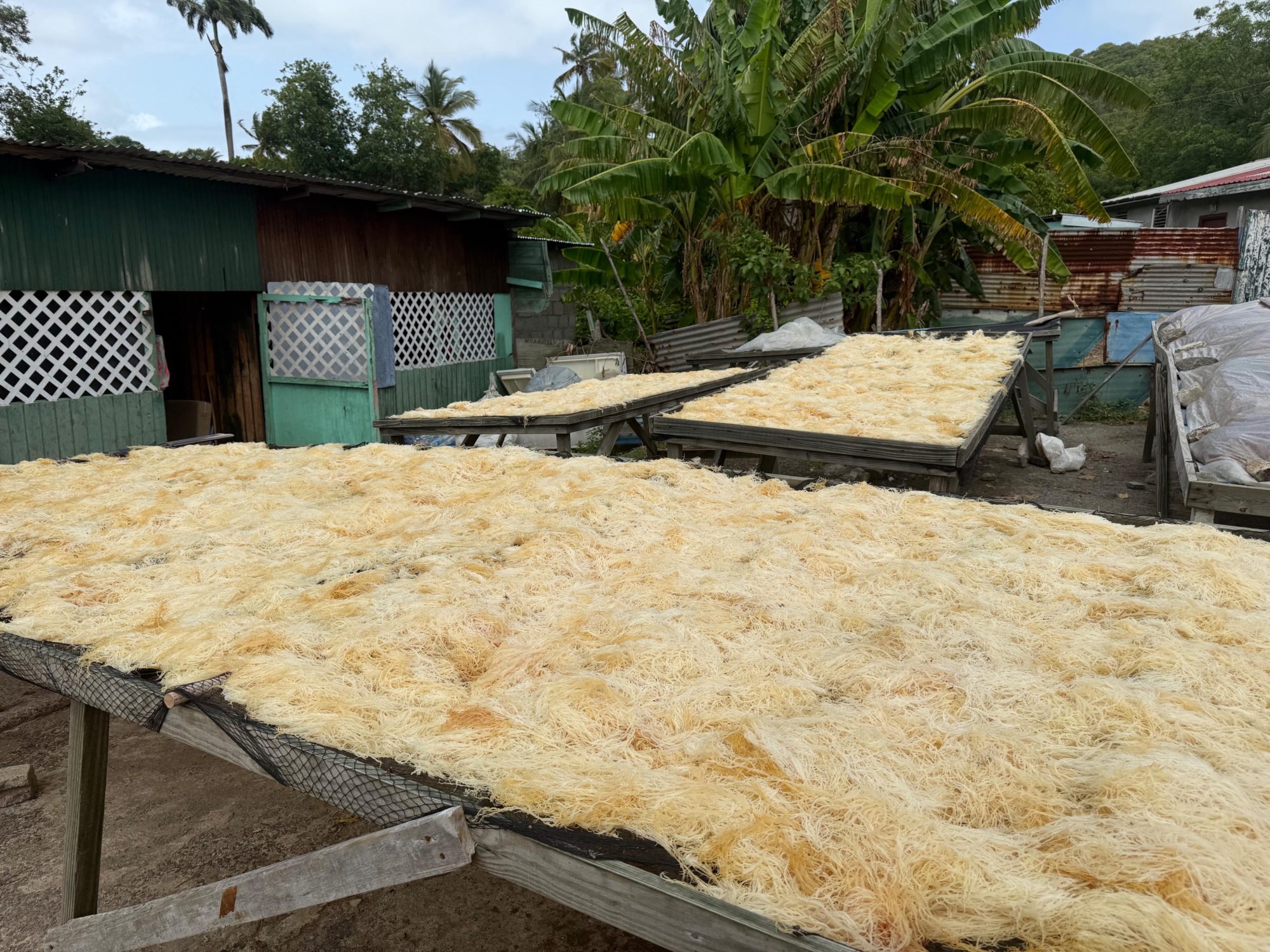
St Lucia: Blanched seaweed laid out for natural sun-drying

Laying to dry

Laying seaweed to dry remains the most widespread approach. Farmers use beaches, yards, or raised platforms where sunlight and airflow are abundant. This method allows easy handling of large volumes. For gold seaweed, bleaching under plastic sheeting is often integrated, enhancing uniformity and appearance before grading for market sale.
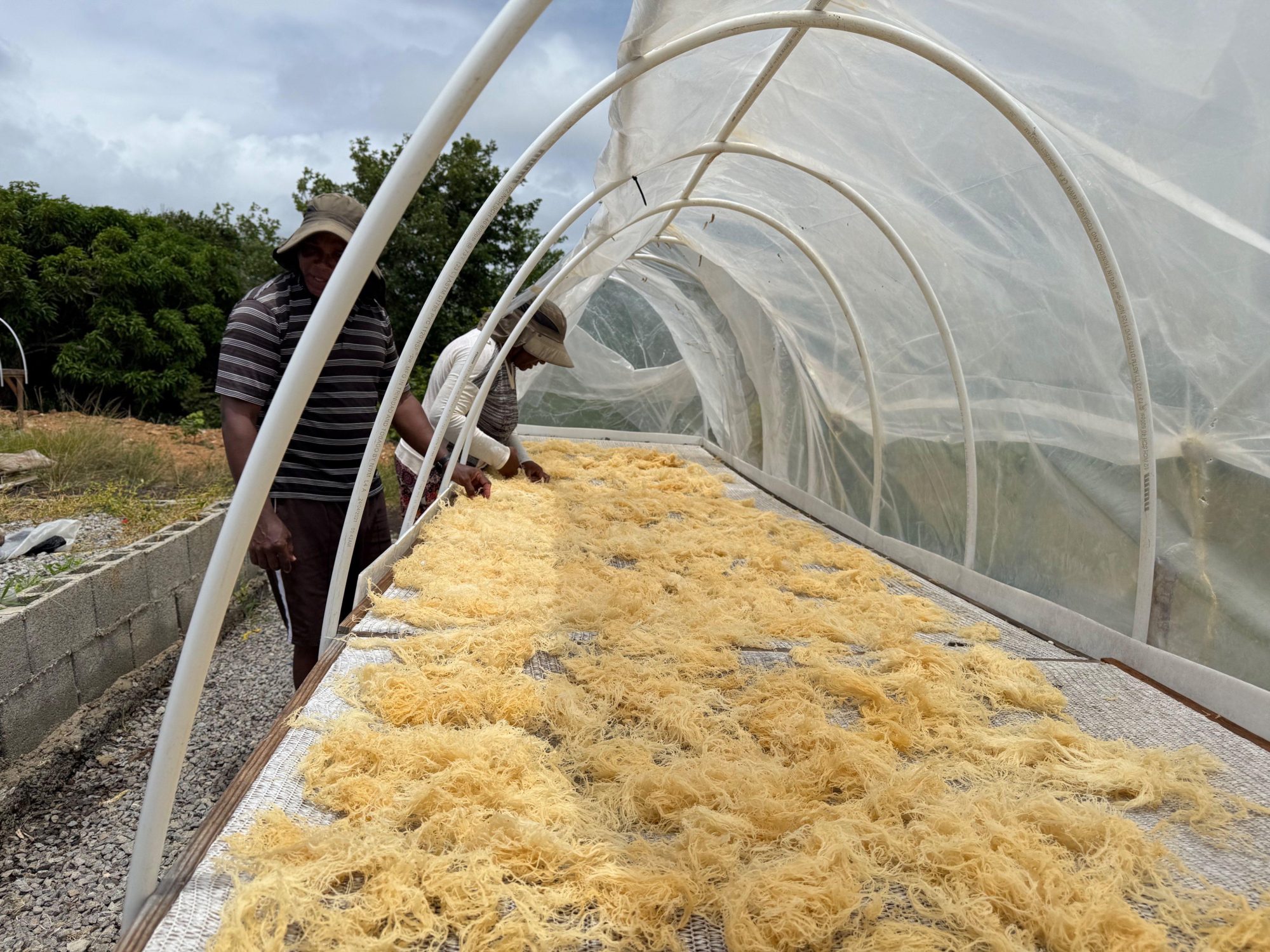
St Lucia: Farmers spread bleached gold seaweed on raised drying tables under plastic covers to protect it from rain and ensure even drying.
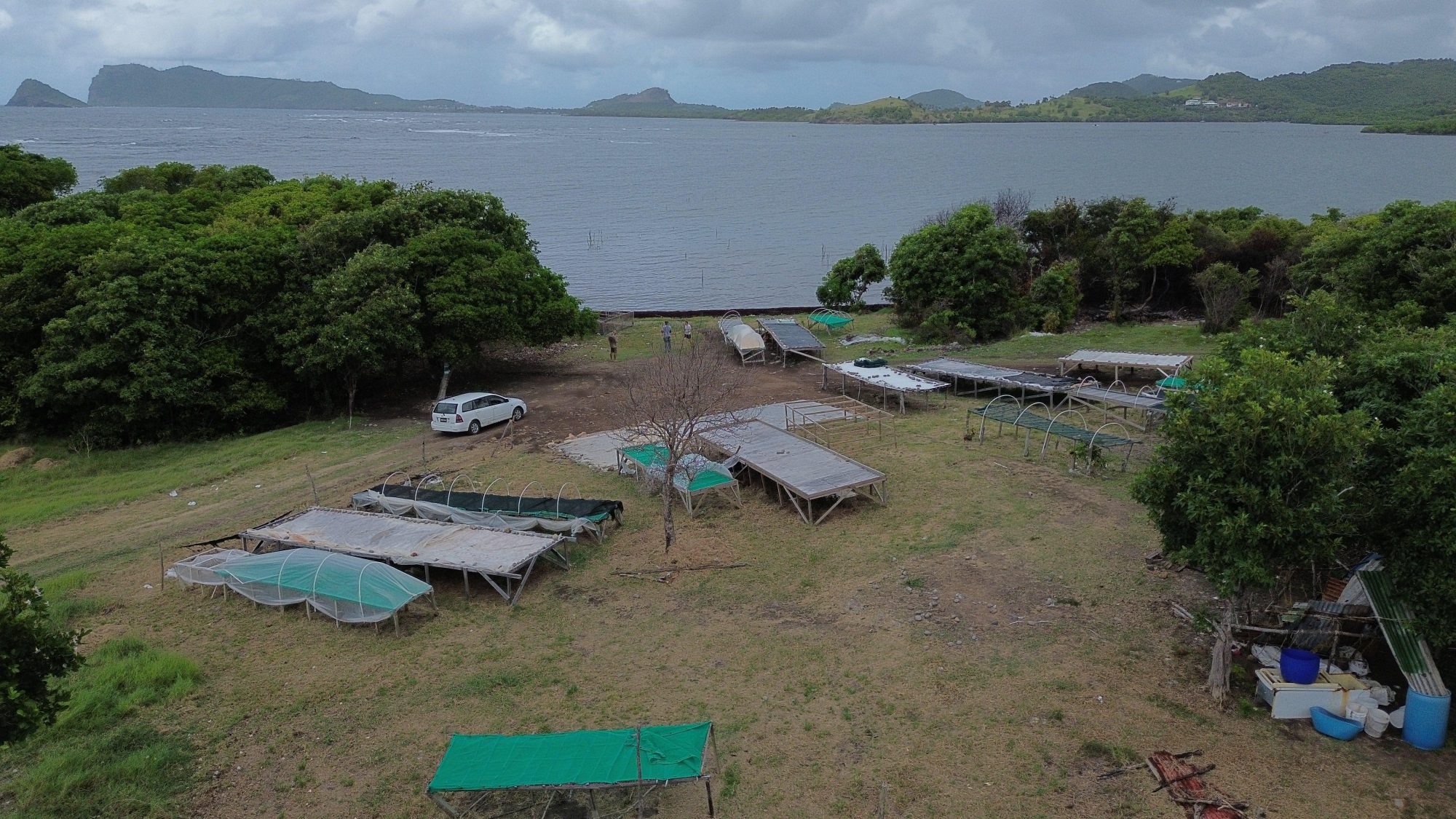
St Lucia: Community drying beds near seaweed sites in Savennes Bay, St Lucia.
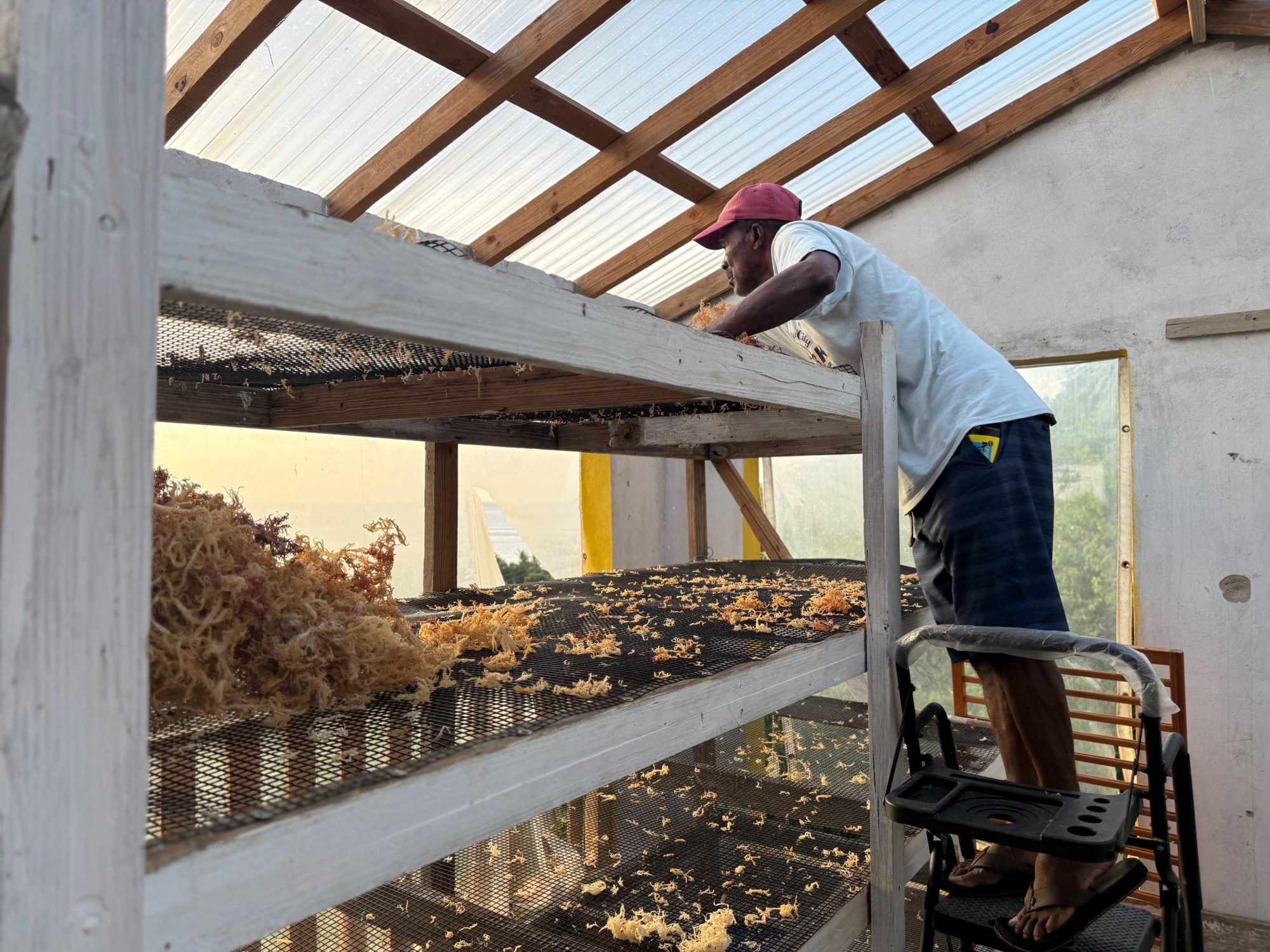
St Vincente: Farmer arranging bleached gold seaweed on elevated mesh racks inside a covered drying house to ensure uniform drying.
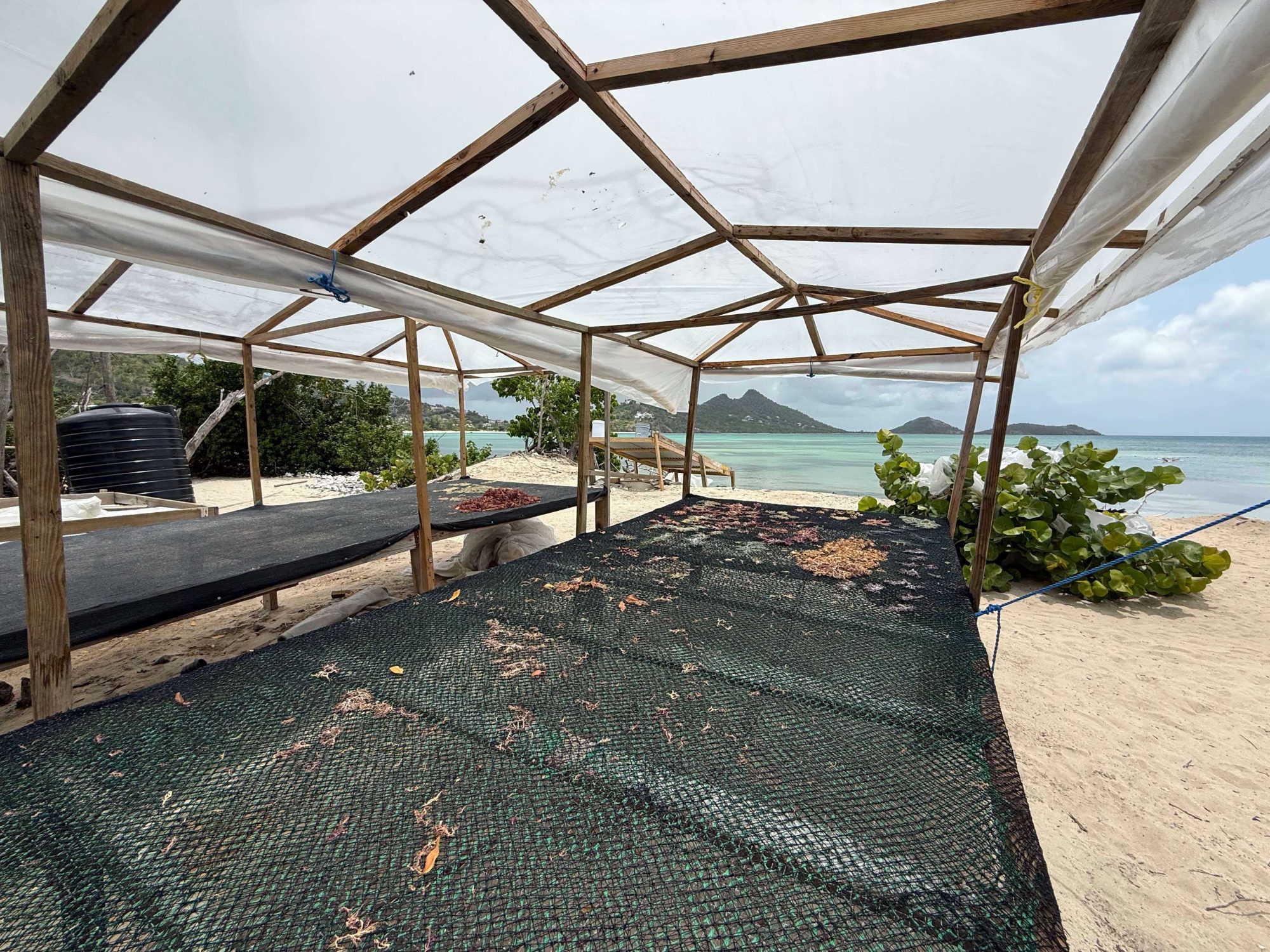
Grenada: Community drying platforms built along the beach, allowing farmers to dry purple and gold seaweed close to the sea.
St Lucia: Laying gold and purple seaweed to dry on raised mesh platforms near the shoreline in St. Lucia.
St Lucia: Bleached gold seaweed drying on elevated racks in a backyard area to enhance color and texture.
St Lucia
St Lucia

Hanging to dry

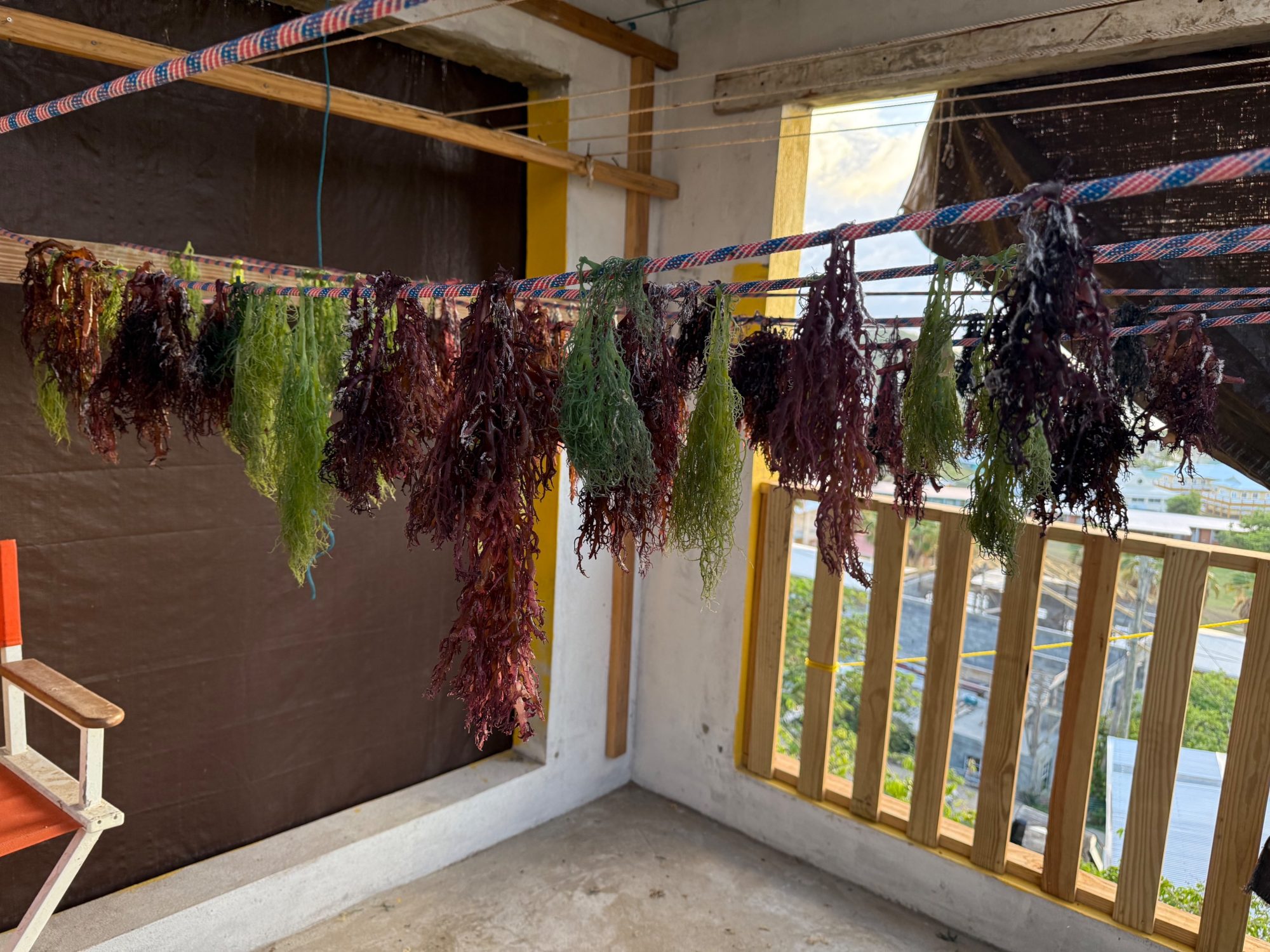
Hanging seaweed lines is practiced mainly for purple and green varieties to protect their natural pigments. The method minimizes ground contact and contamination, using shaded, ventilated areas or tree branches for suspension. This slower, indirect drying process helps preserve color vibrancy and texture, ensuring a premium product presentation.
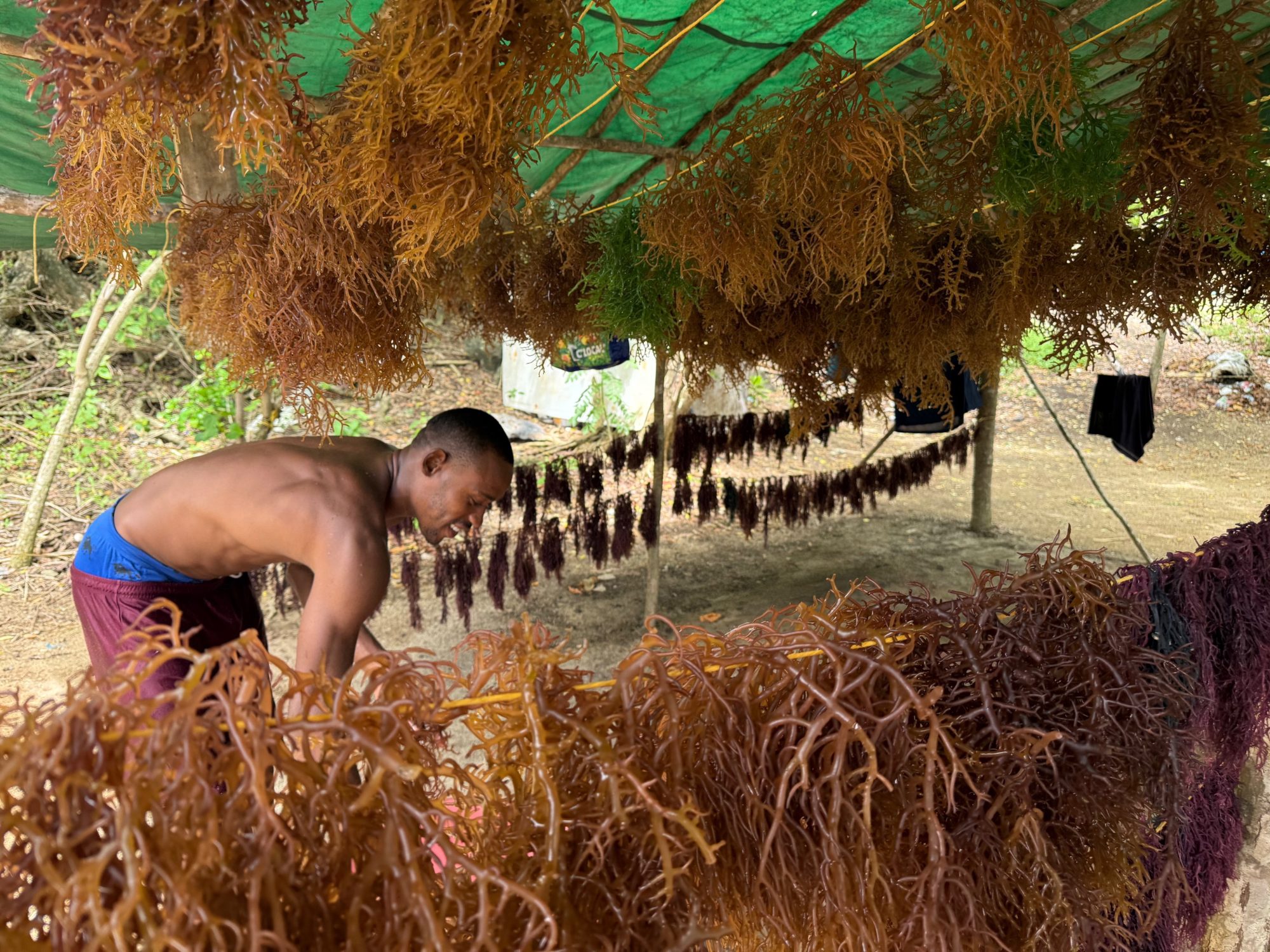
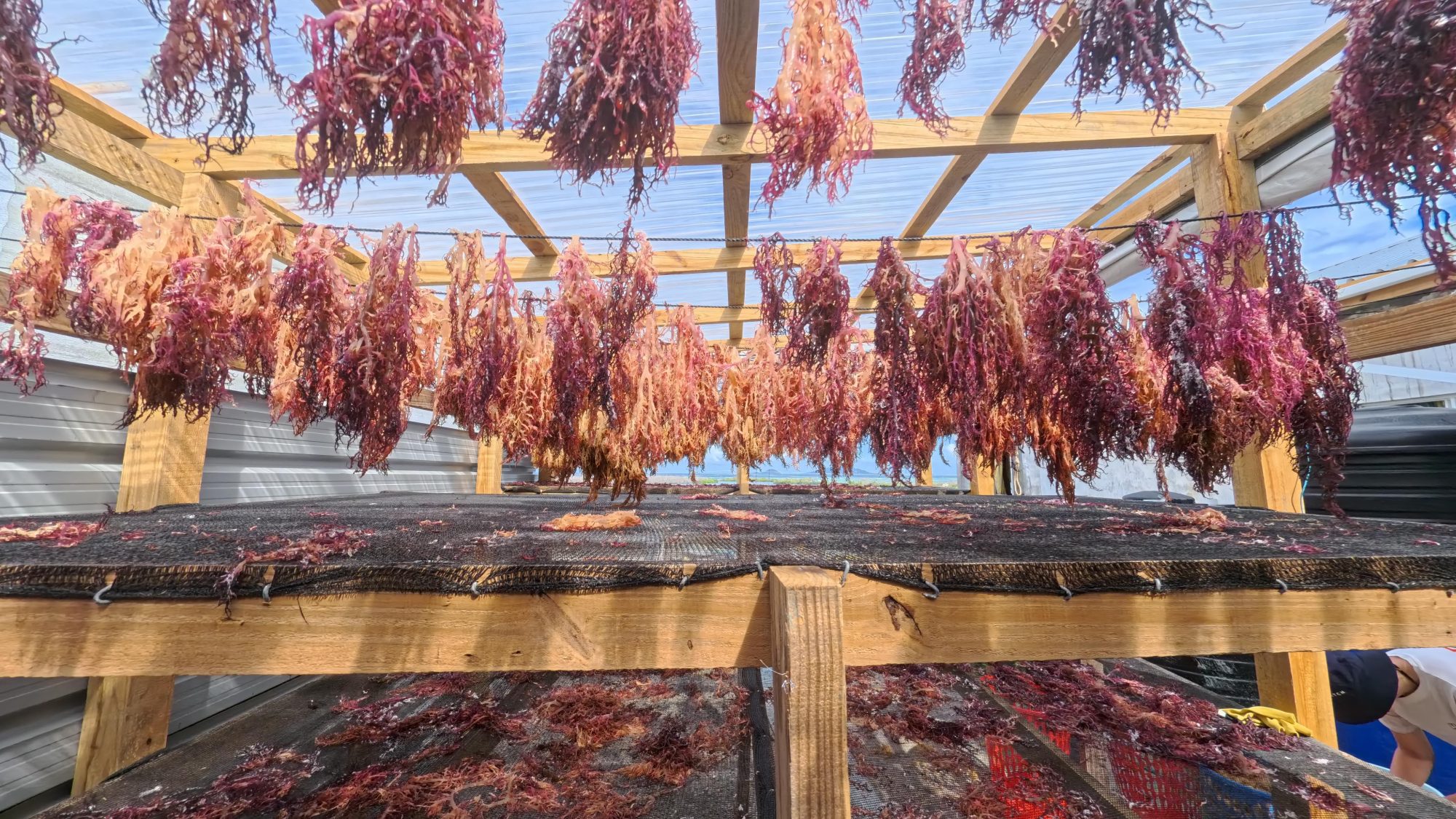
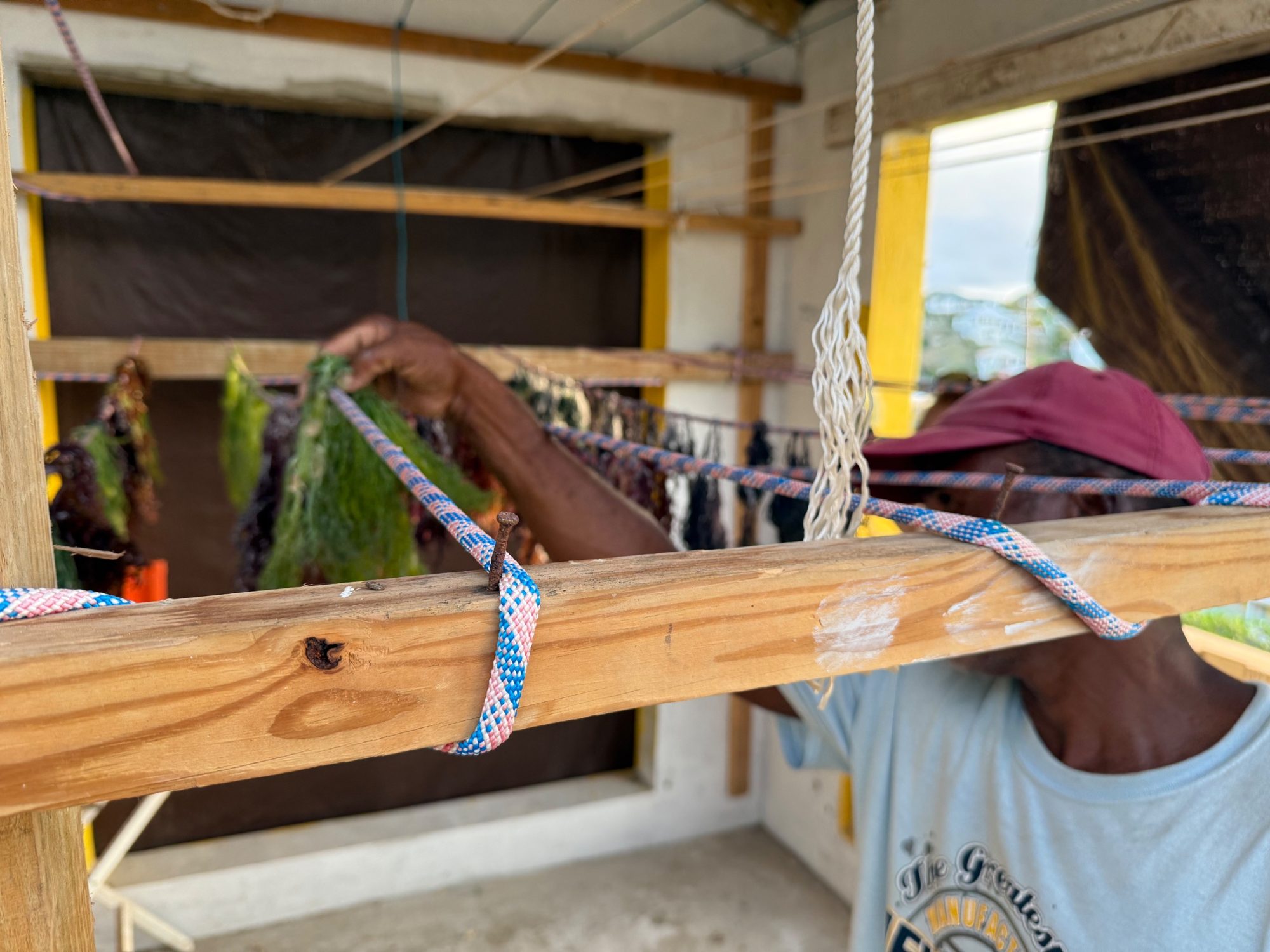
St Lucia: Farmer hanging freshly harvested purple, green, and gold seaweed under a shaded structure to dry while preserving colour and texture.
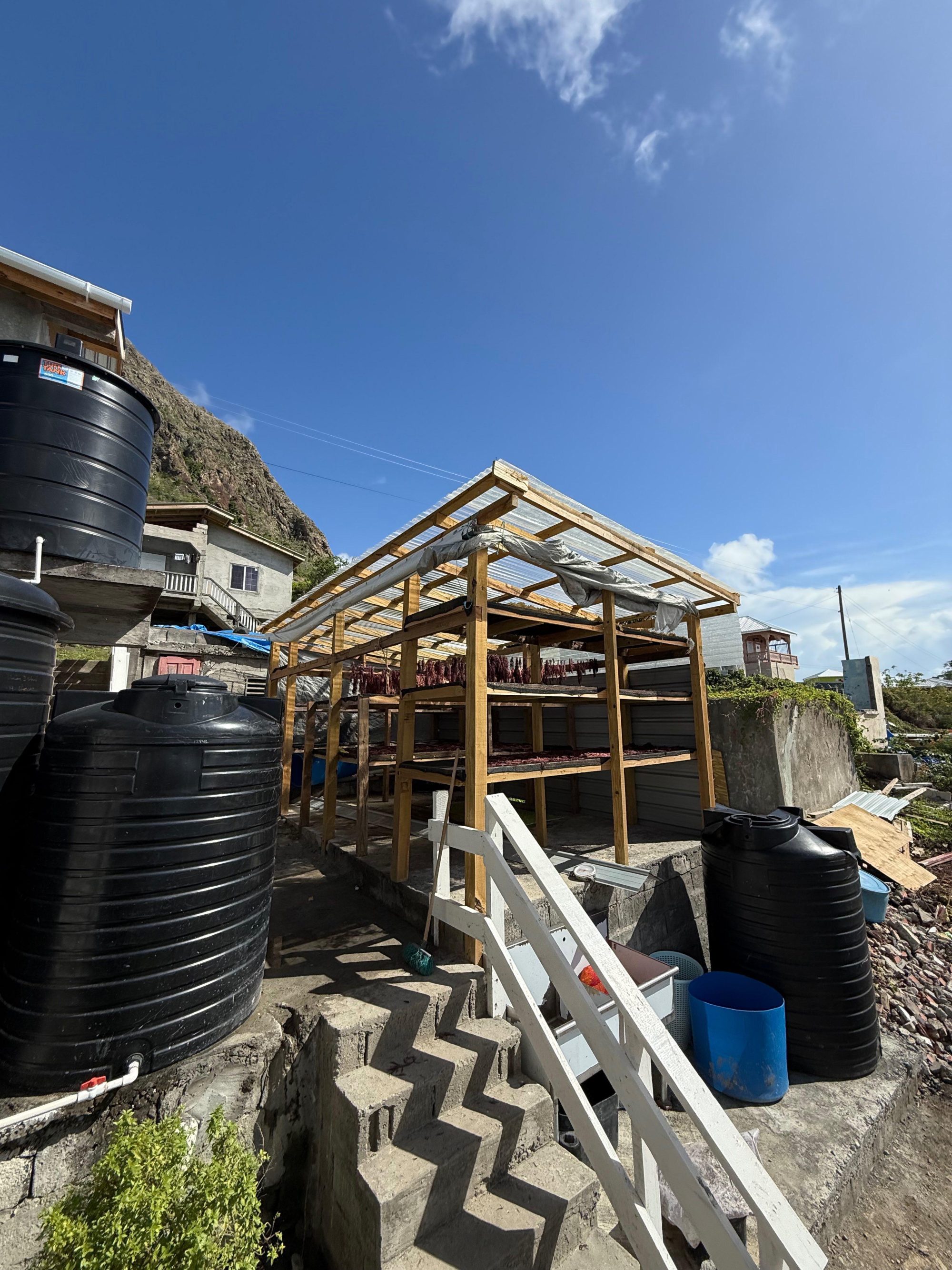
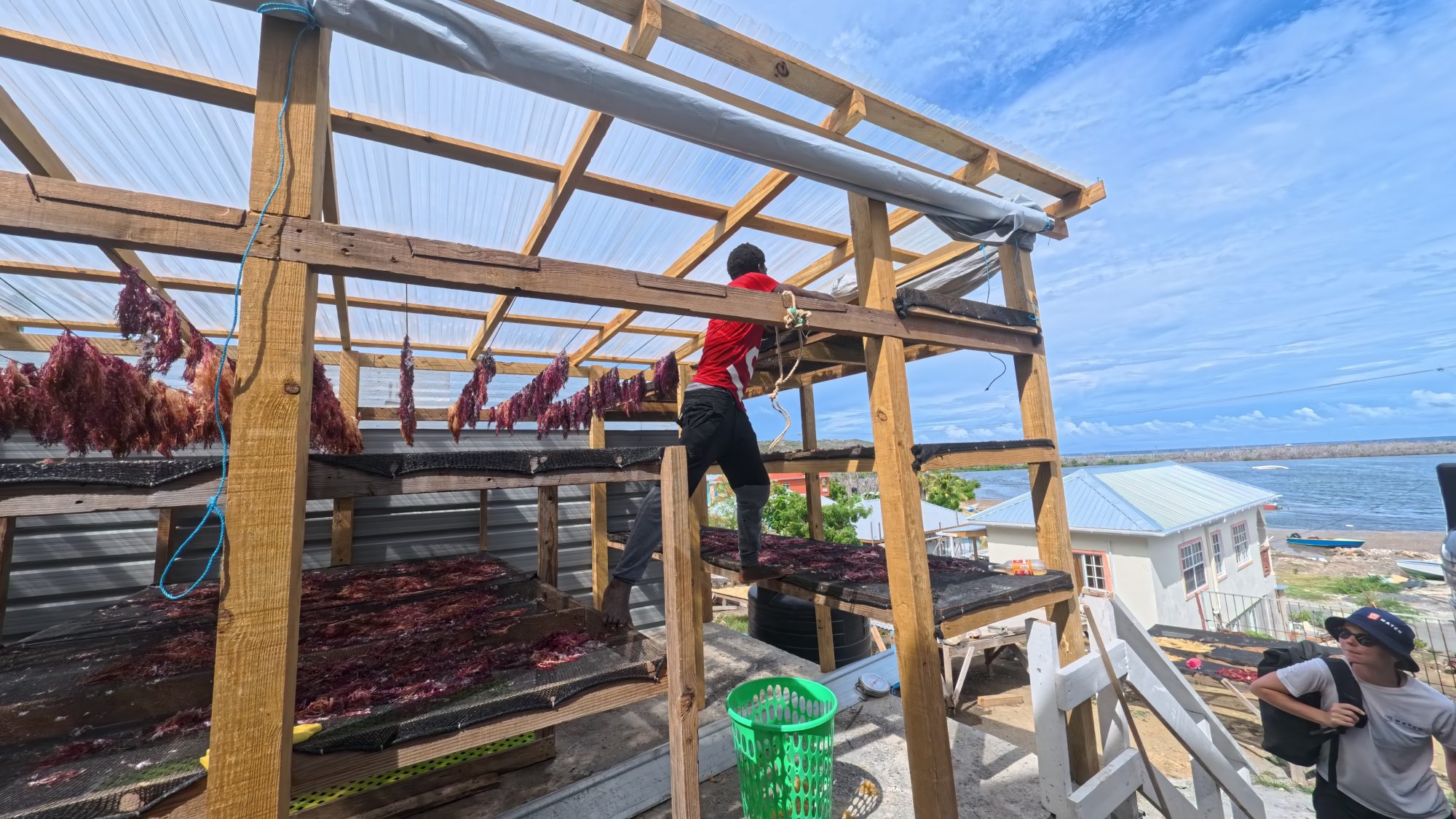
St Vincente: Multi-level drying racks built with wood and mesh allow improved airflow and protection from rain during the drying process.
St Vincente: Hanging lines used indoors to dry small batches of purple and green seaweed, preventing ground contact and contamination.
St Vincente: Community-built drying house designed to enhance drying efficiency and reduce exposure to rainfall and theft.
St Vincente: Farmer arranging freshly rinsed seaweed by color on drying ropes inside a ventilated structure for even drying.
St Vincente: Drying facility operated by local farmers’ association, combining hanging and laying methods to increase capacity.

Treatment of culture lines

On the islands, culture lines remain in the sea after harvest and are typically cleaned every two to three cycles. Sometimes they are brought to farmers’ homes and soaked in chlorinated water for cleaning. After about three years, lines are usually fully replaced.
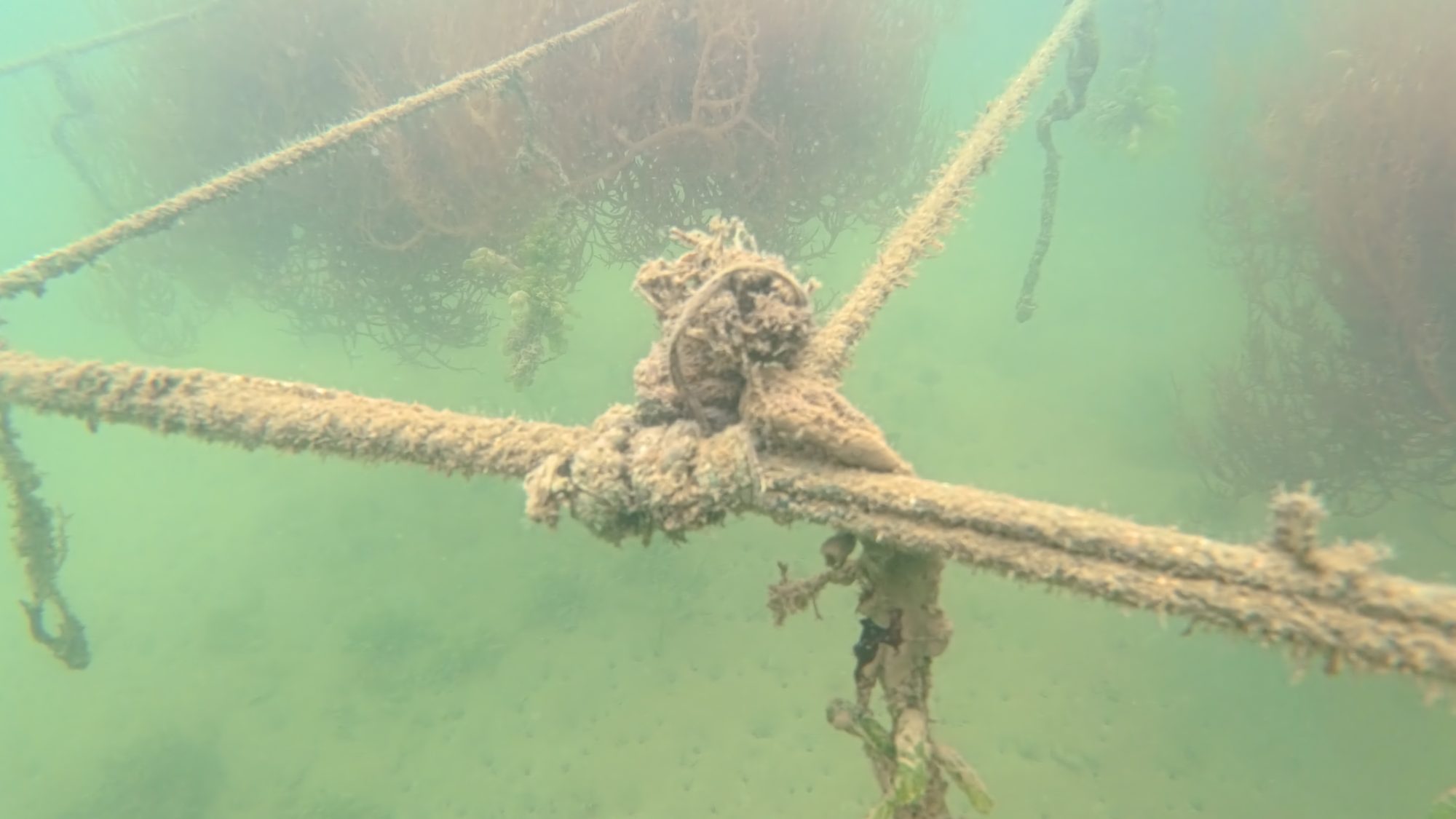
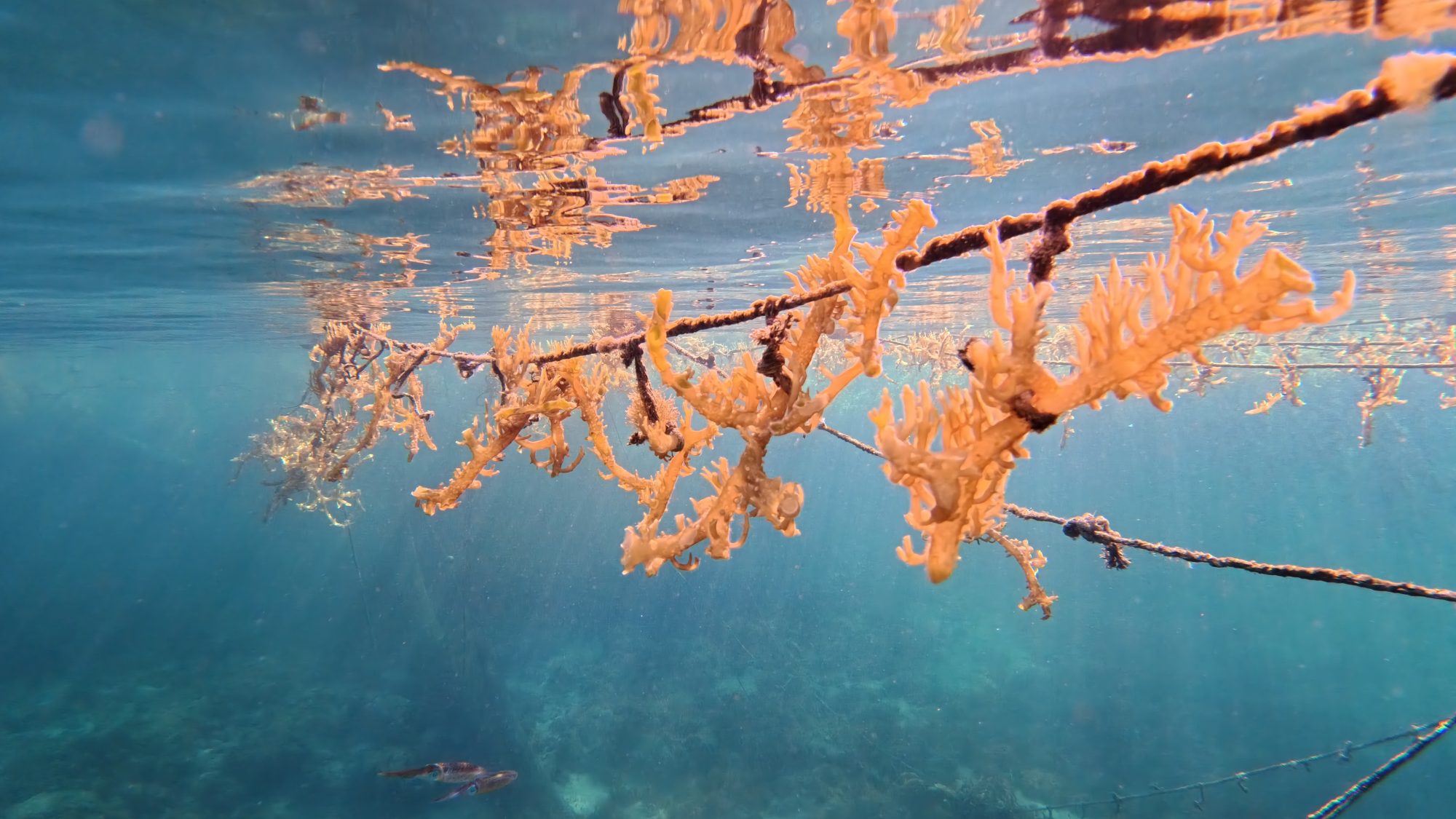
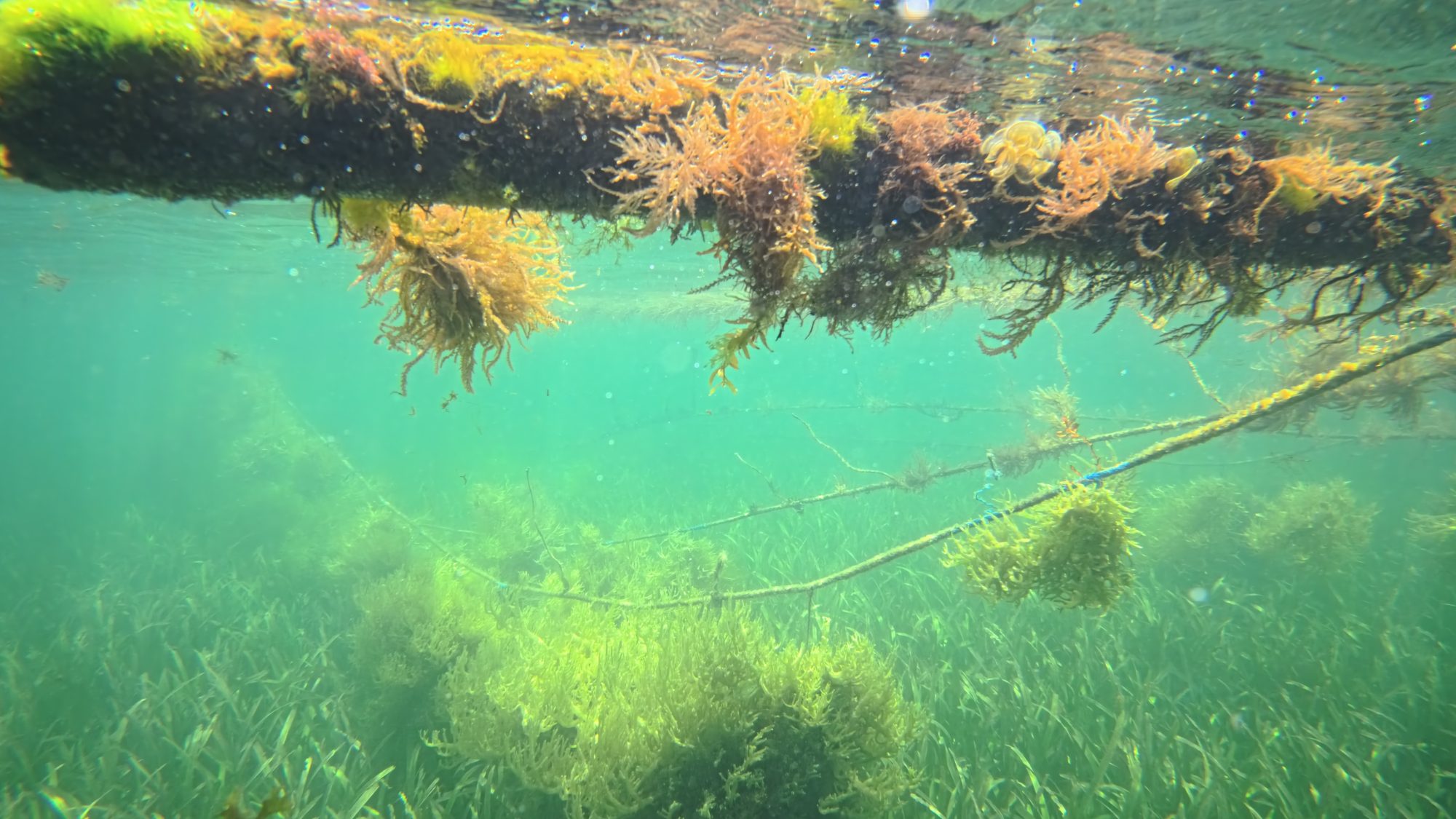
St Lucia: Culture lines remain submerged through multiple production cycles.
St Vincente: Long-used culture lines supporting successive growth cycles of eucheumatoids.
Grenada: Culture lines maintained in place across several harvests.
South America

Upon harvest, the initial focus in both Venezuela and Brazil is cleaning the biomass and selecting quality seedlings for the next cycle. Post-harvest processes vary significantly by region and product destination. In Brazil, most seaweed is sold and processed fresh for liquid extraction into biostimulants, with only the residuals being dried. Producers  in Santa Catarina and Rio de Janeiro prioritise harvesting within 45 days to prevent biofouling, as cleaning incrusted algae significantly raises costs. In contrast, Venezuela primarily sun-dries its seaweed for export. The exporting companies have implemented strict quality control, ensuring seaweed is clean and standardised before processing. 
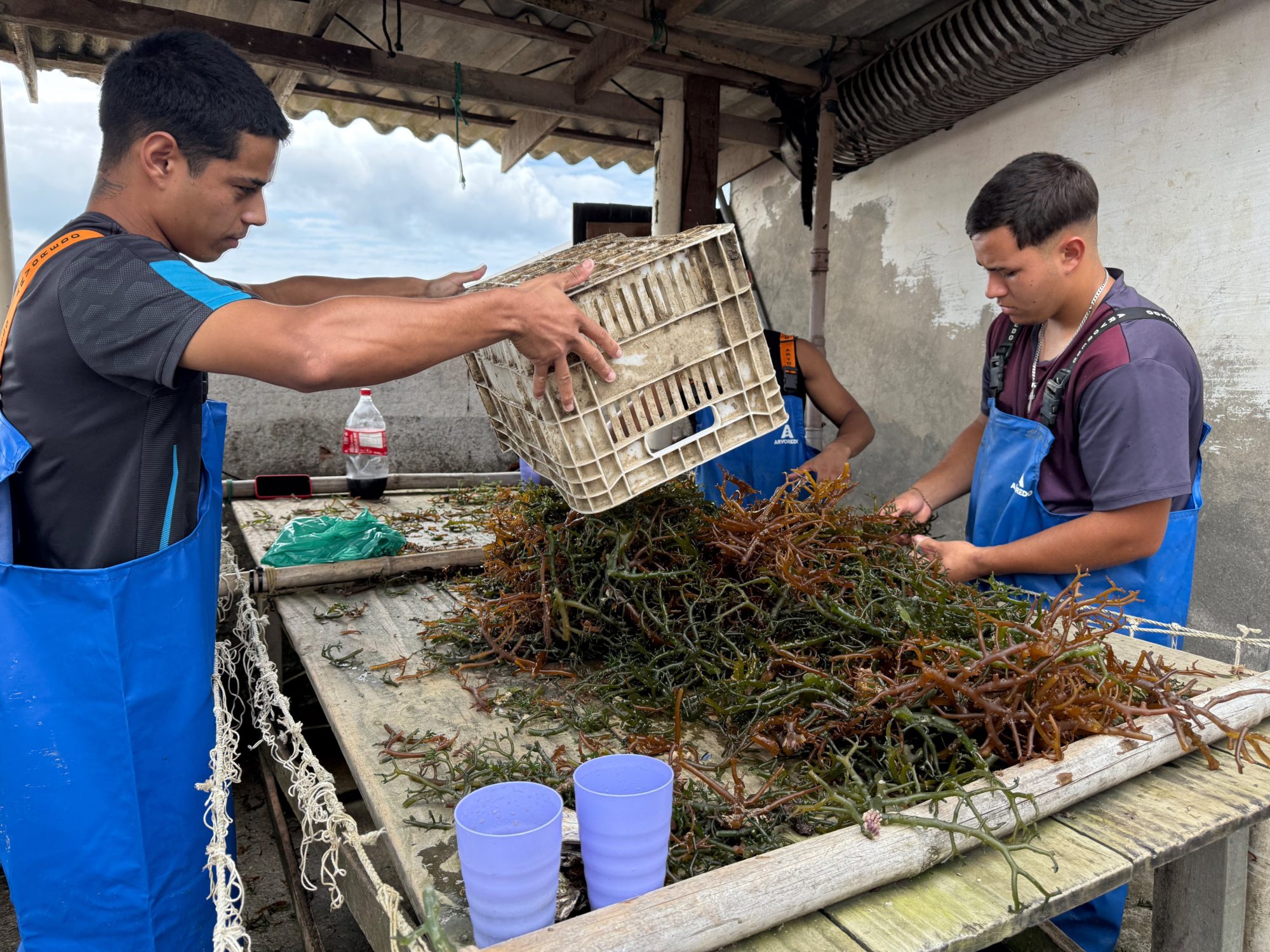
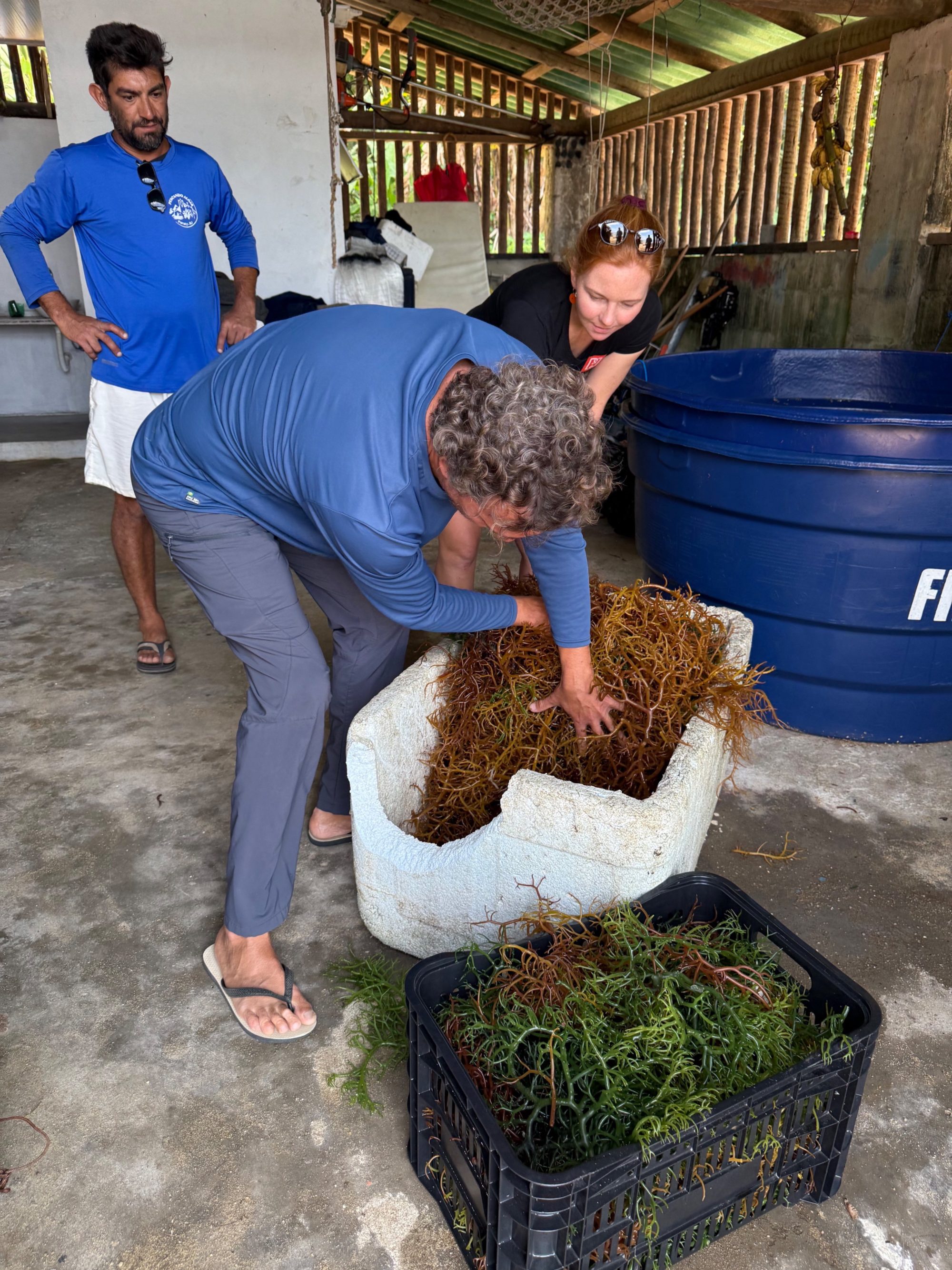
Brazil: Workers sort and select vigorous, healthy thalli from harvested biomass to prepare seedlings for the upcoming cultivation cycle.
Brazil: Farmers assess texture and colour to identify top-performing seedstock, ensuring resilience for the next round of planting.

Upon harvest, the initial focus in both Venezuela and Brazil is cleaning the biomass and selecting quality seedlings for the next cycle. Post-harvest processes vary significantly by region and product destination. In Brazil, most seaweed is sold and processed fresh for liquid extraction into biostimulants, with only the residuals being dried. Producers  in Santa Catarina and Rio de Janeiro prioritize harvesting within 45 days to prevent biofouling, as cleaning incrusted algae significantly raises costs. In contrast, Venezuela primarily sun-dries its seaweed for export. The exporting companies have implemented strict quality control, ensuring seaweed is clean and standardized before processing. 
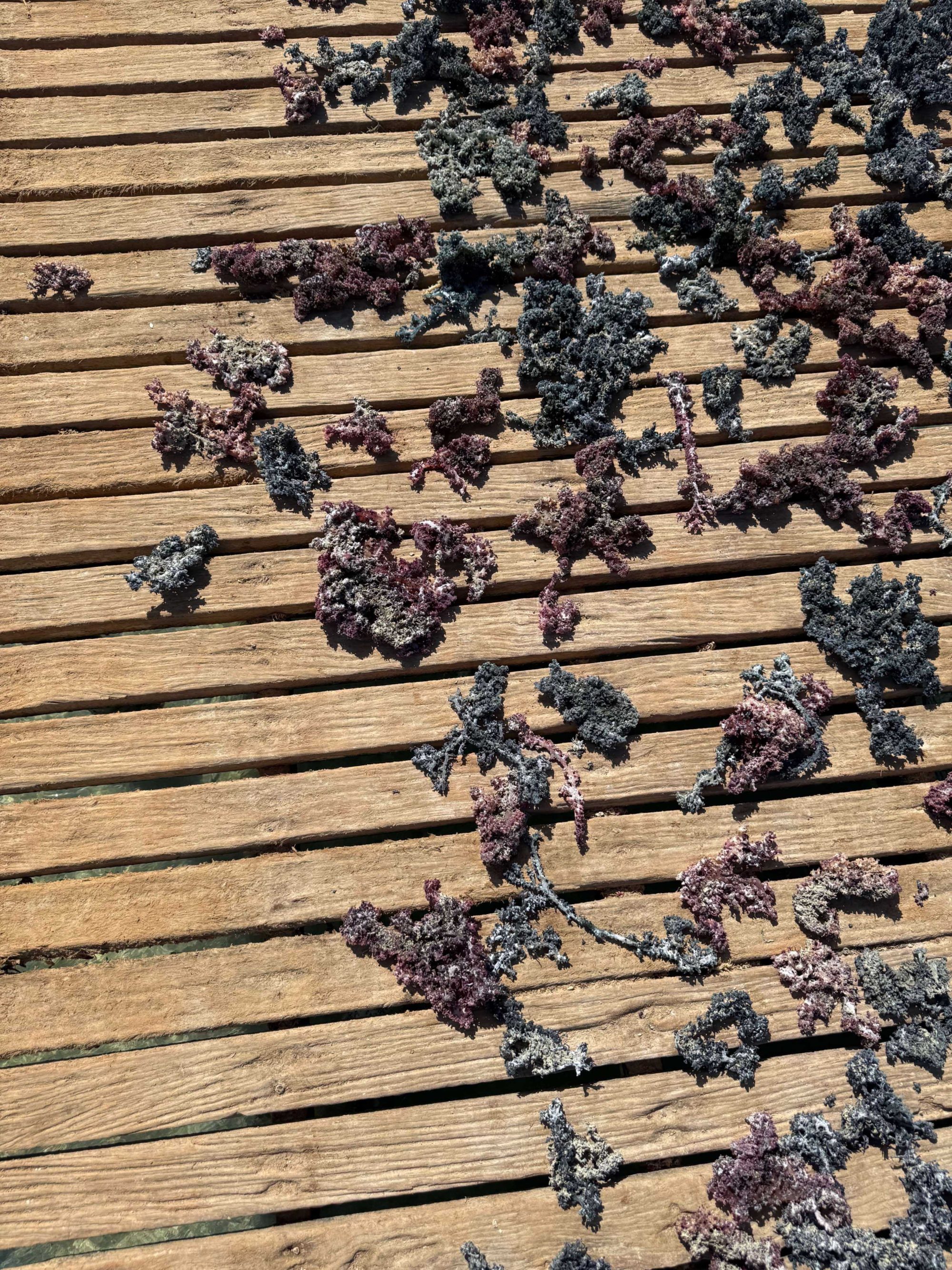
Venezuela: Sun-drying harvested seaweed on wooden racks in Venezuela.

Liquid seaweed extraction

Bio-stimulants are the main market for Brazil's seaweed industry, leveraging a liquid extraction process that is both rapid and efficient. This operation is highly time-sensitive and relies on fresh, clean algae, requiring biomass to be processed within 48 hours of harvest to preserve its valuable bioactive compounds.

The primary method in Brazil is a simple mechanical, cold-press extraction. The seaweed is ground into a pulp and then pressed to separate the liquid, yielding about 1,000 liters of raw extract from 1.3 metric tons of fresh algae. The residual 15-20% of solids are dried and increasingly sold as a functional ingredient for inoculants, which are live-microorganism bioinputs increasingly utilized in Brazilian agriculture.

Meanwhile in Venezuela, also TIDE has built a  600 m² processing plant for extraction of a biostimulant to diversify income beyond raw material exports. With a capacity of receiving 5 tonnes of fresh seaweed every 150 minutes, the new facility, which is only 10 minutes by truck from most cultivation sites, can produce 10,000 litres of pure Kappaphycus extract each day for their biostimulant line. 
 

Laying to dry

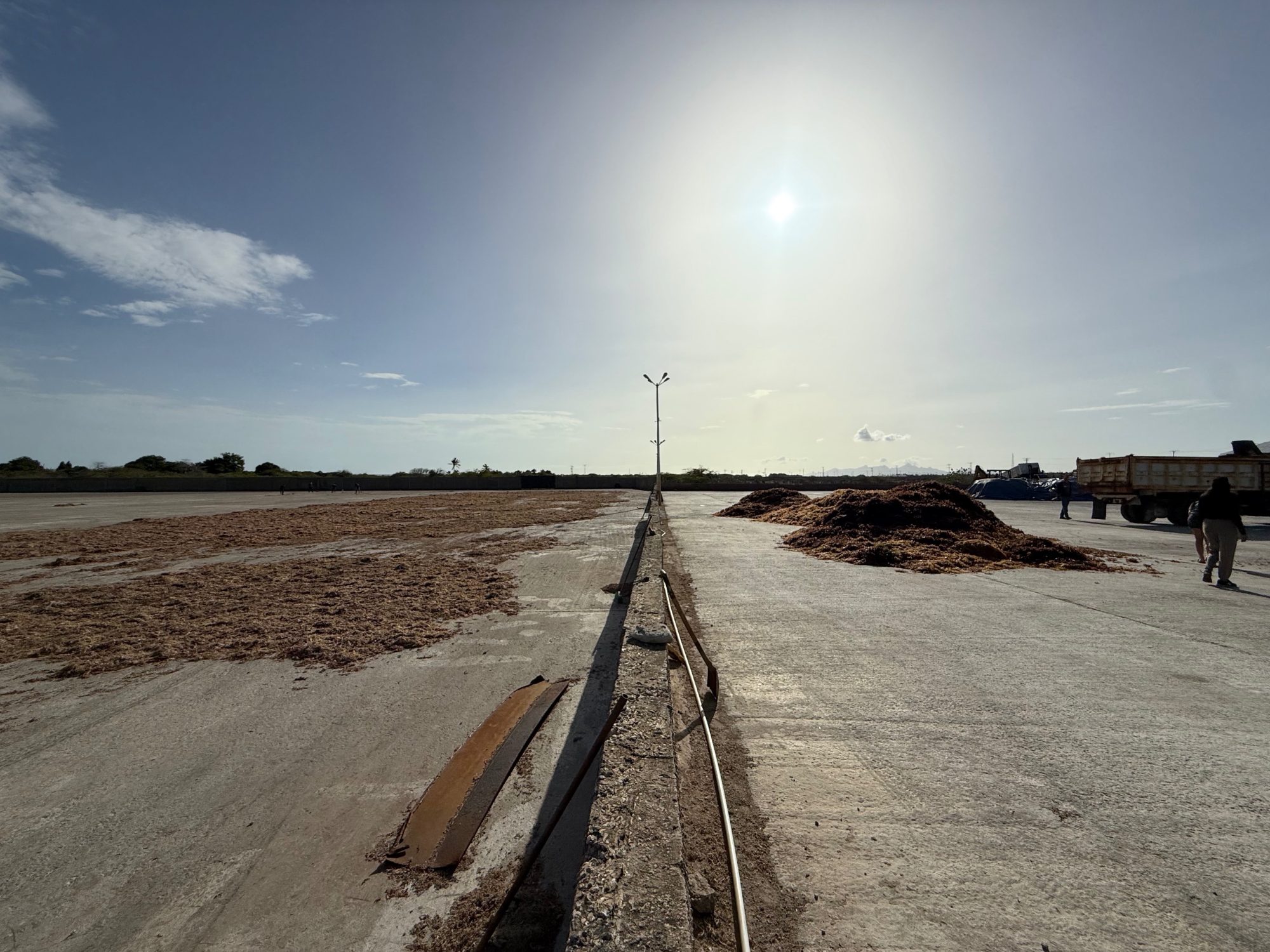
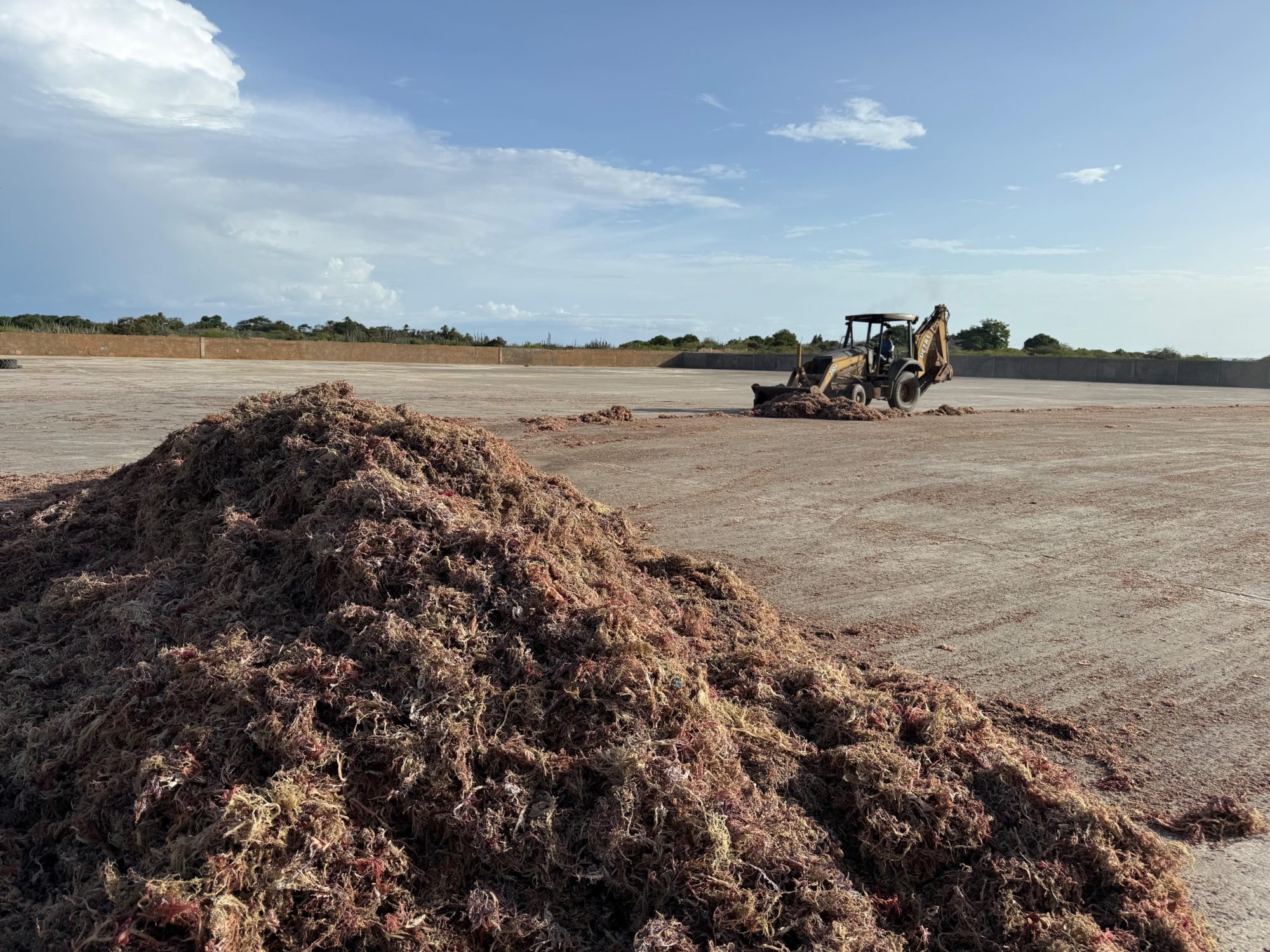
This method is predominant in Venezuela, where seaweed is spread on beaches or open areas near farm sites. The company TIDE operates a 300 m² concrete drying facility capable of processing one ton every two months. The technique relies entirely on solar exposure and is susceptible to weather delays, creating potential bottlenecks during rainy periods. Under good conditions the sun-drying typically achieves a 10:1 wet-to-dry ratio over three days. 
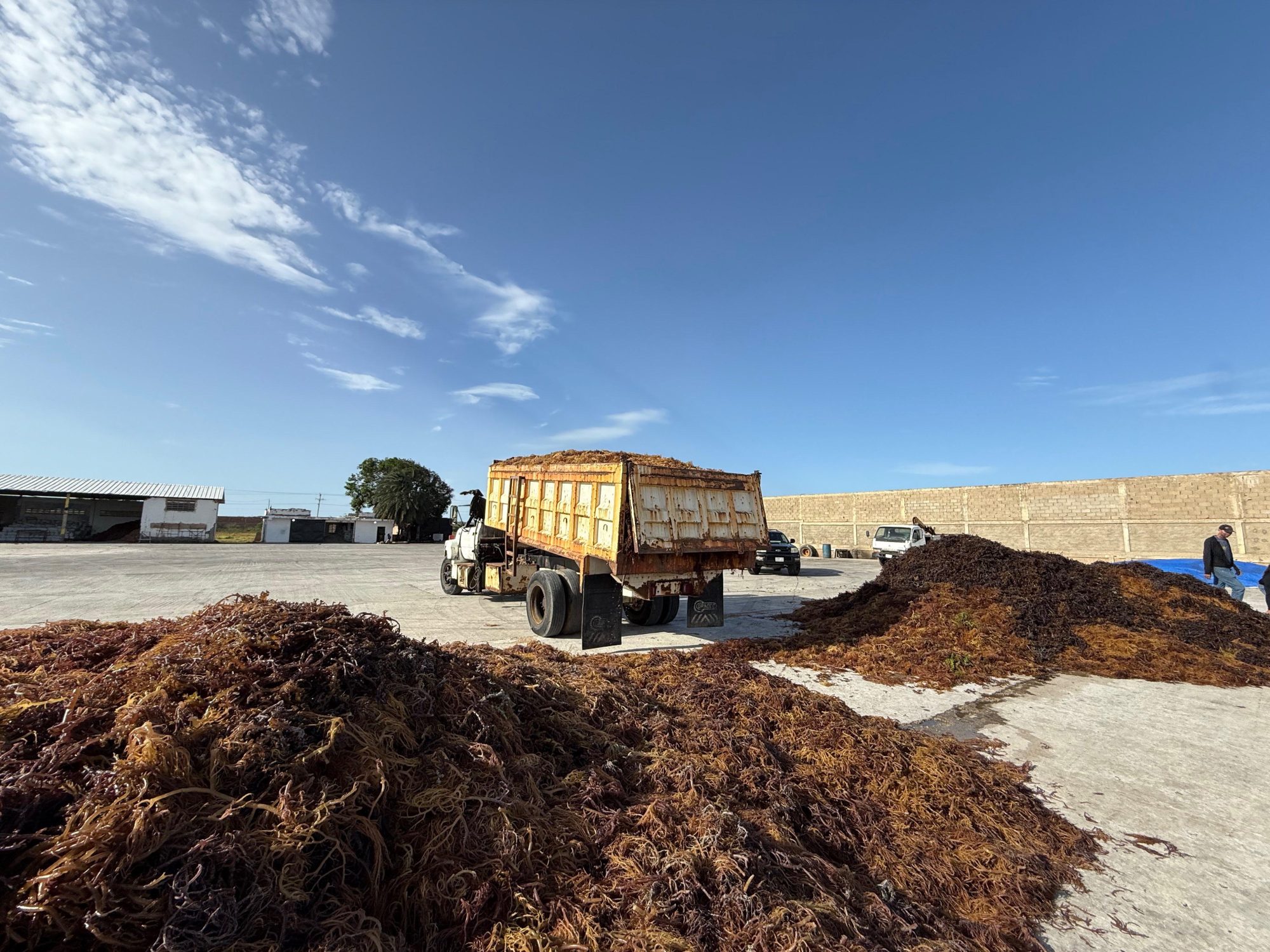
Venezuela: At TIDE, Venezuela, harvested seaweed is unloaded in a 300 m² concrete facility for large-scale controlled drying.
Venezuela: Seaweed spread over the concrete drying yard at TIDE, Venezuela, where moisture is monitored for quality control.
Venezuela: At TIDE, Venezuela, mechanical equipment helps spread and turn the seaweed piles to maintain even drying across the facility.
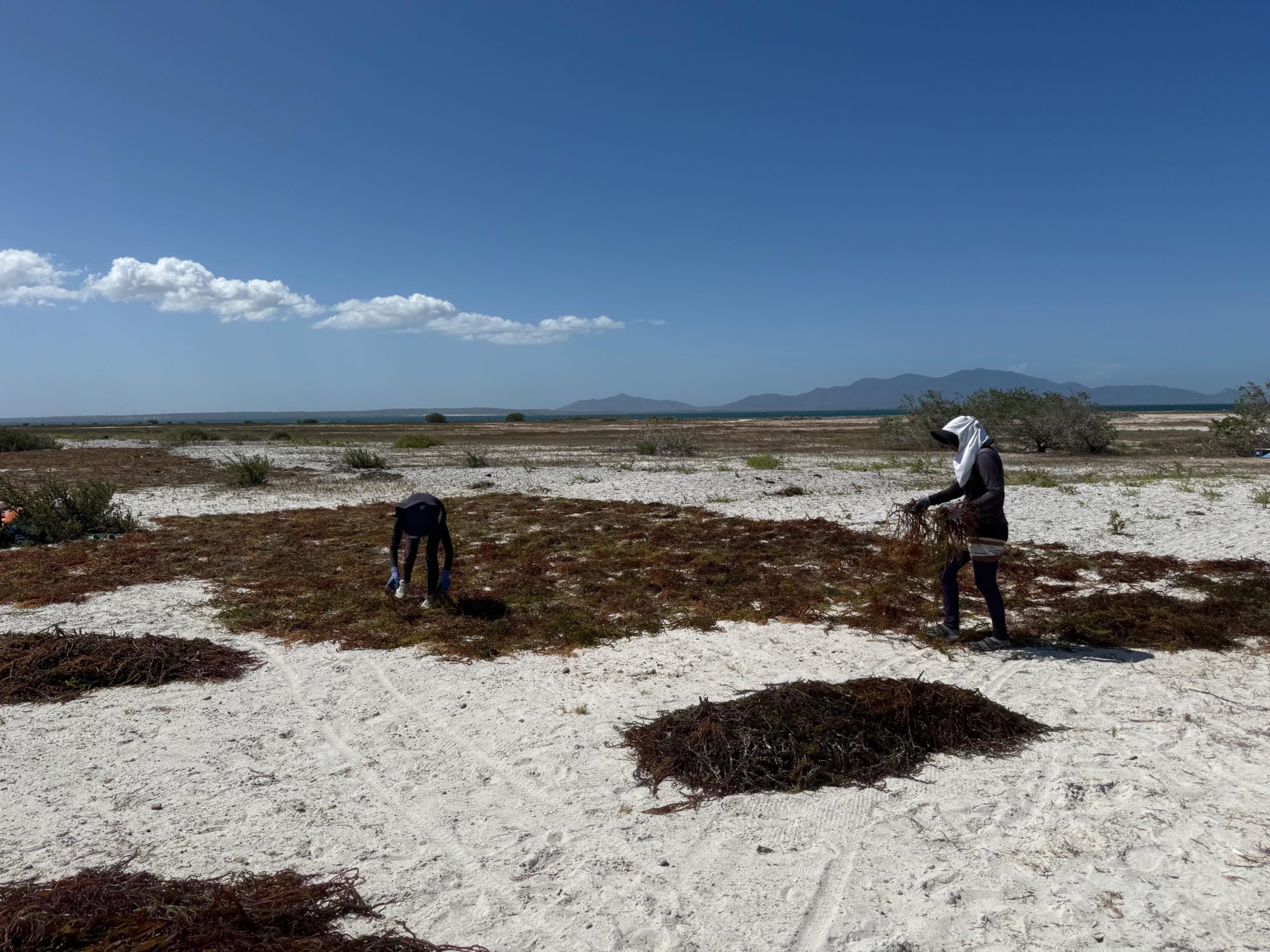
Venezuela: In other Venezuelan regions, farmers lay seaweed directly on sandy flats to bleach under the sun and achieve consistent coloration.

Treatment of culture lines

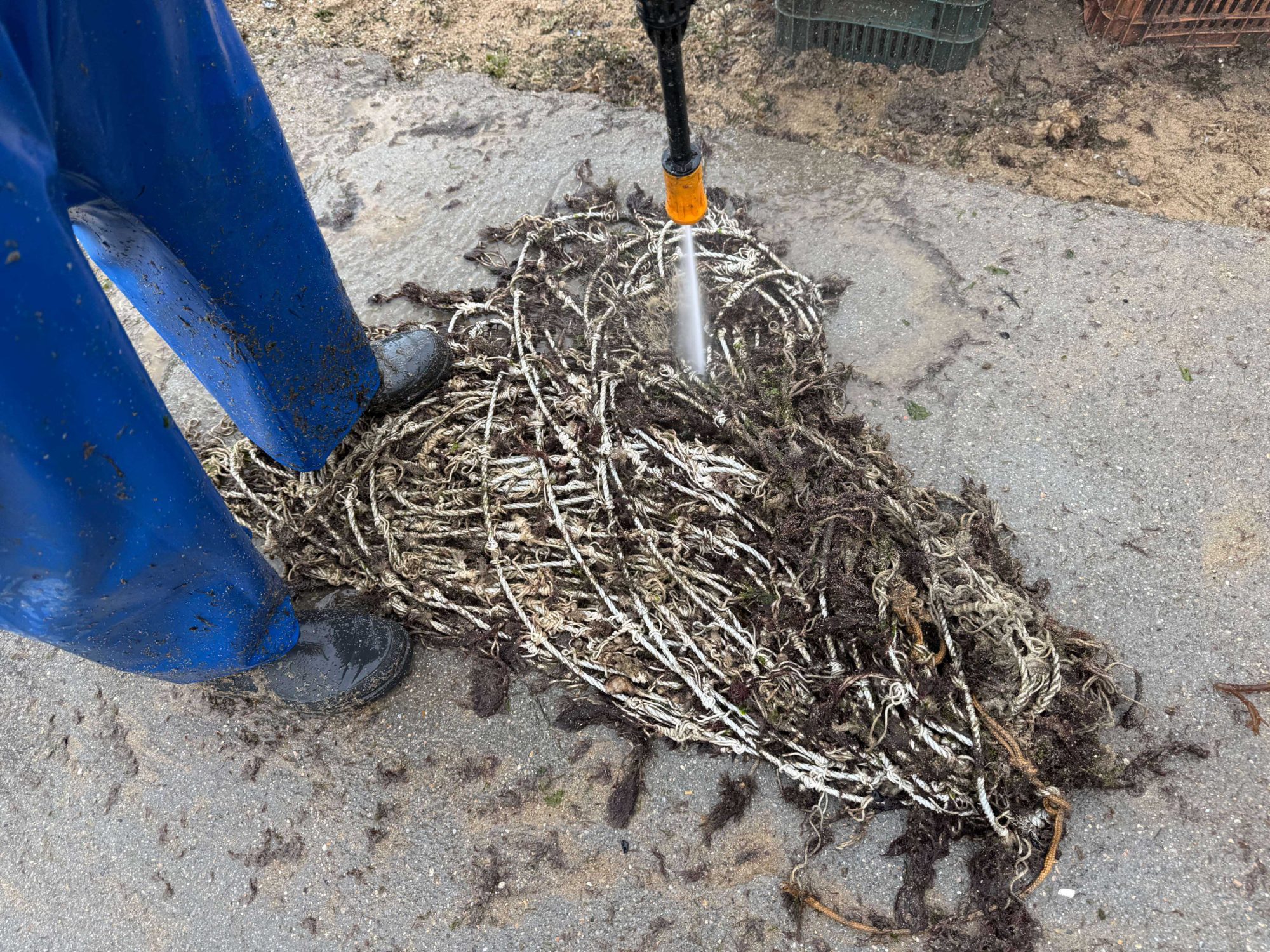
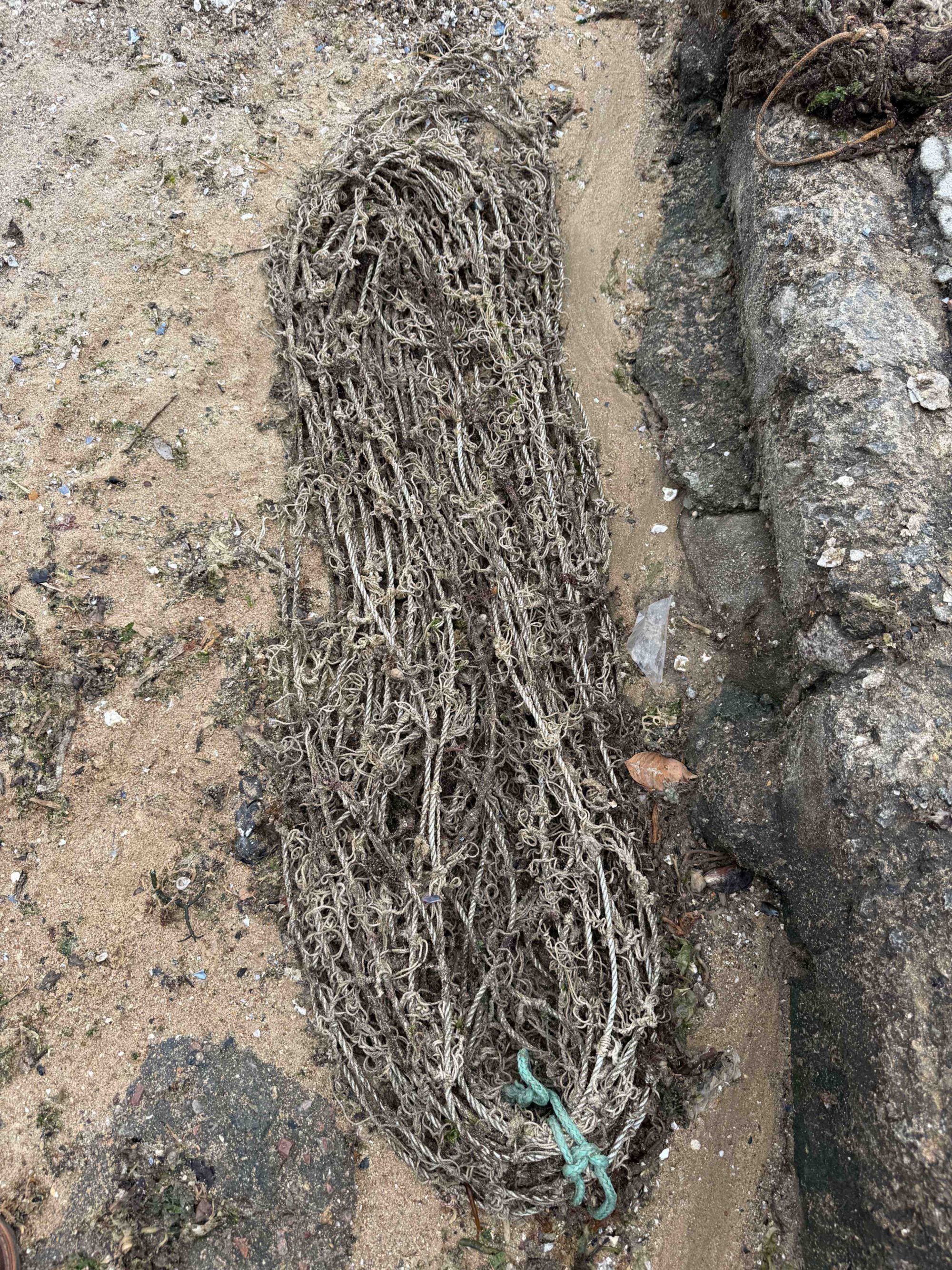
Post-harvest maintenance is systematic across both countries. Venezuelan operations perform regular line cleaning and rope tightening. In Brazil, Santa Catarina conducts comprehensive cleaning every six months using high-pressure equipment, while Rio de Janeiro implements full system maintenance - cleaning structures, ropes, and tubes on raft systems.
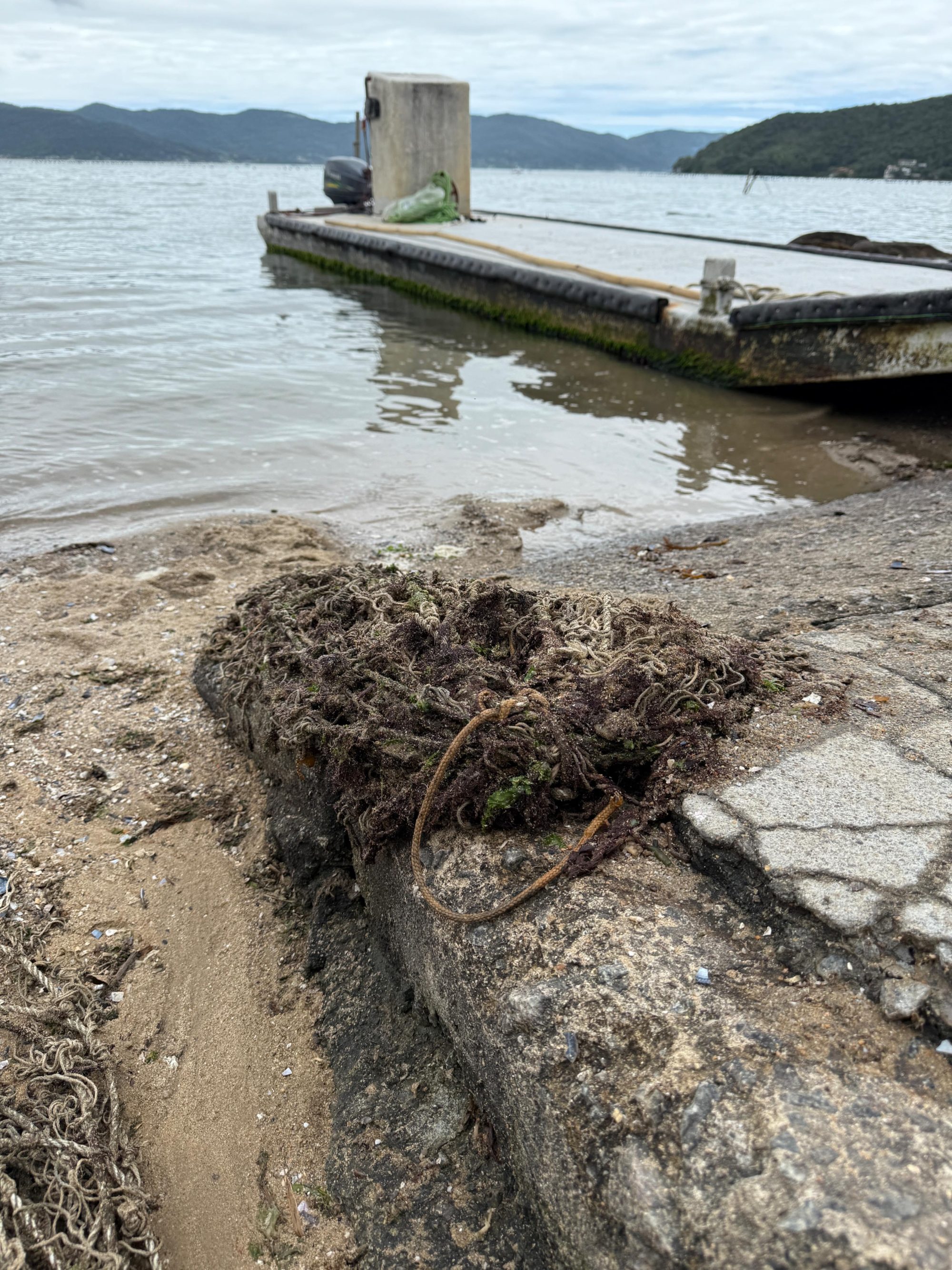
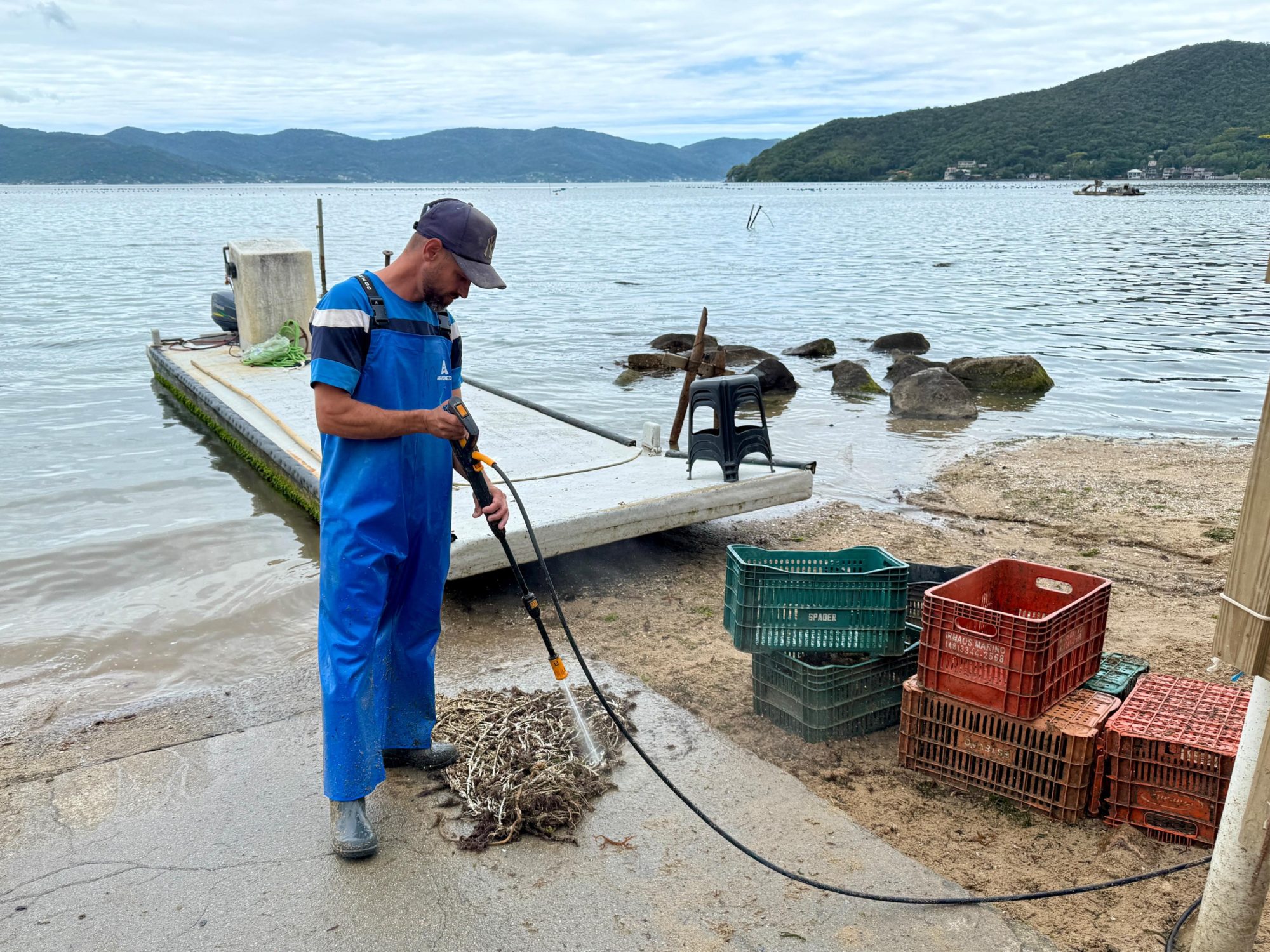
Brazil: Post-harvest line removed from water, ready for pressure-cleaning and reuse in Santa Catarina.
Brazil: Worker cleans fouled cultivation lines with high-pressure water to extend their usability.
Brazil: Persistent epiphytes are blasted away in a routine maintenance cycle on Brazilian farm lines.
Brazil: Cleaned and coiled culture rope rests on shore, ready for redeployment next season.
Previous
Next
Seaweed

Contact us:

info@hatch.blue
www.hatch.blue

Copyright © 2026 Hatch Blue Limited. All rights reserved.

  • Terms and conditions
  • Privacy policy

Hatch Blue is a global impact business focussed on farmed and alternative seafood. Hatch Innovation Services is the consultancy arm of Hatch, advising corporates, investors and governments on innovation and investment projects in the global aquaculture industry.

For our Shrimp Farming Insights visit: www.shrimpfarm.tech.