Seaweed
  • Species production
  • Regional production
  • About
  • Reports
  • en
  • es
  • pt
  • Species Production Overview
  • Eucheumatoids
  • Saccharina
  • Undaria
  • Pyropia
  • Gracilaria
  • Macrocystis
  • Global Production Overview
  • East Asia
  • South East Asia
  • Central America & Caribbean
  • South America
  • Species production
    • Species Production Overview
    • Eucheumatoids
      • Production Overview
      • Site selection
      • Farm design
      • Seeding
      • Grow out
      • Harvest
      • Post harvest
      • Sales
      • The farmer
      • Future of farm
    • Saccharina
      • Production Overview
      • Site selection
      • Farm design
      • Seeding
      • Grow out
      • Harvest
      • Post harvest
      • Sales
      • The farmer
      • Future of farm
    • Undaria
      • Production Overview
      • Site selection
      • Farm design
      • Seeding
      • Grow out
      • Harvest
      • Post harvest
      • Sales
      • The farmer
      • Future of farm
    • Pyropia
      • Production Overview
      • Site selection
      • Farm design
      • Seeding
      • Grow out
      • Harvest
      • Post harvest
      • Sales
      • The farmer
      • Future of farm
    • Gracilaria
      • Production Overview
      • Site selection
      • Farm design
      • Seeding
      • Grow out
      • Harvest
      • Post harvest
      • Sales
      • The farmer
      • Future of farm
    • Macrocystis
      • Production Overview
  • Regional production
    • Global Production Overview
    • East Asia
    • South East Asia
    • Central America & Caribbean
    • South America
  • About
  • Reports
Seaweed
  • en
  • es
  • pt
  • Production Overview
  • Site selection
  • Farm design
  • Seeding
  • Grow out
  • Harvest
  • Post harvest
  • Sales
  • The farmer
  • Future of farm

Undaria Post-harvest

Table of contents
  • East Asia
    1. Overview

    2. Processing

East Asia

Overview

Processing

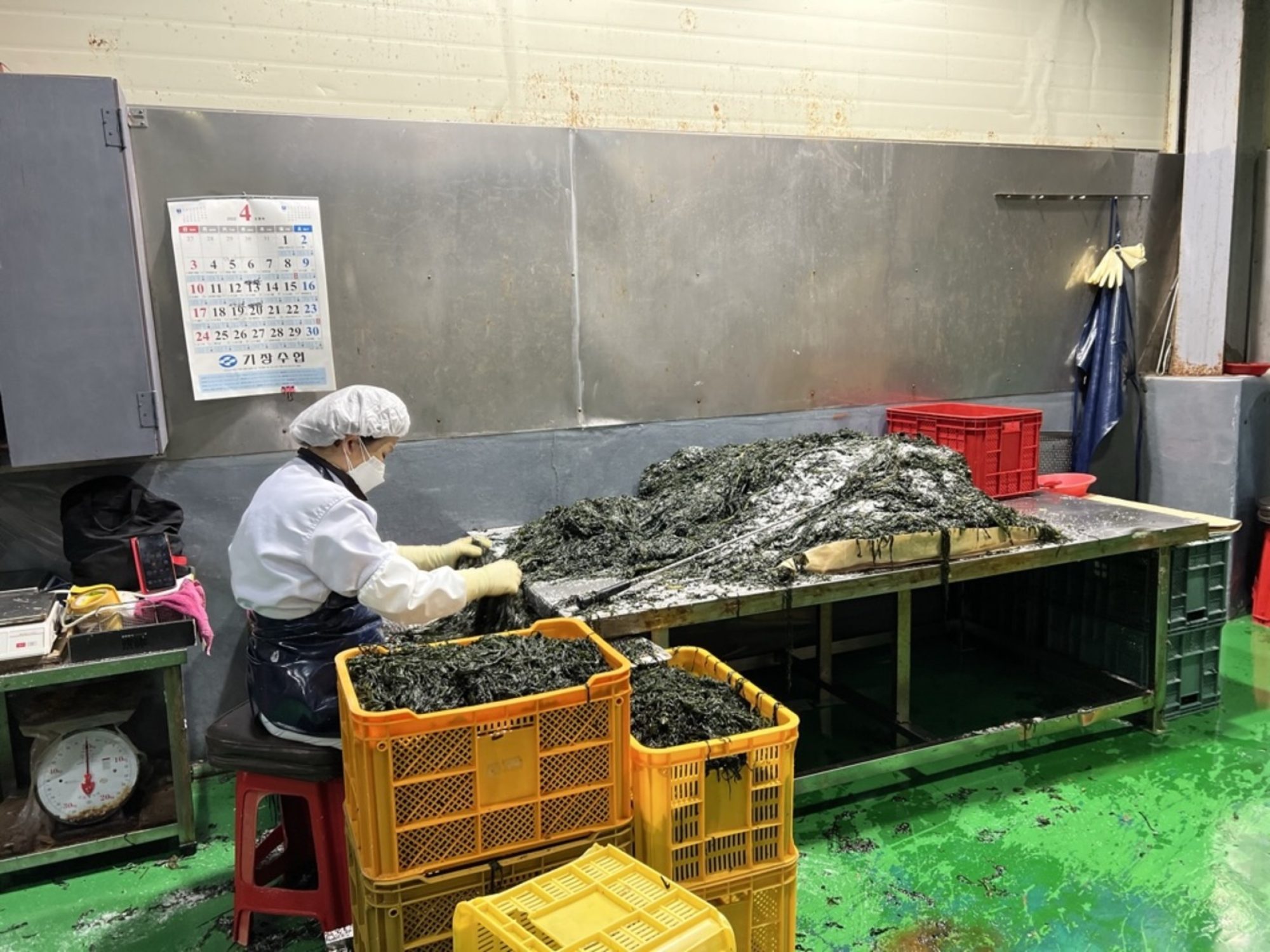
Processing of Undaria involves the separation of the stems, leaves and sporophyll (the root-like part above the holdfast often called Mekabu). The product variety of Undaria is large and ranges from a combination of fresh, blanched, salted, dehydrated or dried processing.

Most of the processing technologies were developed in Japan, yet nowadays processing methods are fairly similar across producing countries and regions. The capacity and sophistication (automation) of the processing line varies significantly across companies.

Processing conversion ratios, like the wet-to-dry ratio, can vary across harvests, regions and due to nuances in processing.
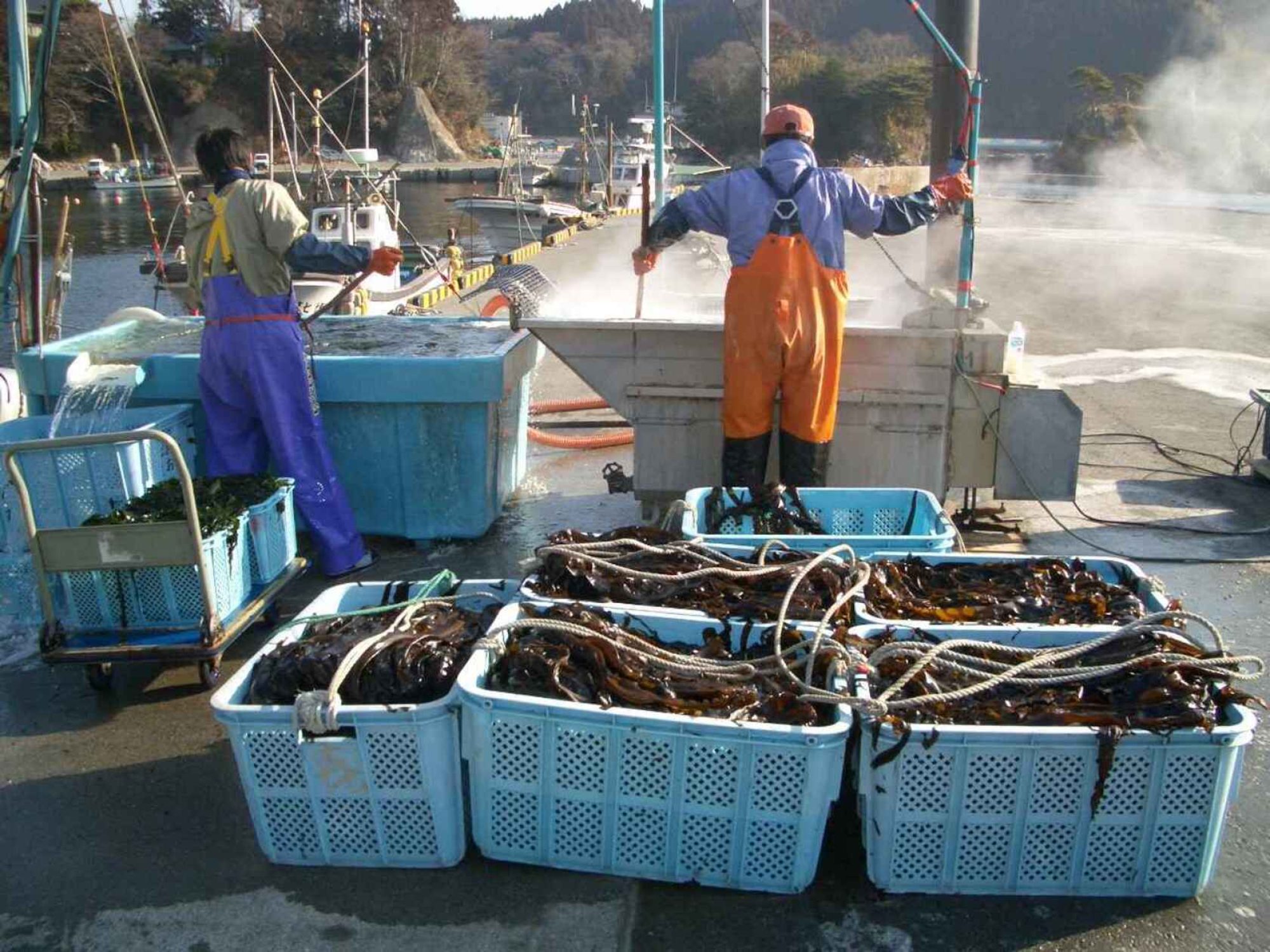
Small, provisional processing line set up by farmers at a port in Sanriku, Japan.
Stringing Undaria is labor intensive, because it is done by hand. Busan, South Korea
In South Korea, about 60% of the harvested Undaria is fed directly to Abalone.
A dedicated drying facility / machine could easily cost 70.000 USD.

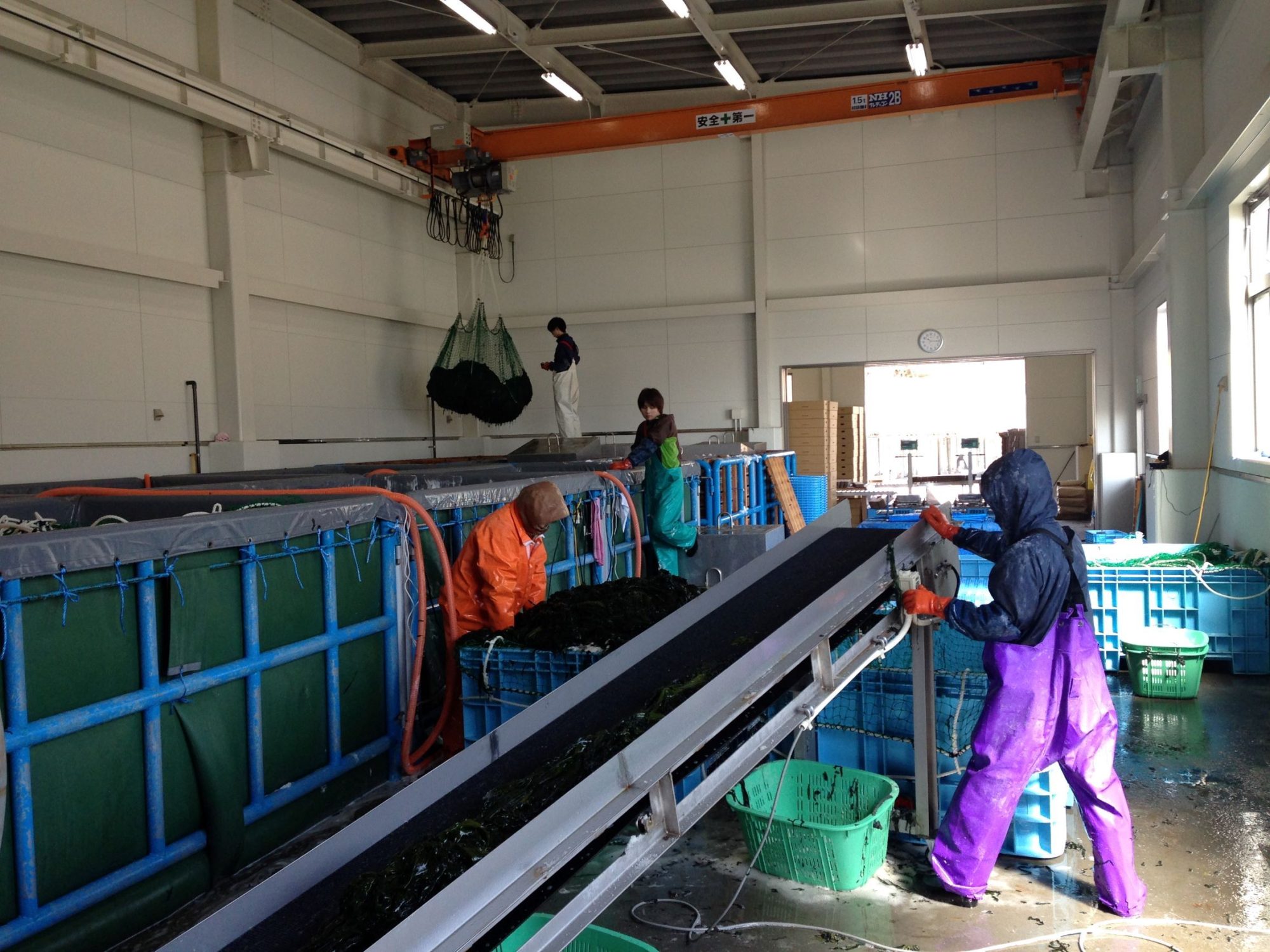
In the highest producing region of Japan, Sanriku, around 60% of the processing is done by farmers in small-scale facilities, with the capacity to process between 0.5 and 1 tonne of fresh Undaria per day. The remaining 40% of processing takes place in large scale facilities, from fishery cooperatives or companies, that can process up to 50 tonnes per day. The processing period is limited by the auction schedule until the end of April.
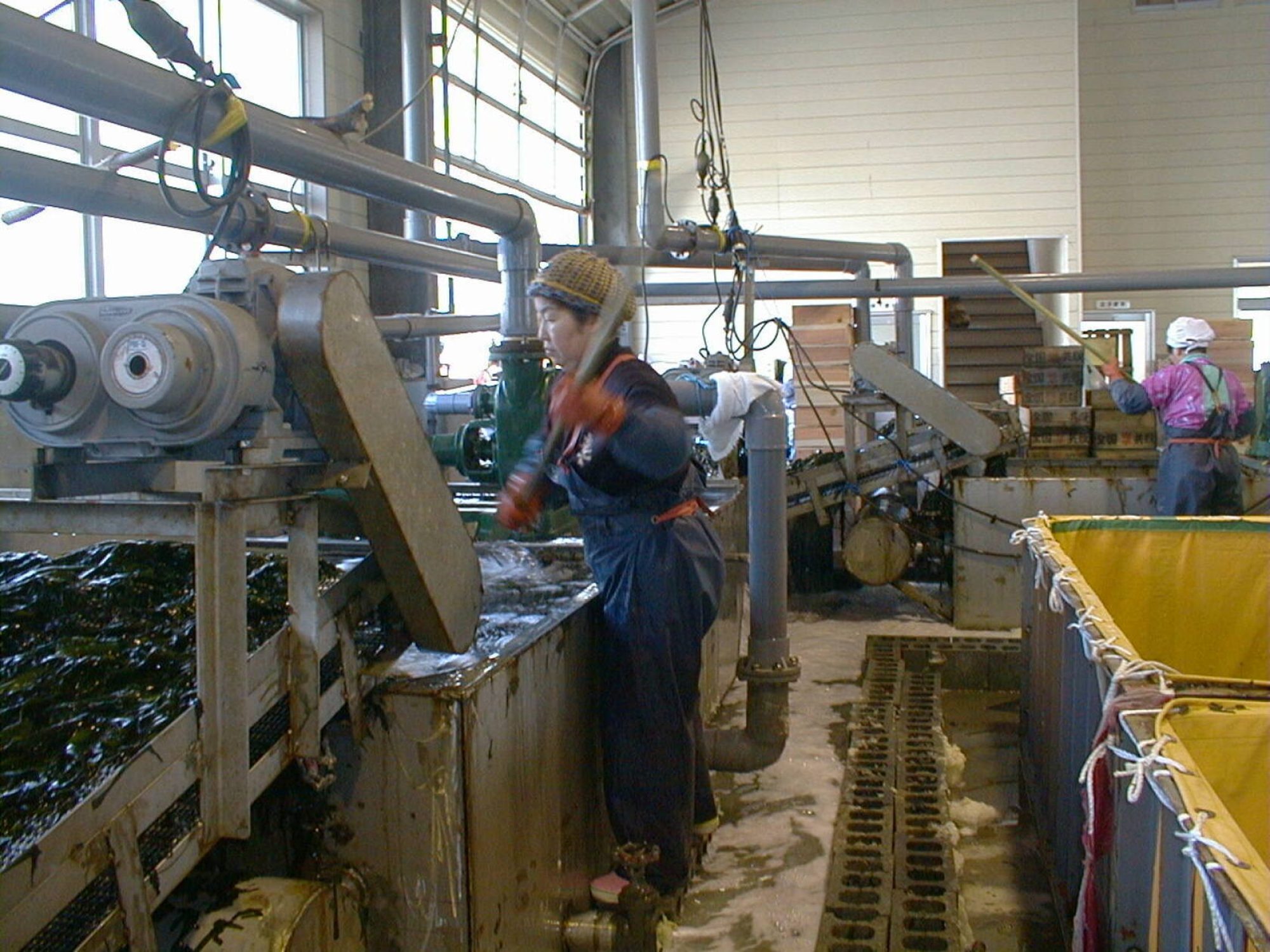
An automated processing line of Undaria in Sanriku, Japan (Photo courtesy of Riken Food)
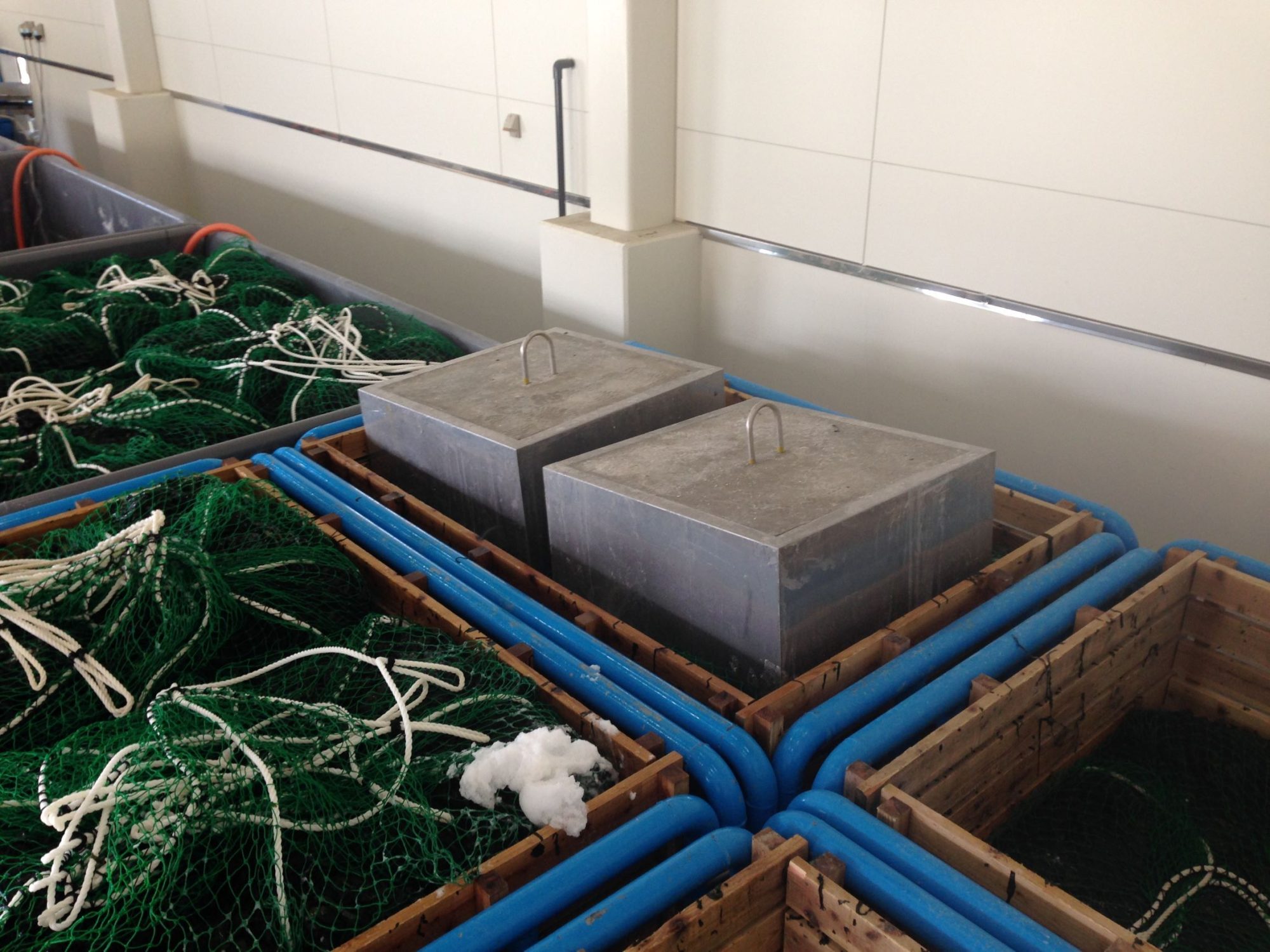
The process of salting the blanched Undaria in Sanriku, Japan (Photo courtesy of Riken Food)
Large processing facility in Sanriku, Japan (Photo courtesy of Riken Food)
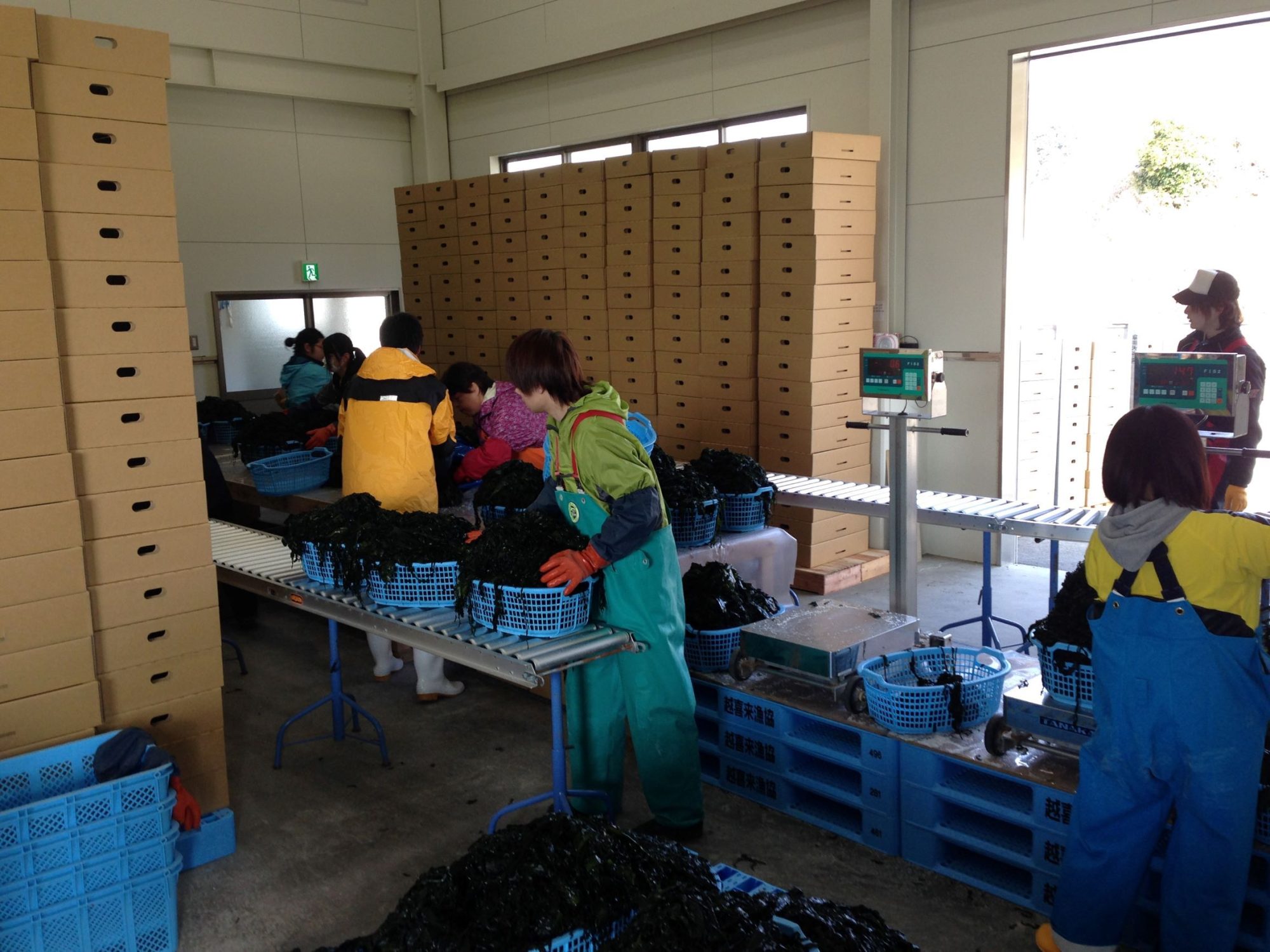
Packing Undaria in cardbox boxes, ready to be sold at an auction in Sanriku, Japan (Photo courtesy of Riken Food)

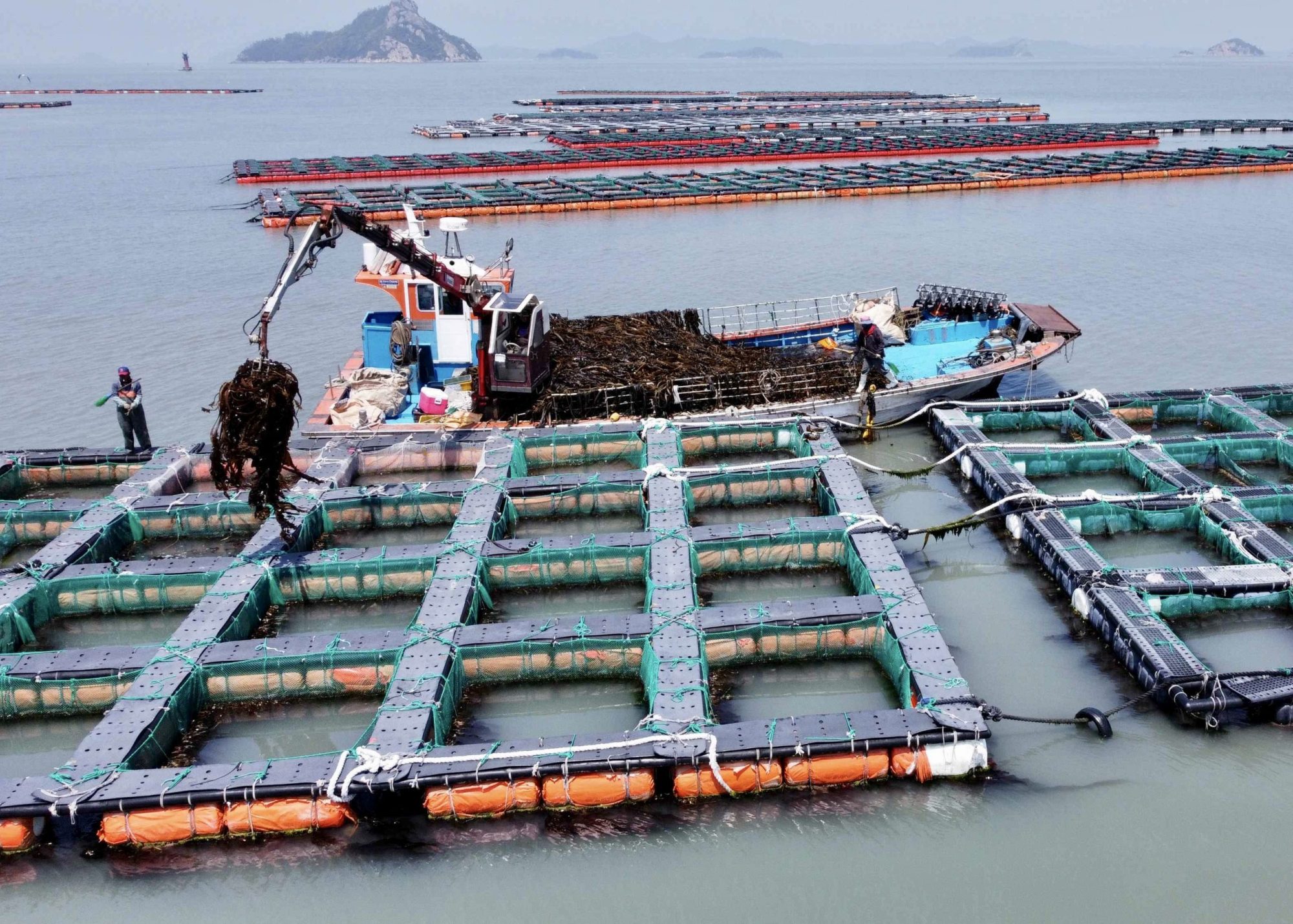
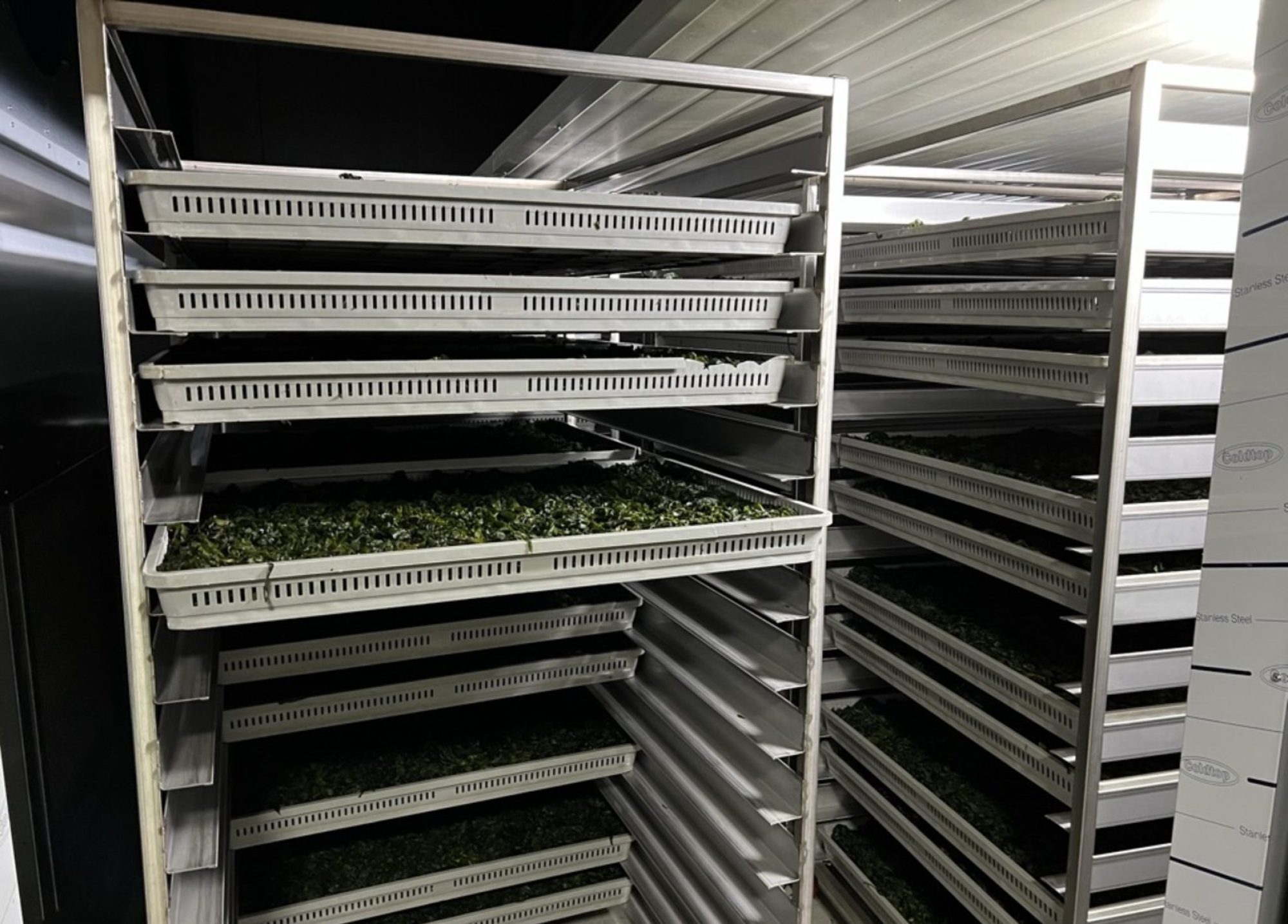
In South Korea, about 60% of the harvested Undaria is fed directly to abalone on neighbouring farms. The remaining harvest is mainly processed into blanched, salted or dried products. Drying is often a bottleneck for the farmer since it is space and weather dependent if done outdoors, or energy intensive and expensive if done indoors.
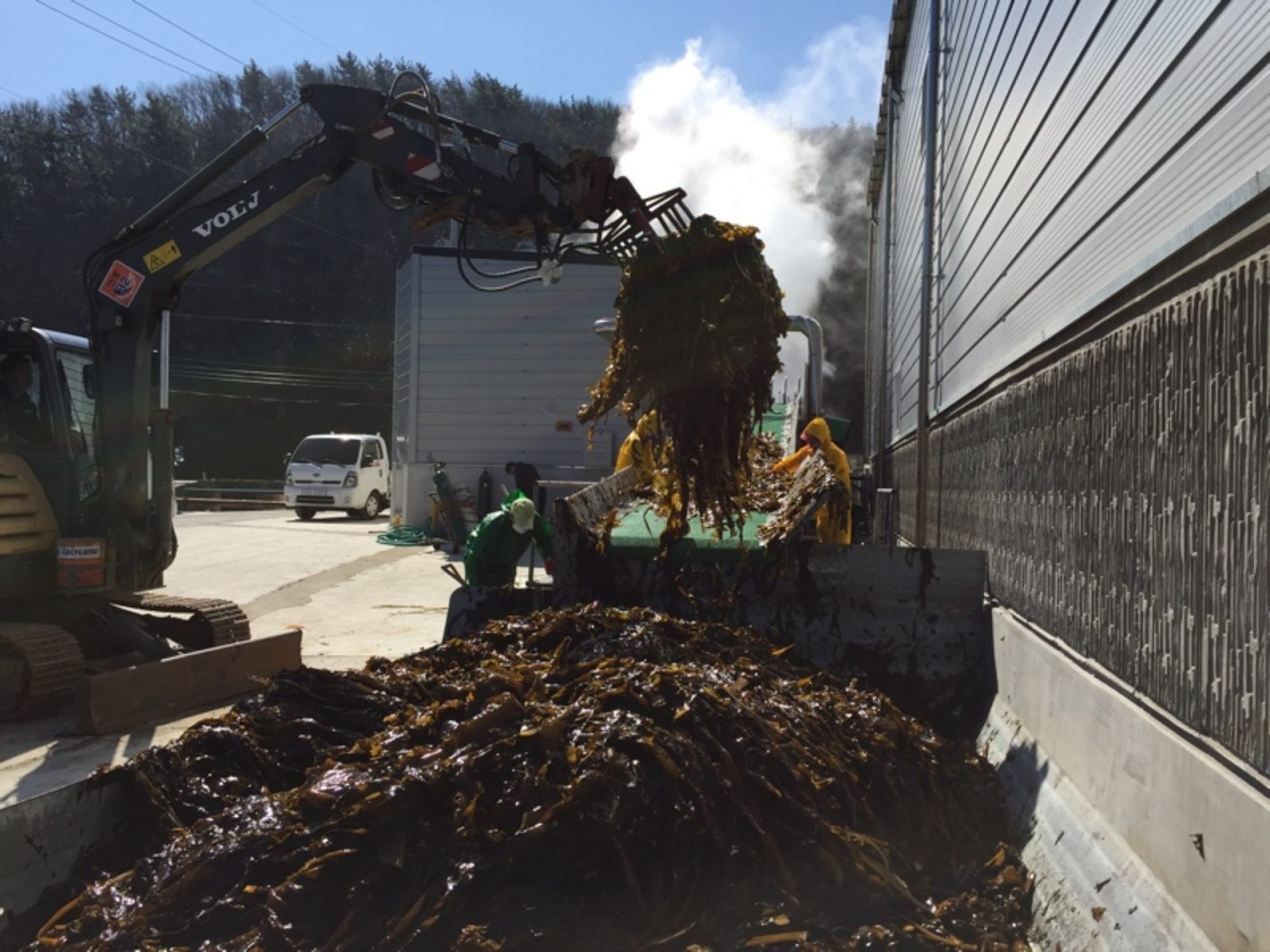
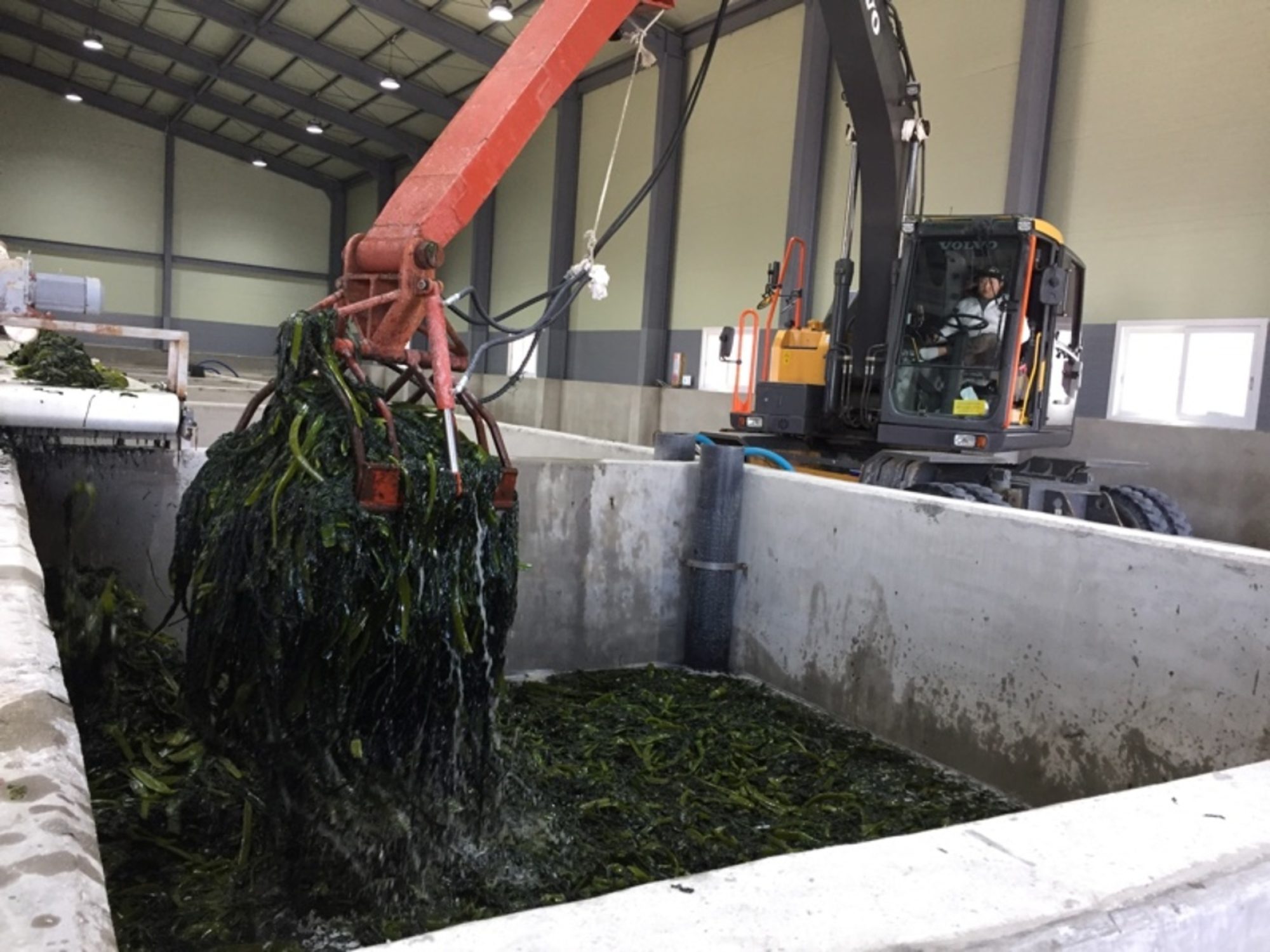
Arrival of harvested biomass at processing facility in Goheung-go, South Korea (Photo courtesy of Riken Food)
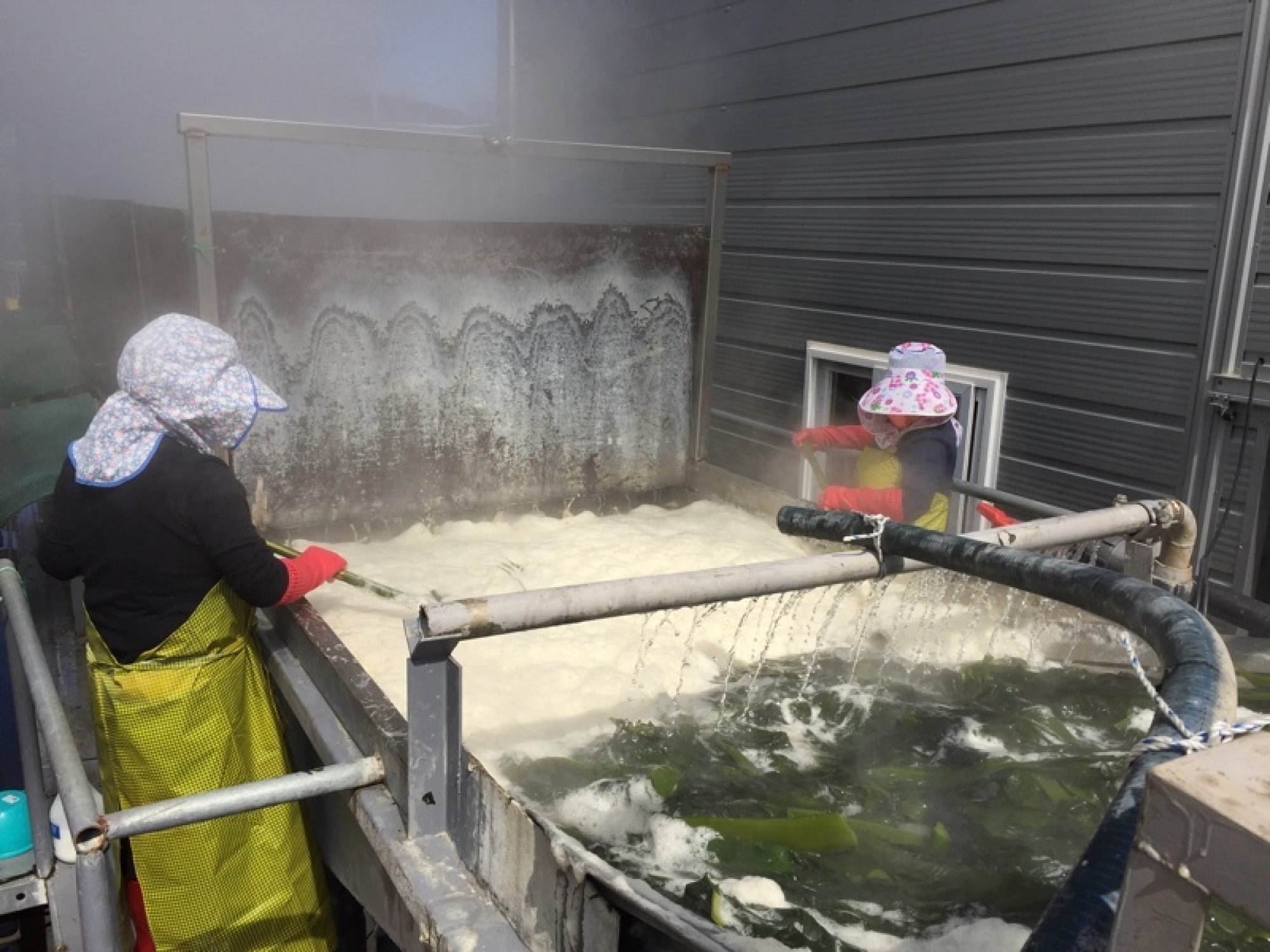
Pre-treatment of Undaria in large processing facility in in Goheung-go, South Korea (Photo courtesy of Riken Food)
The rinsed biomass is blanched in Goheung-go, South Korea (Photo courtesy of Riken Food)
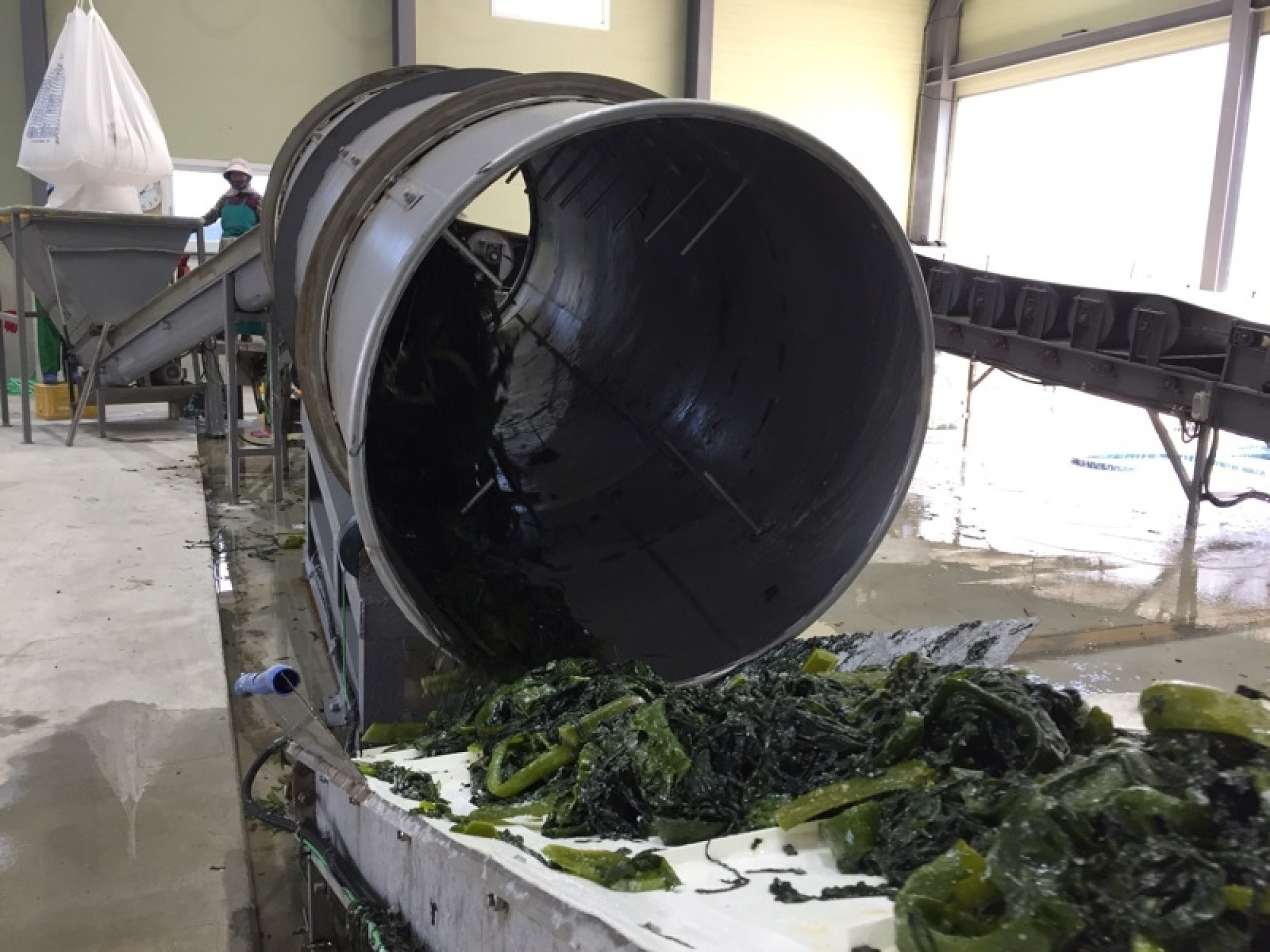
A tumble mashine removes the excess liquid in Goheung-go, South Korea (Photo courtesy of Riken Food)
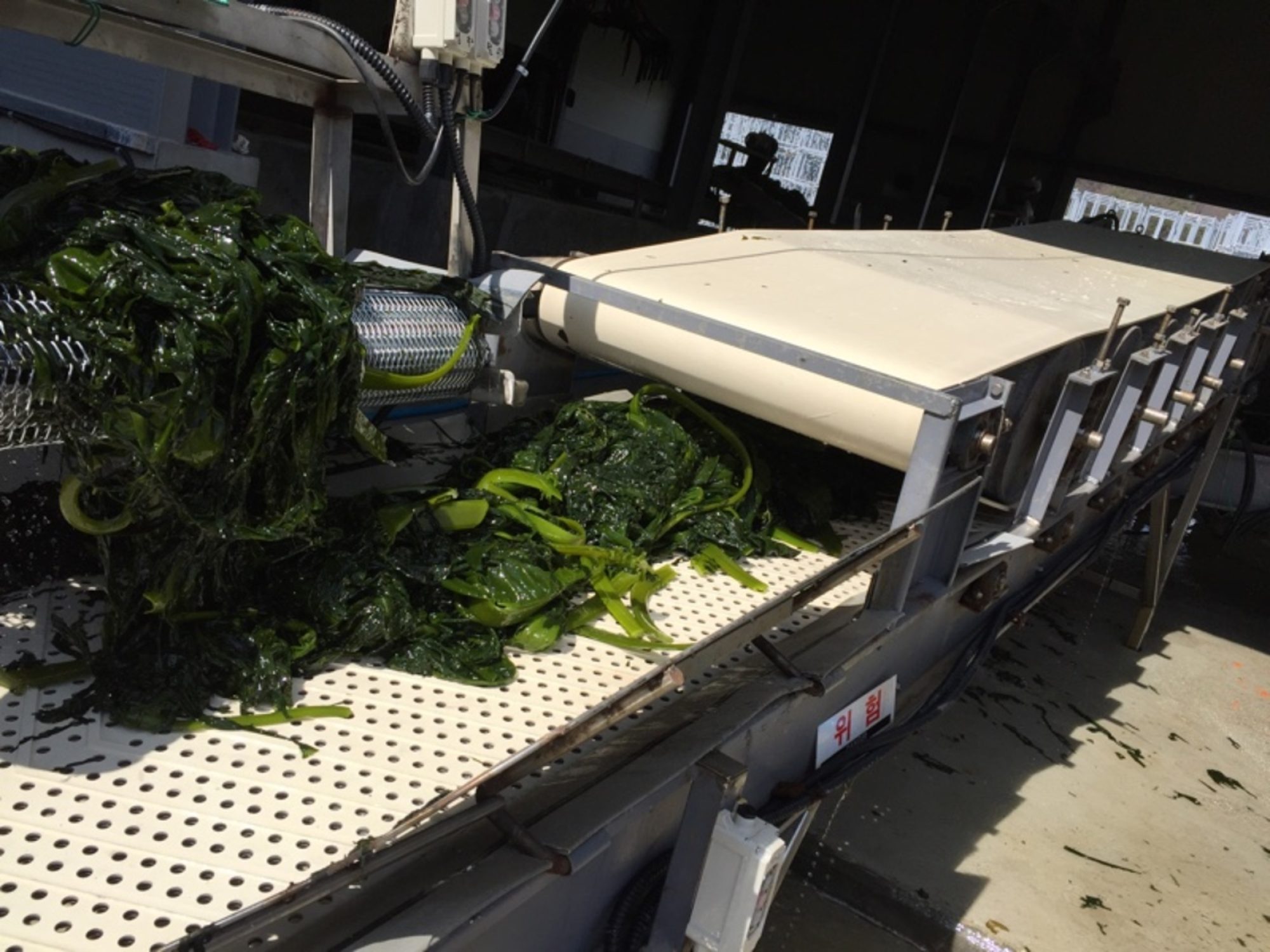
Wakame processing in Goheung-go, South Korea (Photo courtesy of Riken Food)

In China, harvested Undaria is also mainly processed into blanched and salted products. Other processed products include dried leaves, salted dehydrated leaves and stems. Under normal circumstances, 6.5 – 7 tonnes of fresh Undaria produces 1 tonne of salted dehydrated leaves and about 5 tonnes of salted dehydrated leaves can turn into 1 tonne of dried Undaria.

Previous
Next
Seaweed

Contact us:

info@hatch.blue
www.hatch.blue

Copyright © 2026 Hatch Blue Limited. All rights reserved.

  • Terms and conditions
  • Privacy policy

Hatch Blue is a global impact business focussed on farmed and alternative seafood. Hatch Innovation Services is the consultancy arm of Hatch, advising corporates, investors and governments on innovation and investment projects in the global aquaculture industry.

For our Shrimp Farming Insights visit: www.shrimpfarm.tech.