Saccharina Site Selection
East Asia
Overview
Saccharina grows well in depths up to 10 m or more depending on light penetration in the water column. In the wild, the lifecycle spans two winters (two years), however in farm conditions it is usually grown over one winter.
Suitable site conditions:
- Water depth between 10 and 40 metres (preferably 20-30 m)
- Water velocity between 0.2 and 1 m/s (preferably 0.6-0.8 m/s)
- Water temperature between 2°C and 20°C
- Transparency in the water column above 3 metres
Substrates
Licences
Since the farmable area is publicly owned, prospective farmers must obtain a concession or licence from the government before they begin operating. Permission to use this area will be granted through application via the local government in all three countries.
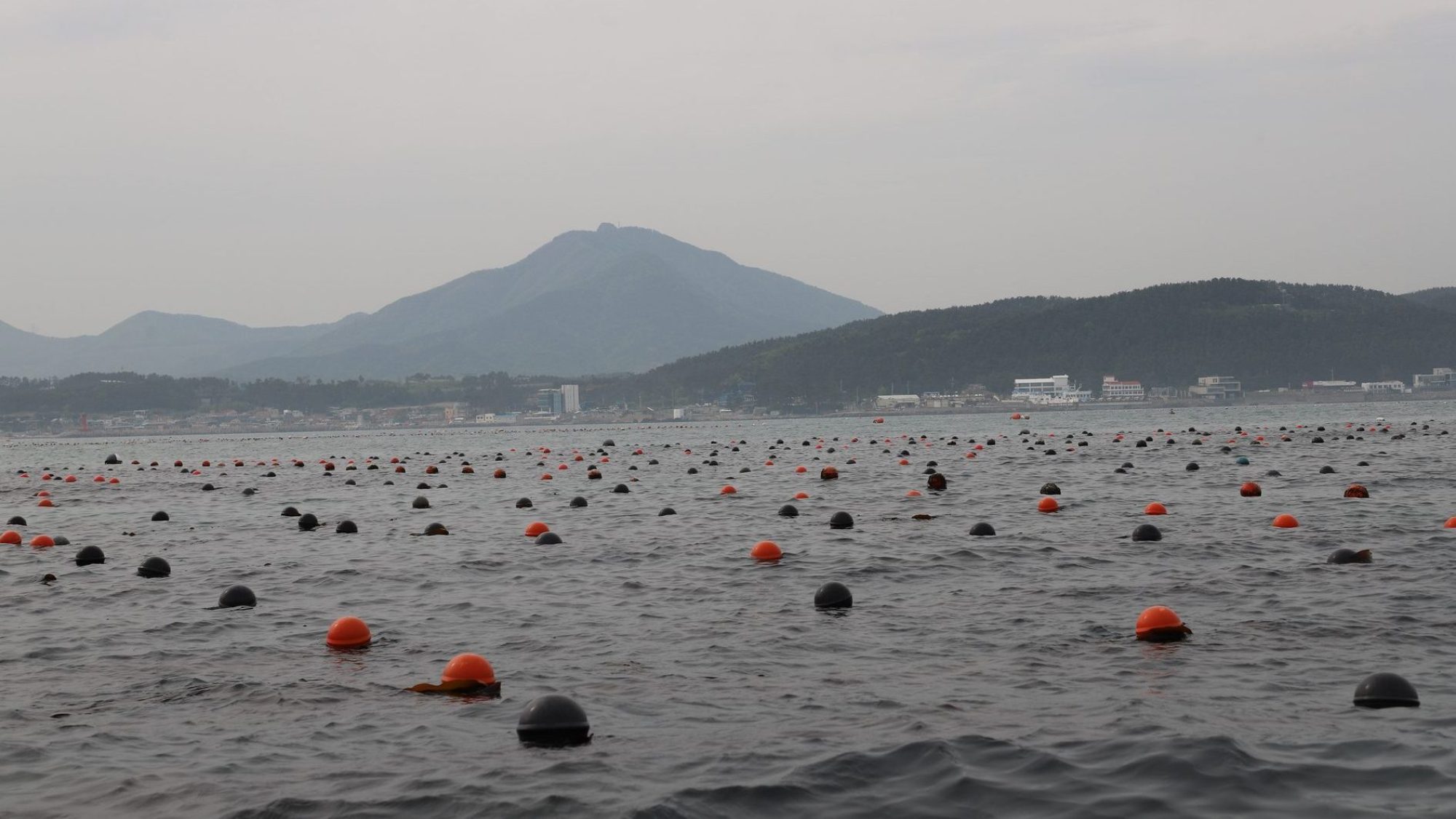
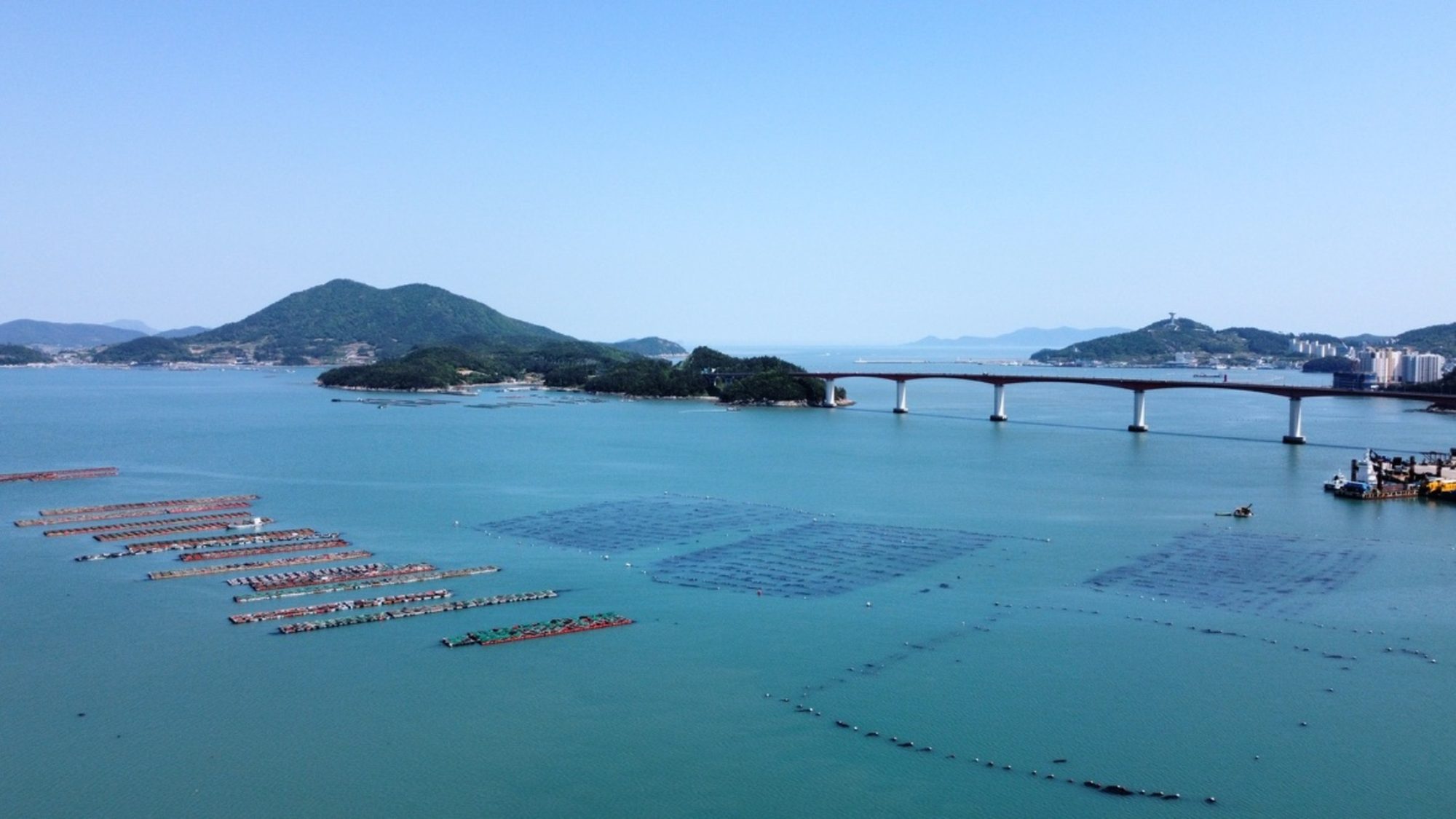
In South Korea, the majority of Saccharina farming takes place in the Southern coast, where conditions are typically more sheltered. We visited farms in Jeonnam district and the North coast of Busan which are by far the main producing regions.
It is getting more difficult to obtain permits for new farms or farm expansions, as the maximum carrying capacity has been reached in most established locations.
Here it is mandatory to be in a farmers association in order to receive a permit and a fee for the farm area has to be paid.
In Southern China and South Korea, Saccharina is often farmed as fresh feedstock for Abalone farms and located in close proximity to them. It is typically farmed interchangeably with Undaria.
Japan has the longest tradition with this species, hence the common name Japanese kelp. Hokkaido, in the North of Japan is the most famous region for Saccharina (Kombu). Saccharina is harvested from the wild in large quantities here (approx. 50% more in volume than from aquaculture in 2020).
In Japan it is mandatory to be in a farmers association in order to receive a permit and a fee for the farm area has to be paid.
The only measurement of farms happens in length and amount of culture lines.
In China, Shandong and Dalian are the main producing regions, where large companies have developed with farm sizes of several hundred – to a few thousand hectares. Fujian province (close to Hong Kong) is another farming region where family farms dominate, each only a few hectares large.
In China it is getting more difficult to obtain permits for new farms or farm expansions, as the maximum carrying capacity has been reached in most established locations.
Farmers generally don’t have to pay any fee for the use of the farm area. Farm sizes are not usually measured in hectares, but rather in MU (1 ha = 15 MU) or simply by the length of cultivation lines.