Gracilaria Post Harvest
East & South-East Asia
Overview
based on 5 interviews conducted across 2 major producing regions in 2 countries
Drying
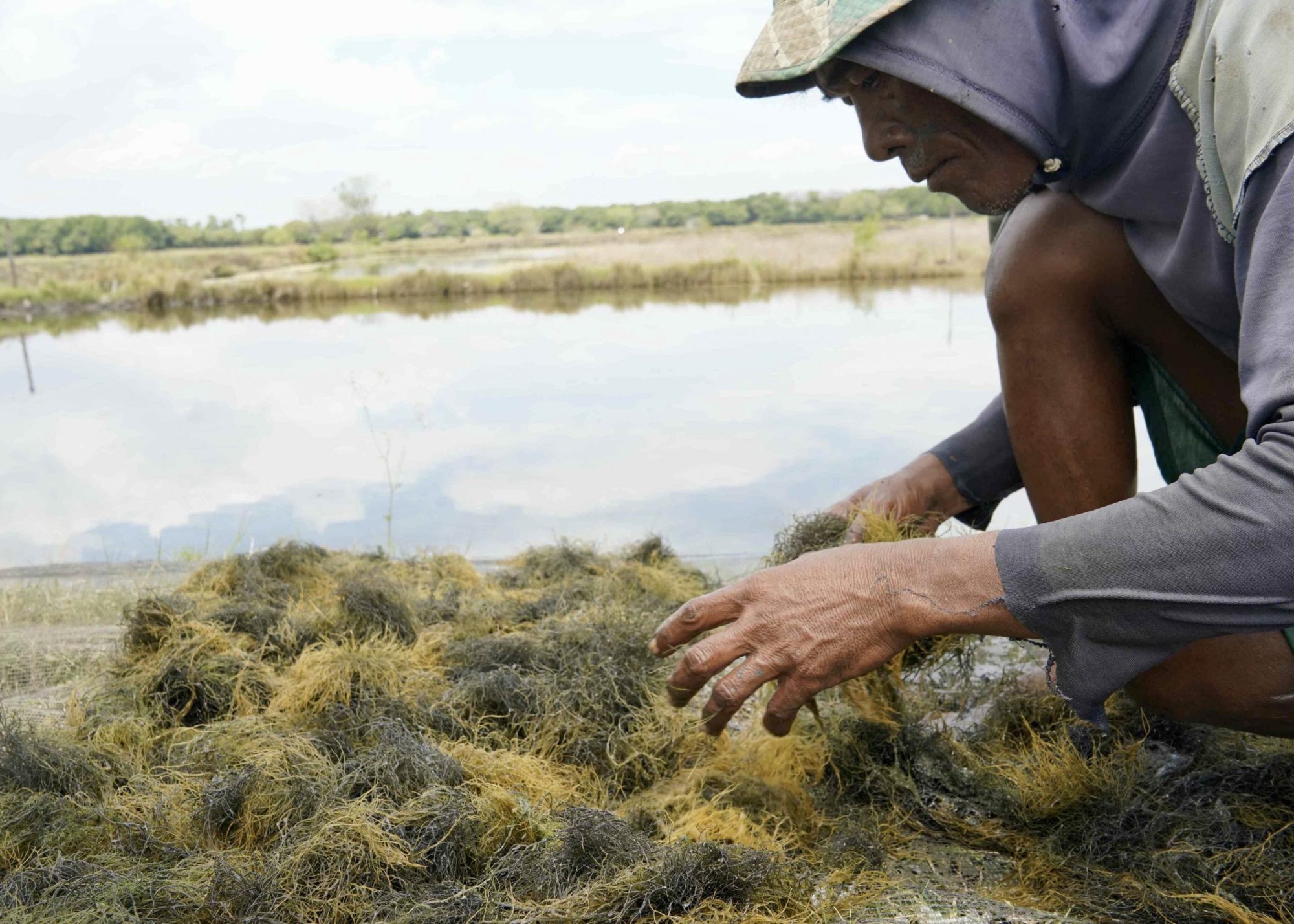
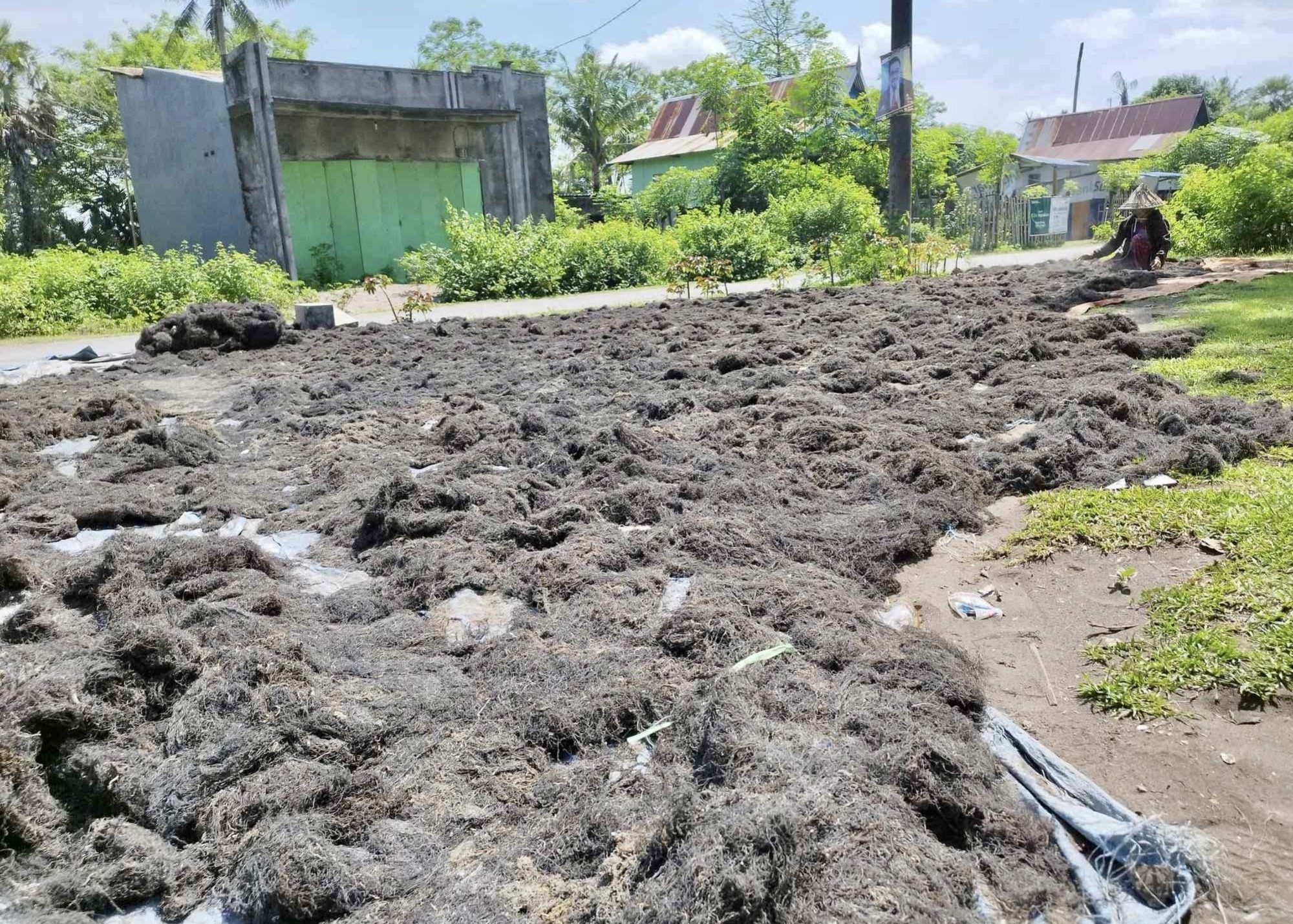
Once the harvested Gracilaria biomass is brought to shore (whether farmed in a pond or at sea), it is immediately laid out under the sun to dry. Farmers use wooden drying platforms, the dikes of the pond or they will spread the seaweed out over a net on the ground. On rainy days the seaweed is covered with a tarpaulin.
Gracilaria dries quickly in sunny weather. Usually after sun drying for 1 – 2 days, the moisture content is reduced to 15 – 18%, which makes it suitable for selling to Indonesia’s local collectors and traders. The wet-to-dry weight ratio is somewhere between 7-10 kg wet weight to 1 kg dry weight at this point.
Sometimes filamentous algae or other impurities have to be removed by hand. When Gracilaria is farmed in unfavourable pond conditions it can have mud, conical shells or similar impurities that have to be cleaned by hand.
The moisture content for export in Indonesia has to be lower (13-15%), which translates into a wet-to-dry ratio of 10-12 : 1.
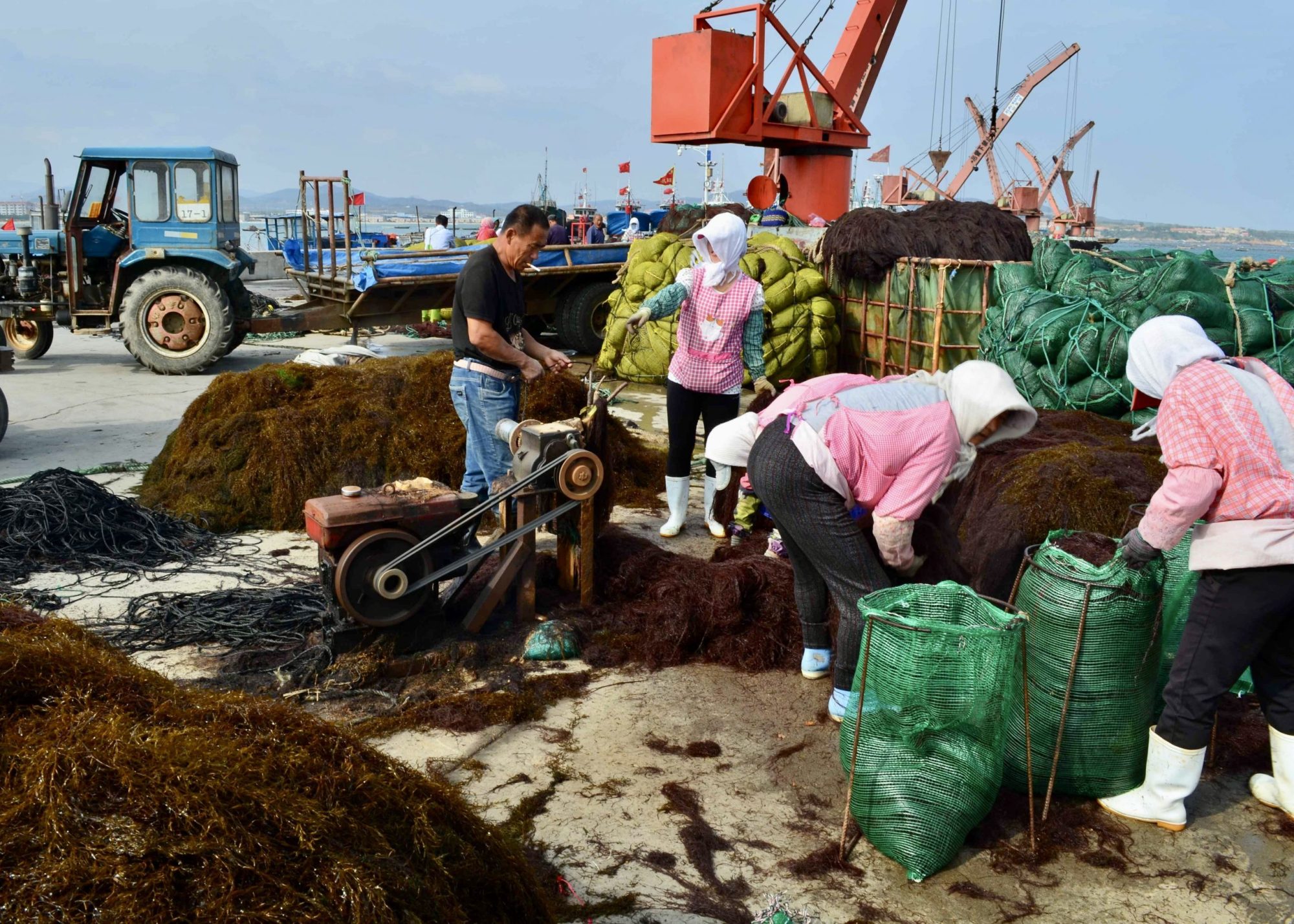
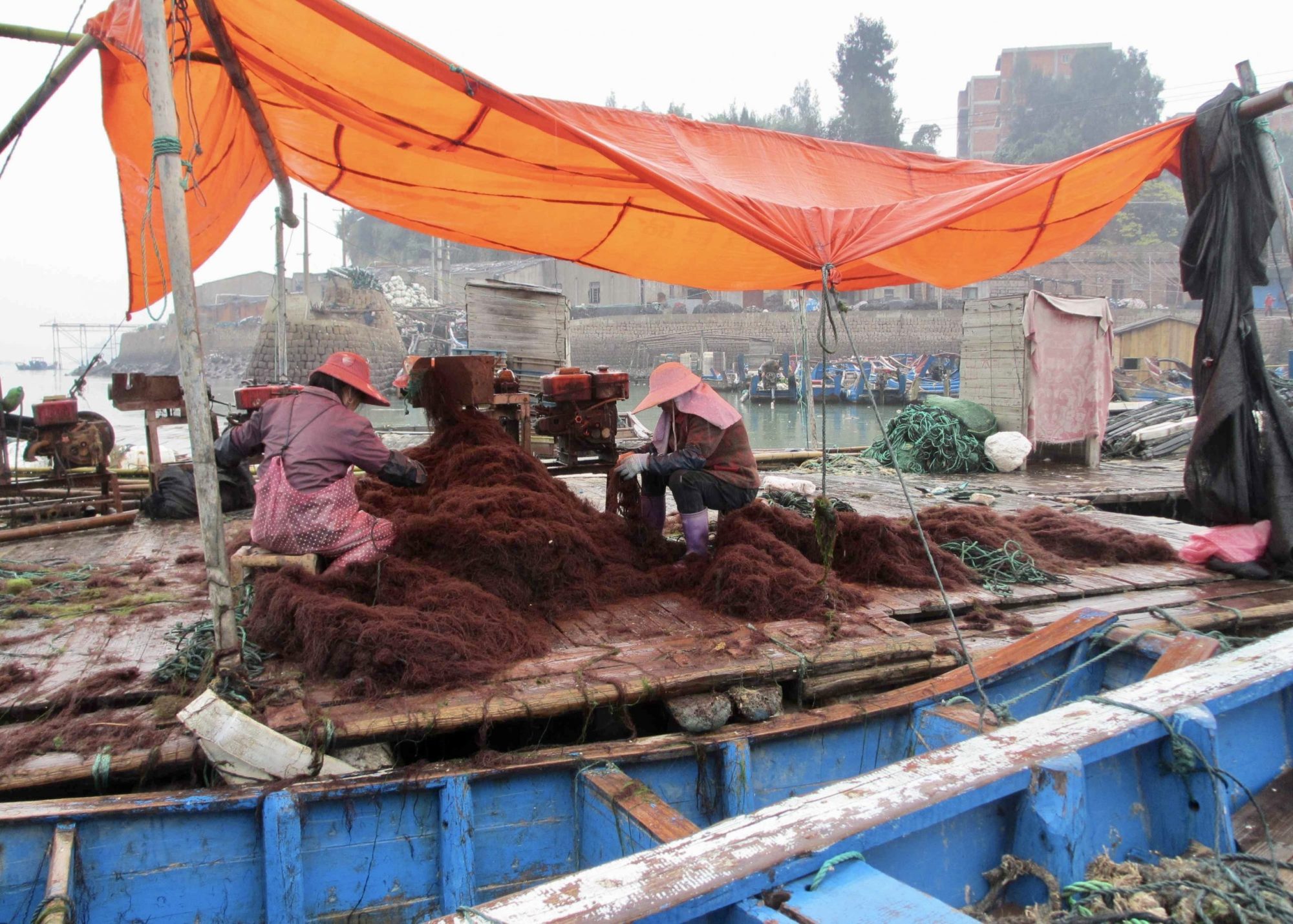
In China, 70% of Gracilaria is farmed for abalone feed and therefore not dried, but transported fresh to the abalone farm.
South America
Overview
After harvest, the first steps involve cleaning the seaweed to remove contaminants. These can include epiphytes from the farming areas, as well as fuels, oils, and lubricants encountered near shore. Seaweed harvested from muddy bottoms also requires thorough washing. This cleaning is done at the shore or a site immediately after the harvest, before transport. Rapid handling is critical because the quality of the algae begins to decline quickly once it is cut.
At this stage, some farmers also select the best fragments for the next cycle, choosing healthy thalli with active apical growth. However, this careful selection is not yet a widespread practice.
Drying
While some farmers sell their algae wet, especially since the processing plant of the main buyer Algas Marinas and only domestic refinery for agar is strategically located in the heart of several main producing areas.
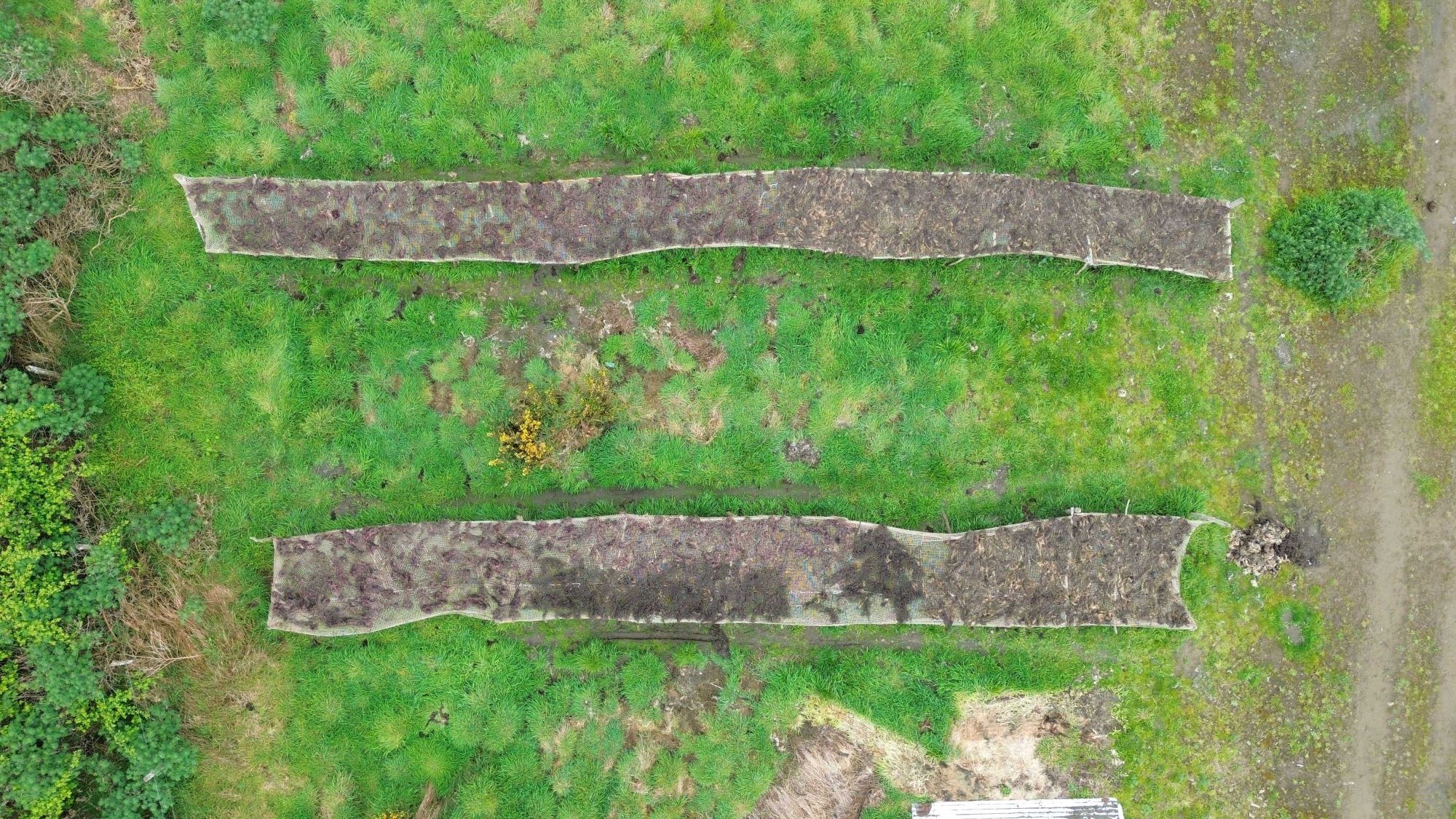
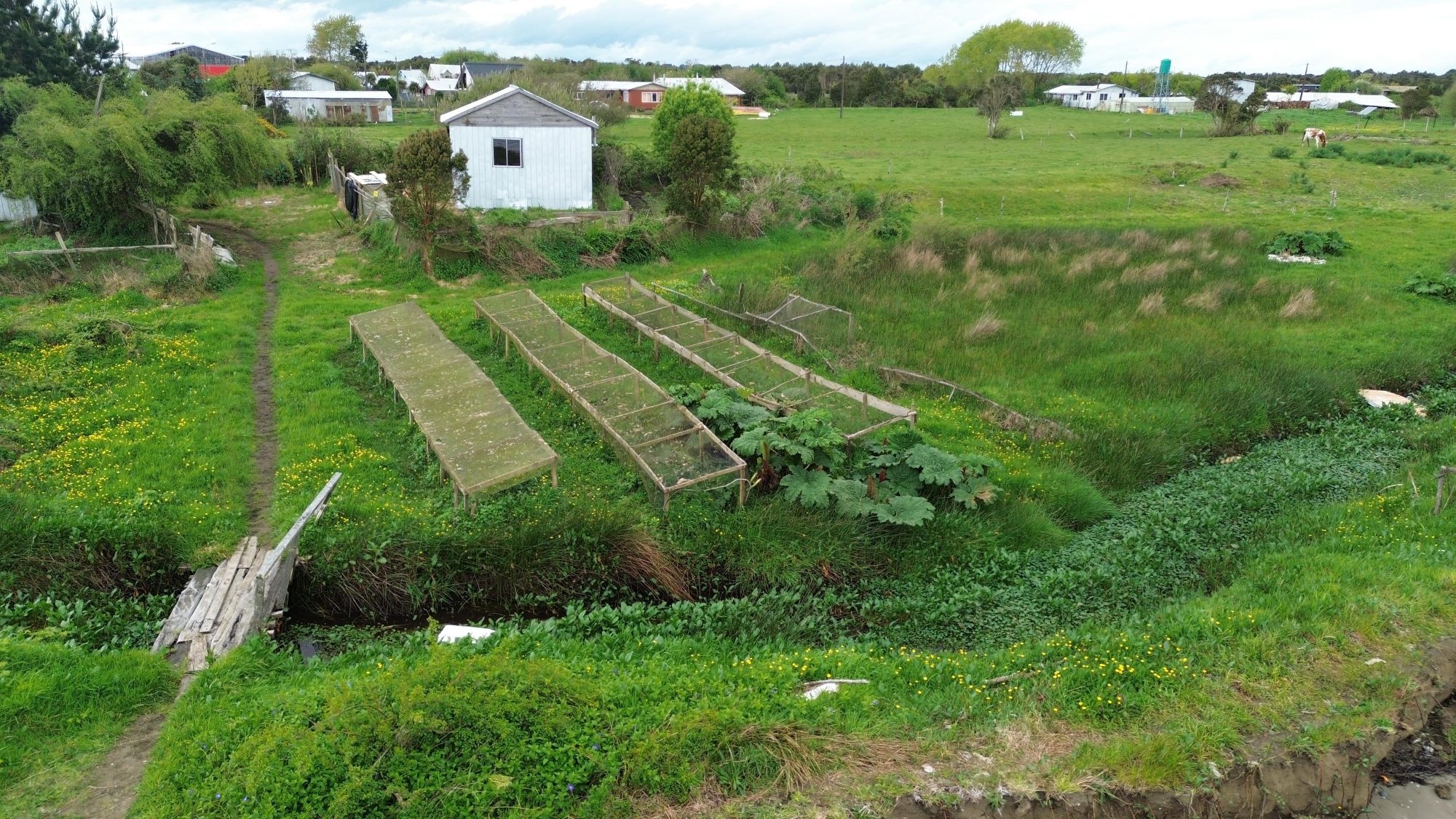
The rest of the biomass which is not domestically processed is exported as raw dried seaweed and processed abroad. The recommended drying method uses elevated racks made of wood and netting, known as tendales, which prevent contamination from soil, sand, and animal faeces. While some traditional drying on beaches still occurs, the use of elevated racks is considered the best practice. For industrial-scale processing, large tunnel dryers are used to ensure consistent quality regardless of weather.
Drying time is highly dependent on the climate, which is a major challenge further south in Chile. Under optimal sunny conditions in the south, seaweed can dry on racks in just one day, while the winter rainy season can extend the process to three or four days.
Processing
Chilean Gracilaria is primarily cultivated to produce high-quality agar-agar for the food, pharmaceutical, and biotechnology industries, a product renowned for its superior gel strength often exceeding 650 g/cm². The domestic processing sector is highly consolidated, with a single major company, Algas Marinas, producing agar within Chile, while the remainder of the harvest is exported, often in dried form, for processing abroad.
In a typical extraction plant, the algae is chopped, digested in heated alkaline reactors, and filtered. The liquid is refined into agar, while the solid residue is commonly repurposed as an agricultural fertiliser. Despite its superior quality, the sector faces significant competitive pressure from high-volume, lower-cost international producers, particularly from Asia.
Treatment of culture lines
After the harvest is complete, cultivation lines and ropes must be removed from the water. If left in place, they become contaminated waste, which can lead to disease and harm the productive capacity of the farming, not to mention the impact on the ecosystem. Proper cleaning and storage of this infrastructure are essential for maintaining a healthy cultivation environment.
Treatment of farming ground
The farming areas also have treatments after harvesting. A critical step is the removal of contaminants, including plague species like the green alga Rhizoclonium, which after being separated from the harvest must be disposed of on land to prevent re-infestation.
Farmers also collect and classify inorganic debris such as plastics and ropes for proper disposal or recycling. The organic residue, comprising dead algae and epiphytes, is often recycled as compost or humus to fertilize nearby terrestrial crops. In areas where the substrate becomes compacted or anoxic, farmers may use tractors to create furrows, a process that aerates and helps remediate the ground.