Eucheumatoids Farm Design
South East Asia
Overview
Water depth is the main indicator that determines the cultivation methods and equipment used for growing Eucheumatoids.
In shallow areas (0.3 – 2 metre depths during the lowest tide) the fixed off-bottom method is very common, where wooden or steel stakes hold suspended lines in place below the water’s surface. In deeper waters, the hanging long-line, floating rack and multiple raft long-line methods will be used.
The farmers we interviewed operated in farm sites with a maximum depth of 15 meters. Farming in deeper waters is not only more expensive, since more material and boat fuel is used, but also exposes the farm to higher risks, due to typically increasing wave height.
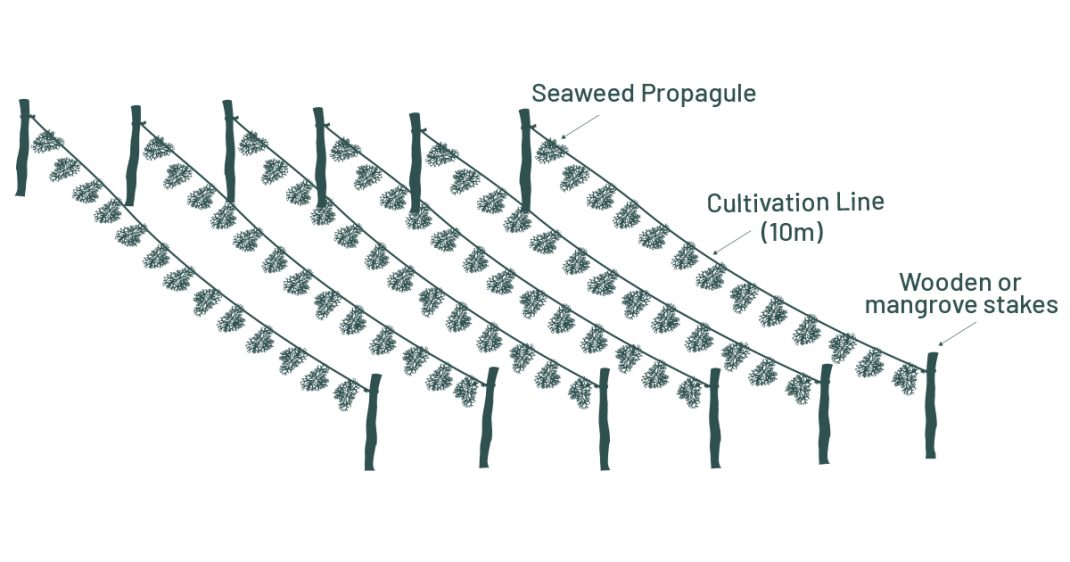
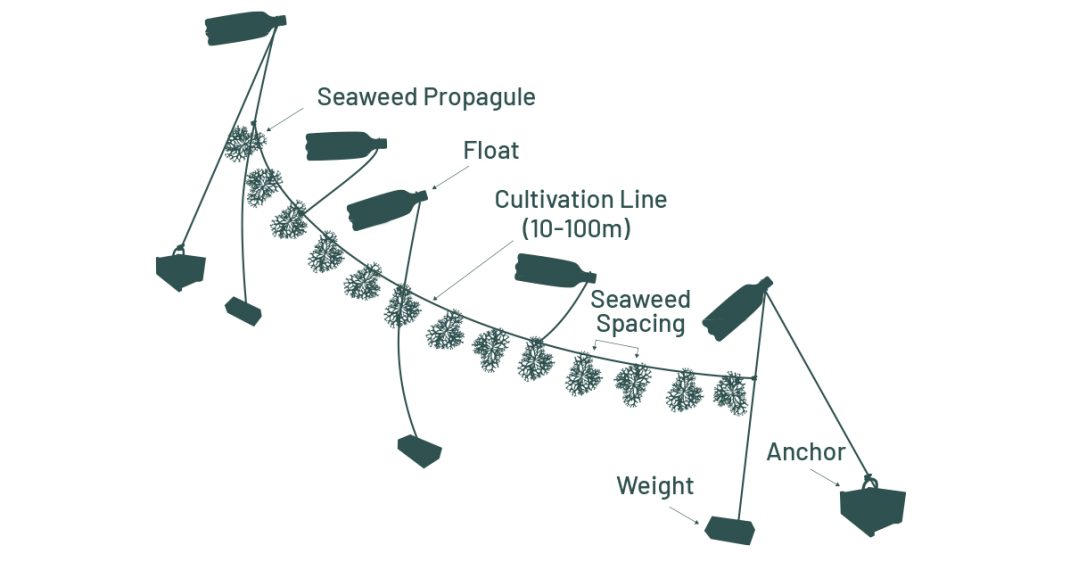
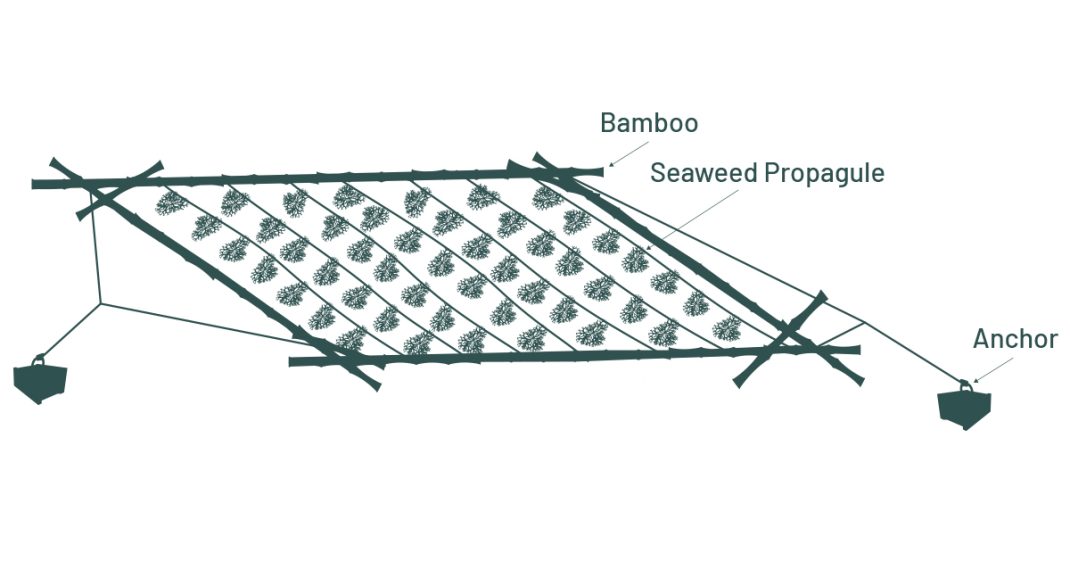
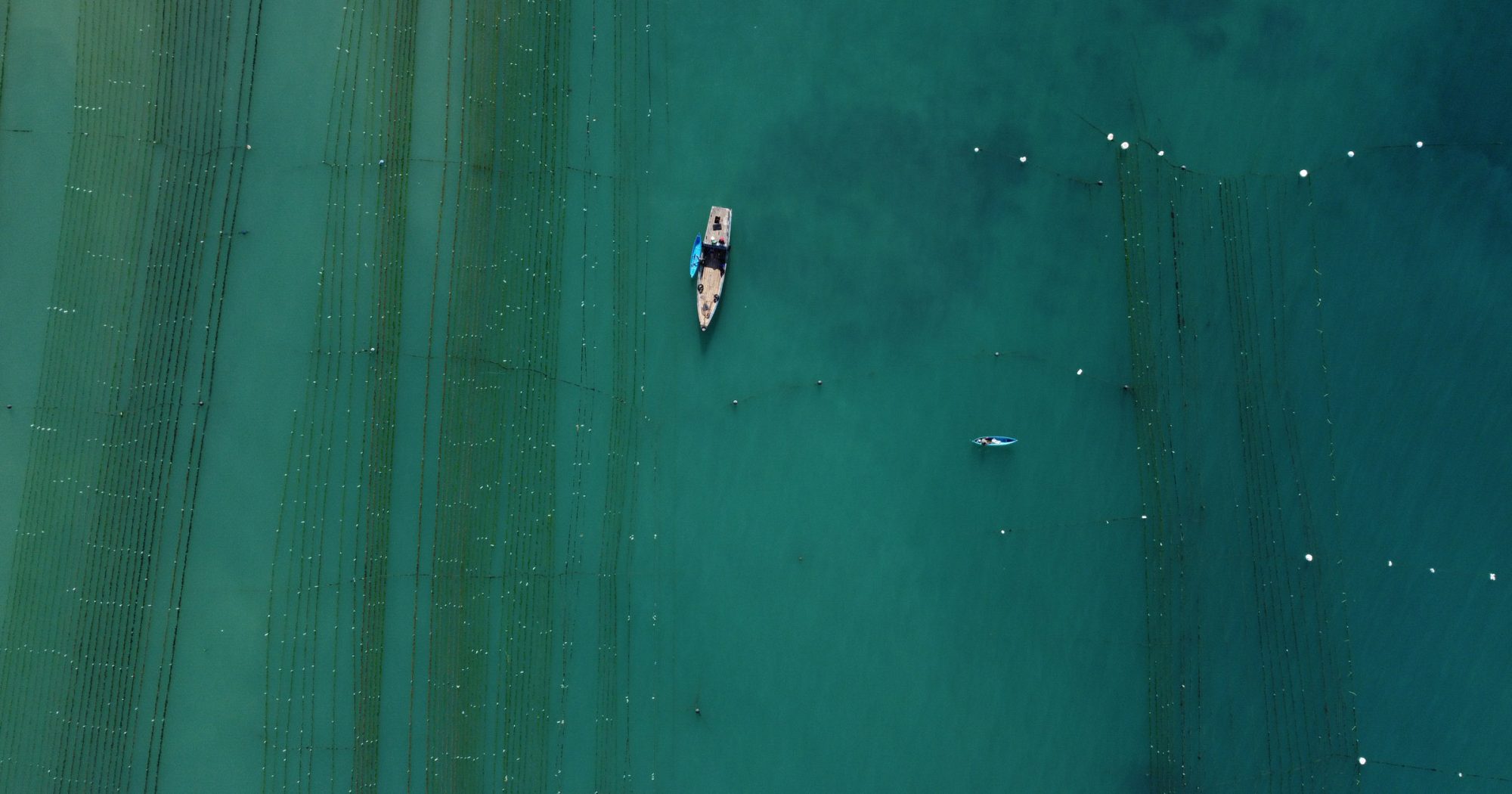
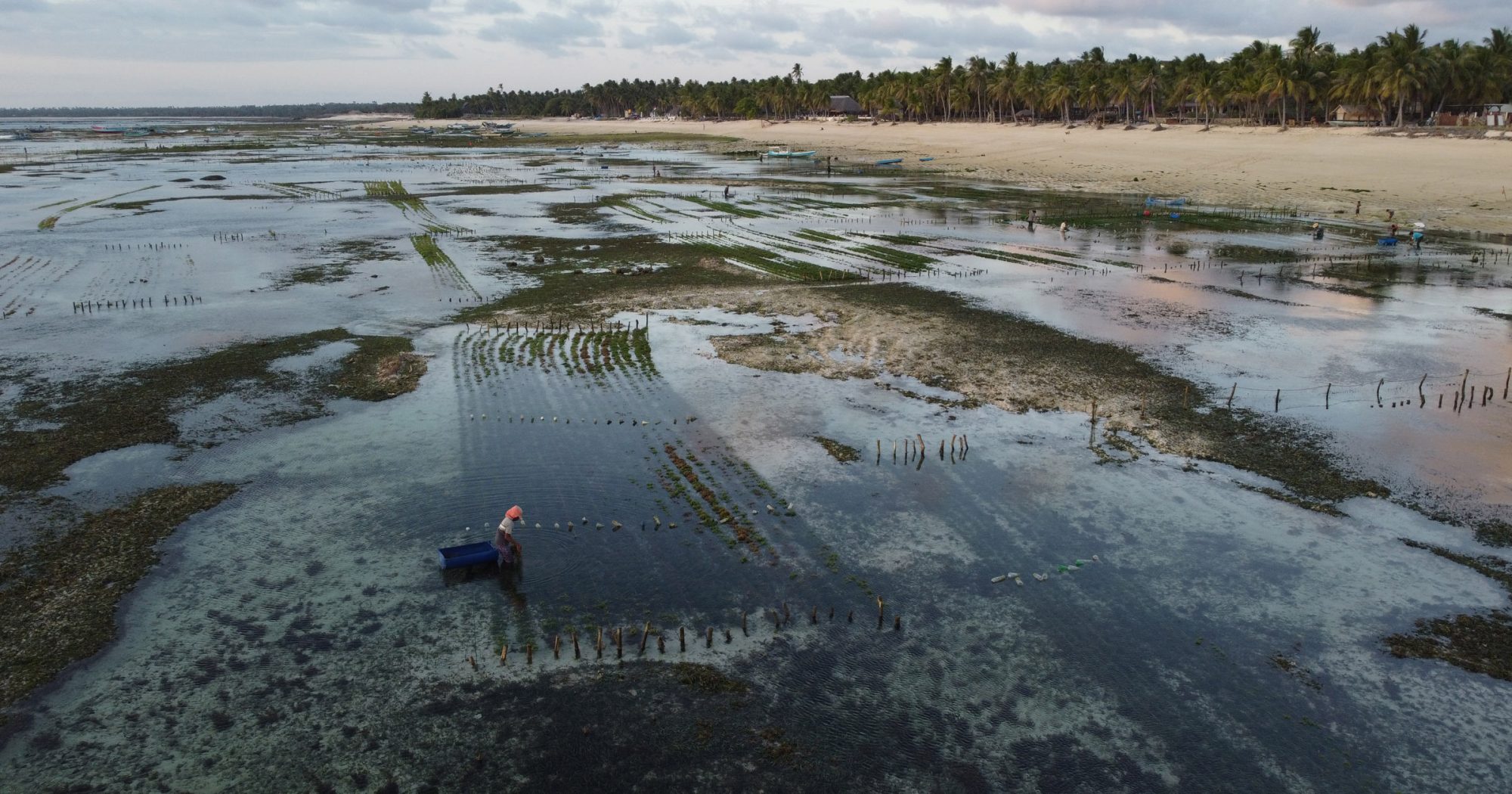
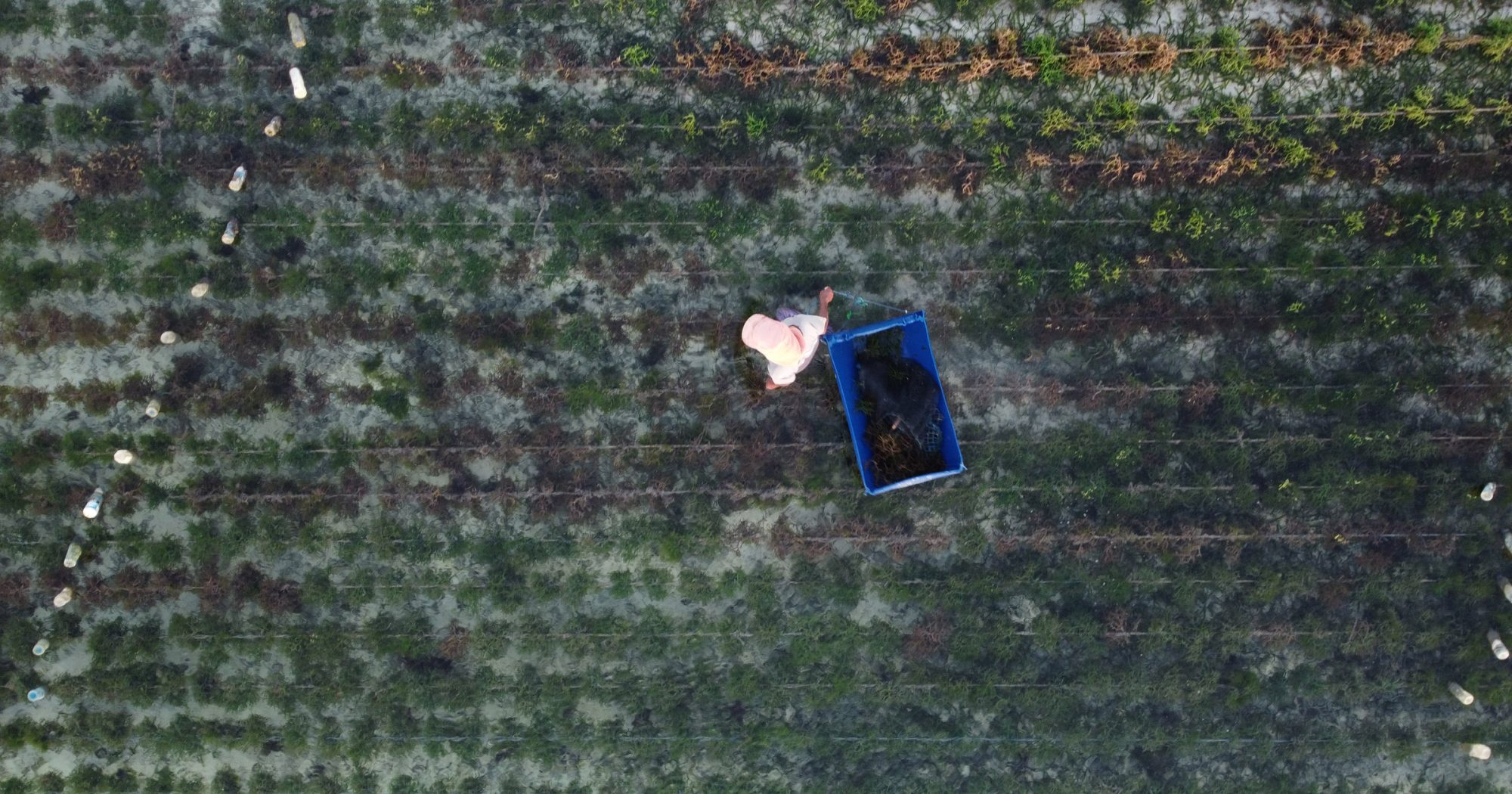
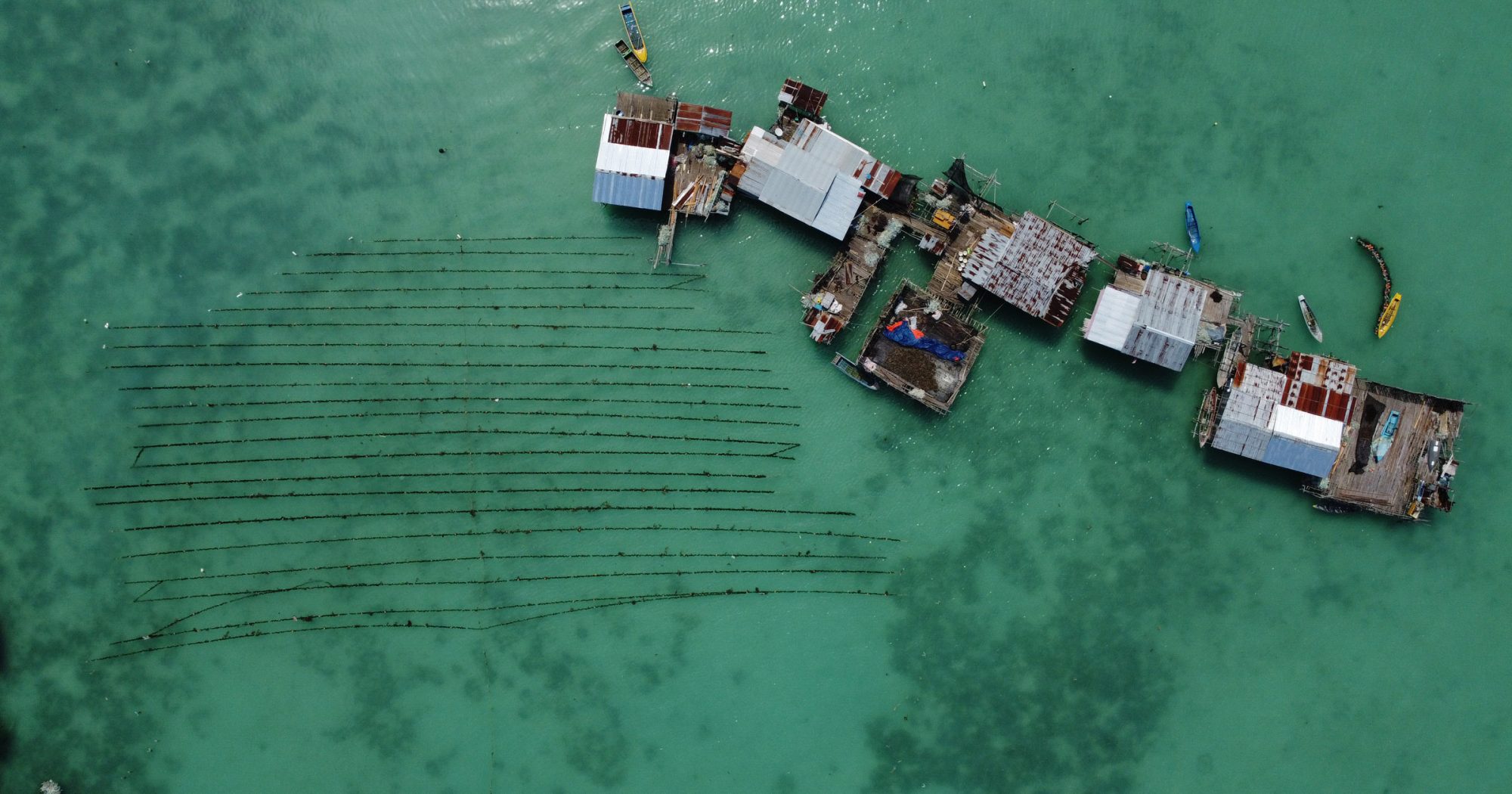
There are at least a handful of other cultivation techniques and many unique design variations to grow Eucheumatoids in the Coral Triangle region.
In the fixed off-bottom and floating rack method the line length usually does not go beyond 10 metres. However in the floating/ hanging long line method the length of each culture line can be much longer and vary quite a bit, depending on the farm location. Less exposed areas can have longer lines, however farmers reported that the handling of a longer line can be a limitation.
Anchors
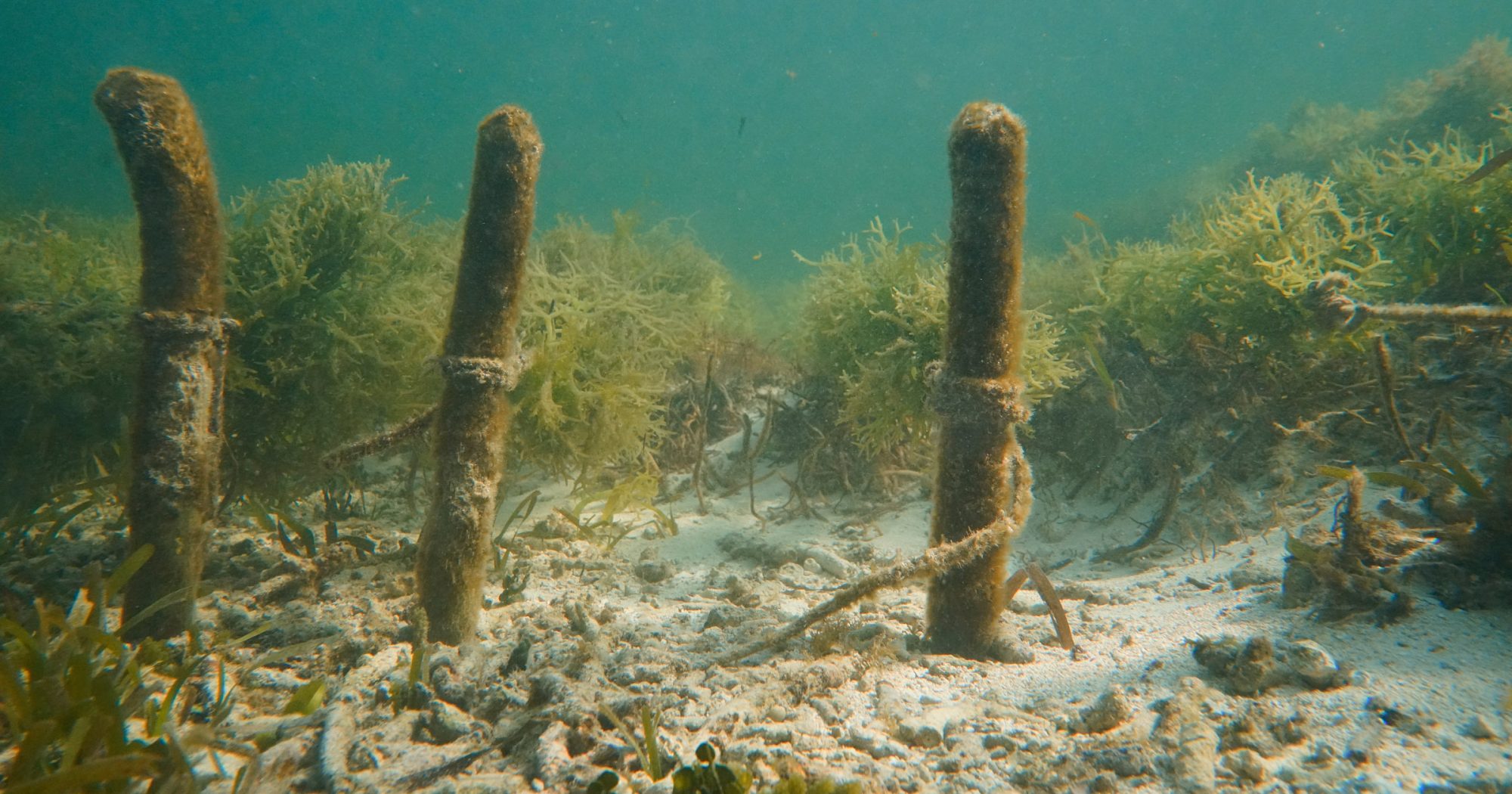
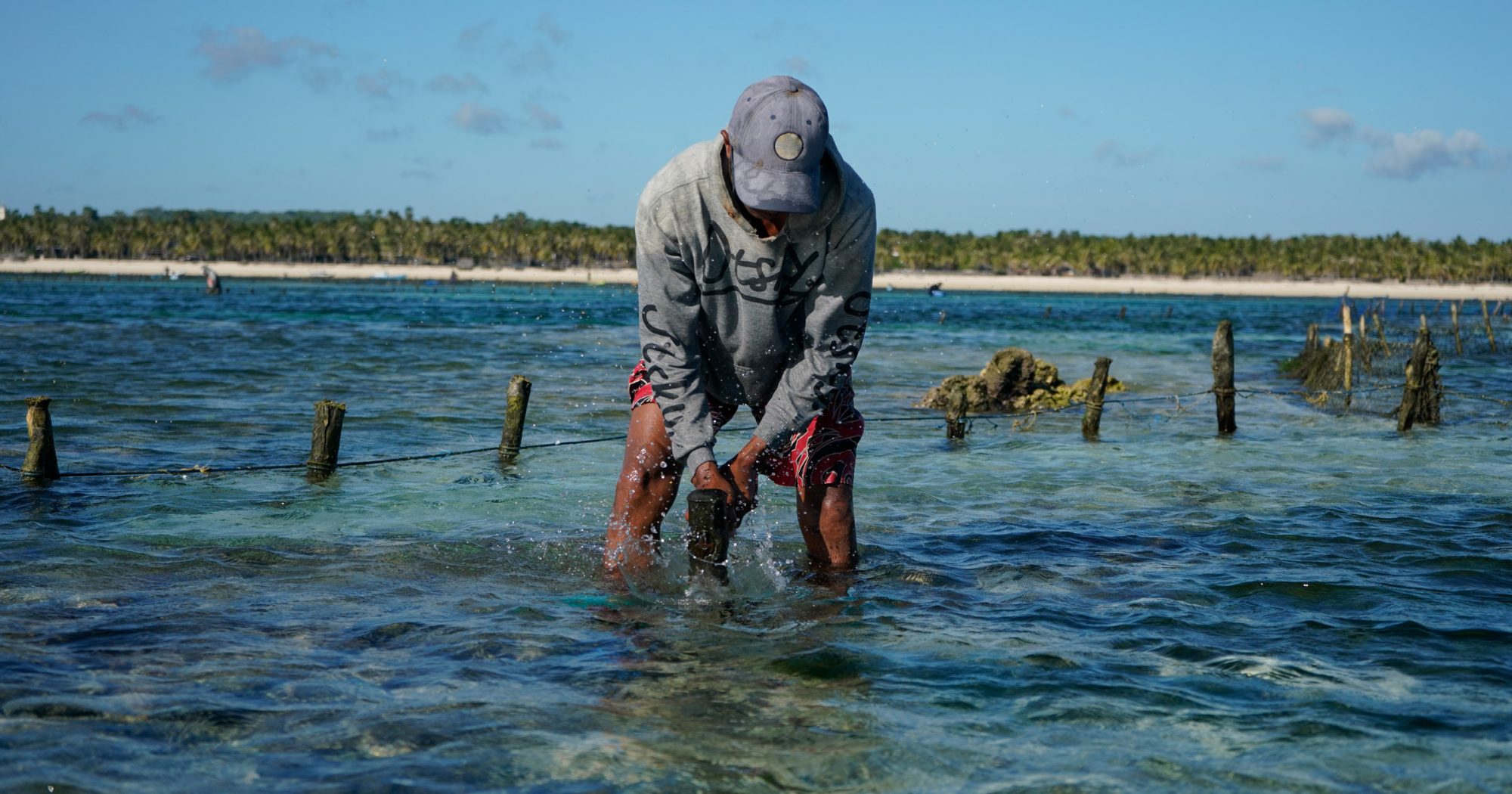
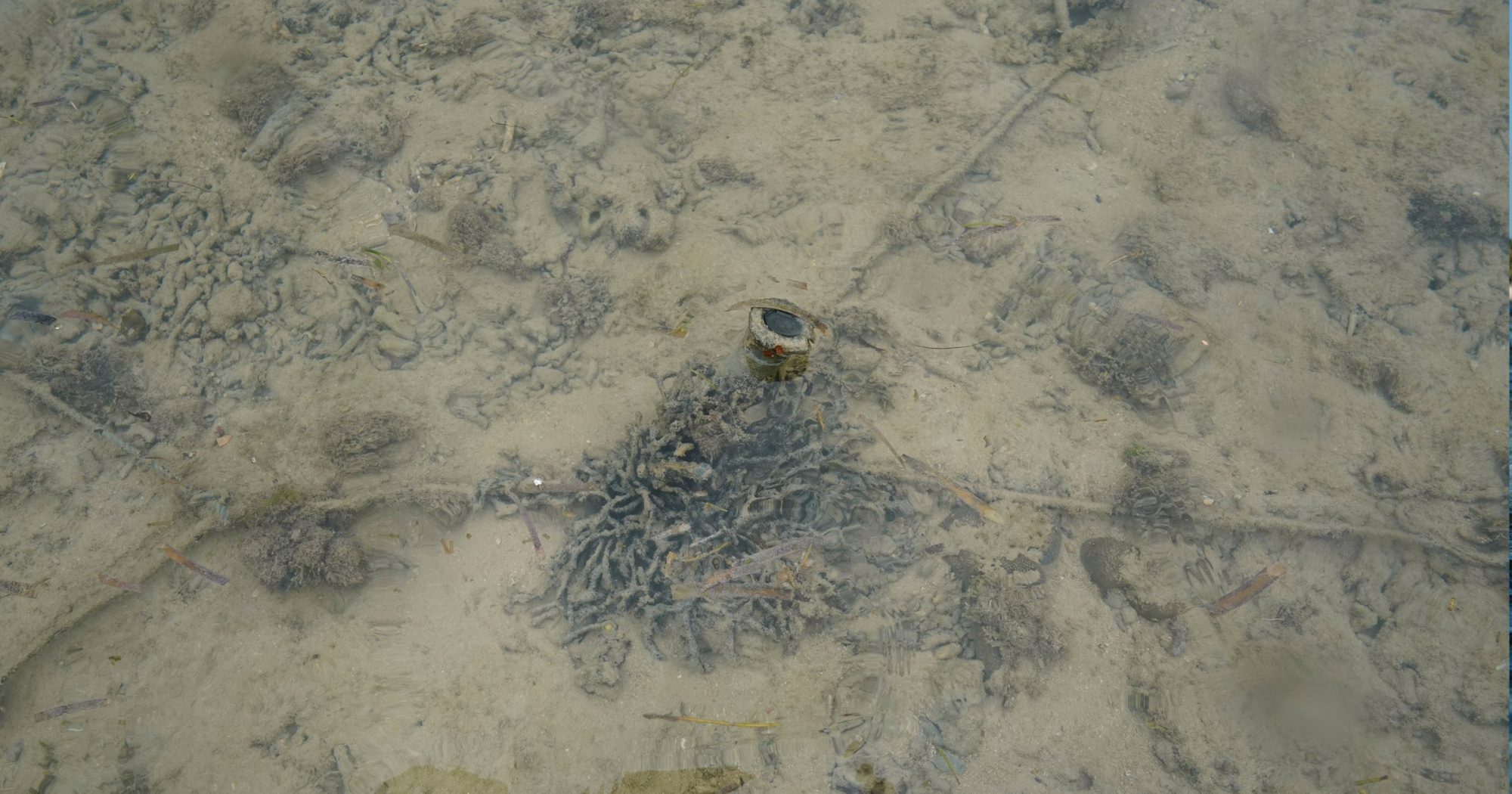
Wooden stakes are mainly used for anchoring the farming rig across Indonesia, the Philippines and Malaysia.
They are usually rammed into the bottom of the sea using pure manpower. In waters over head height, this requires skilled free divers in the community.
Wooden stake anchors are in some regions preferably made out of mangrove wood because of their durability in the water. However, by law, mangroves in the Philippines and Indonesia are protected. In Indonesia, the leaders of coastal communities have a consensus to protect mangrove forests and do not allow mangroves to be used as stakes for seaweed farming.
Rope material
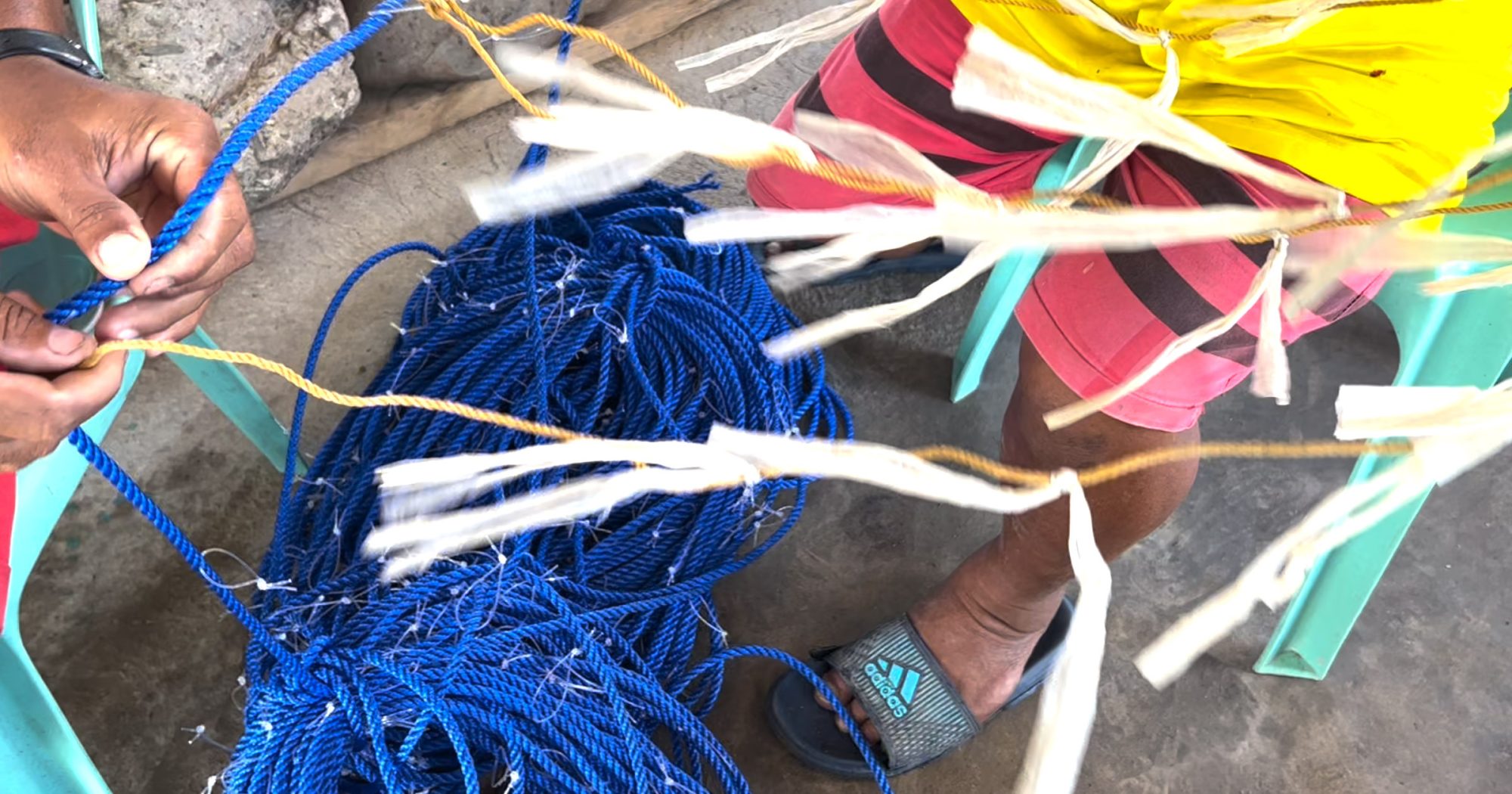
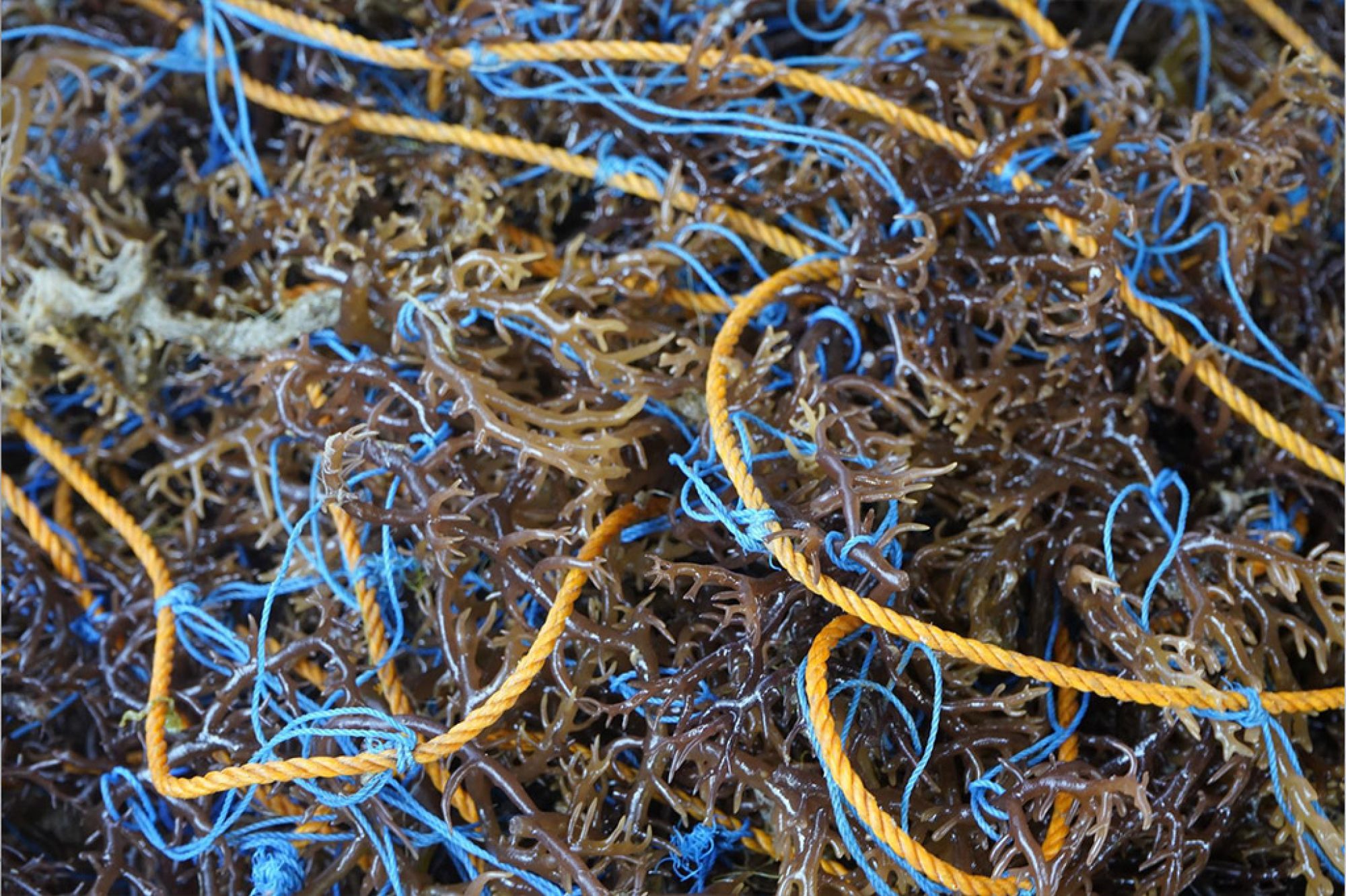
The culture lines are typically between 4 and 7 mm in diameter. In floating long line systems, the lines connected to the anchor (rig lines) are often stronger (10-14 mm).
The strength of all ropes used depends both on the farm design and exposure of the site.
The lines are a substantial cost in setting up a farm and in most cases farmers buy universal polyethylene ropes (PER), which are sold in local stores or provided by local dealers.The prices for a roll of 200m rope are somewhere between 10 and 15 USD. Under normal conditions, these ropes can last up to 5-8 years. Frequent cleaning of the culture line after each cycle will help to keep them intact and also reduce disease and epiphytes across crop cycles.
Floats
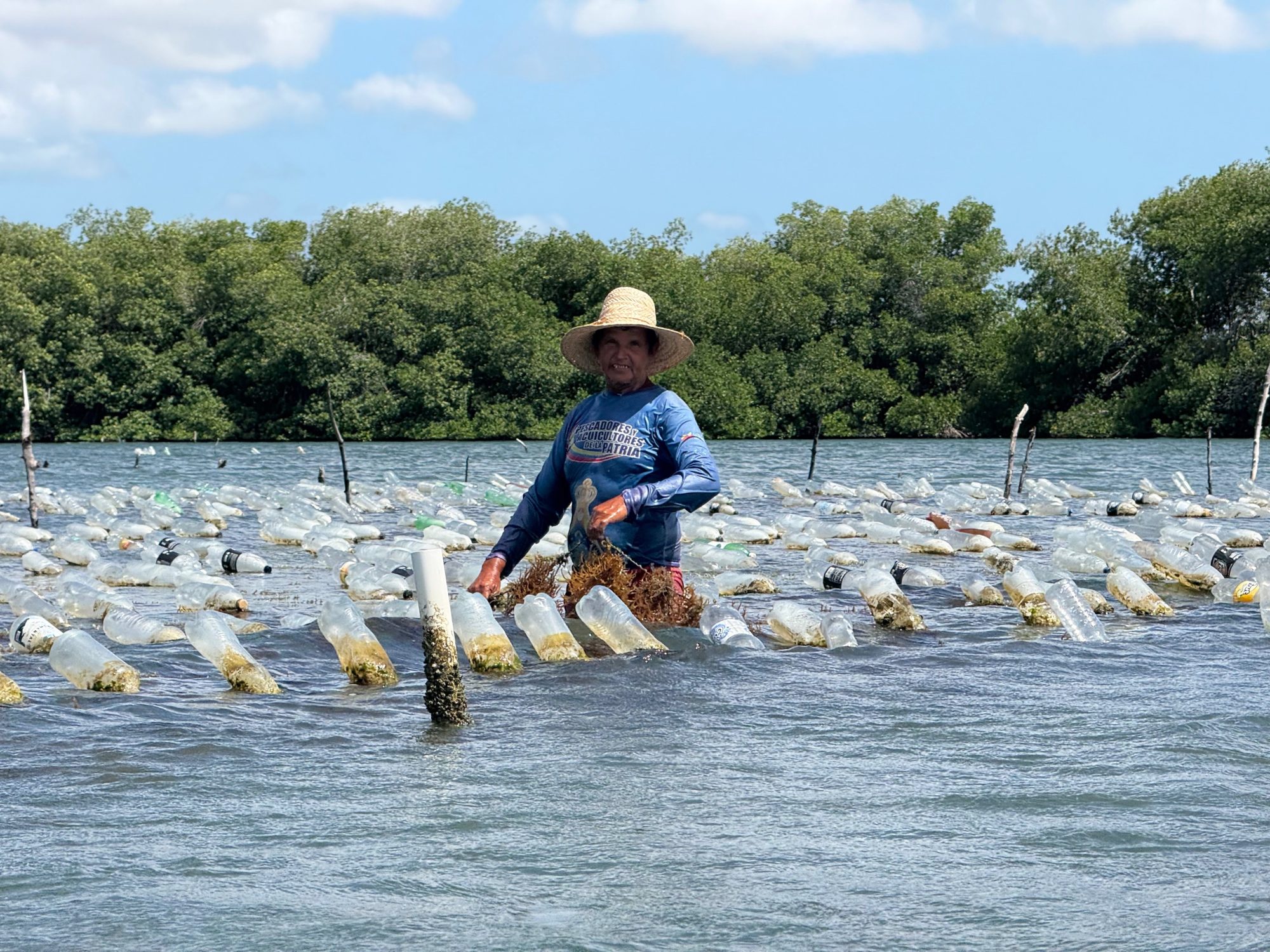
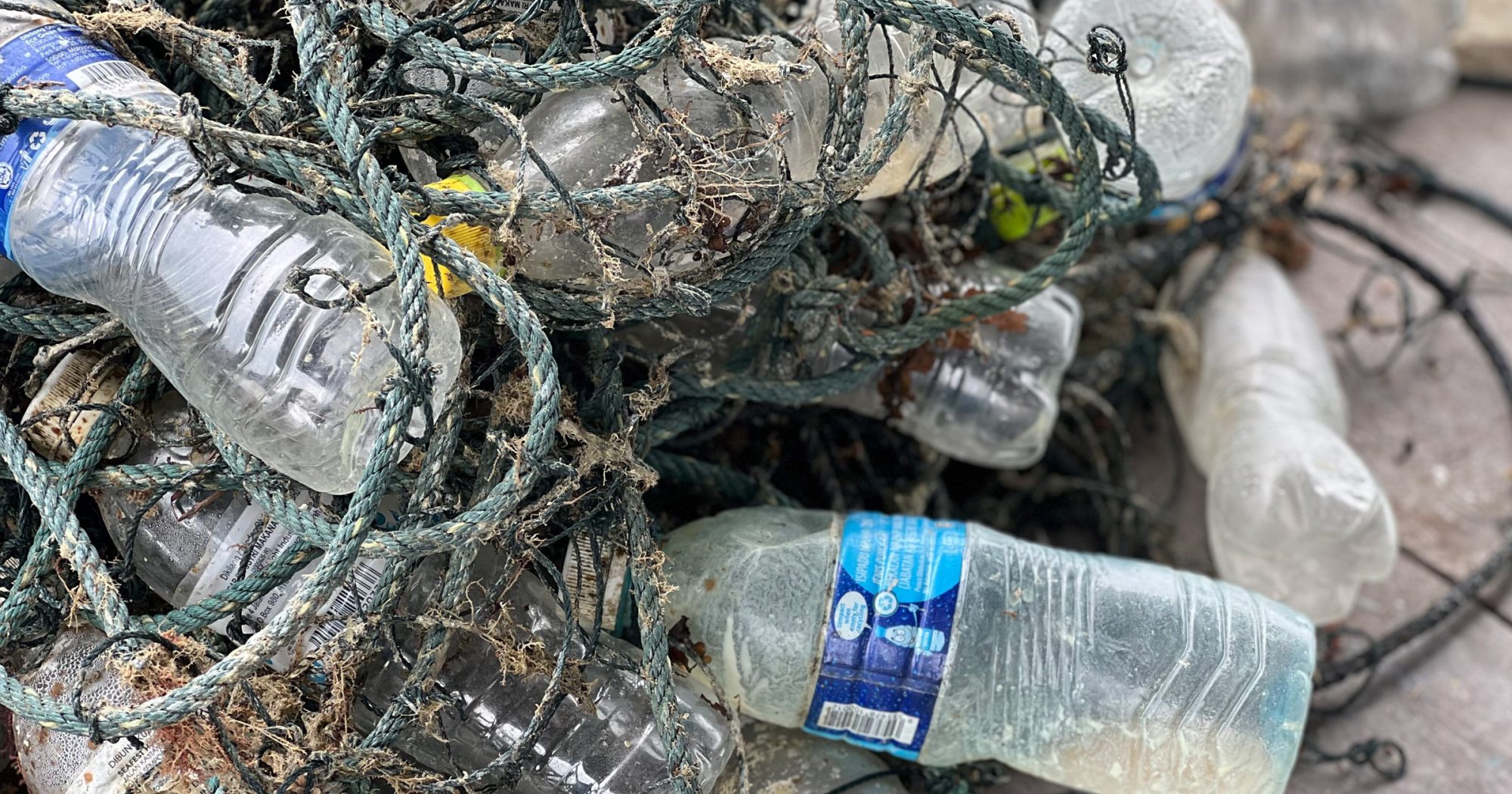
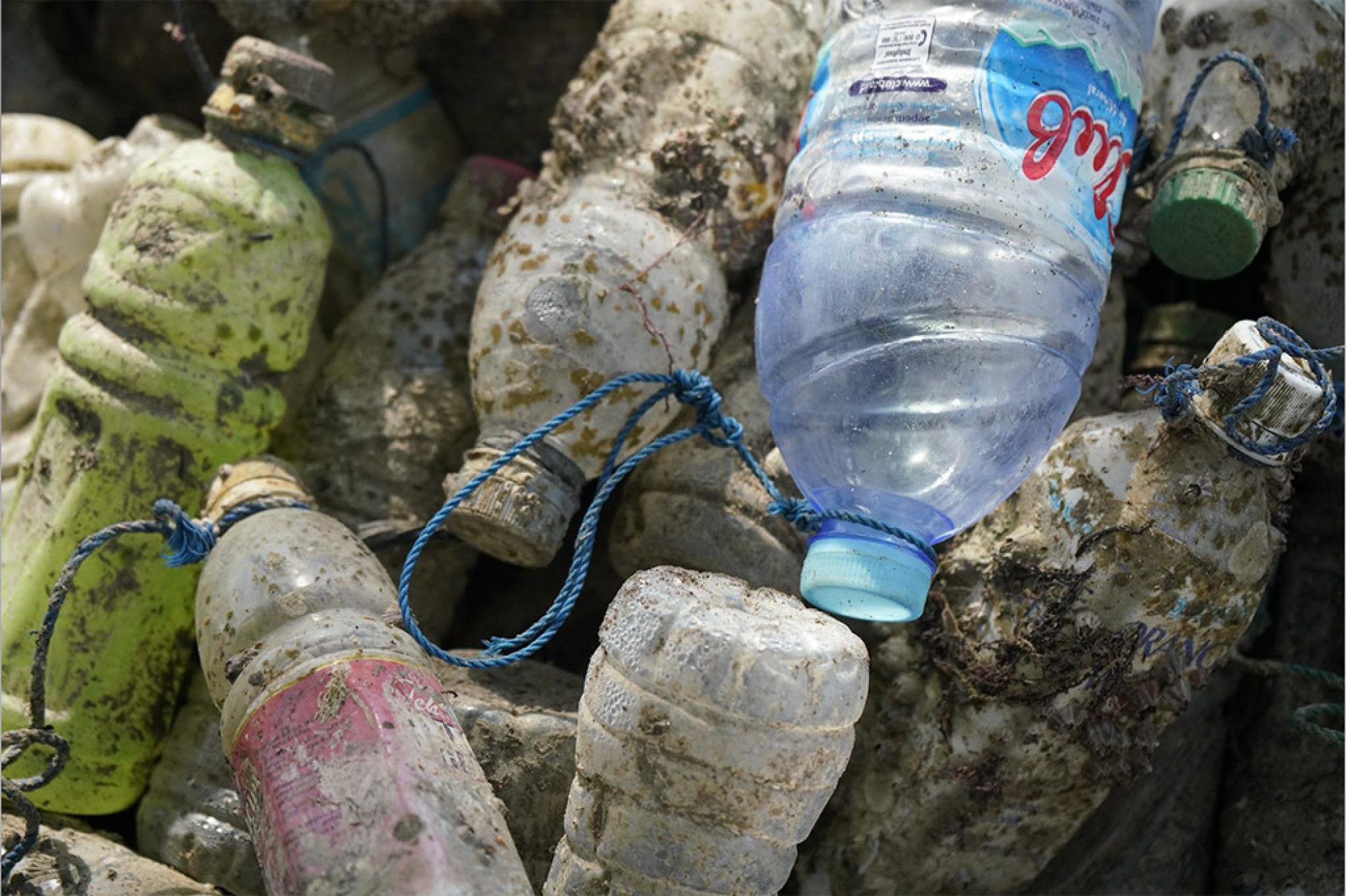
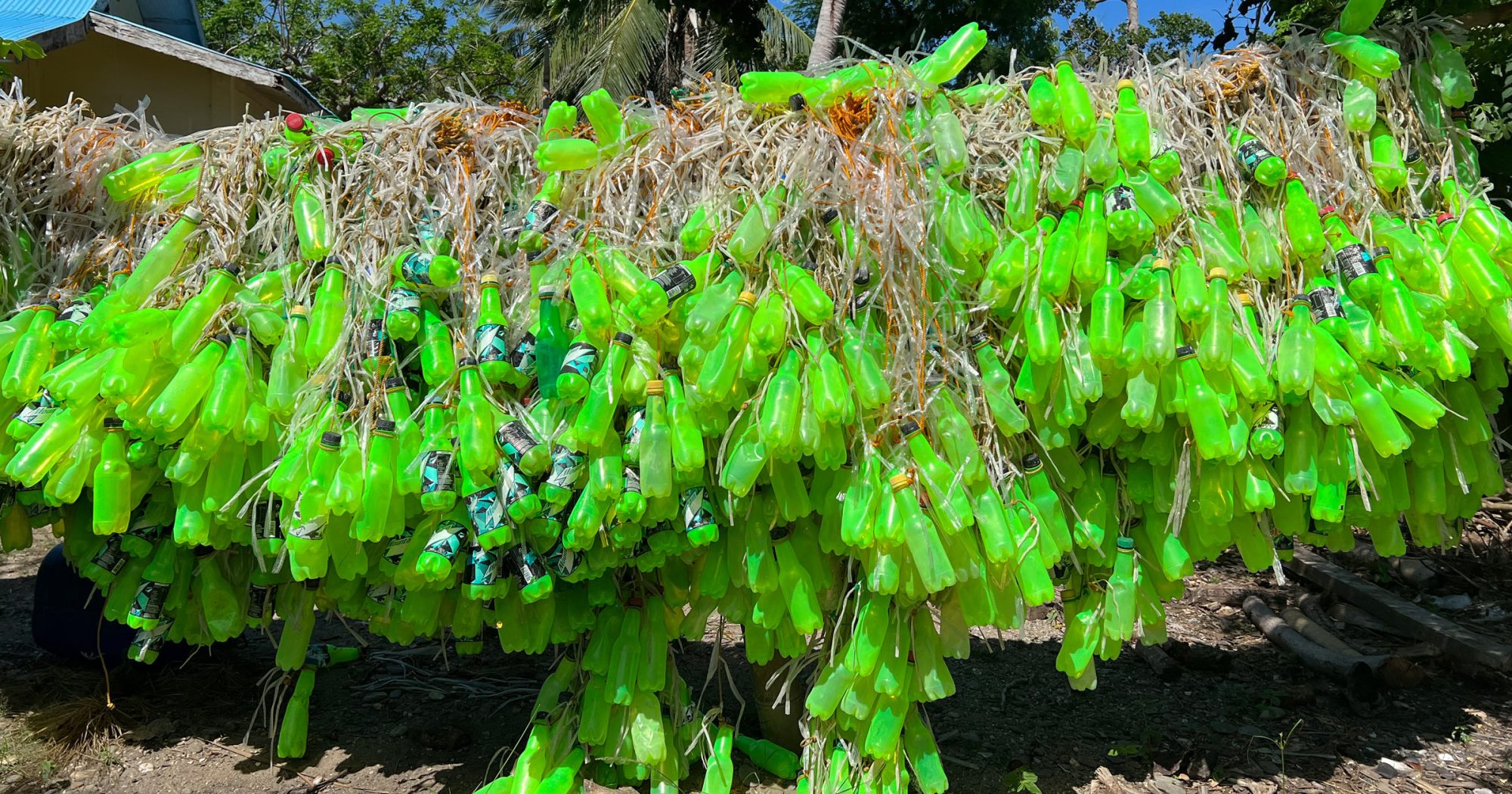
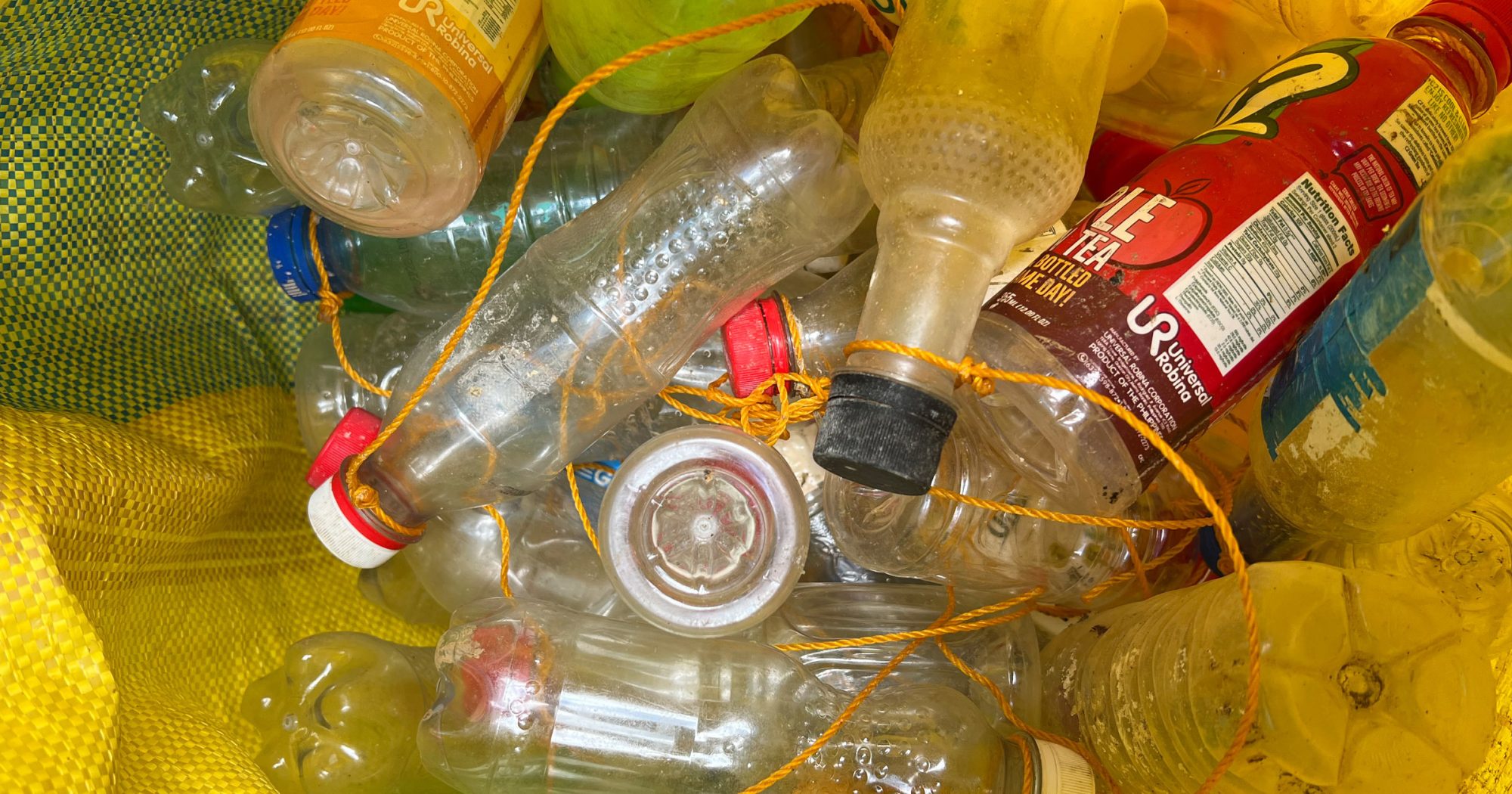
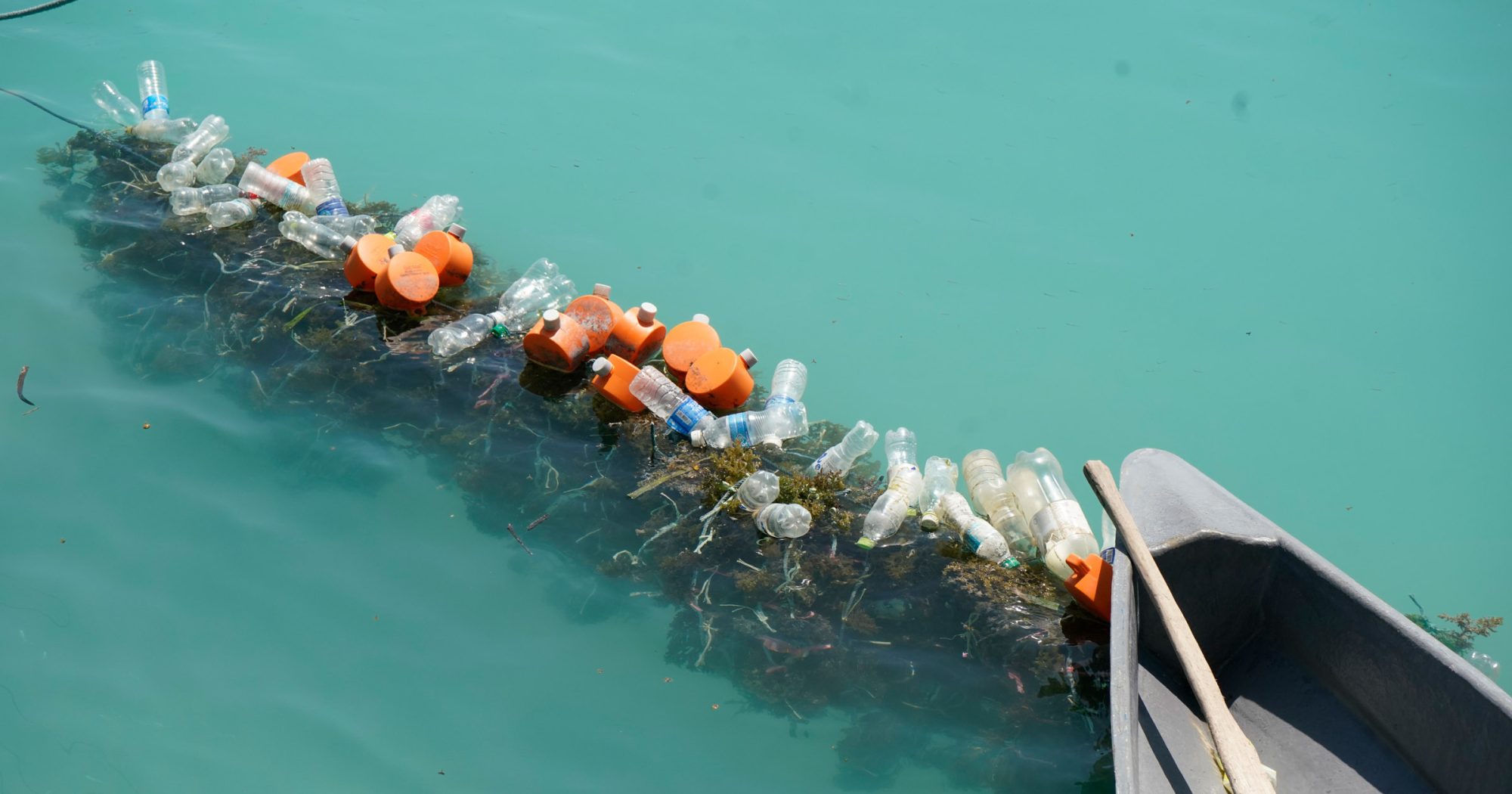
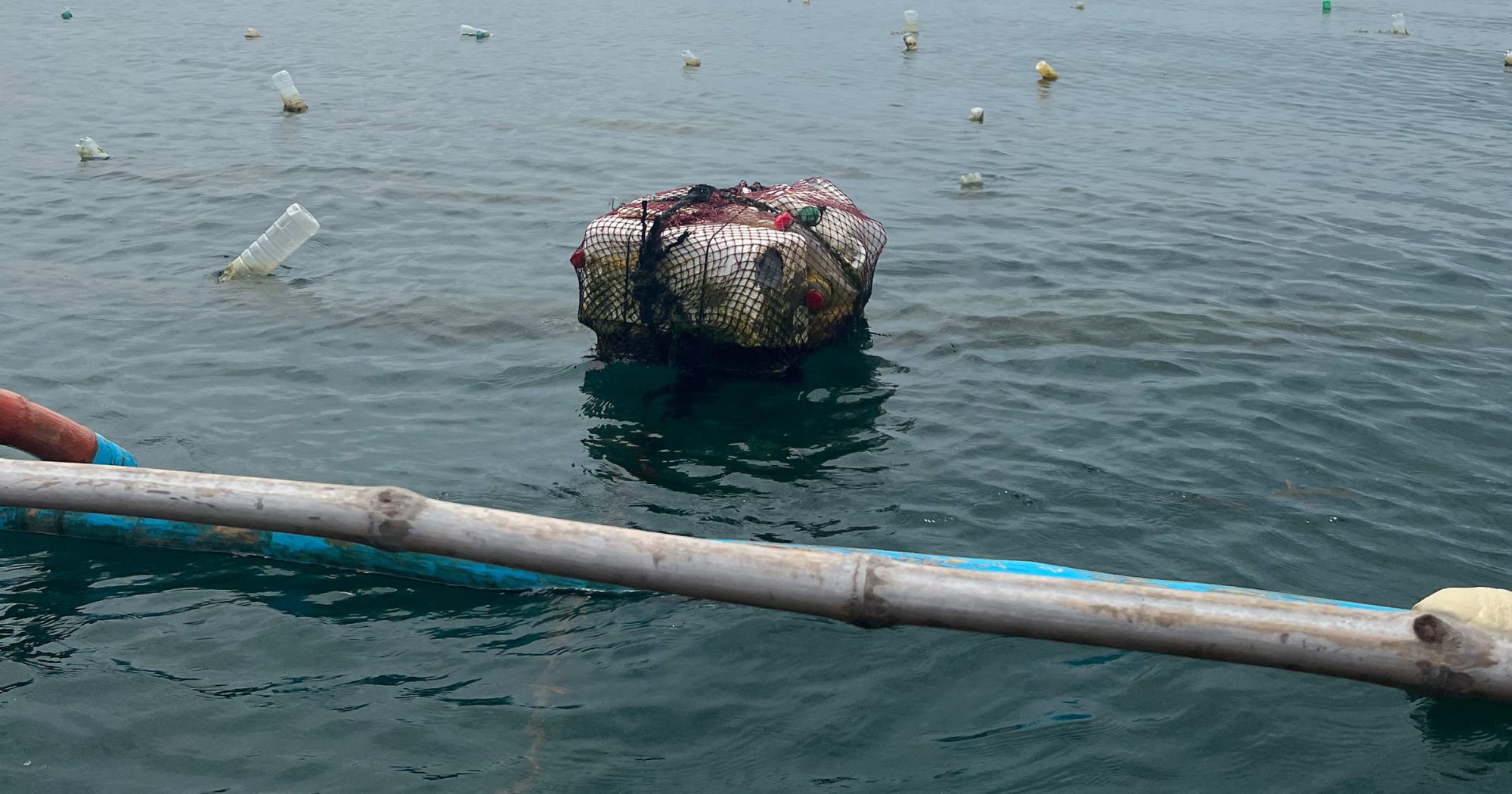
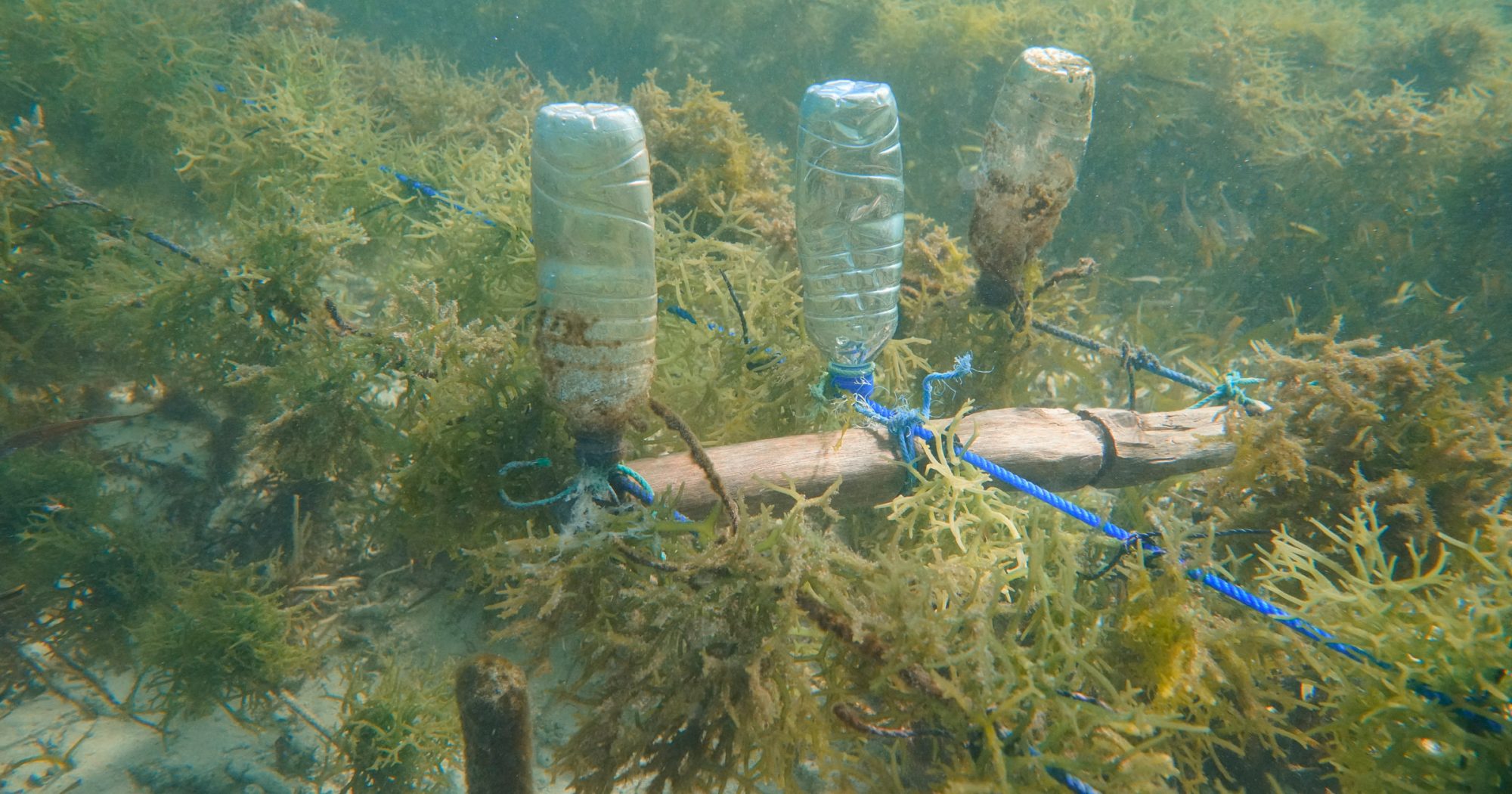
To keep the cultivation lines with seaweed close to the water surface at all times, used PET (polyethylene terephthalate) bottles are most commonly used as floats. Farmers reported large differences in how long these bottles last them. Depending on the type of PET bottle, they have to be replaced a minimum of every 2-3 cultivation cycles.
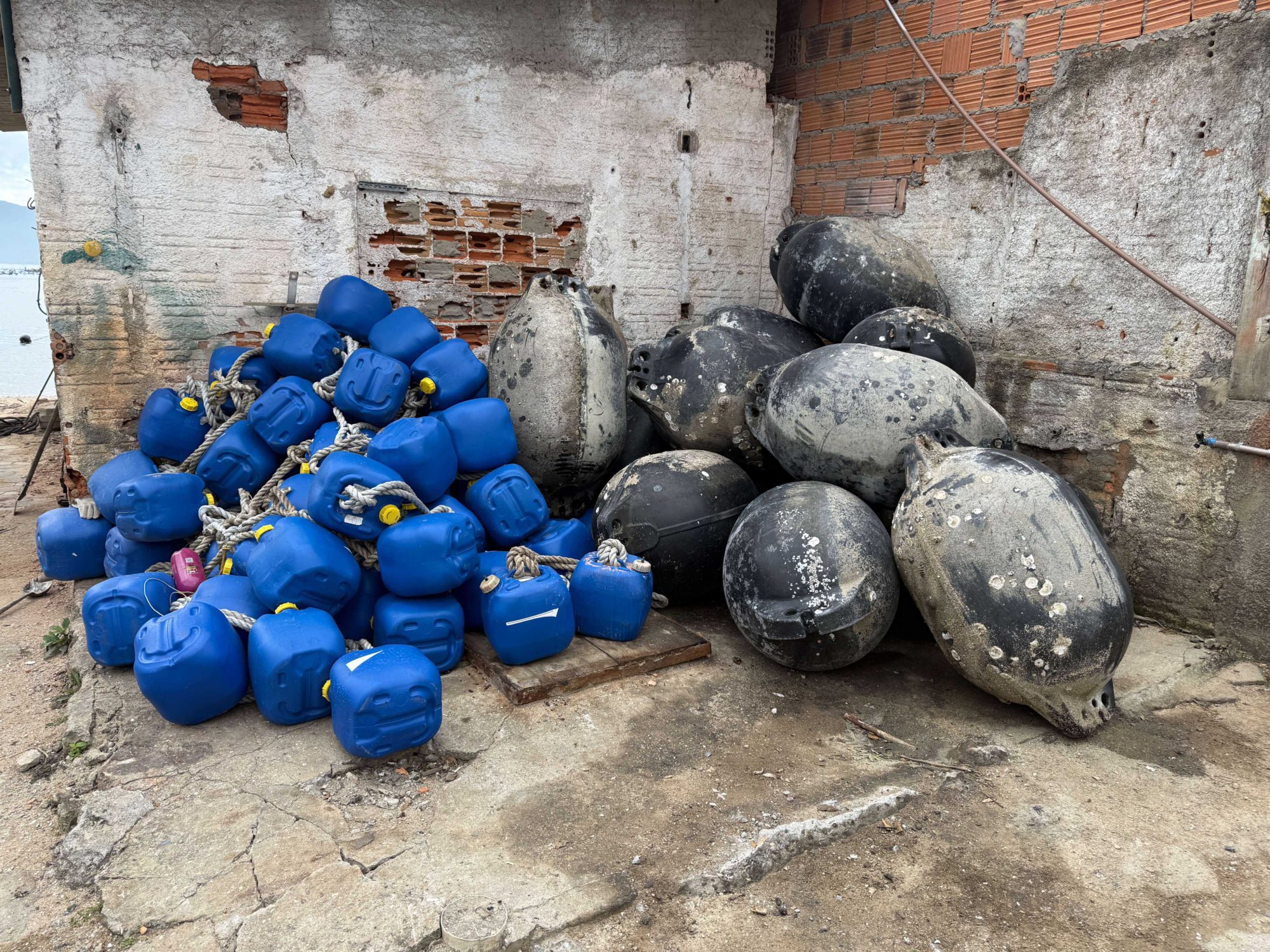
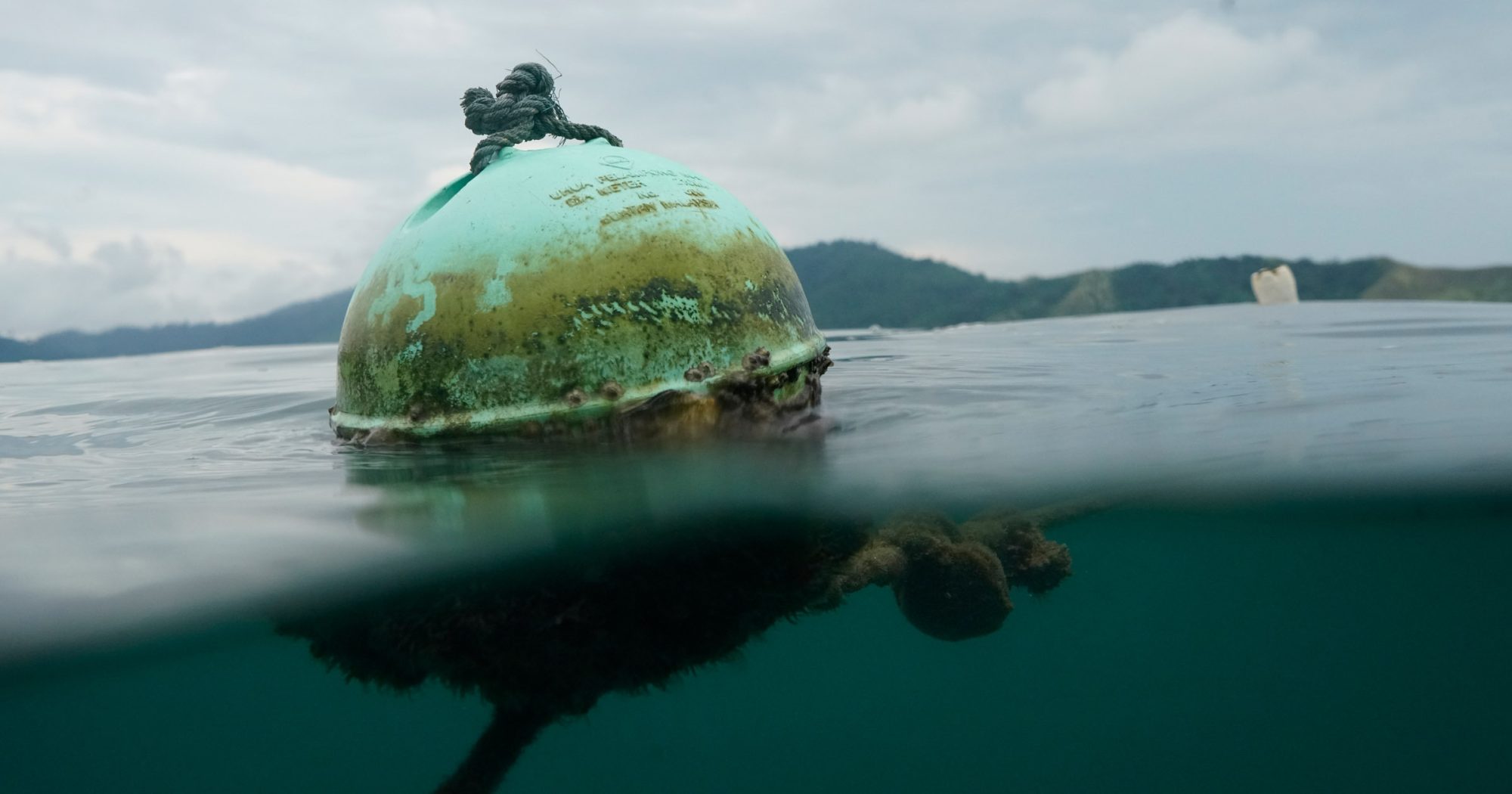
There have been some initiatives to introduce manufactured floaters (rubber floats) from more durable materials dedicated for seaweed farming. However, most farmers reported that they prefer the PET bottles since they are cheap and practical. They noticed that the surface of the manufactured floaters enables more biowaste to attach and the additional weight sinks them faster. The PET bottles on the other hand have a cleaner surface, where this process happens much slower.
Caribbean
Overview
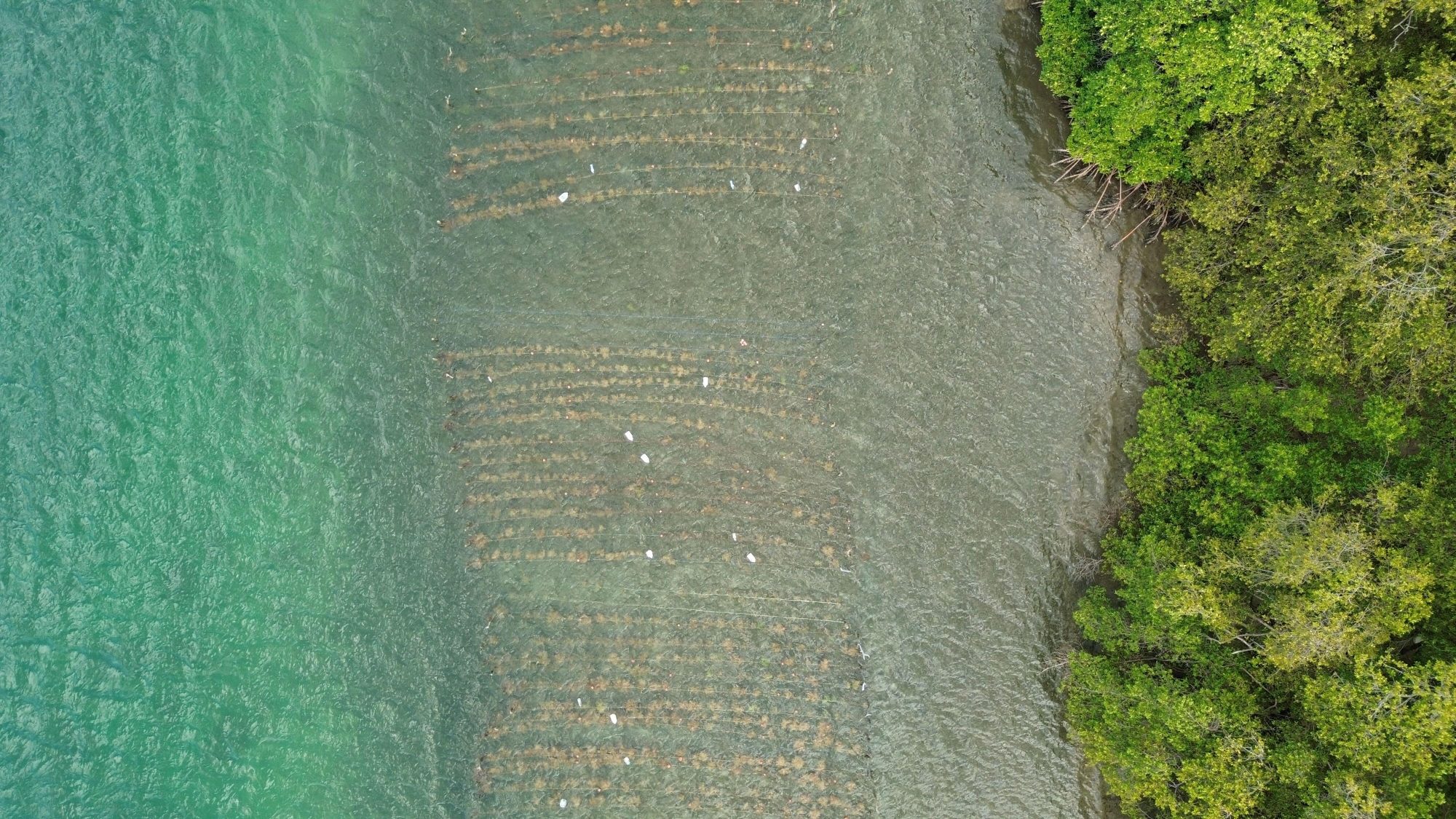
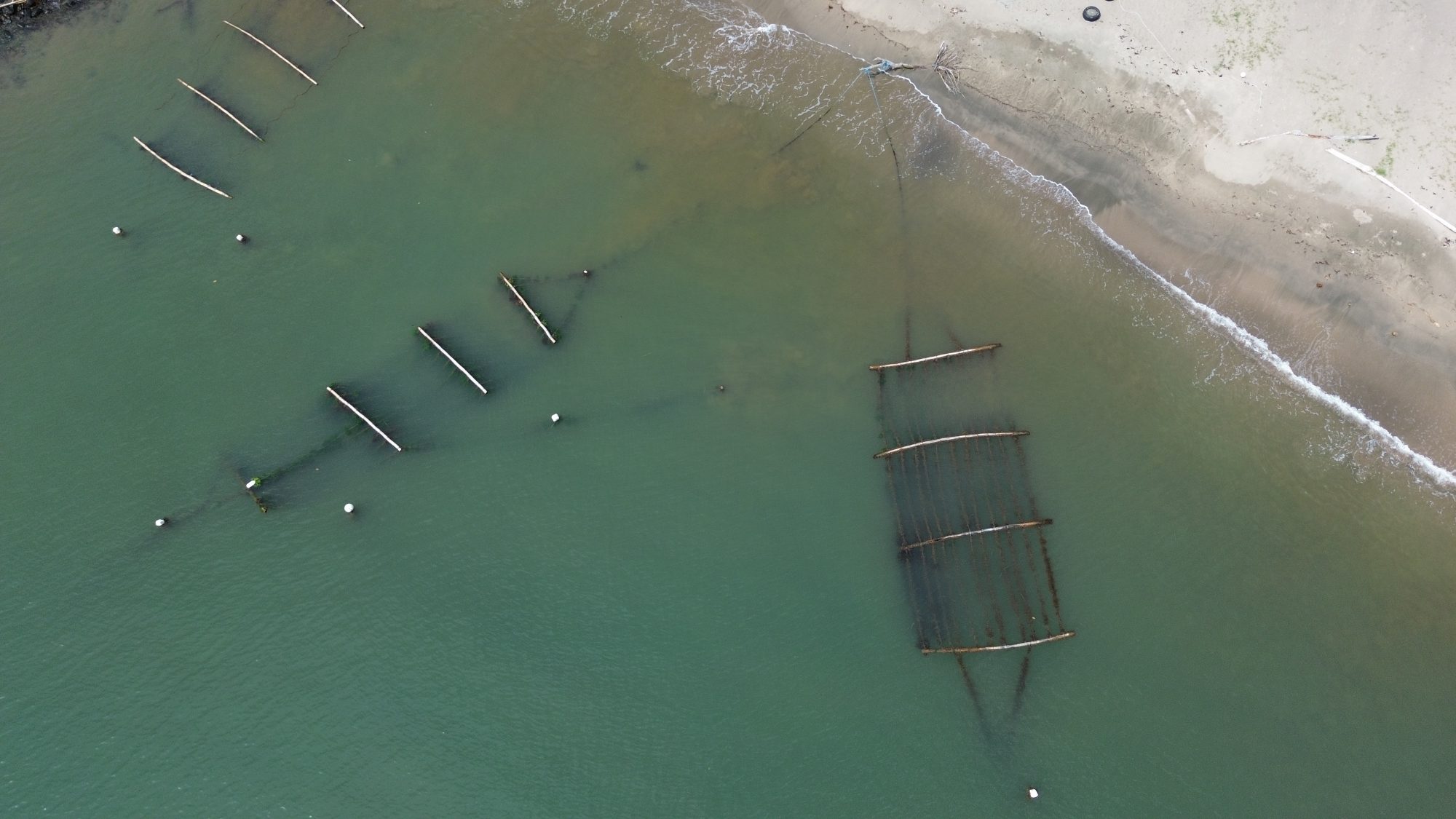
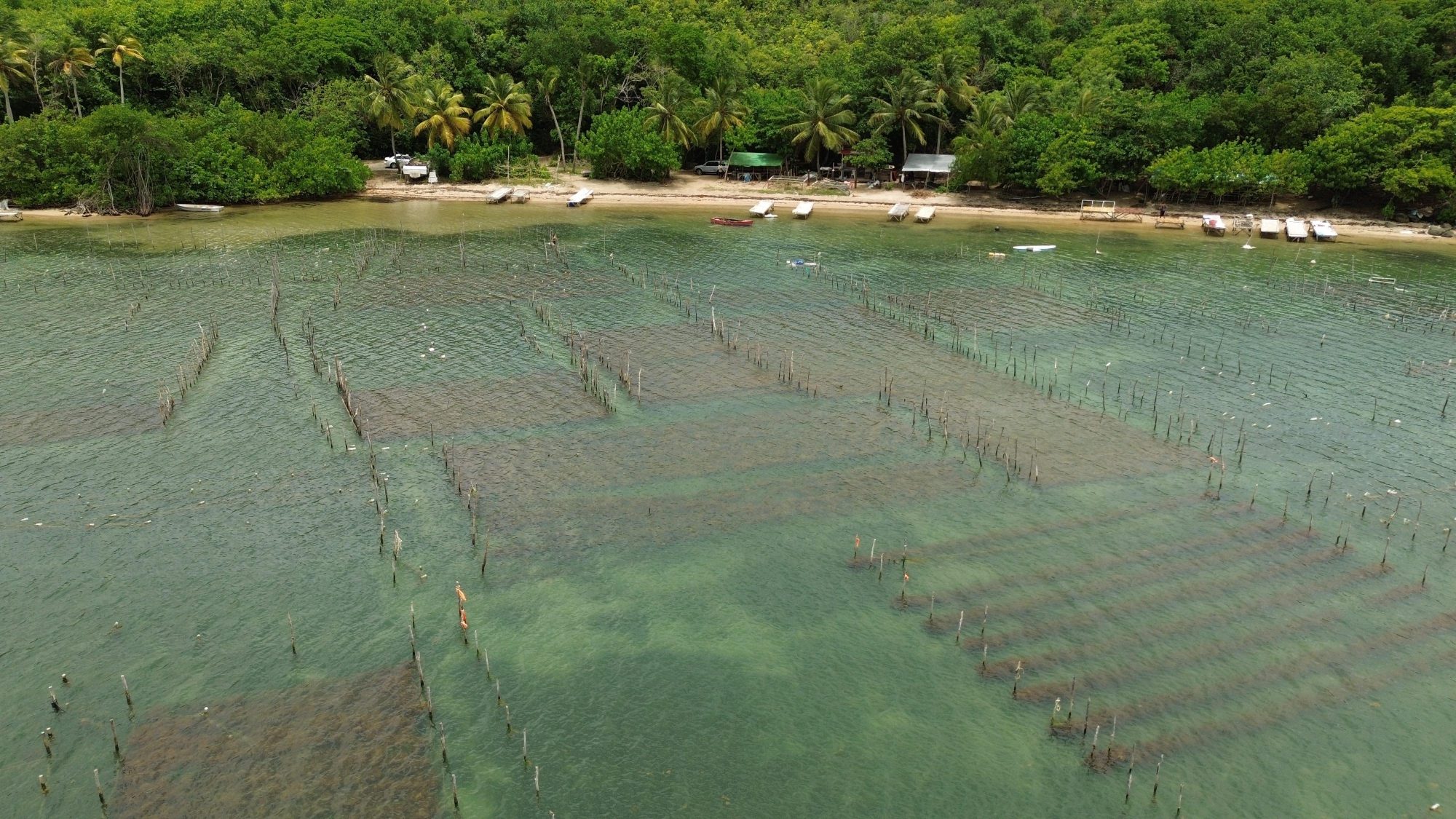
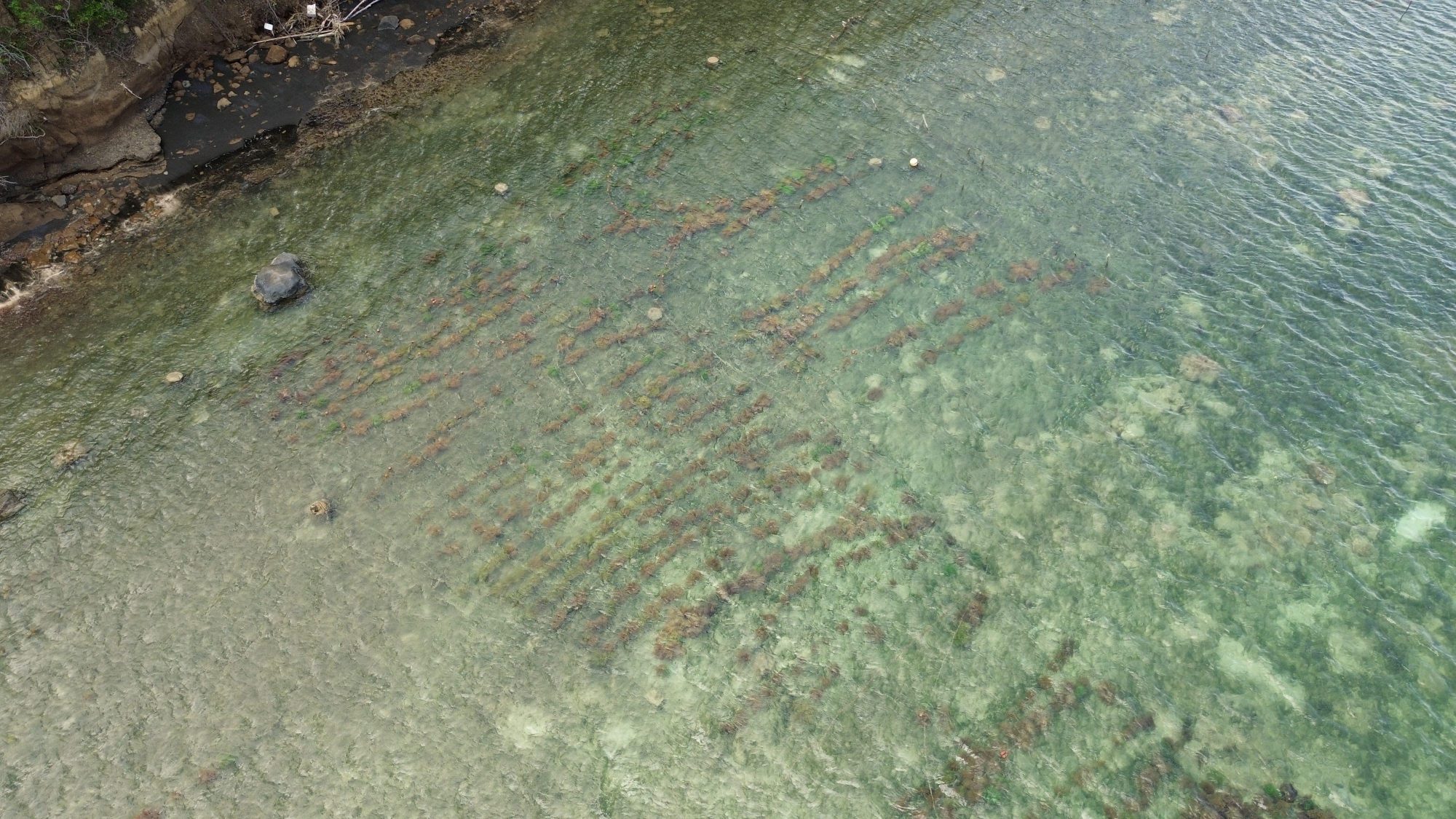
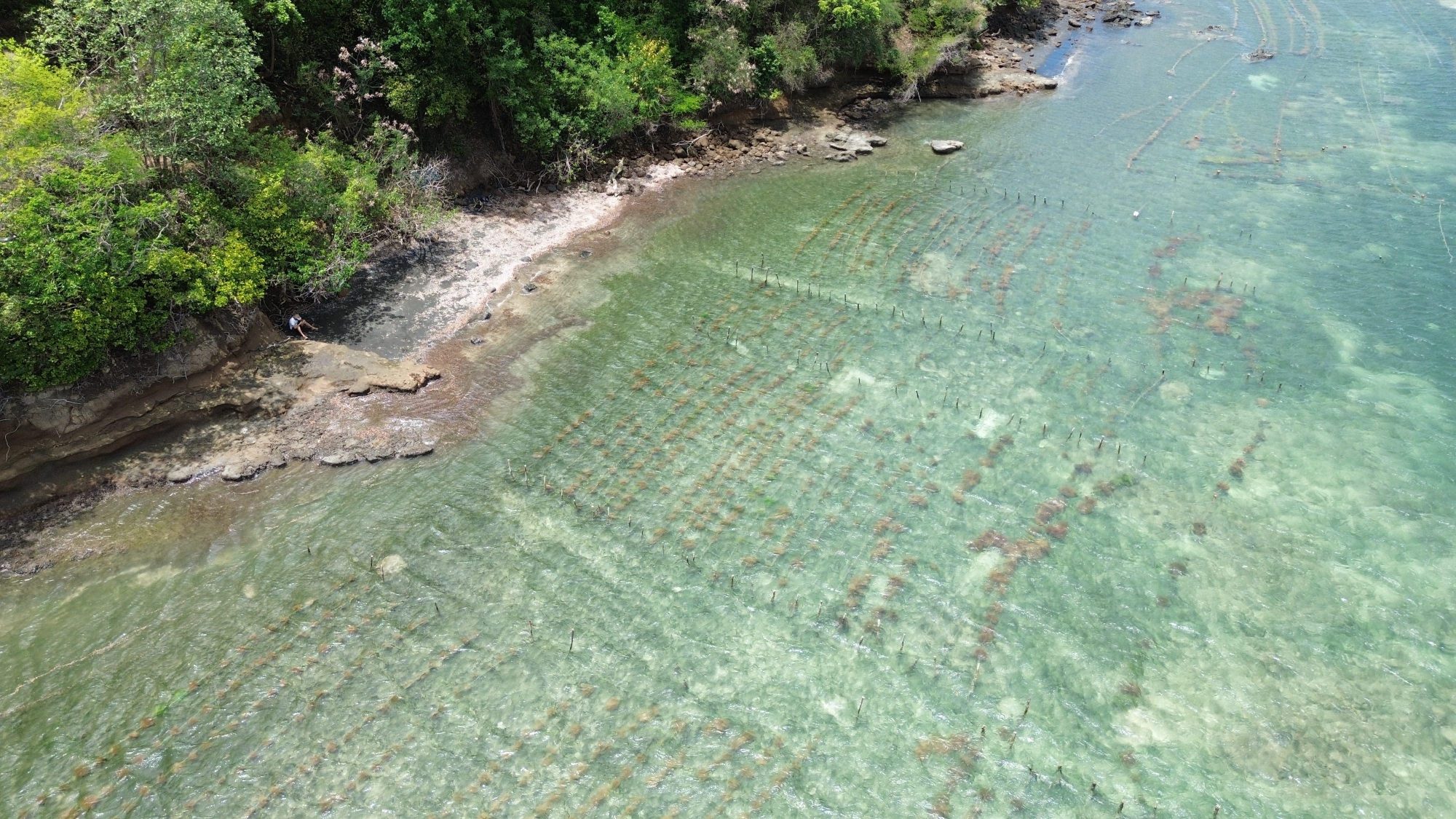
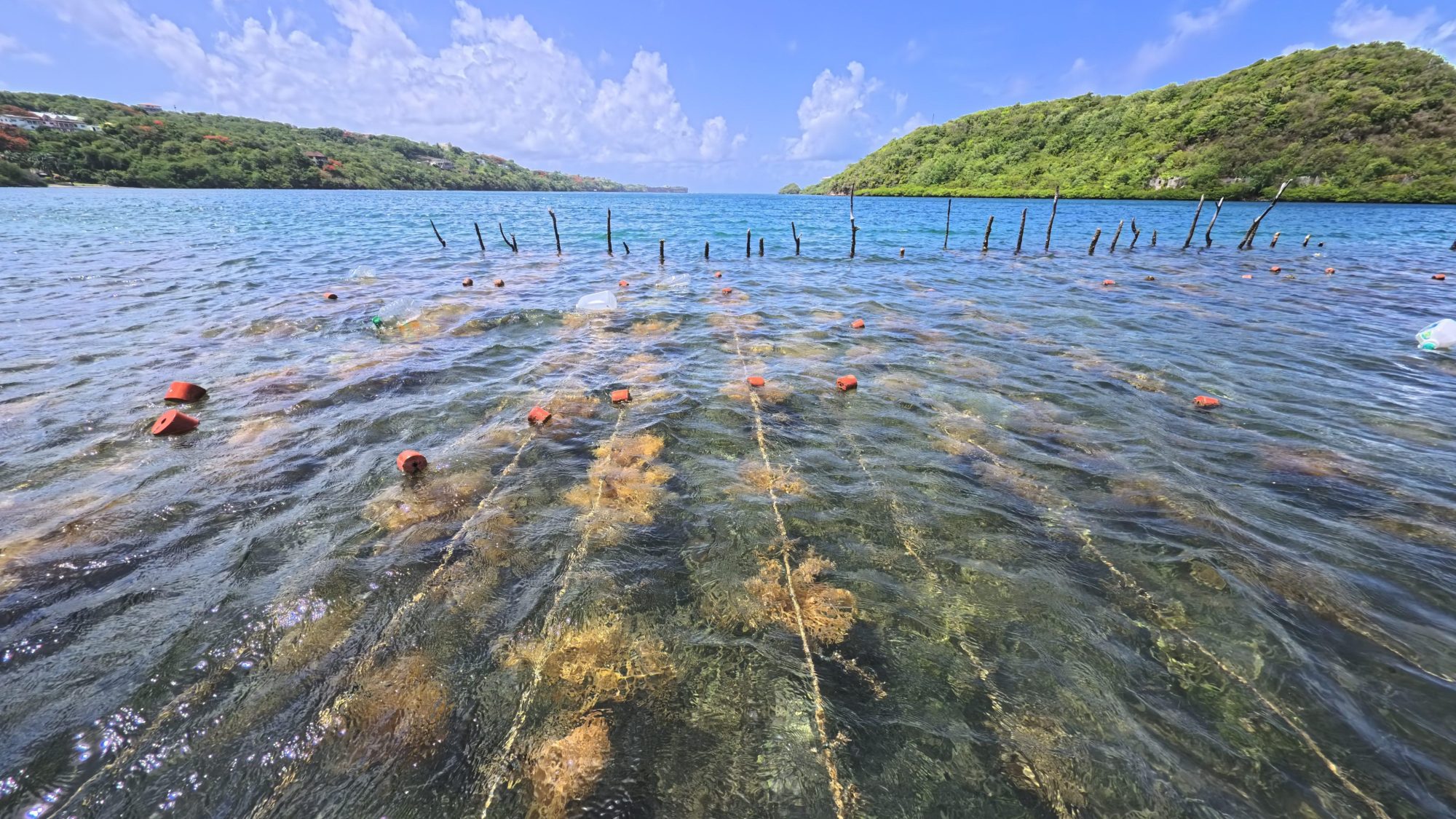
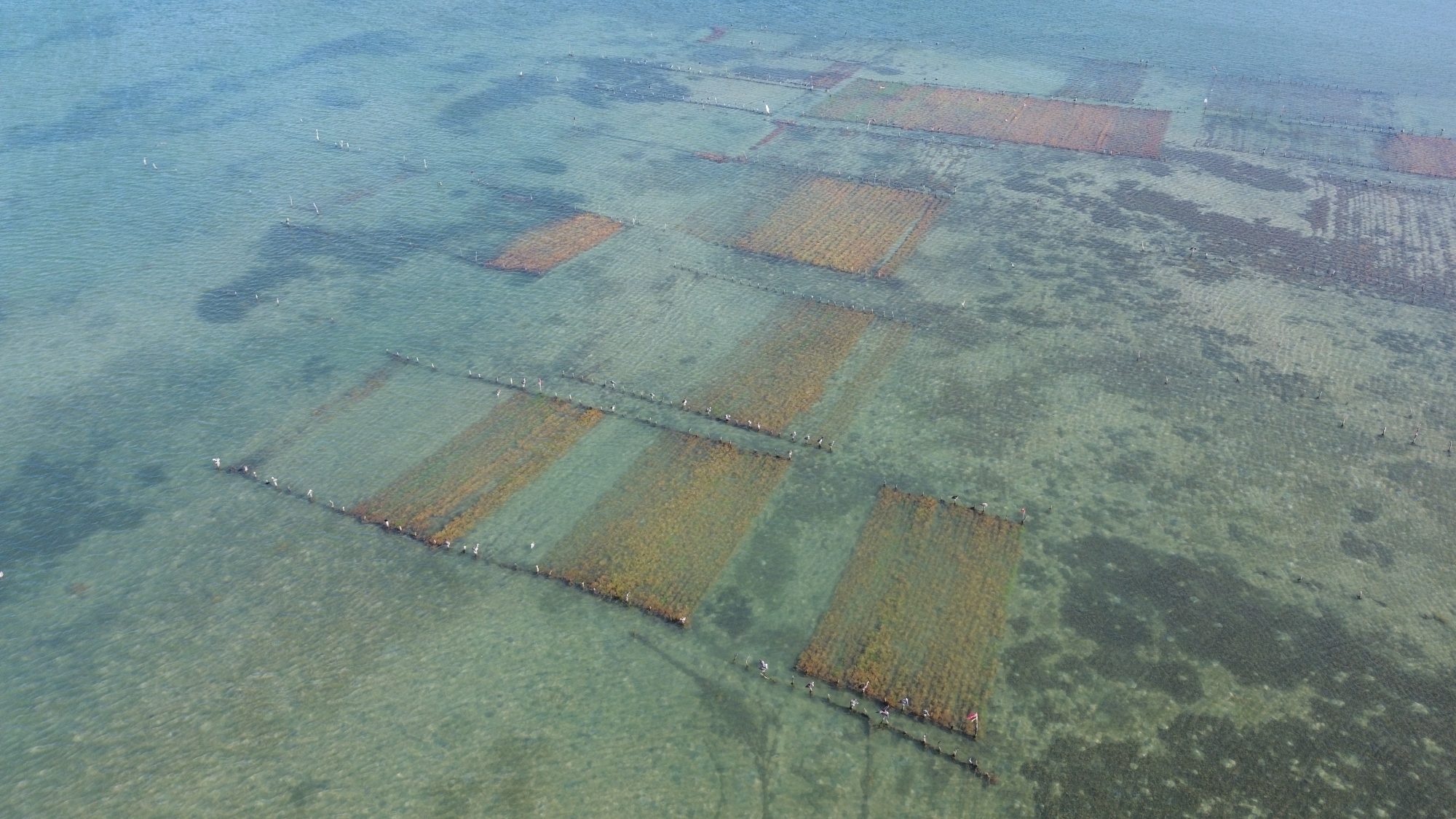
In the Caribbean, farm design is largely based on water depth, shelter, and economic feasibility. The fixed off-bottom method dominates because it allows farmers to manage plots in shallow, protected areas while relying on simple, low-cost setups. Farmers also prefer it because these are simpler fixed structures, easier to install and maintain than more complex systems. Lines anchored to the seabed can be adjusted seasonally to reduce stress from strong sun, freshwater runoff, or drifting sargassum, although hurricanes remain a major threat.
Floating raft and vertical systems are also being introduced to adapt to slightly deeper or more dynamic waters, while experimental hanging long-line trials have been attempted in exposed sites. However, these remain limited, as higher costs and rougher conditions make them less practical for most farmers.
Culture line lengths vary across the Caribbean. In St. Vincent and the Grenadines, most farmers use shorter lines of around 6 meters, while in St. Lucia they typically measure 15 meters. In Grenada, most farmers report using 30-meter lines.
Anchors
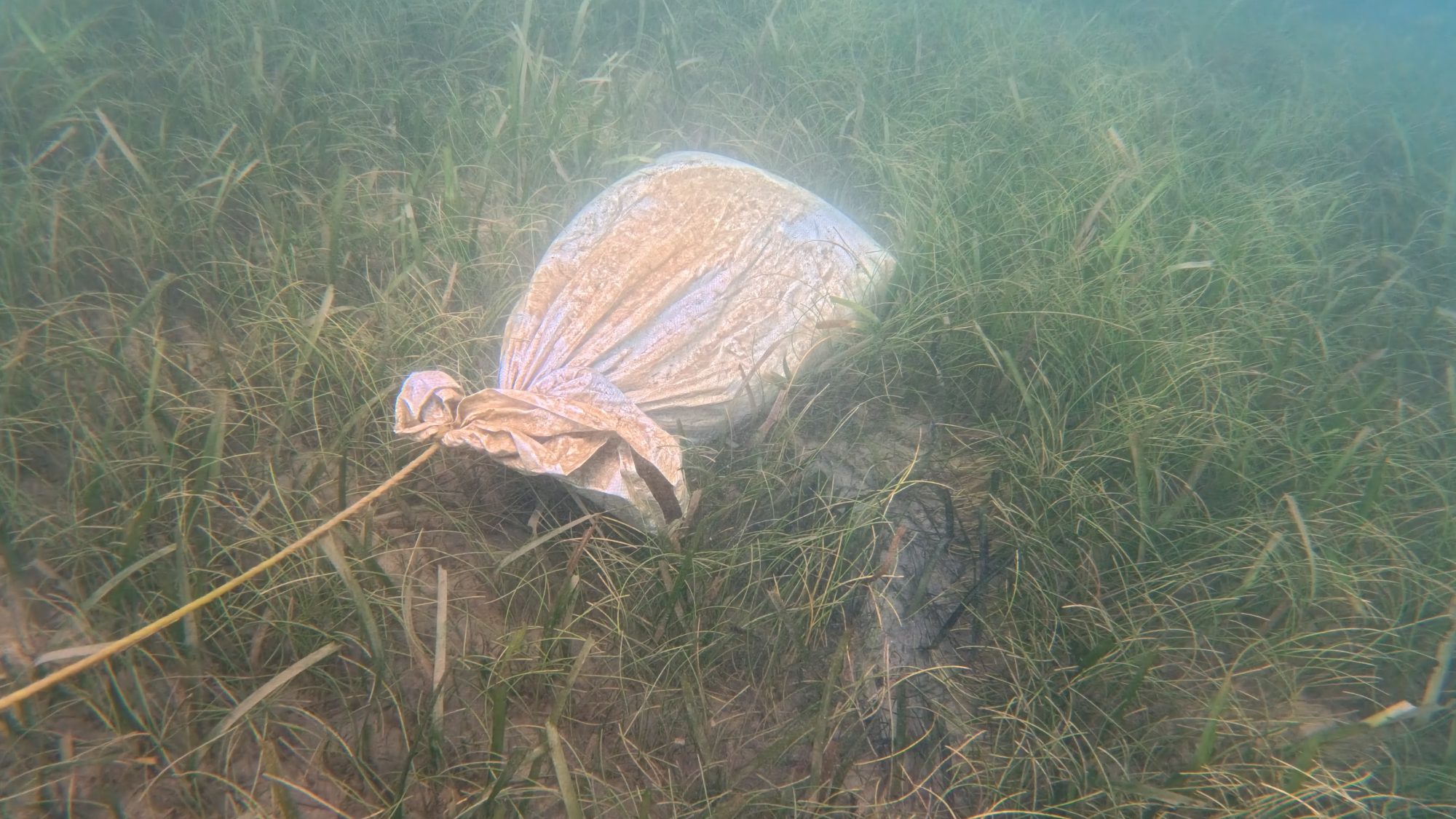
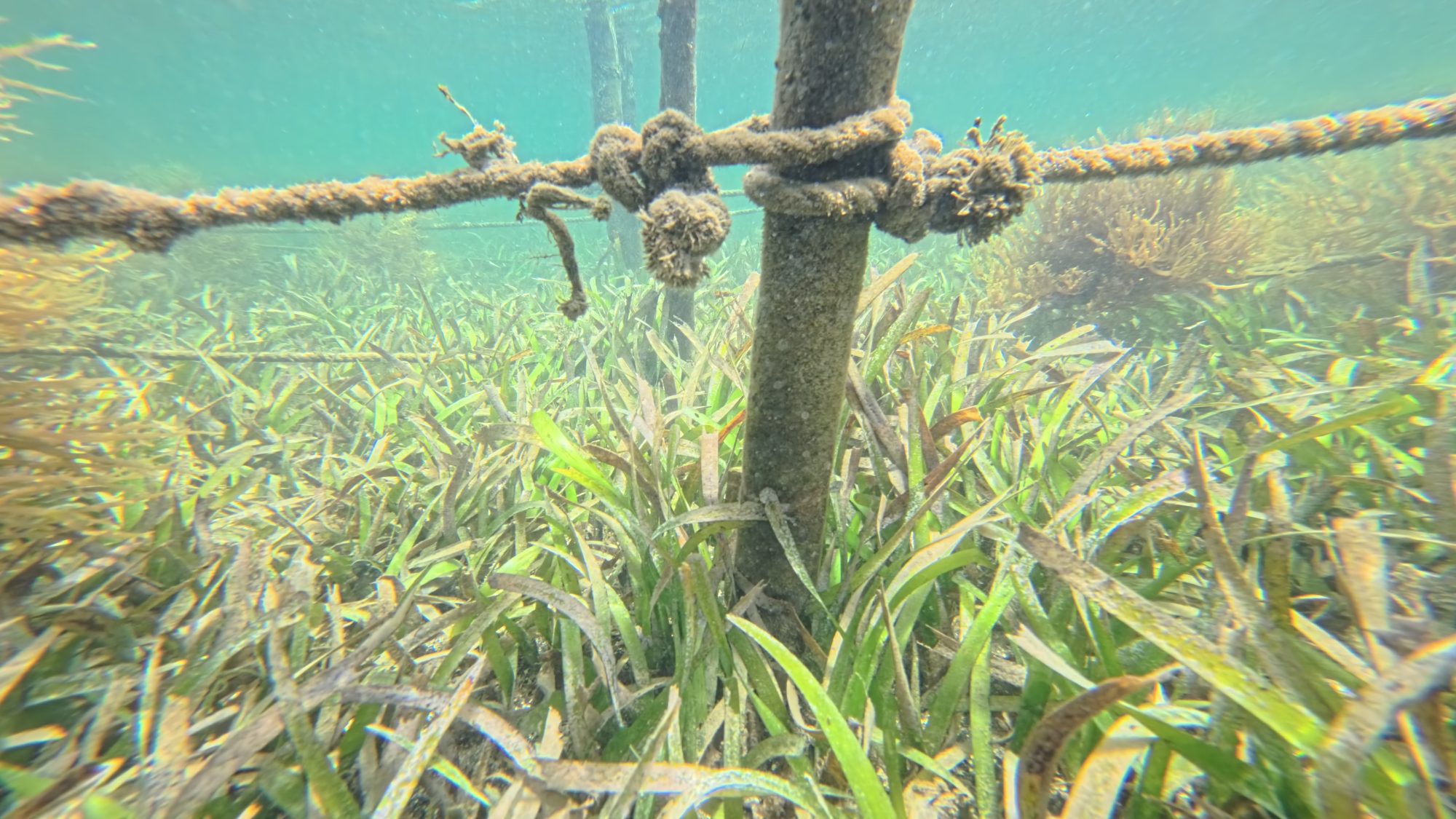
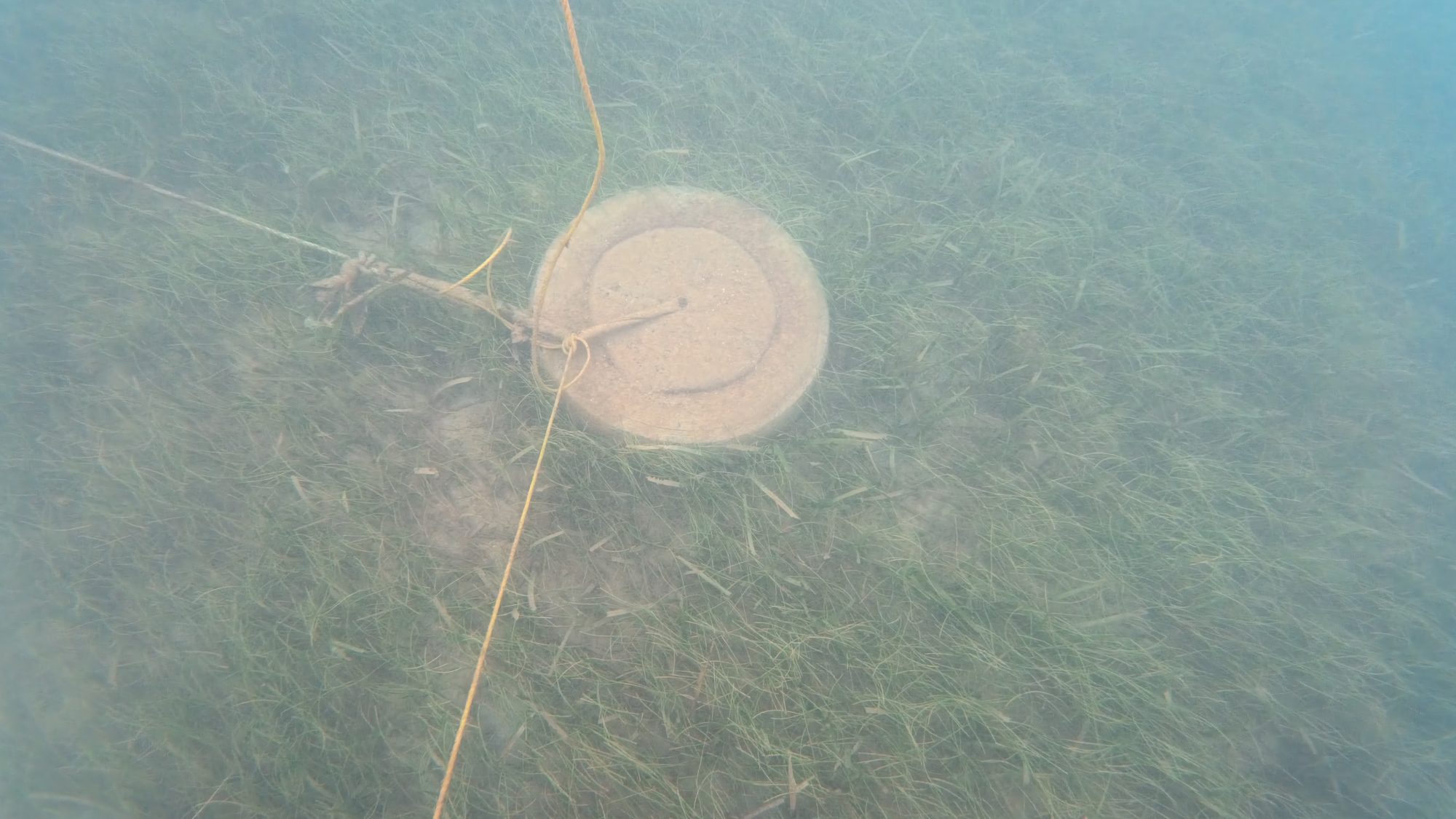
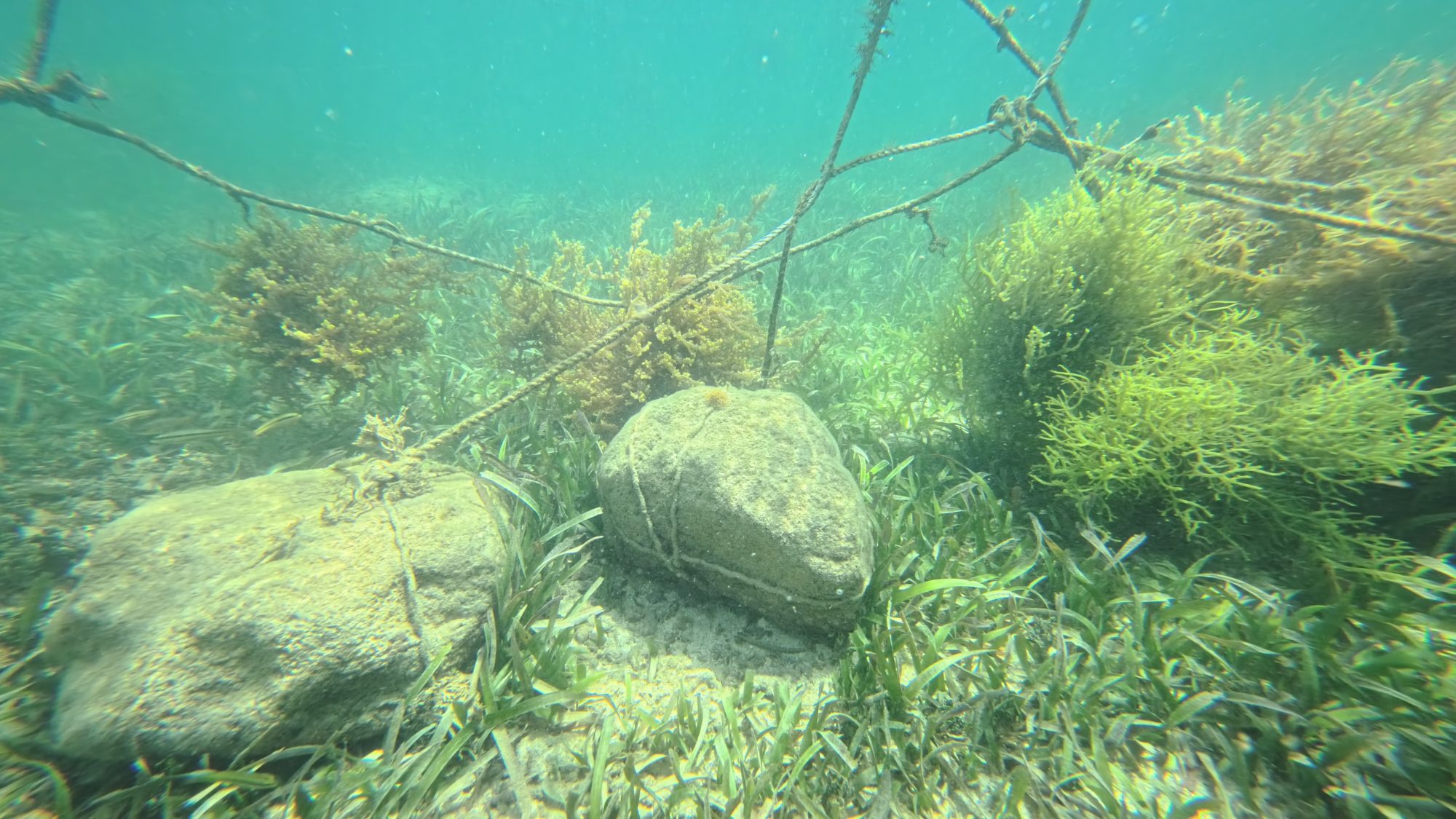
The preferred anchors in St. Lucia are wooden stakes. In St. Vincent and the Grenadines and in Grenada, practices are split: about half of farmers use concrete blocks, while the rest rely on locally available materials: sandbags, stones, and shells.
Rope material
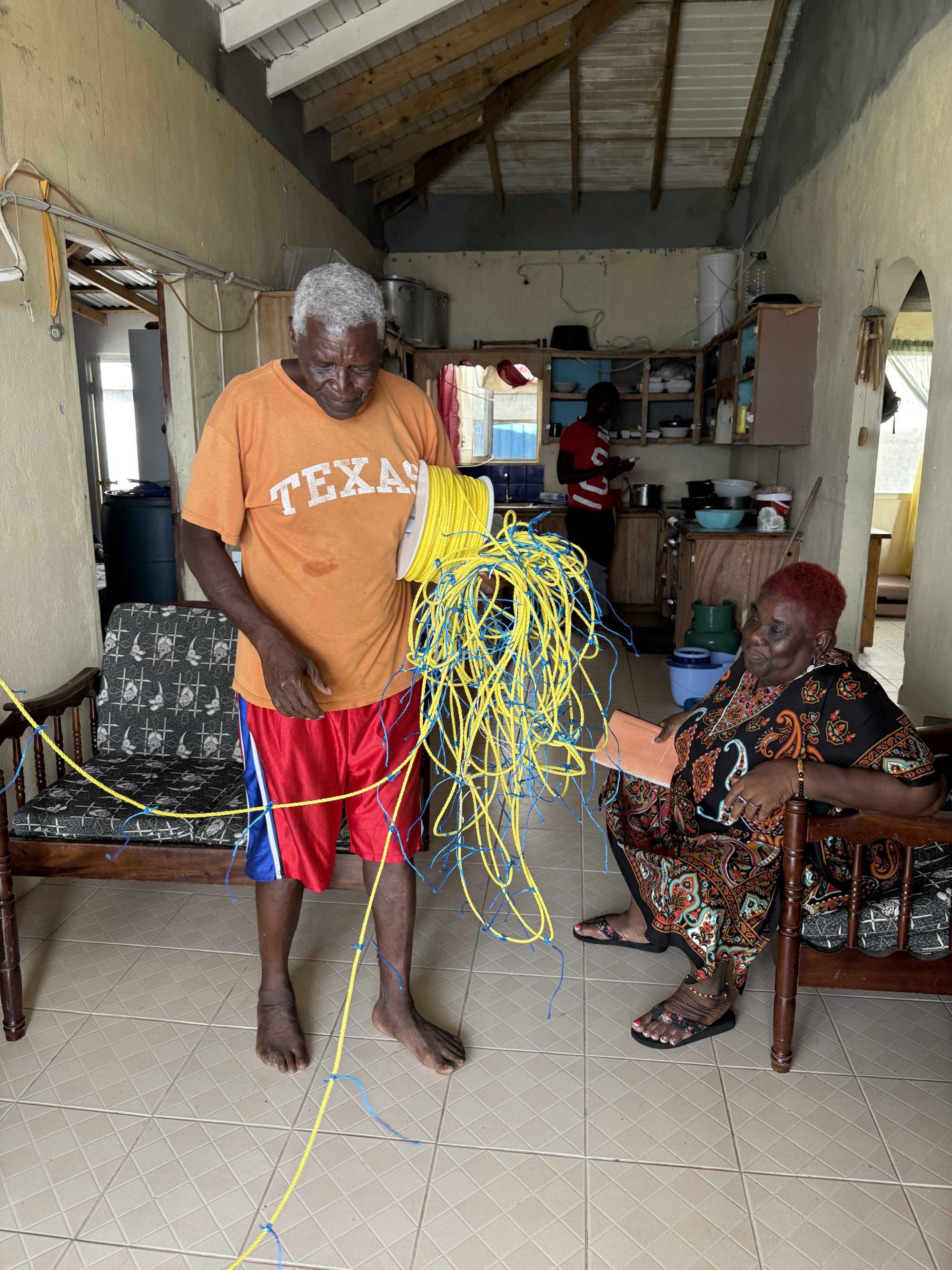
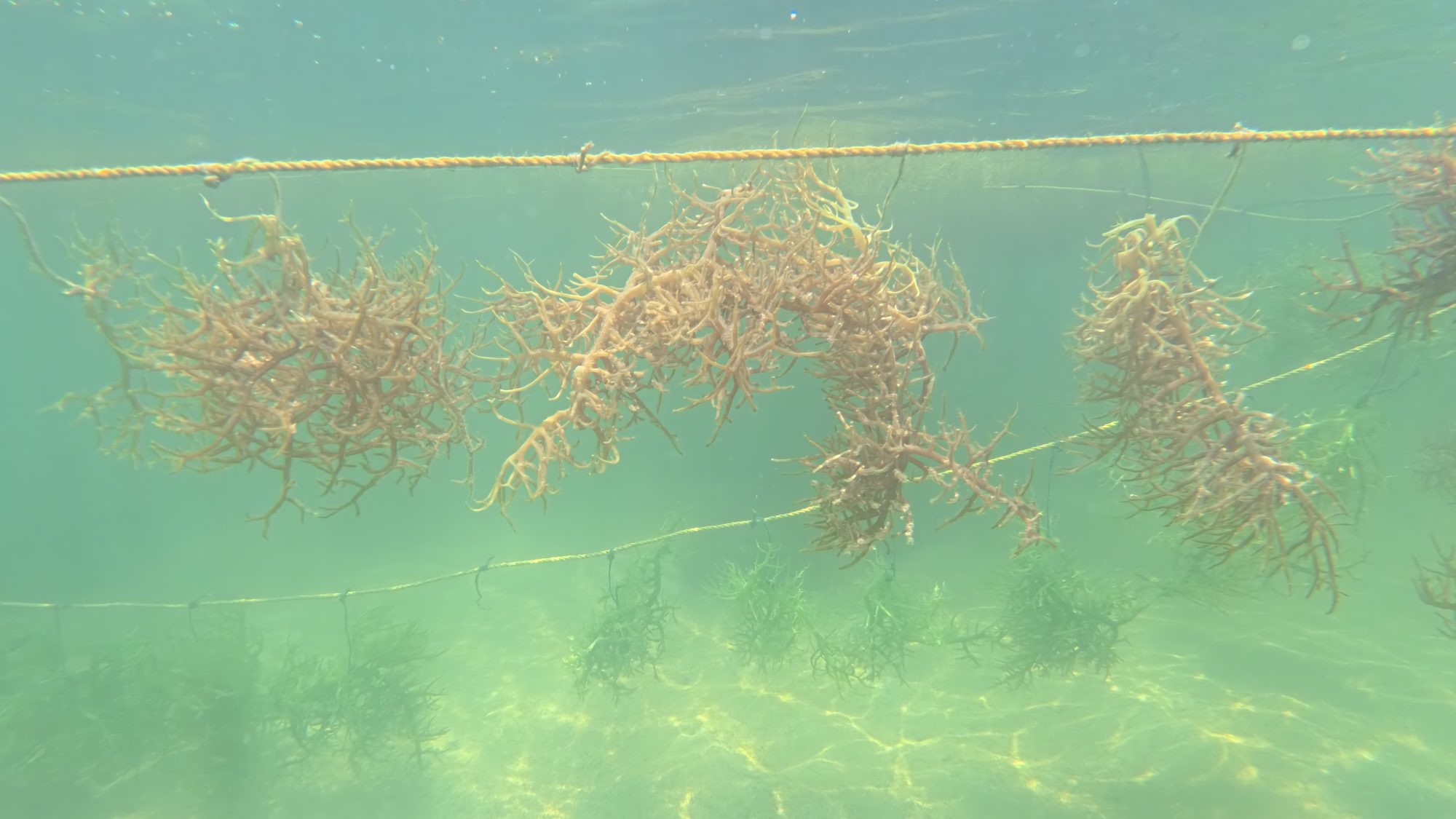
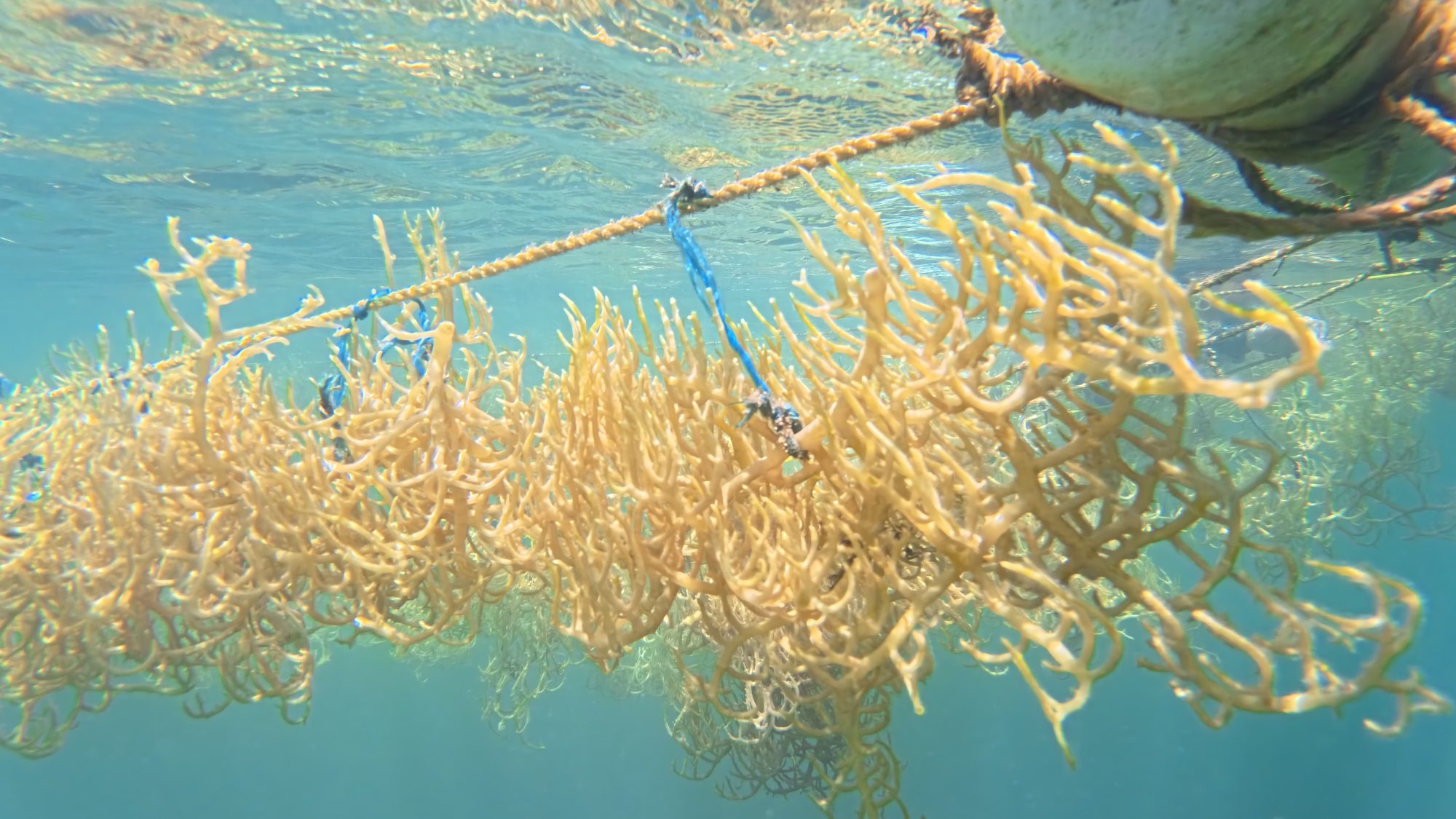
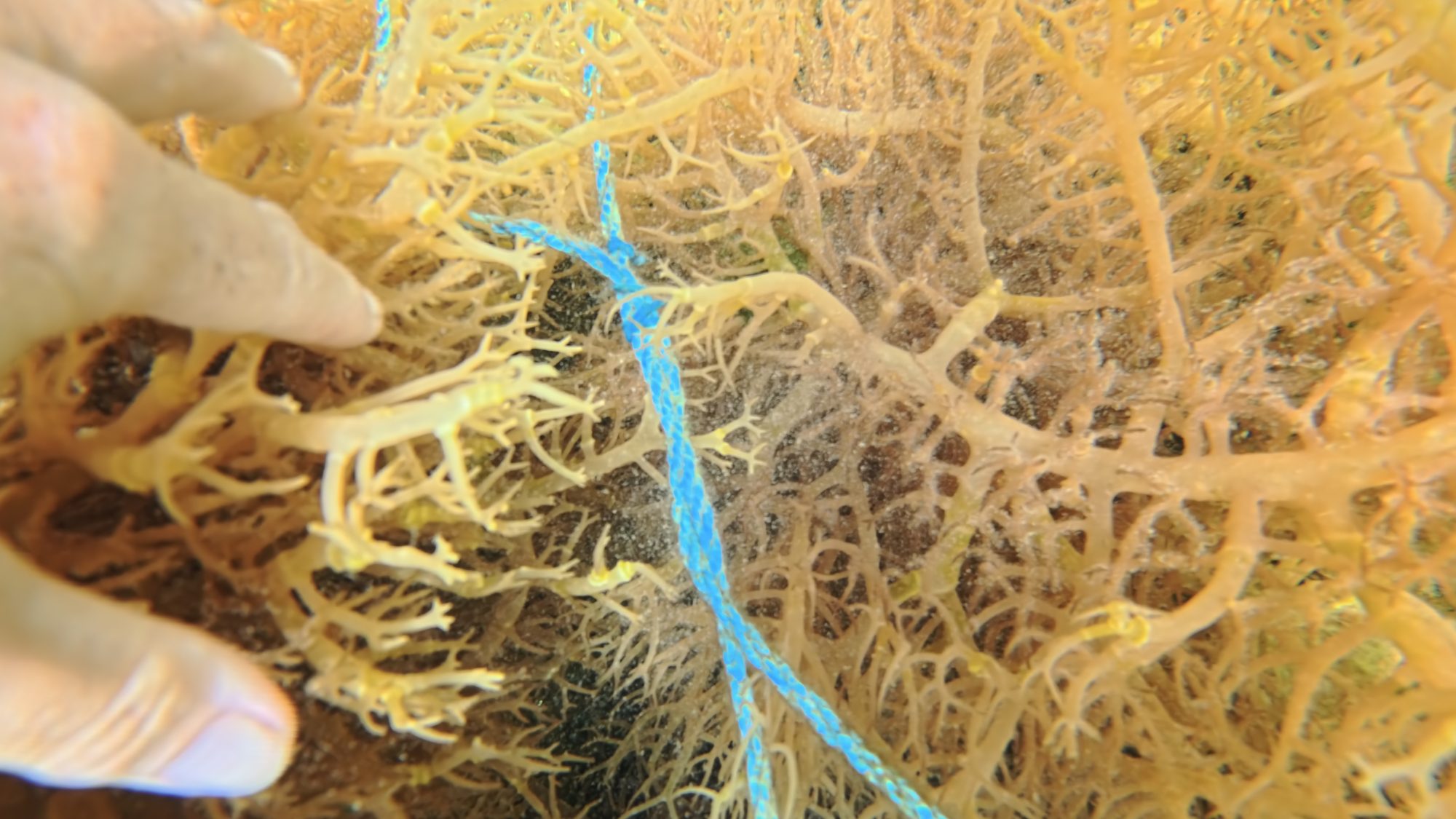
Across most Caribbean islands, nylon is standard material for the farm rig and the cultivation lines. The lines used to tie the seaweed on to the rope has the shortest service life, often under three years, and typically needs full replacement every two to three cycles.
Floats
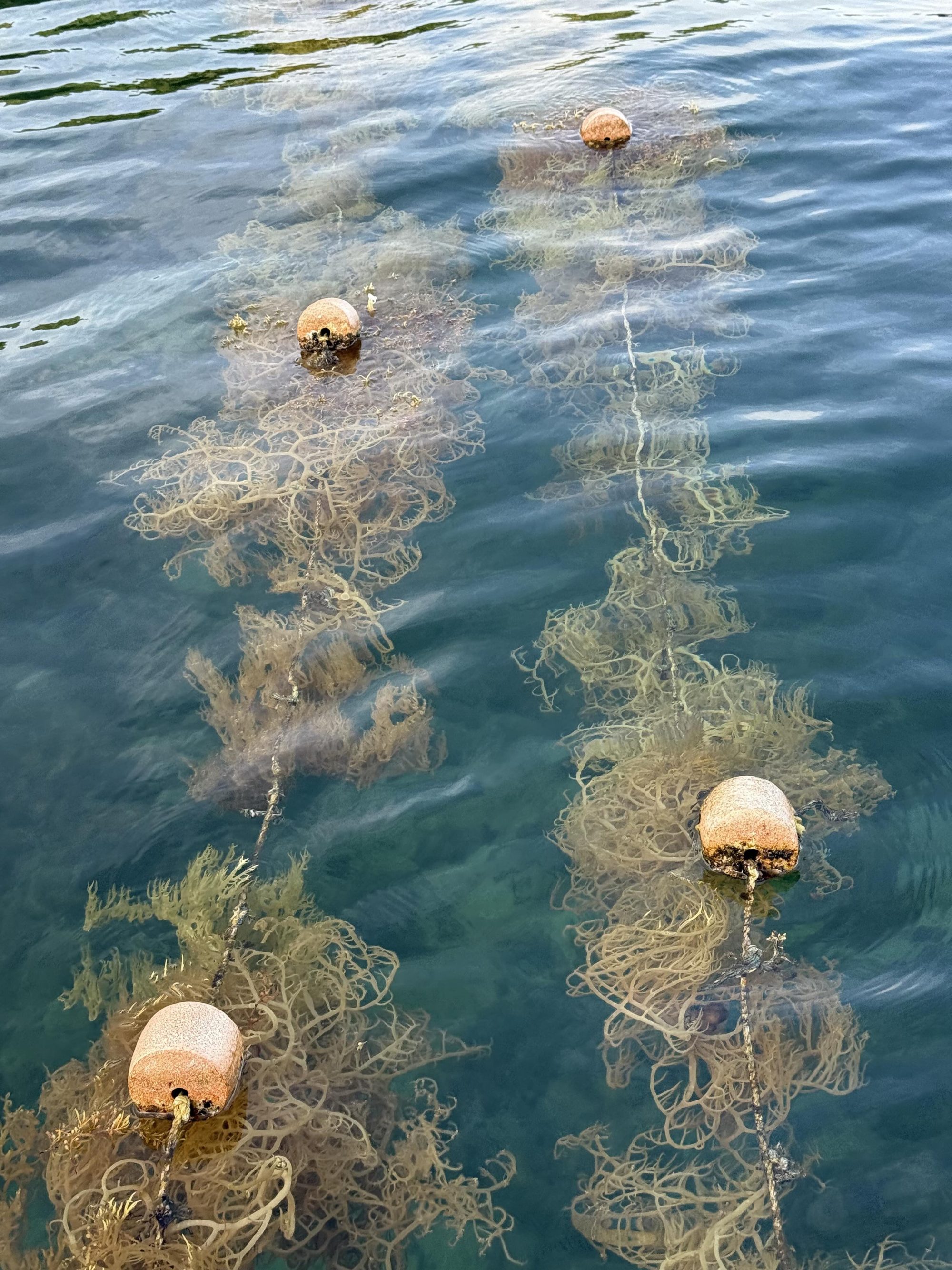
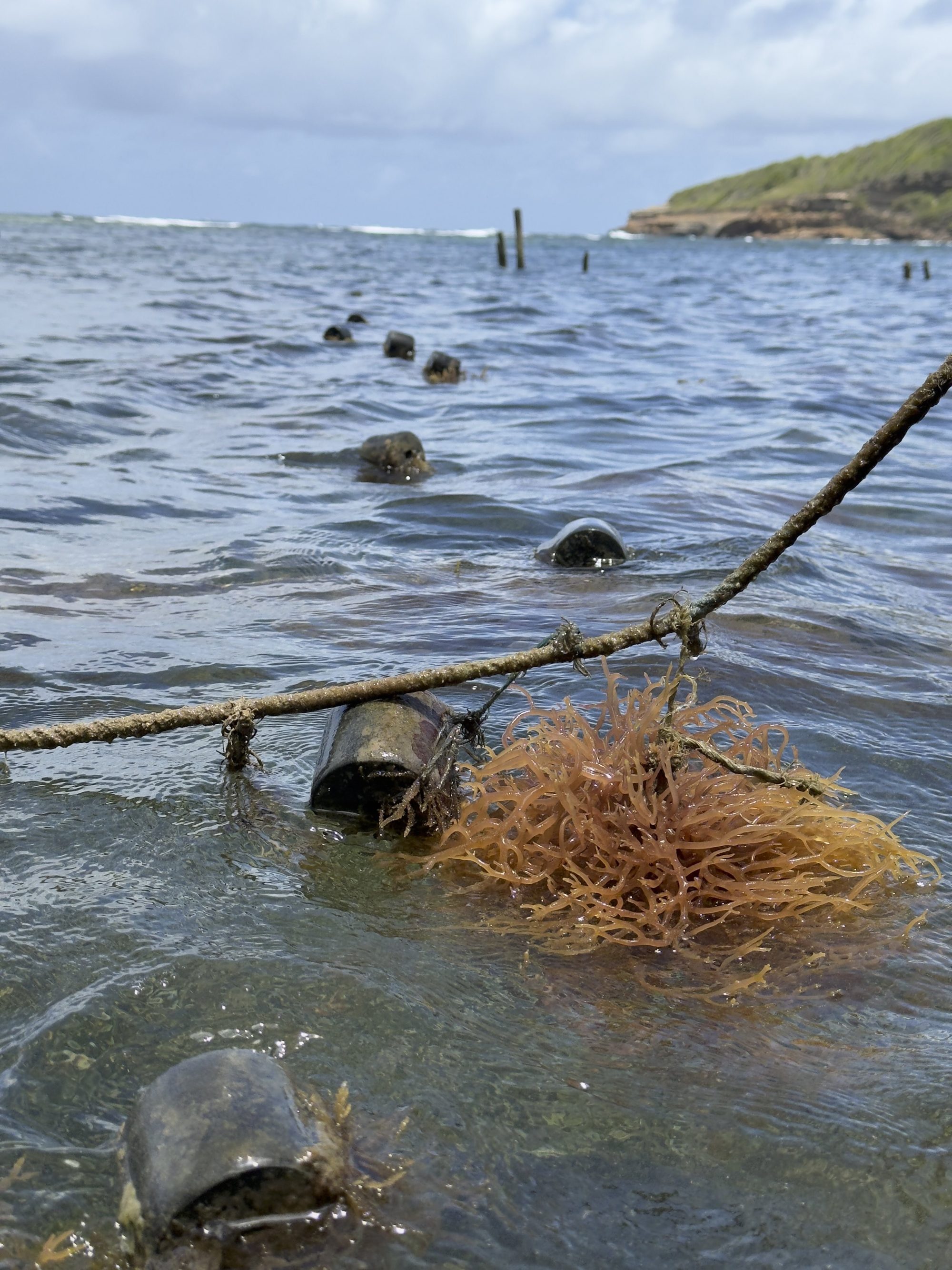
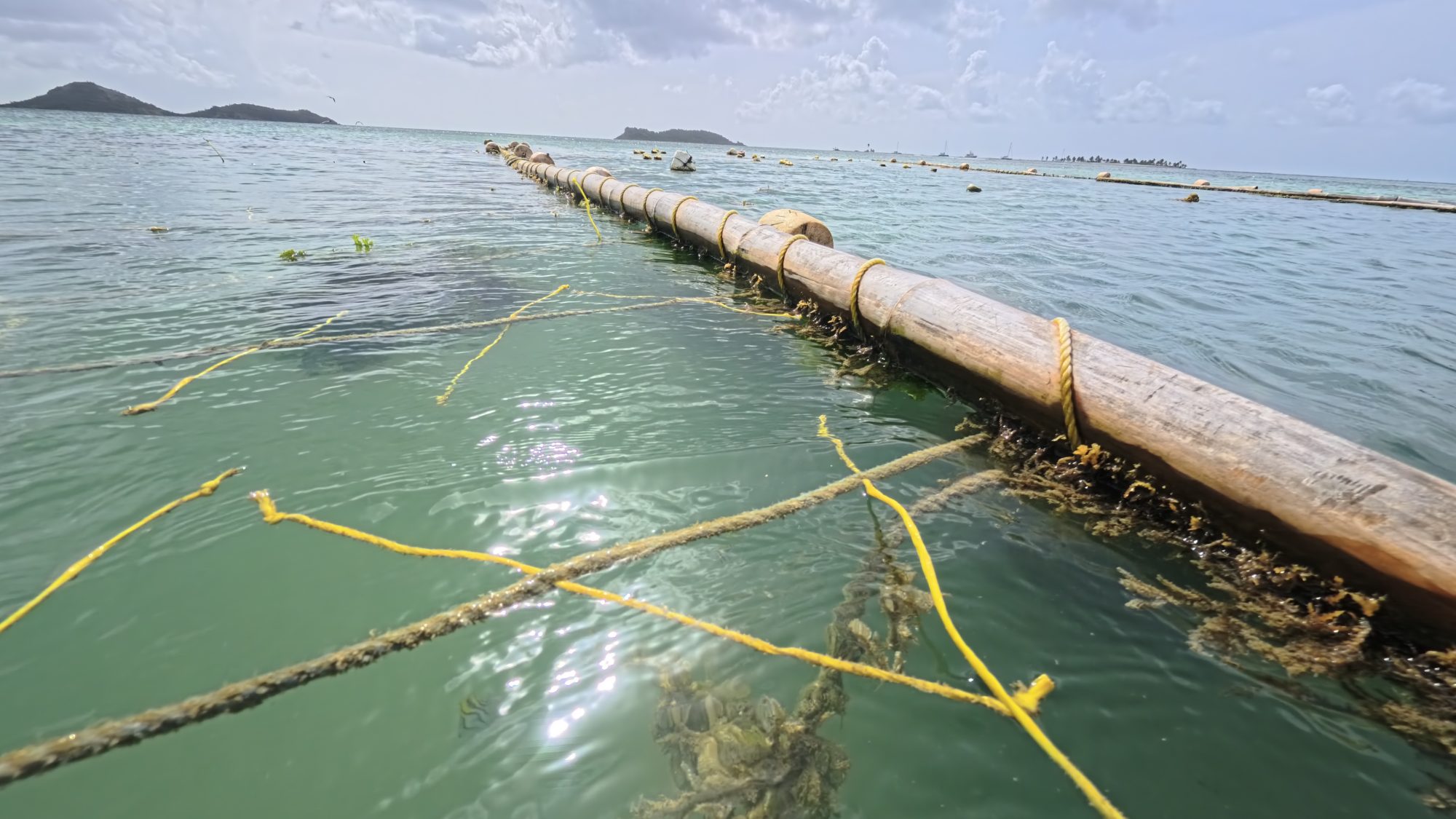
Most farmers in St. Lucia do not use floaters. In St. Vincent and the Grenadines, plastic bottles are common due to the ease of sinking the lines when filling the bottles with water. However, the government and associations are pushing to move away from PET bottles, due to environmental concern. On some sites they are trialling such as bamboo floats in Bequia, Canouan and Carricou (Grenada). Innovative float-based designs in Mayreau are being explored but remain expensive.

South America
Overview
The farming methods for Eucheumatoids in South America primarily mirror the three most common techniques used in South East Asia: the fixed off-bottom, hanging long-line, and floating raft systems. While site conditions and available materials may lead to minor variations, the fundamental principles of these farming approaches remain consistent across the region's farms.
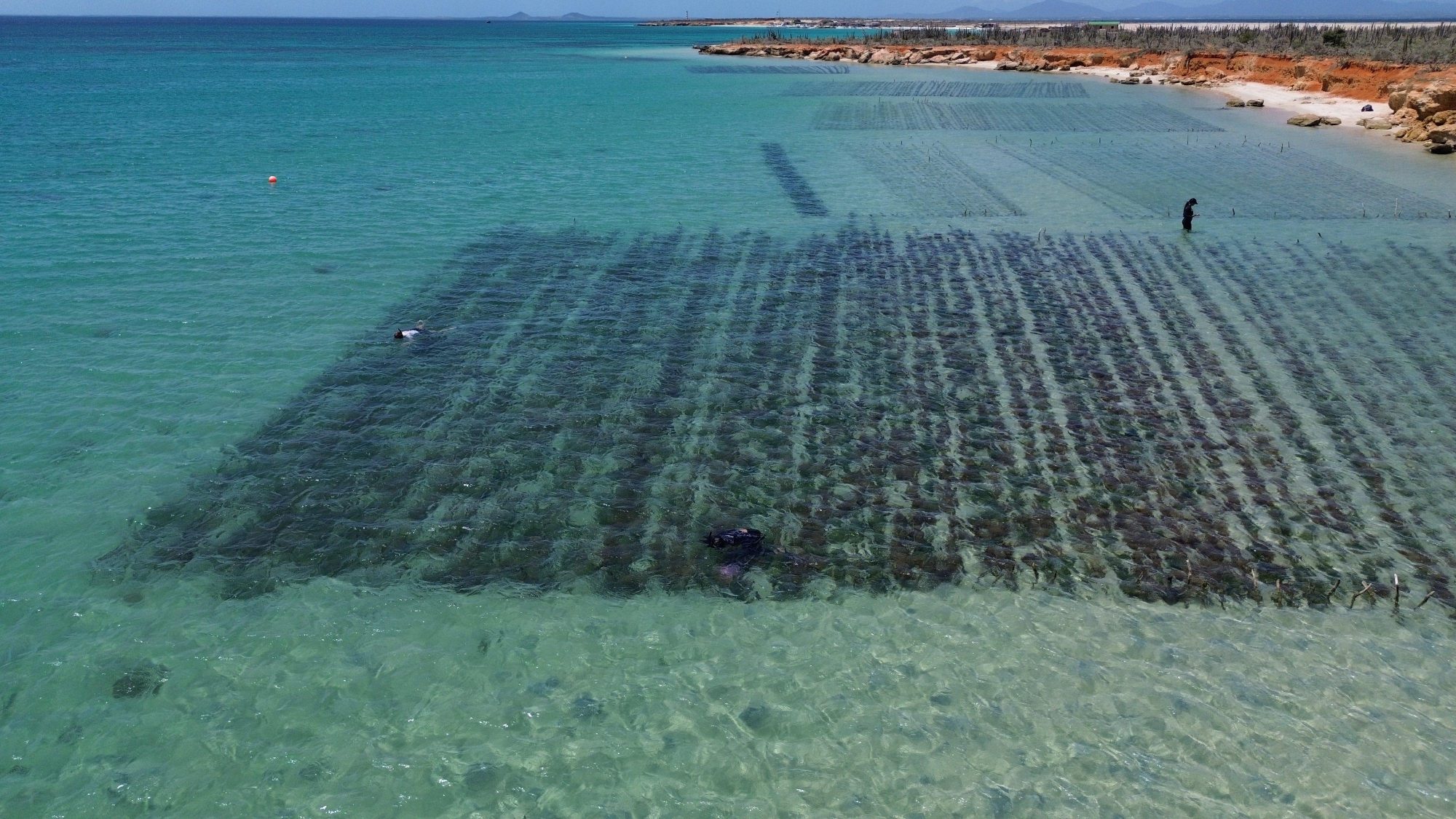
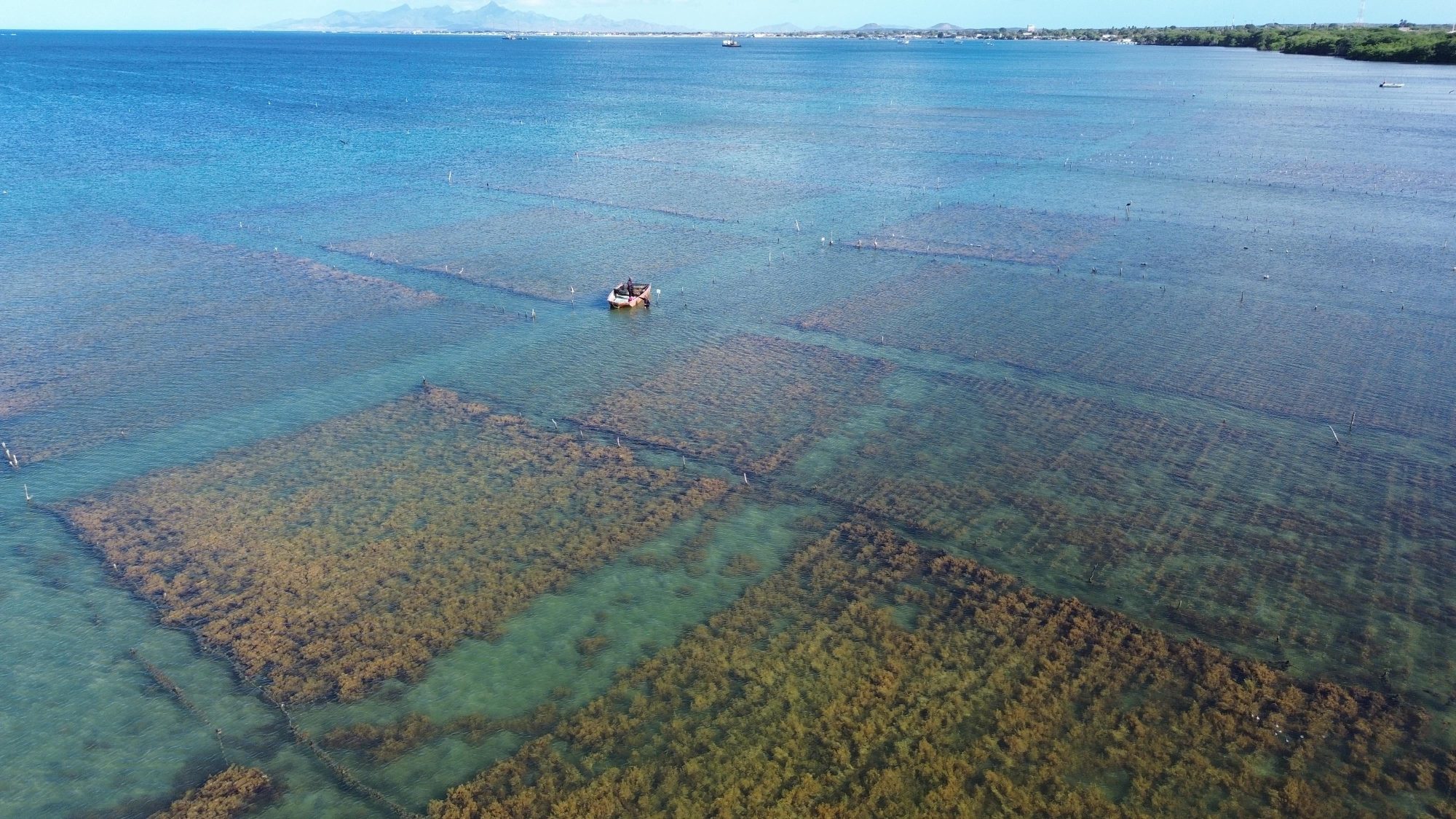
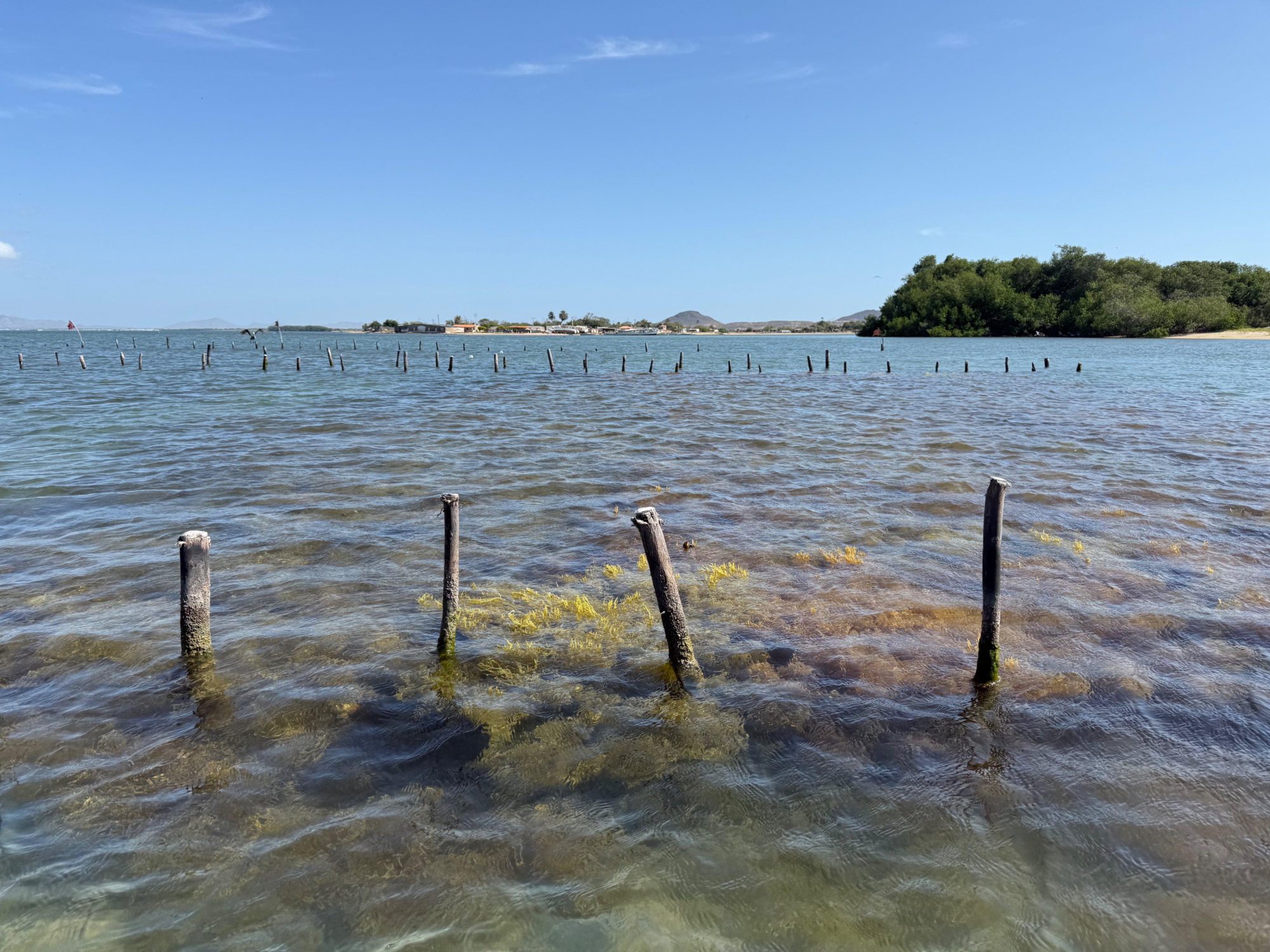
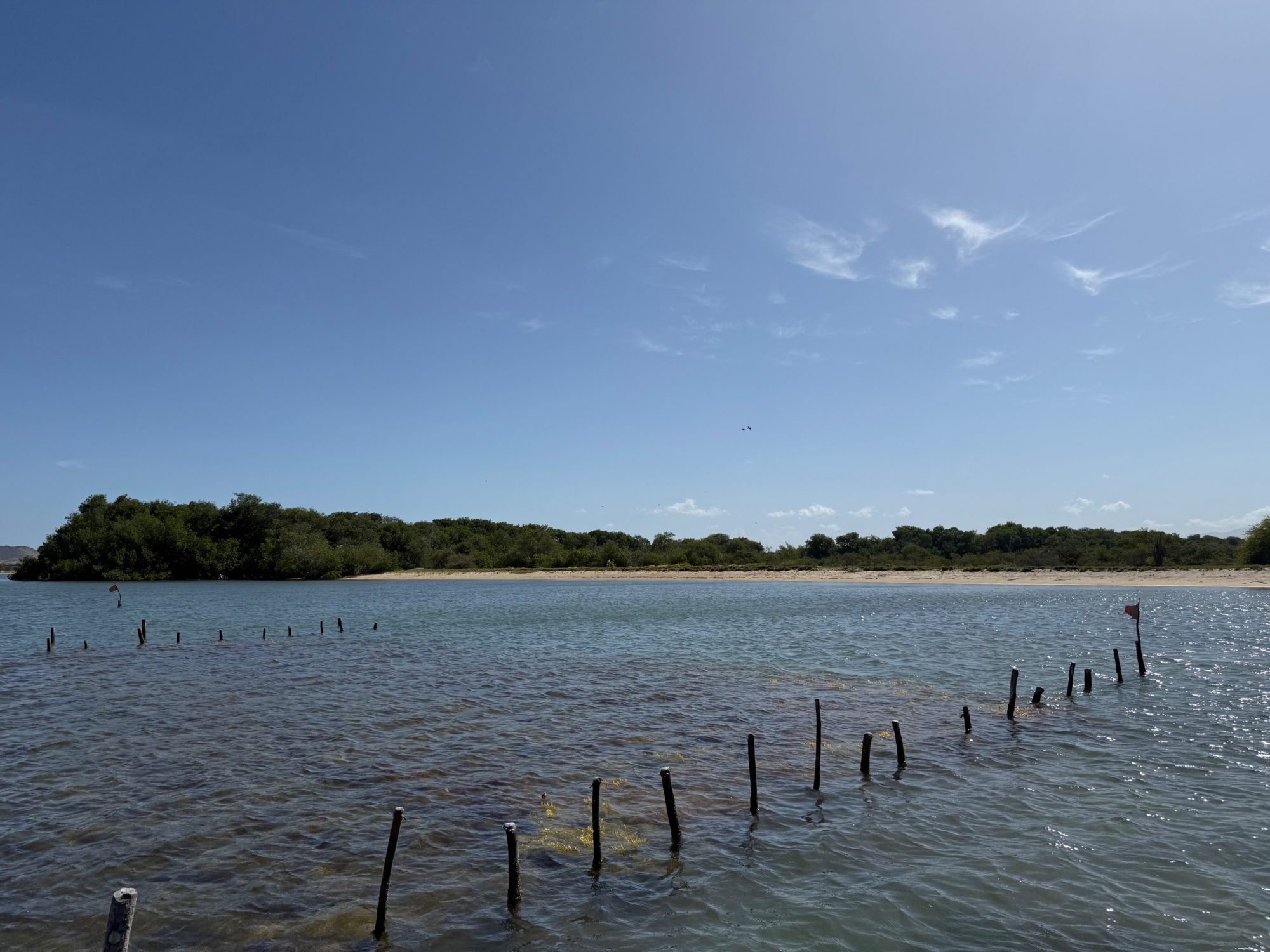
The fixed off-bottom method prevails in Venezuela's shallow sheltered bays, where farmers use varying line lengths, though in most cases its standardized at 25 meters. Boats are provided by the enterprises to associated farmers. Independent community farmers typically share boats to transport the seaweed.
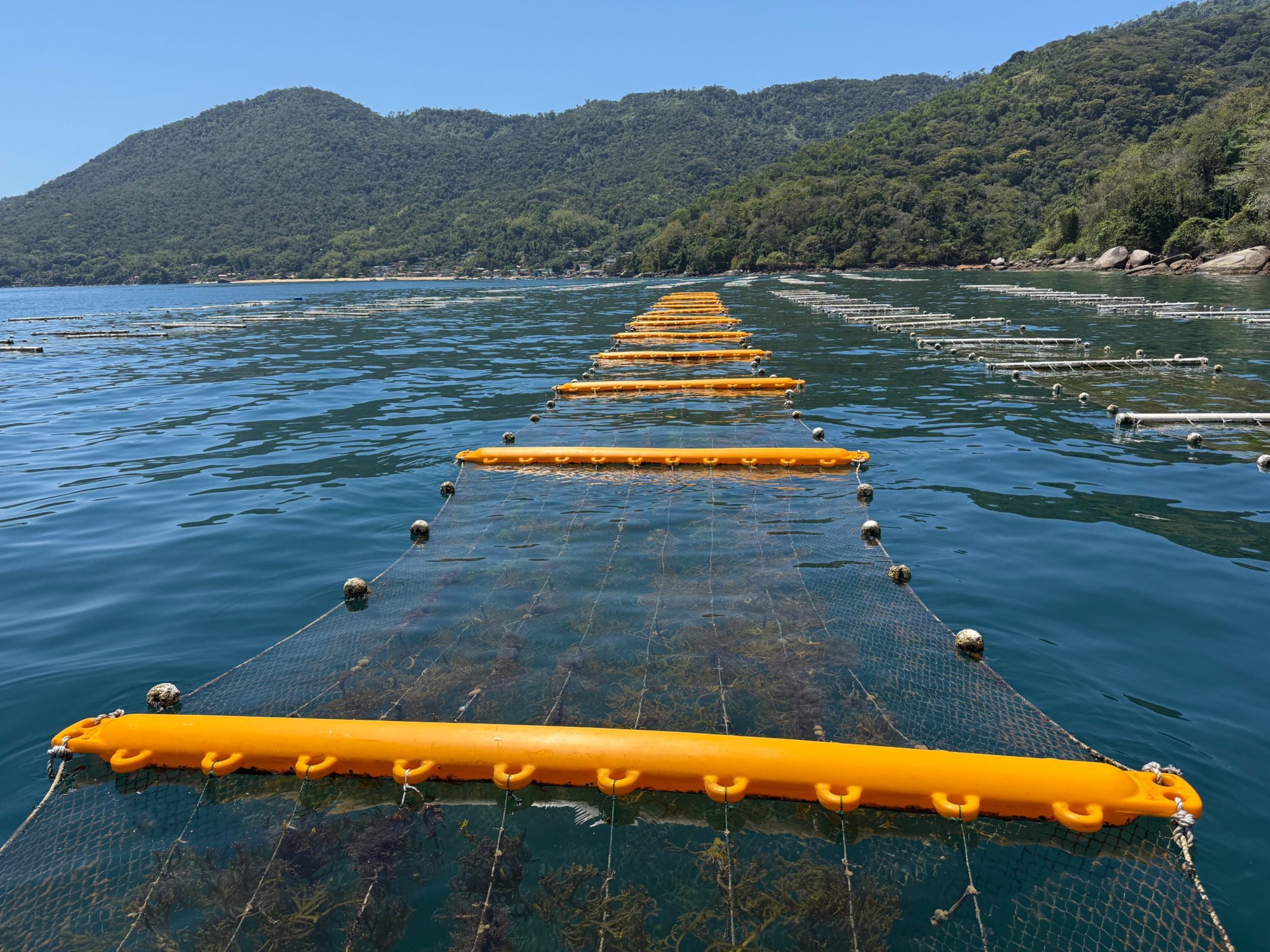
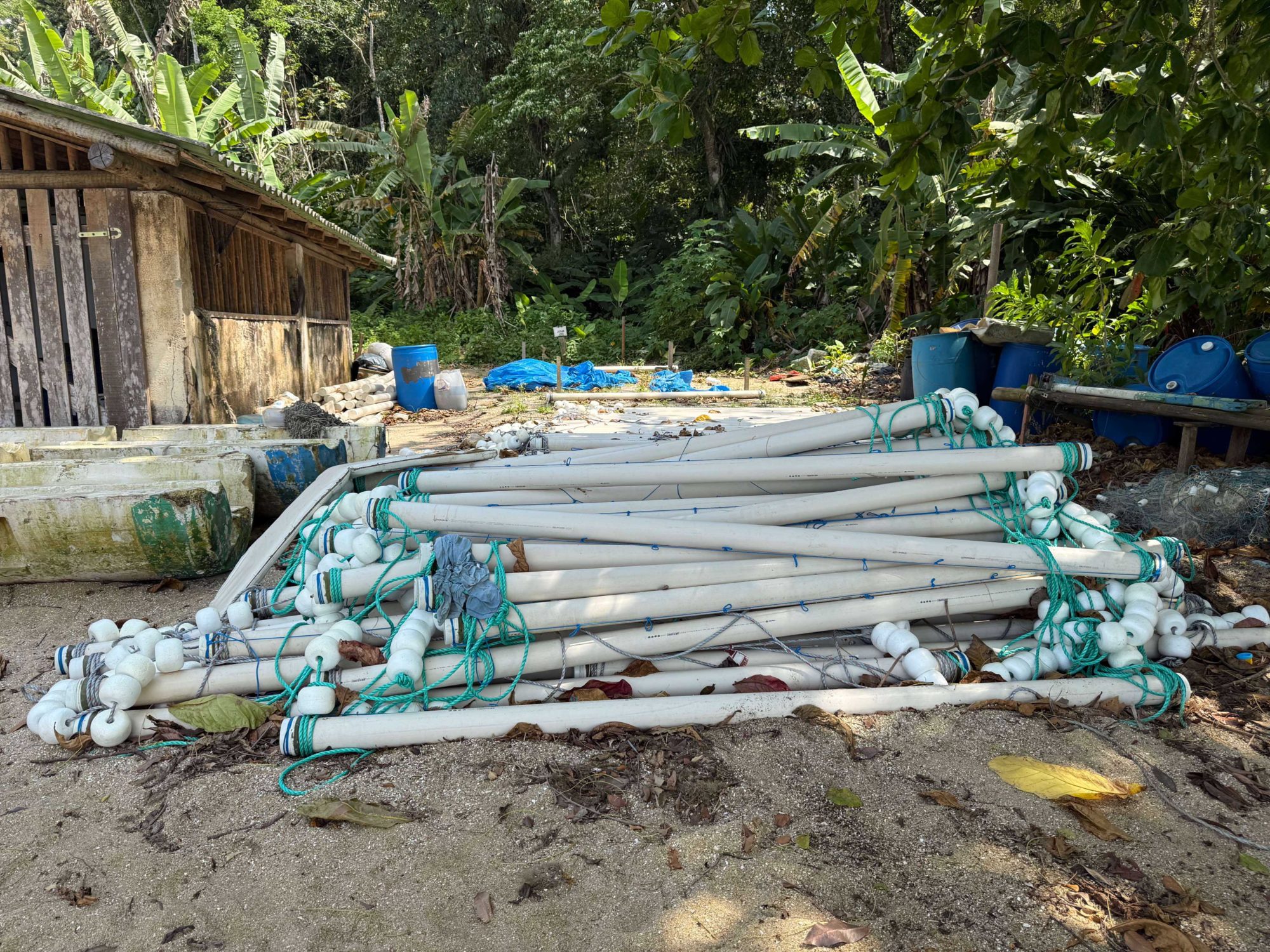
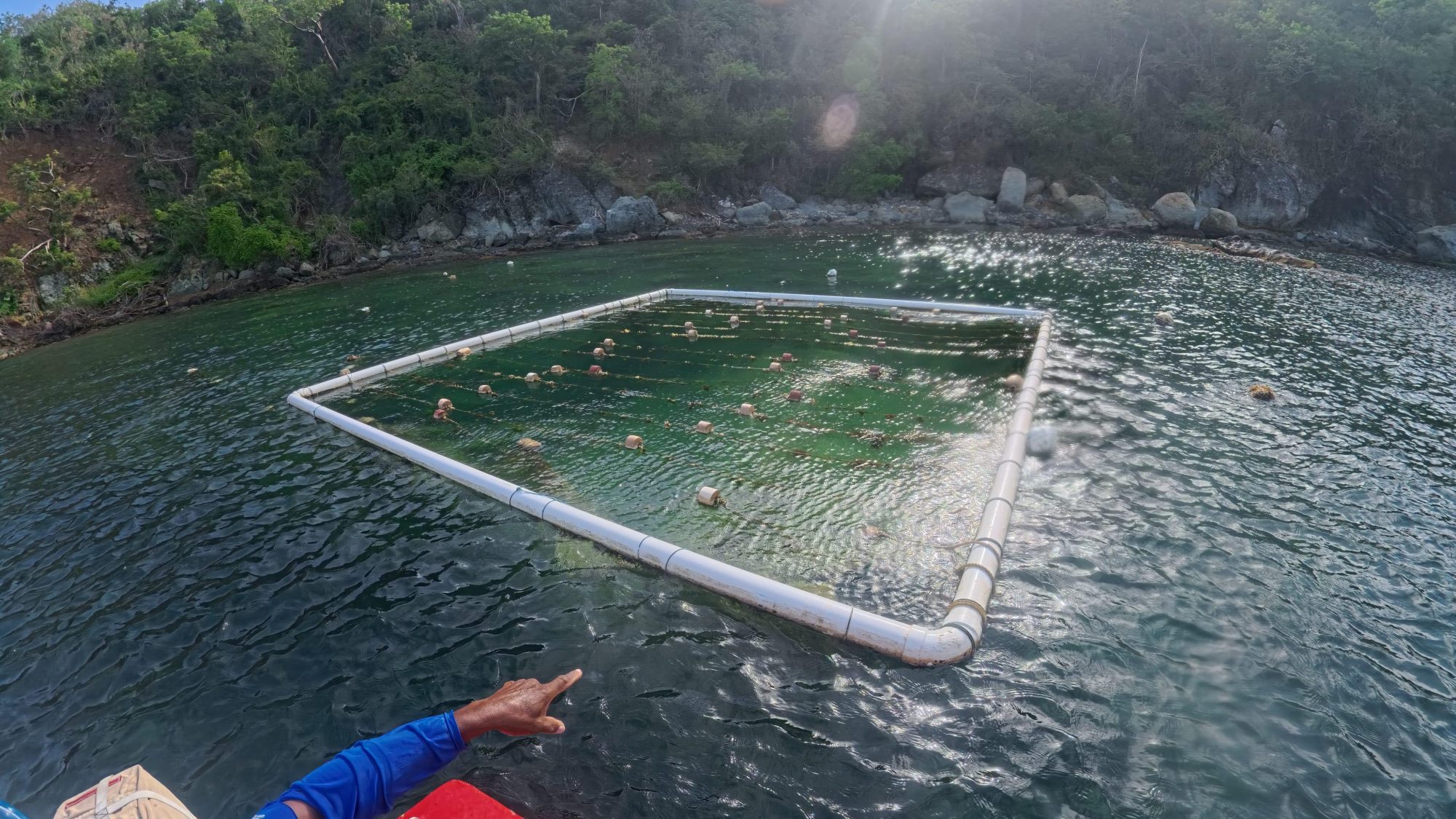
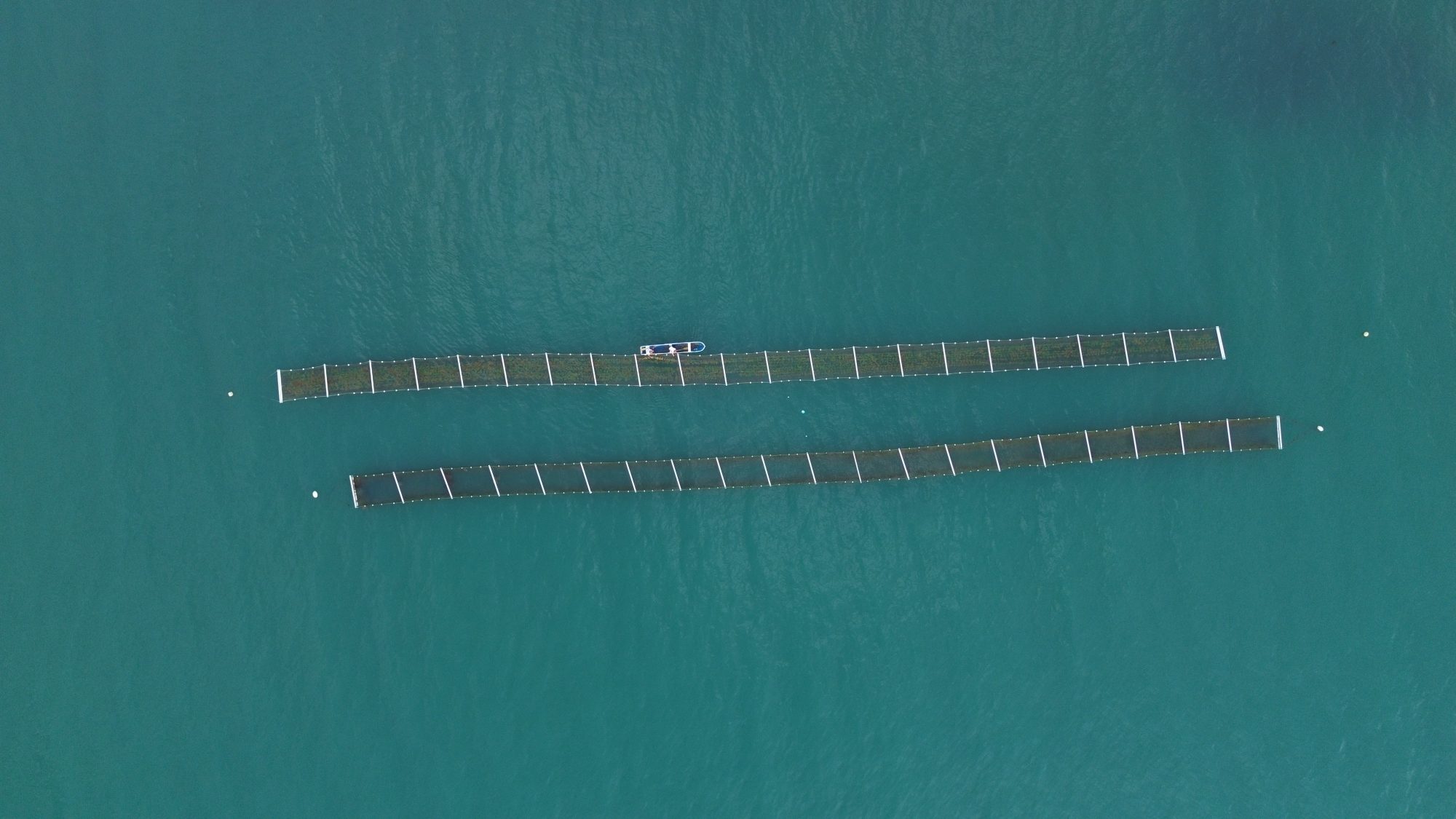
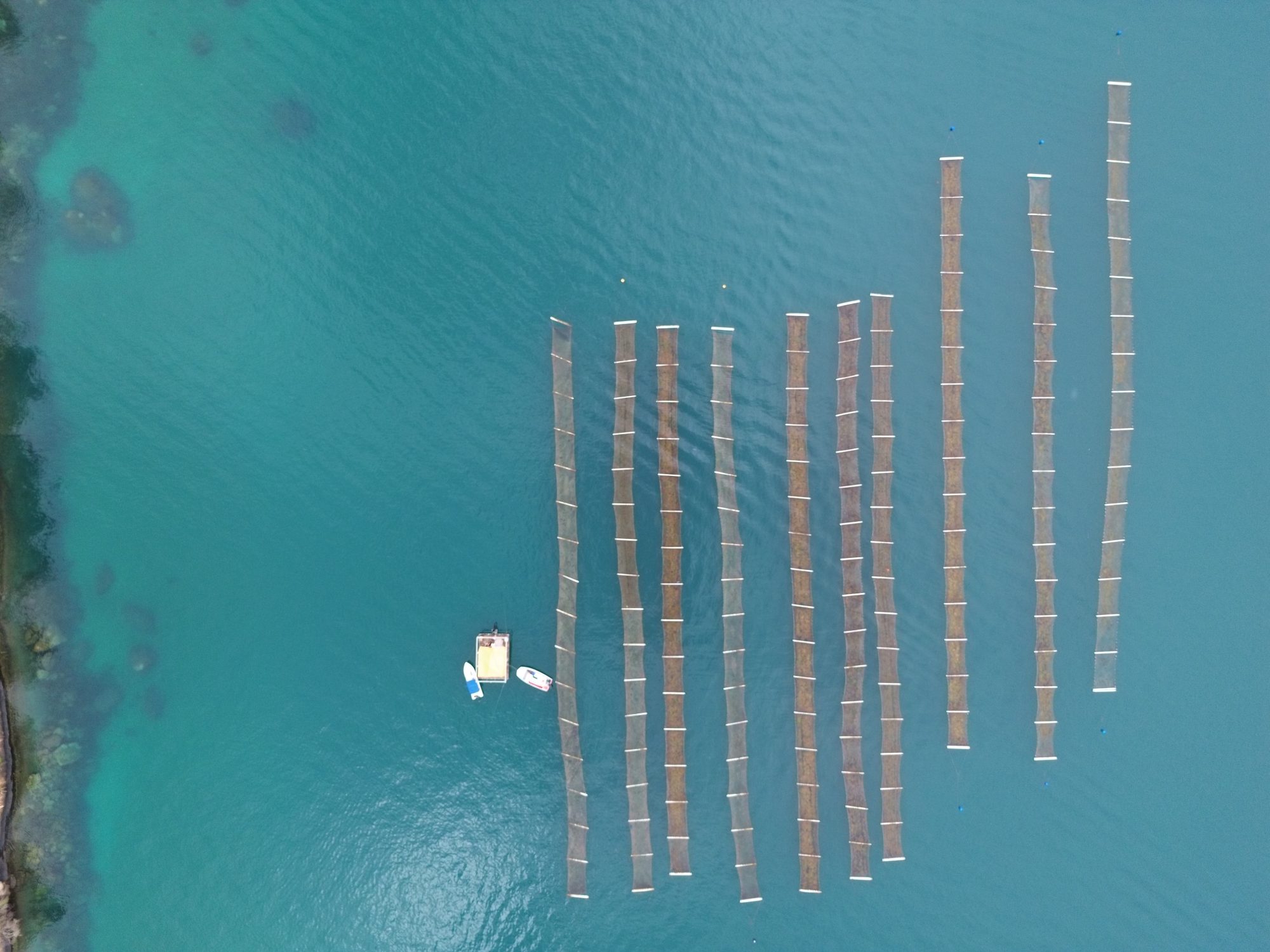
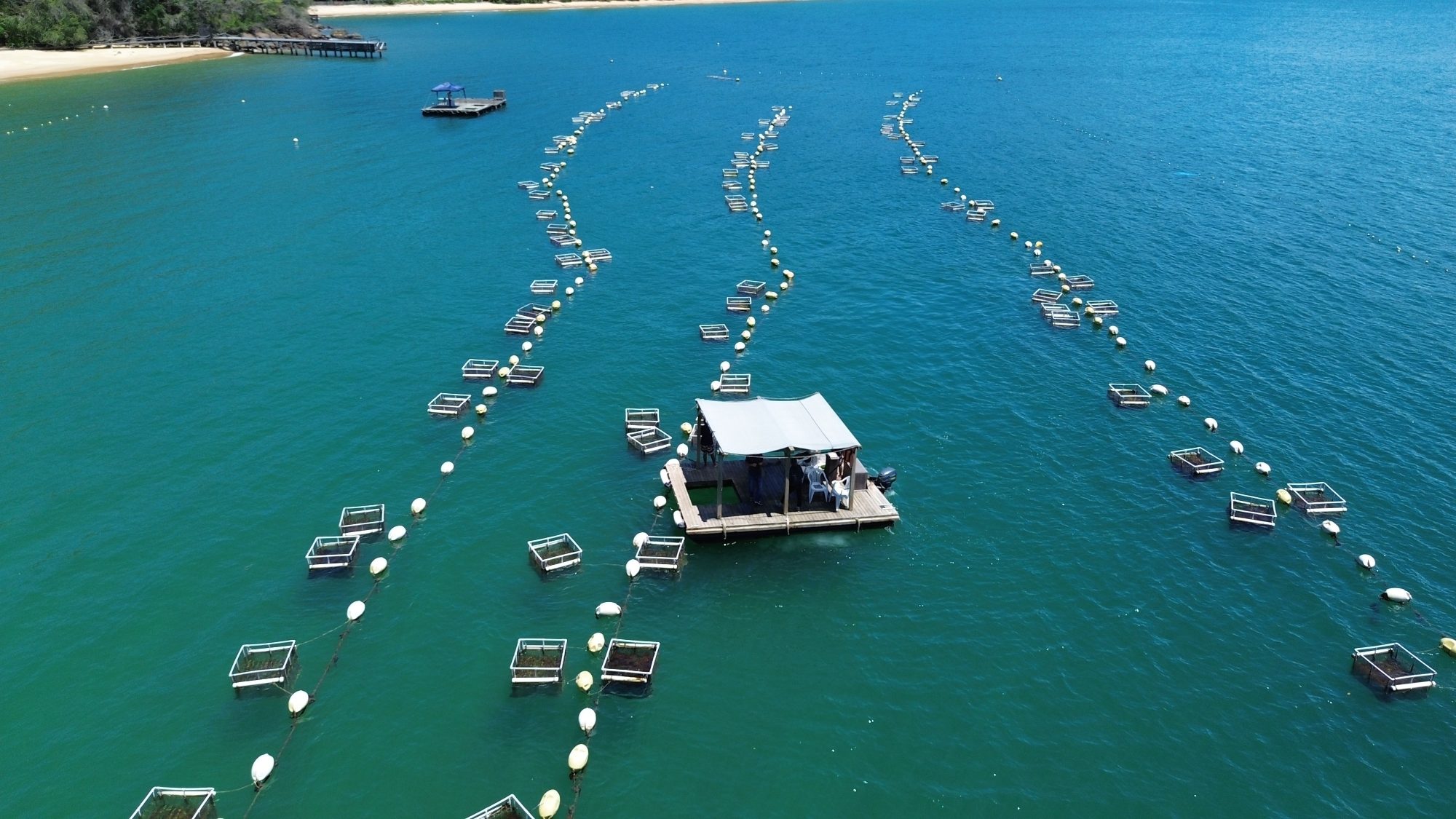
In the waters around Ilha Grande and Paraty, Brazil, the floating raft system is most prominent, featuring modules like 4x3 meter units. These contain several 4-6 meter long culture lines (6-9 typically) which are connected to PVC pipes that together can form a raft of 12-20 modules resulting in 80-100 m long raft structures.
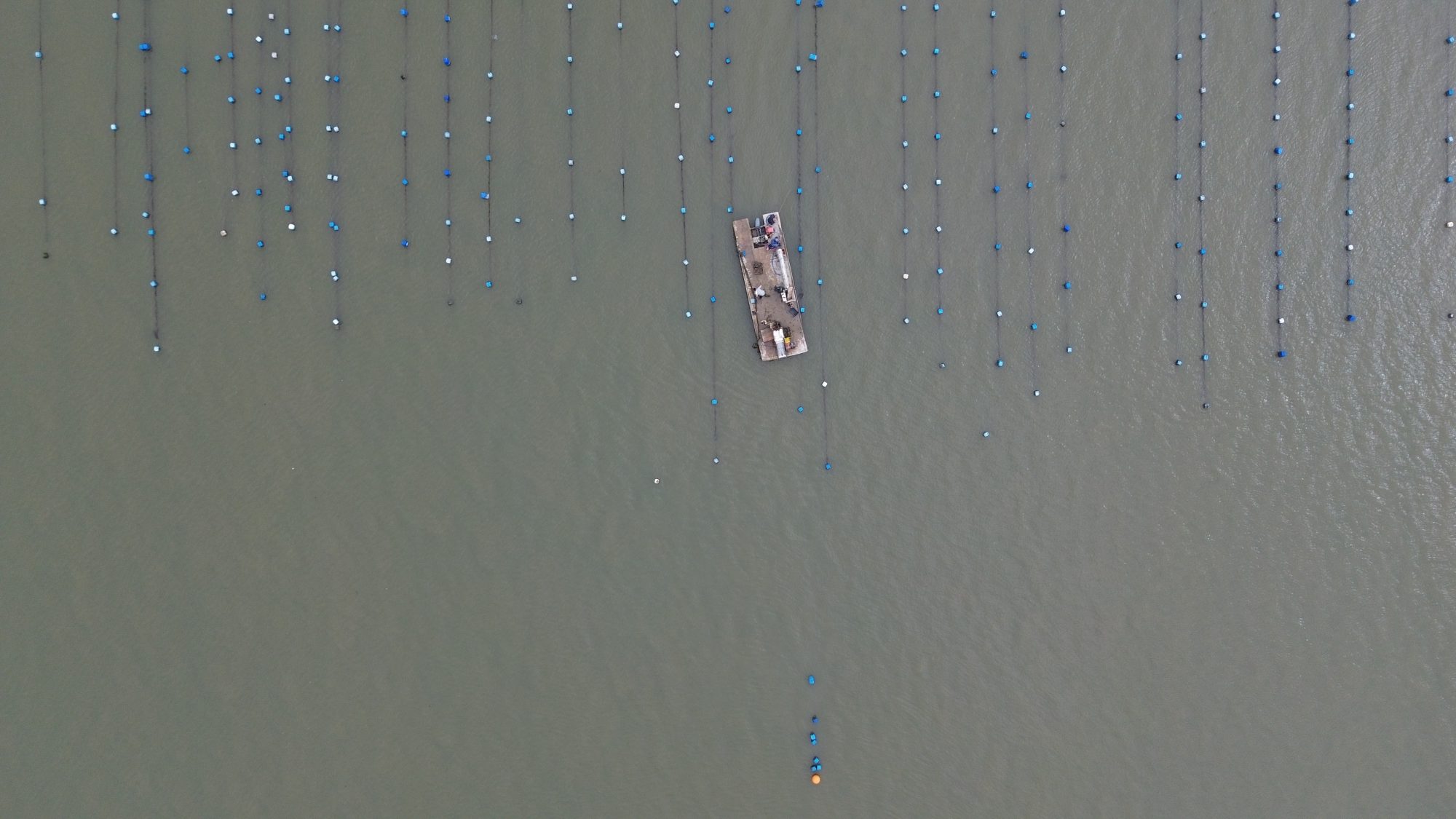
On the other hand, in the waters of Santa Catarina, the hanging long-line method is standard and common use also in mussel farming, employing 50 to 70-meter lines within hectare-scale concessions.
Anchors
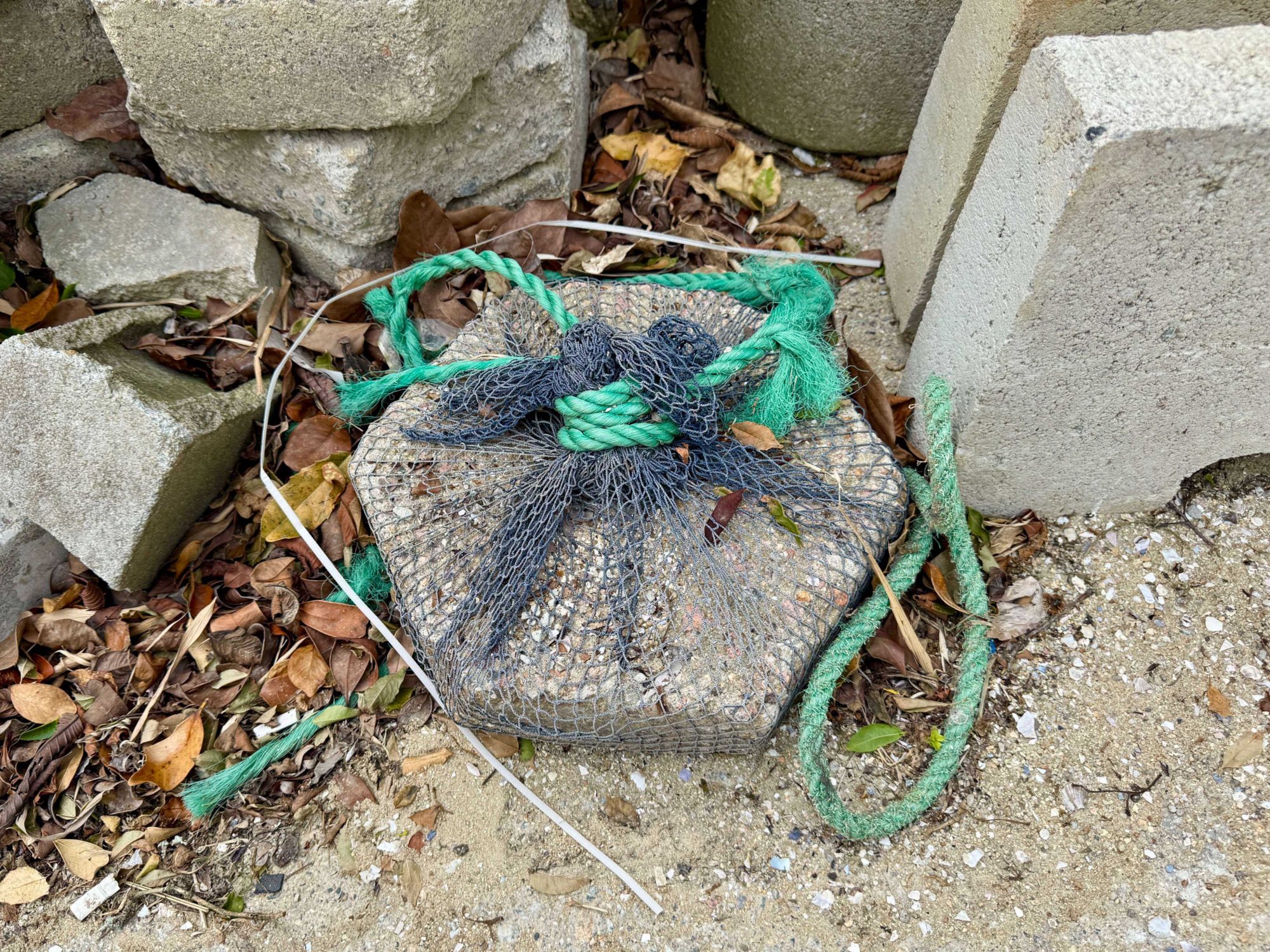
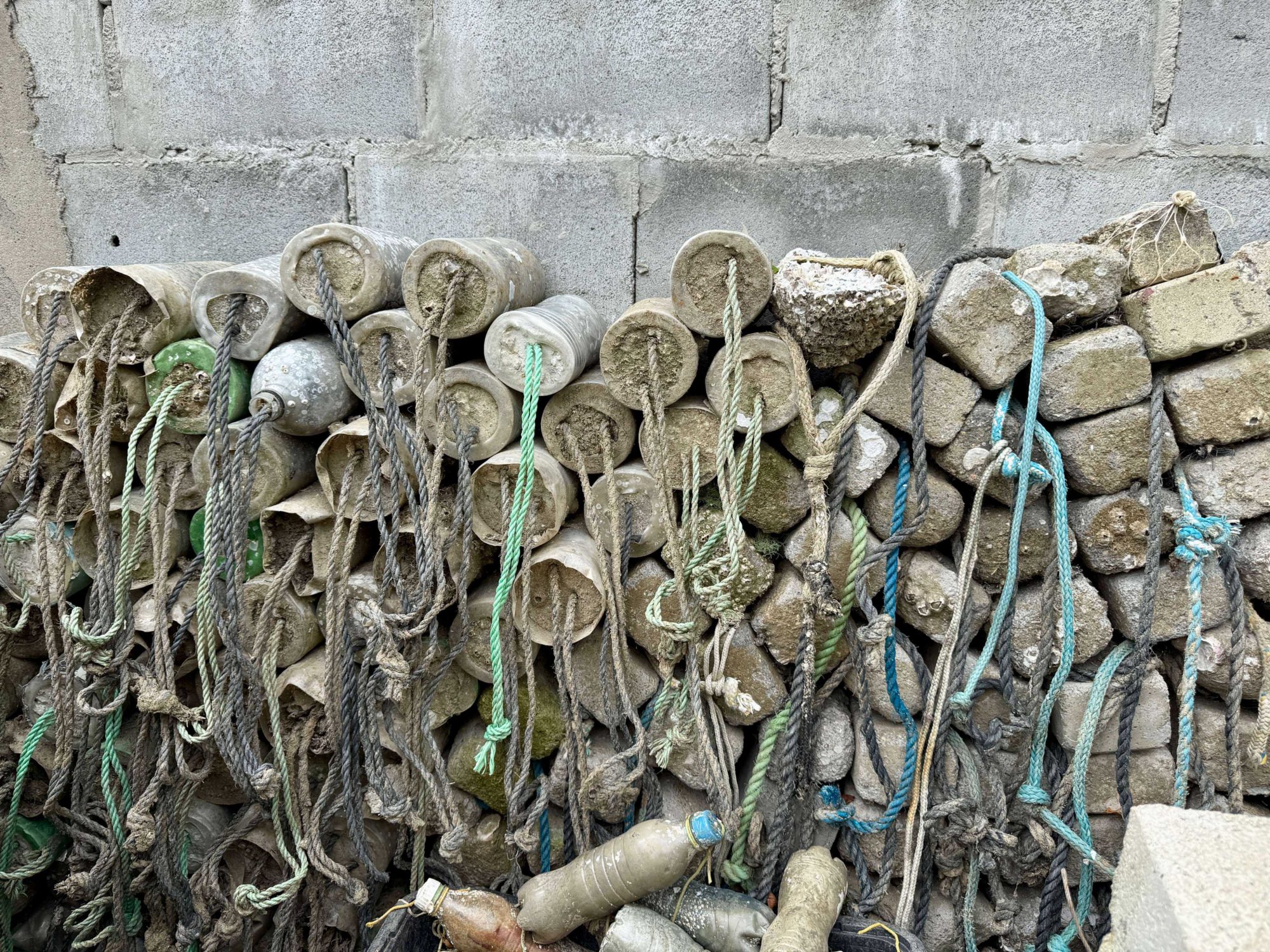
The choice of anchoring reflects local substrates and resources. In Venezuela, sandbags and wooden stakes are prevalent. In the muddy bottoms of Santa Catarina, Brazil, farmers drive long eucalyptus or metal stakes deep into the substrate, a solution valued for its longevity. For the extensive floating raft systems in Rio de Janeiro, heavy concrete blocks typically provide the necessary stability.
Rope material
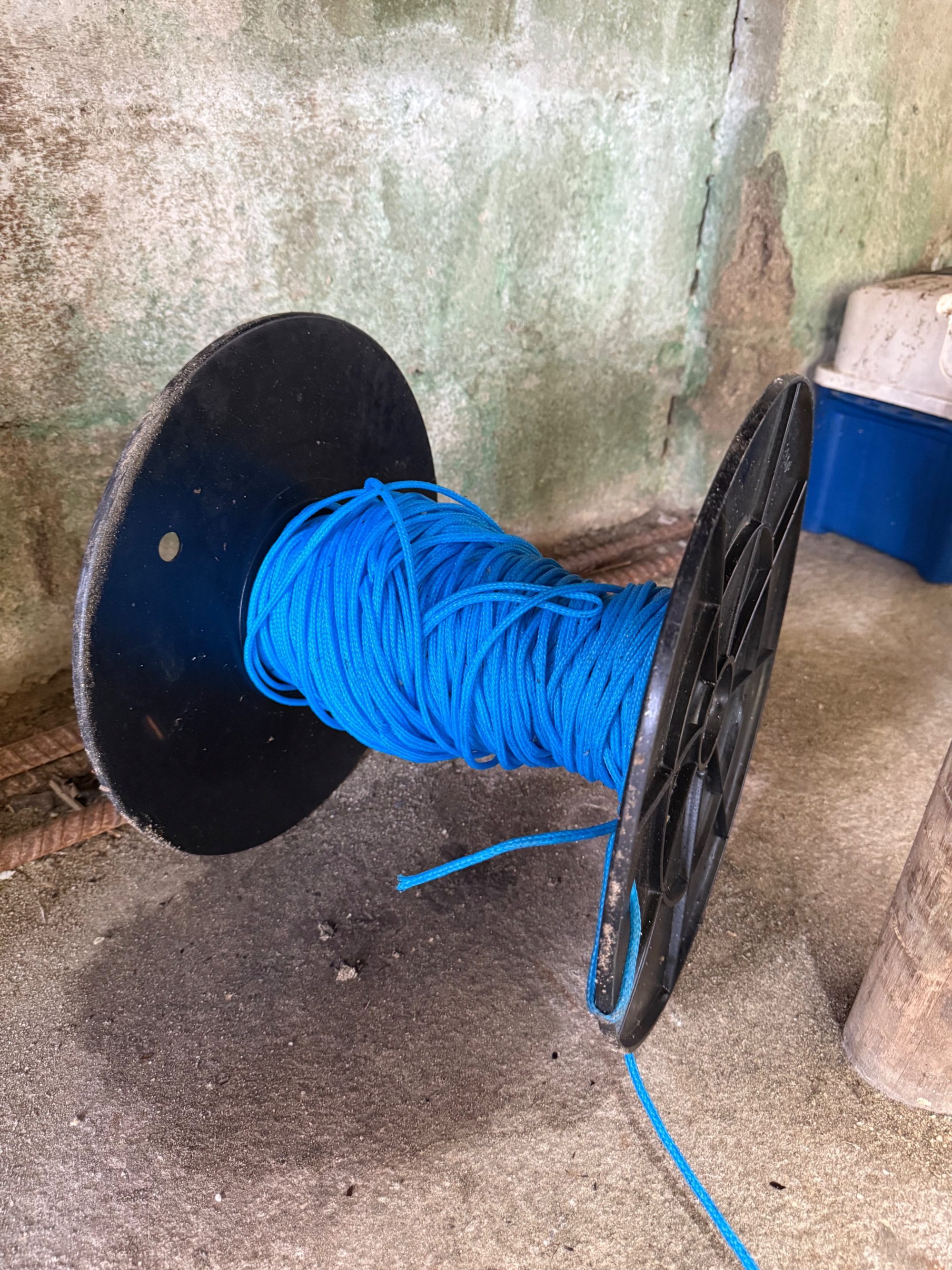
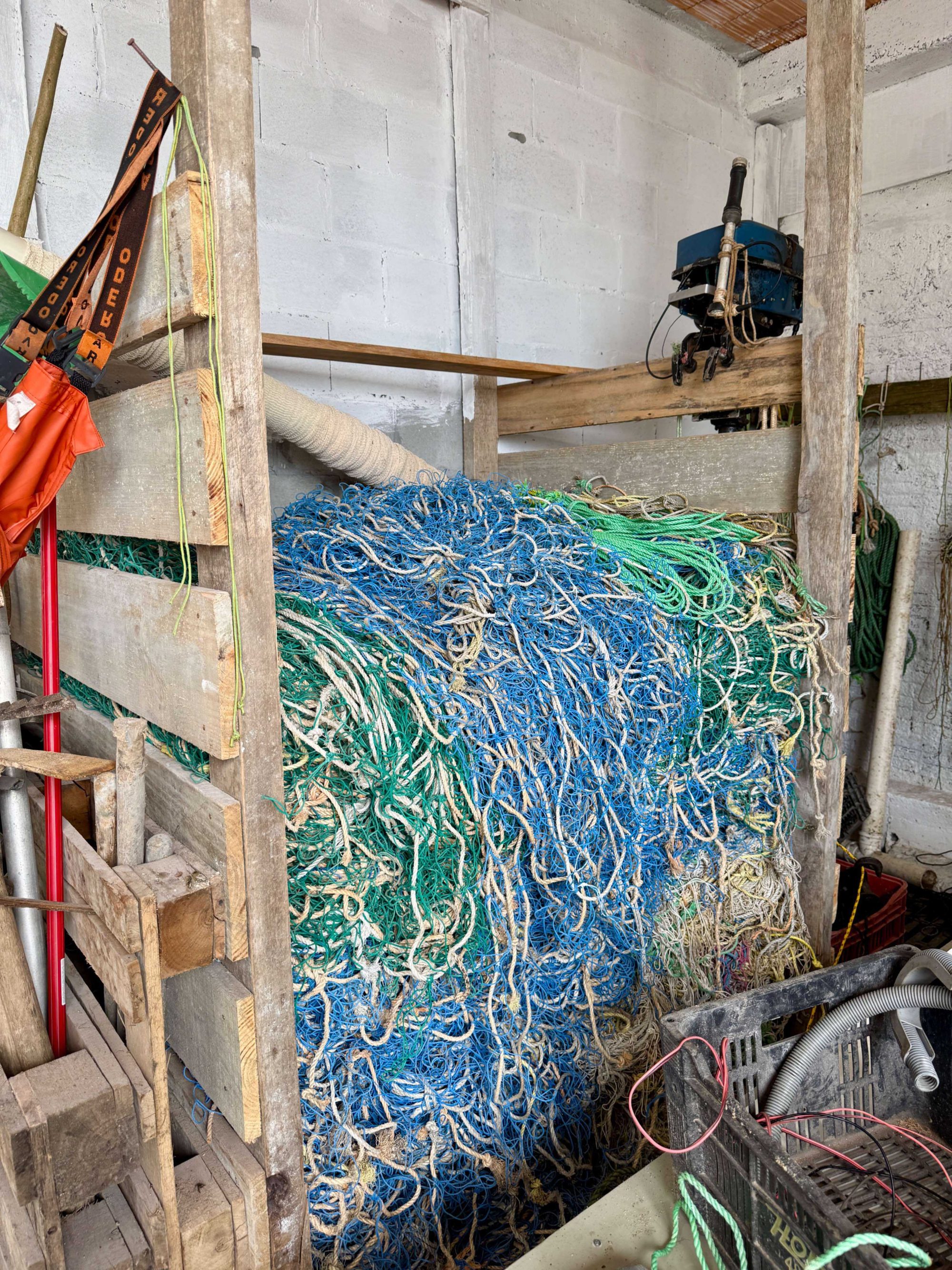
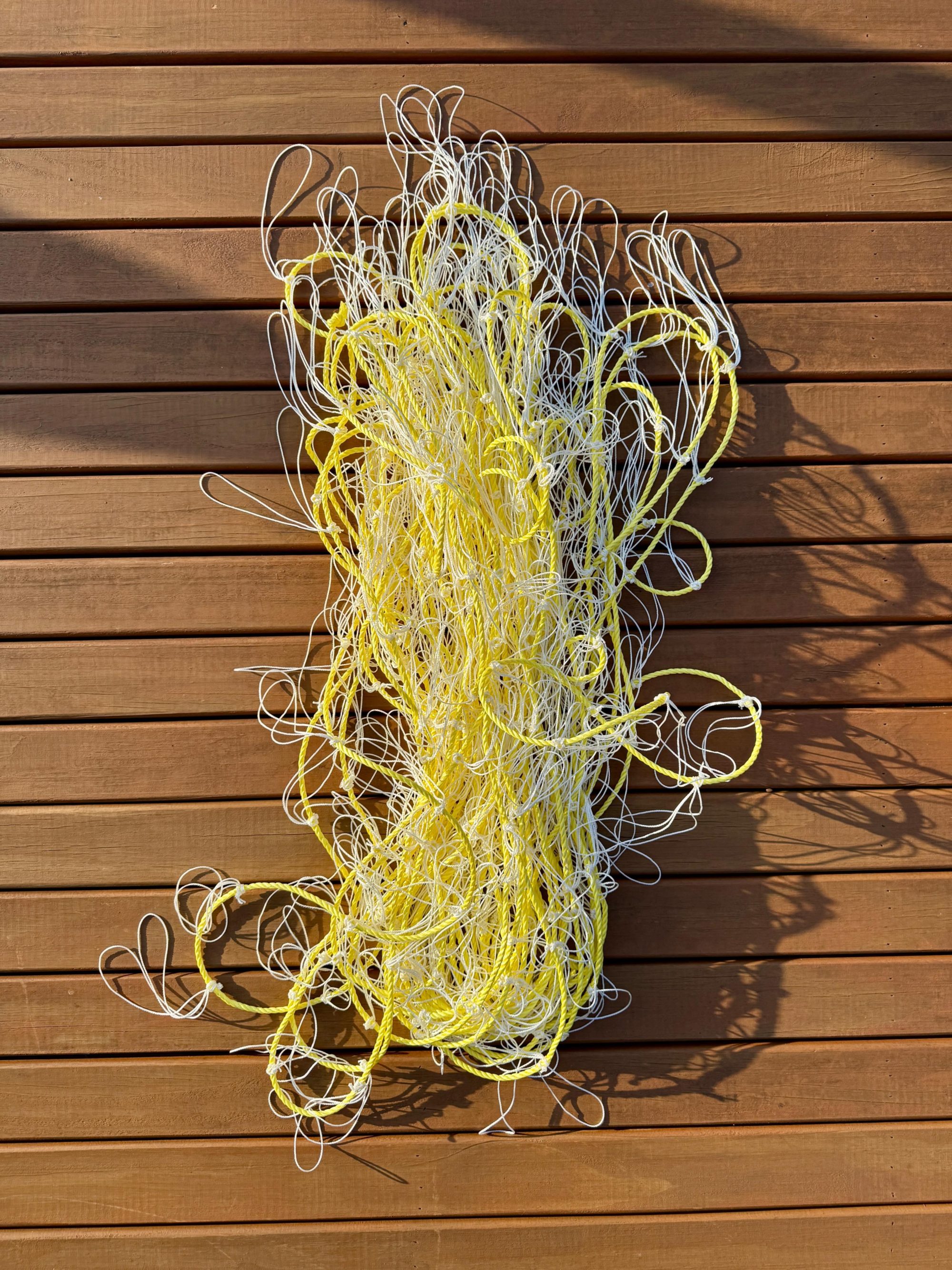
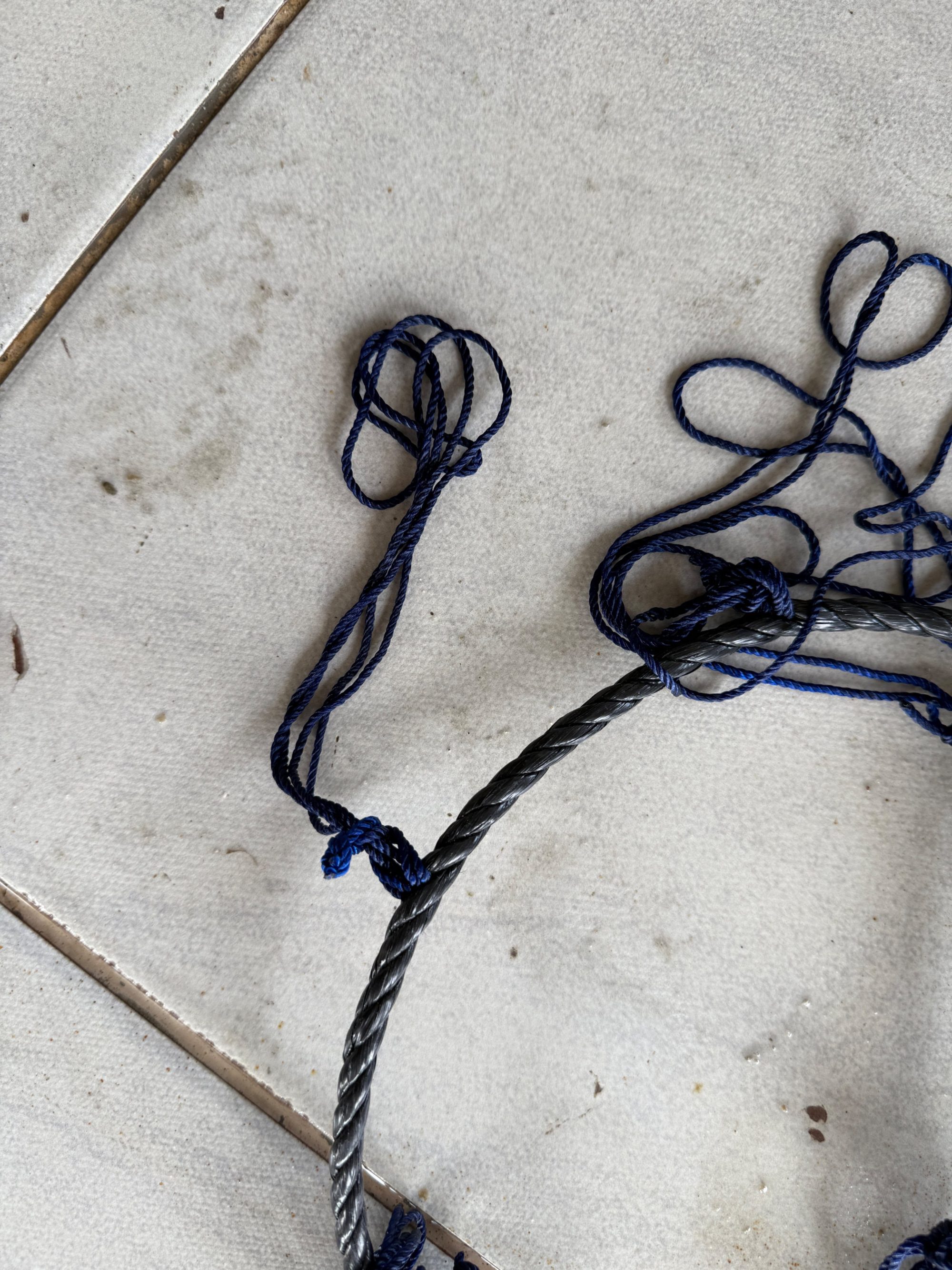
Polypropylene rope is the most common material for cultivation lines across the region, valued for a lifespan of five to eight years. Typically, farmers use two distinct grades: stronger 5 or 6 mm lines for main structures, costing approximately $0.10-0.20 USD per meter, and thinner 2.5 or 3 mm lines for attaching the seaweed, at about $0.040 - $0.045 USD per meter. They are cleaned and reused; a disinfection wash is performed once a year.
Floats
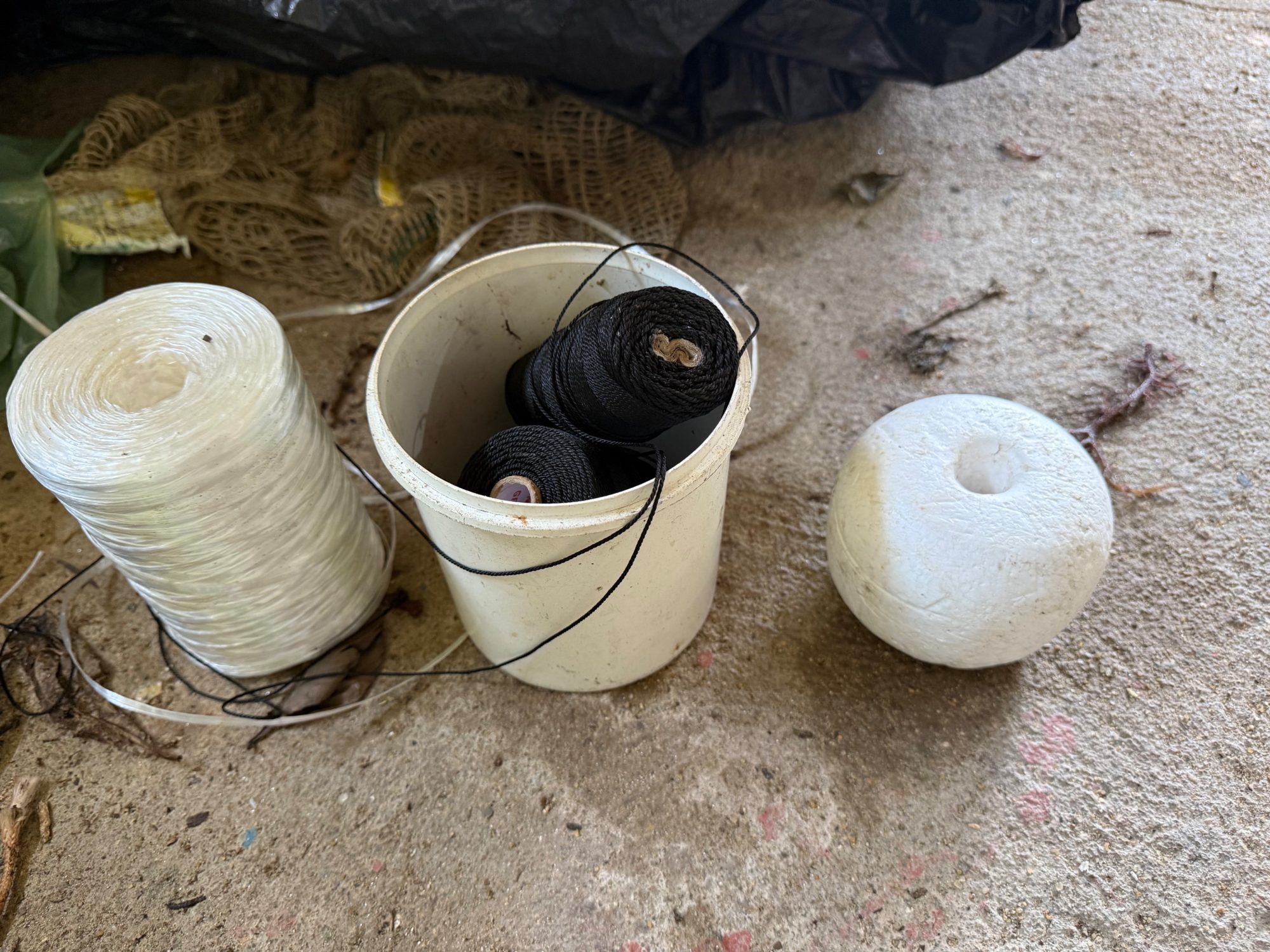
In terms of floats, the low-cost approach of using repurposed PET bottles common in South East Asia continues in Venezuela. However, most fixed-off bottom farms don’t require floats at all - especially in the shallow near shore areas. In Rio de Janeiro, Brazil, the floating raft system represents a more substantial investment, where the primary expense is flotation; basic PVC pipes cost around $12 USD per unit, while specialised polyethylene tubes cost about $100 USD each, promising superior durability and reduced biofouling.