Saccharina Harvest
East Asia
Overview
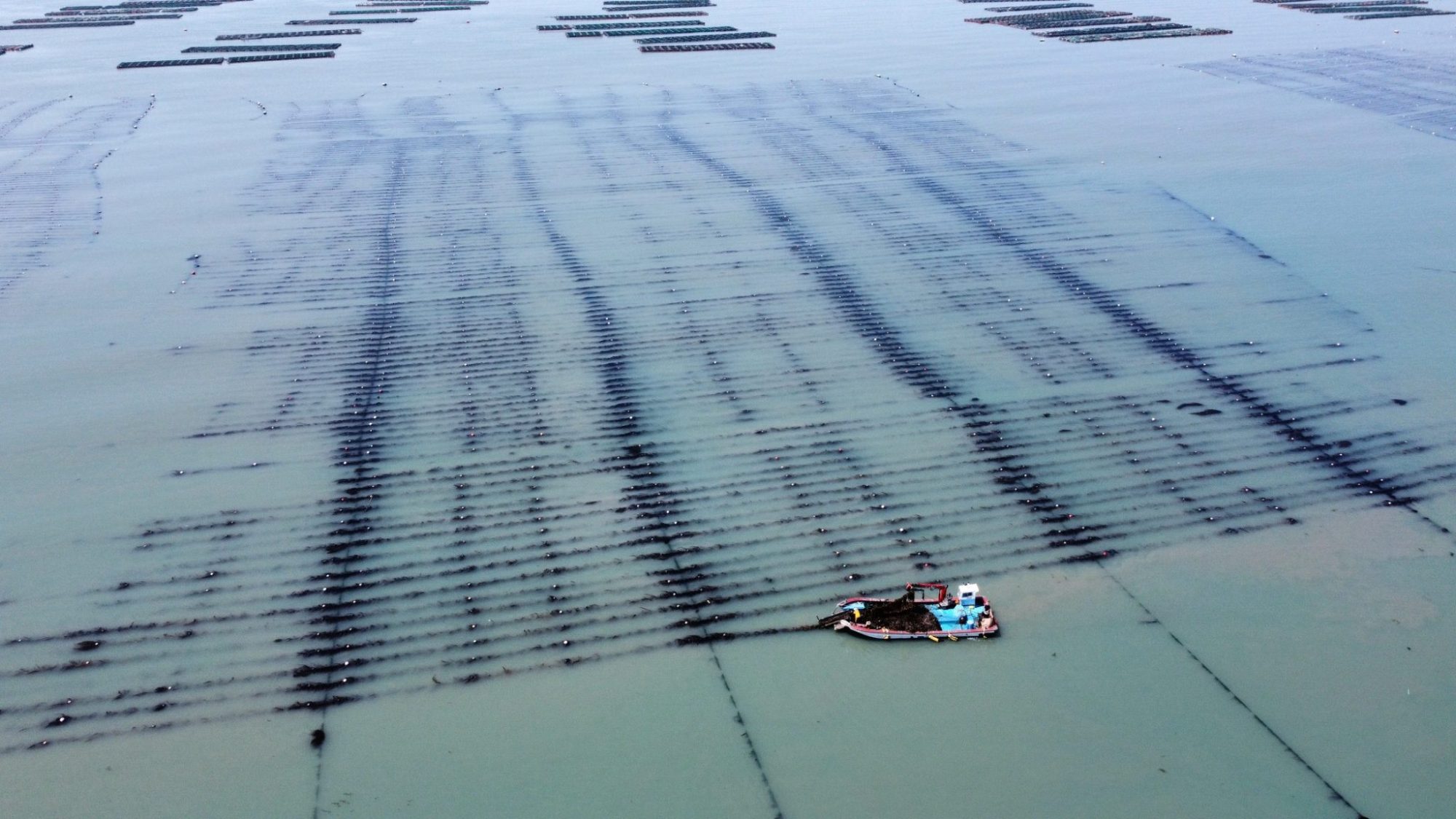
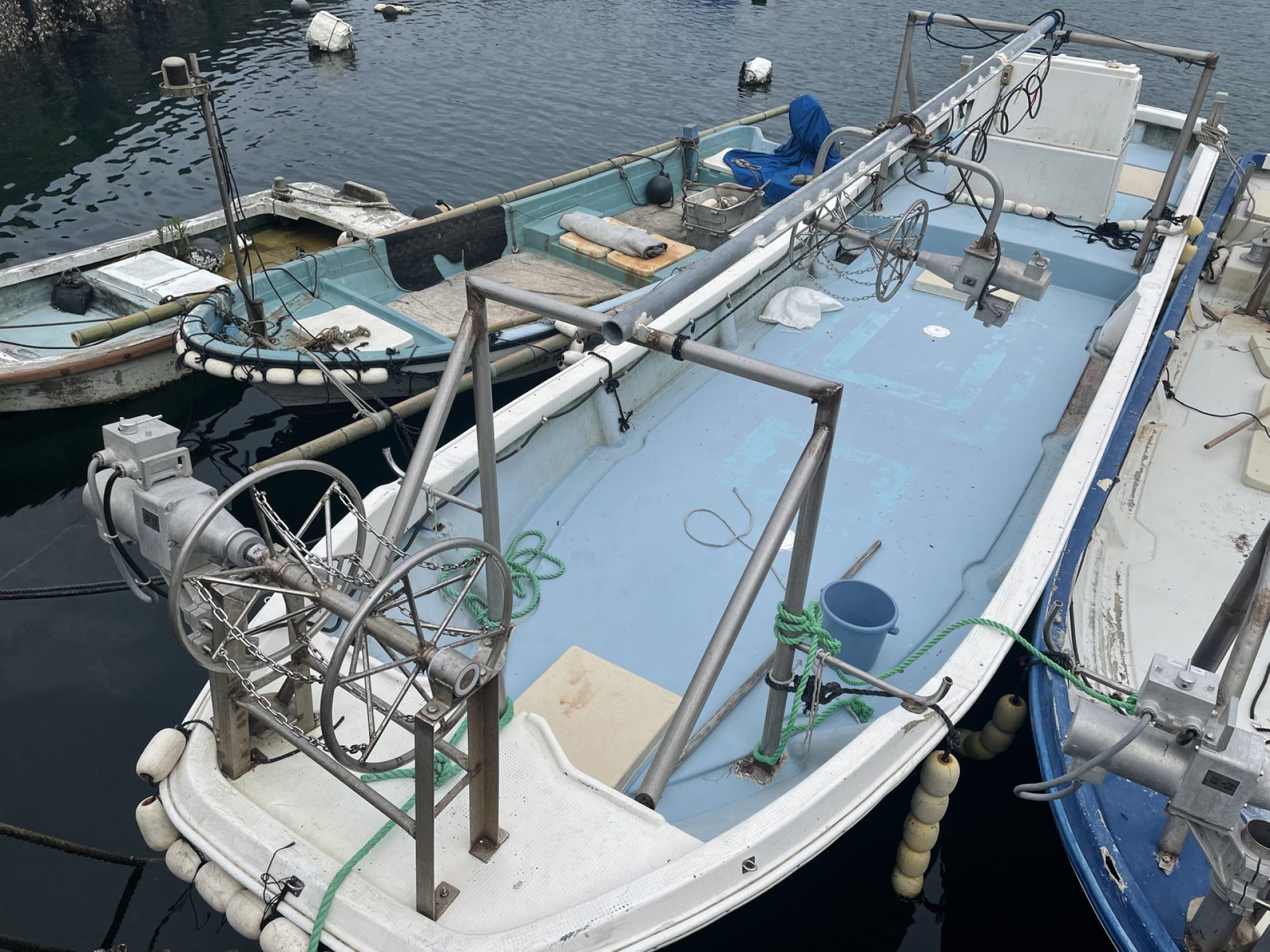
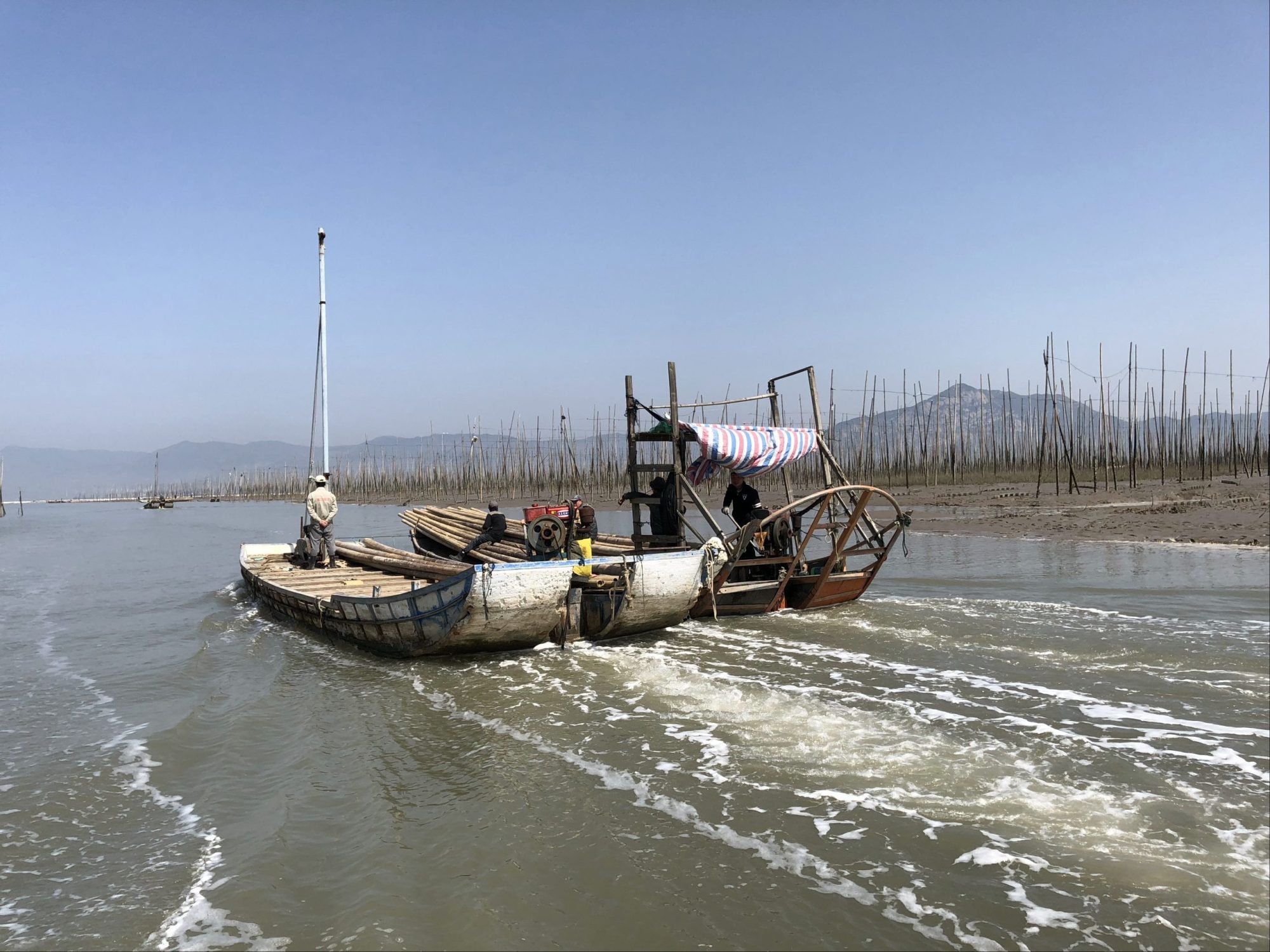
Beyond South Korea, the Chinese Saccharina farming industry has tried to develop mechanised harvesting boats, however efforts have not passed the research and development stage. One device that has been put into use since 2020 is a mechanical arm and towing device that hooks and lifts the culture lines, which the workers then cut manually. The efficiency of this method is about 1 tonne per hour per person.
Xinge No.1 is another harvesting machine currently under development that has yet to be field tested. It uses a conveyor belt mounted on top of traditional flat boats and can be used with twine seeded cultivation methods.
Harvesting only takes place a few months a year and is therefore an intensive and crucial period for the farmers.
Yield
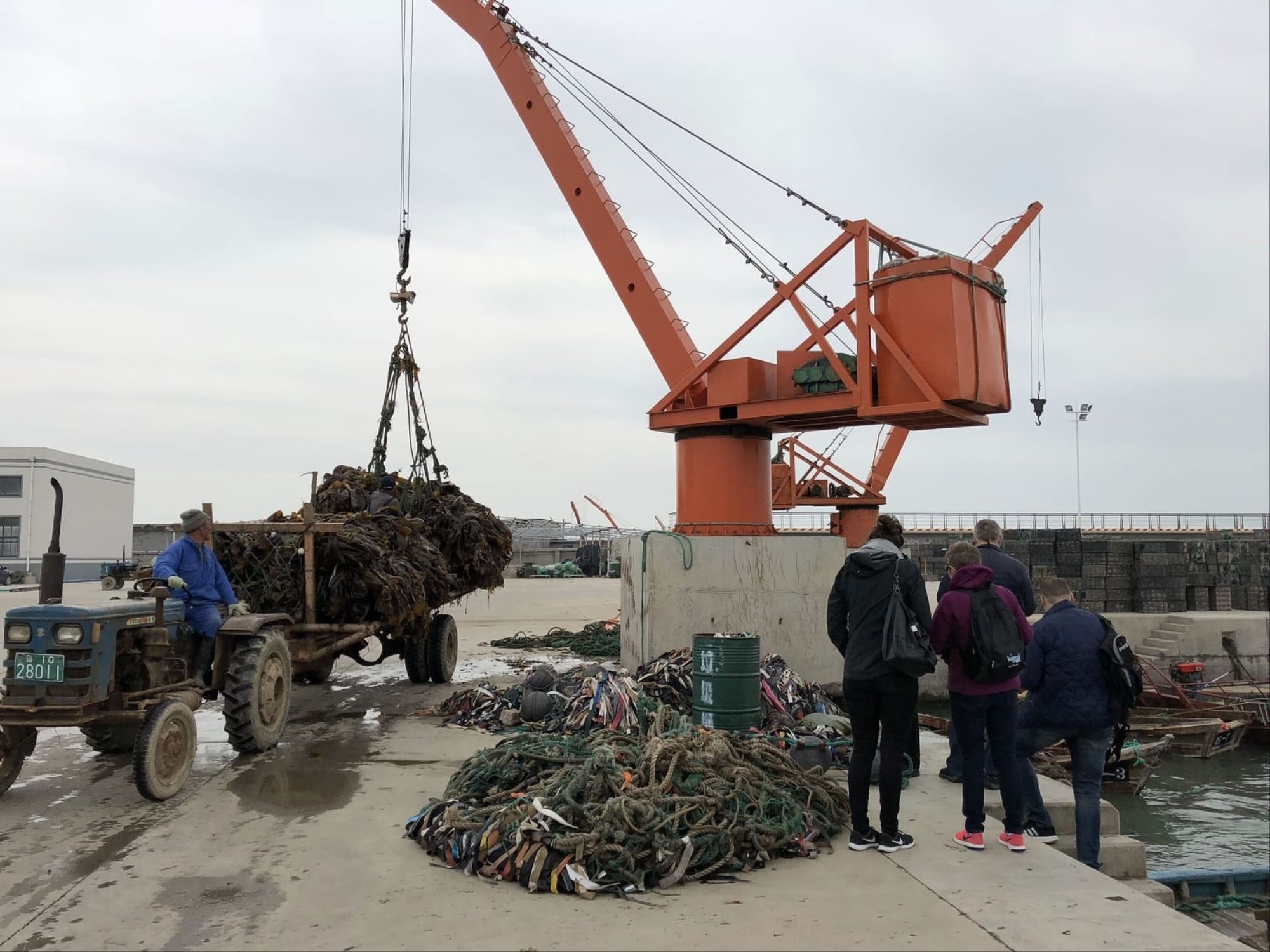
In South Korea, we saw the most automated or mechanised ways of harvesting. Between 600 and 3,000 metres of line can be harvested per hour here. Yet it is important to note that the fastest method, by stripping the entire lines with a semi-automated continuous process, also affects the quality of the harvested seaweed significantly.
In the North of Japan, harvesting begins in the middle of June and usually continues until mid August. Harvest or yield in Japan is not measured in weight (kg or MT), but rather in pieces. For instance, would a typical farm in Hokkaido with a 3,000m line harvests between 40,000 -100,000 pieces per year. The harvest takes place during the early morning hours (3-5am typically) and about 1,000-2,000 pieces are harvested at once. This amount depends on the space for drying the blades on land.
The timing of harvests depends on the sea temperature, since Saccharina does not tolerate temperatures above 20°C well.
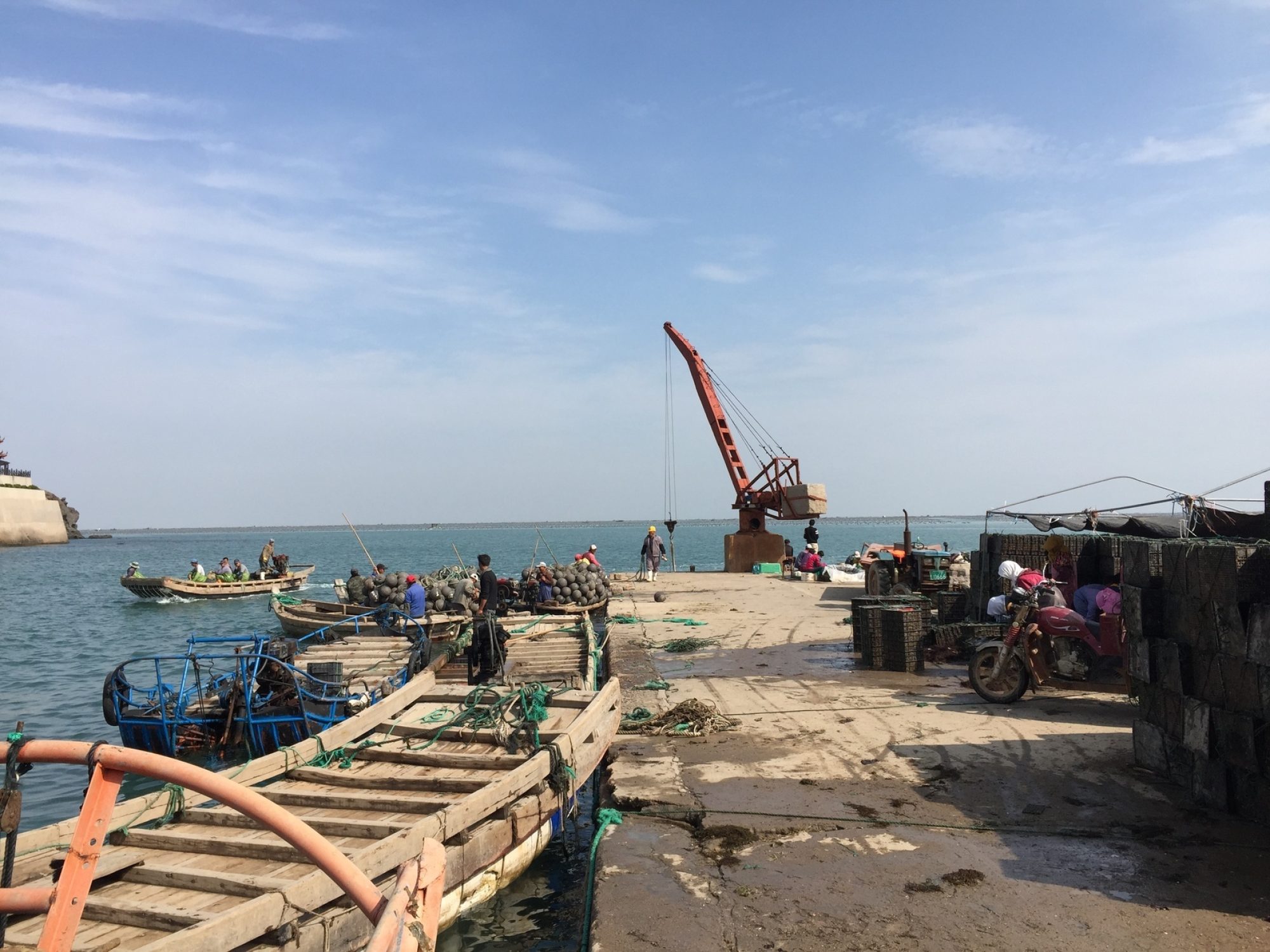
In Shandong and Dalian, China, farmed Saccharina grows up to 4-6 metres before it is harvested between May and August every year. In the South of China (Fujian province), the growth period is much shorter and blades grow only up to 1-2 metres. The harvesting process is usually done by a team of two people per boat and is physically very demanding. There is an urgent need to achieve mechanised harvesting and transportation to shore.