Seaweed
  • Species production
  • Regional production
  • About
  • Reports
  • en
  • es
  • pt
  • Species Production Overview
  • Eucheumatoids
  • Saccharina
  • Undaria
  • Pyropia
  • Gracilaria
  • Macrocystis
  • Global Production Overview
  • East Asia
  • South East Asia
  • Central America & Caribbean
  • South America
  • Species production
    • Species Production Overview
    • Eucheumatoids
      • Production Overview
      • Site selection
      • Farm design
      • Seeding
      • Grow out
      • Harvest
      • Post harvest
      • Sales
      • The farmer
      • Future of farm
    • Saccharina
      • Production Overview
      • Site selection
      • Farm design
      • Seeding
      • Grow out
      • Harvest
      • Post harvest
      • Sales
      • The farmer
      • Future of farm
    • Undaria
      • Production Overview
      • Site selection
      • Farm design
      • Seeding
      • Grow out
      • Harvest
      • Post harvest
      • Sales
      • The farmer
      • Future of farm
    • Pyropia
      • Production Overview
      • Site selection
      • Farm design
      • Seeding
      • Grow out
      • Harvest
      • Post harvest
      • Sales
      • The farmer
      • Future of farm
    • Gracilaria
      • Production Overview
      • Site selection
      • Farm design
      • Seeding
      • Grow out
      • Harvest
      • Post harvest
      • Sales
      • The farmer
      • Future of farm
    • Macrocystis
      • Production Overview
  • Regional production
    • Global Production Overview
    • East Asia
    • South East Asia
    • Central America & Caribbean
    • South America
  • About
  • Reports
Seaweed
  • en
  • es
  • pt
  • Production Overview
  • Site selection
  • Farm design
  • Seeding
  • Grow out
  • Harvest
  • Post harvest
  • Sales
  • The farmer
  • Future of farm

Pyropia Harvest

Table of contents
  • East Asia
    1. Overview

    2. Harvest

East Asia

Overview

For Pyropia, multiple harvests can be taken from a single seeded net in short intervals throughout the winter months.


Specially designed harvesting boats drive beneath the cultivation net and cut off the hanging Pyropia blades underneath. They are typically 10-15 cm long at the point of harvest. 


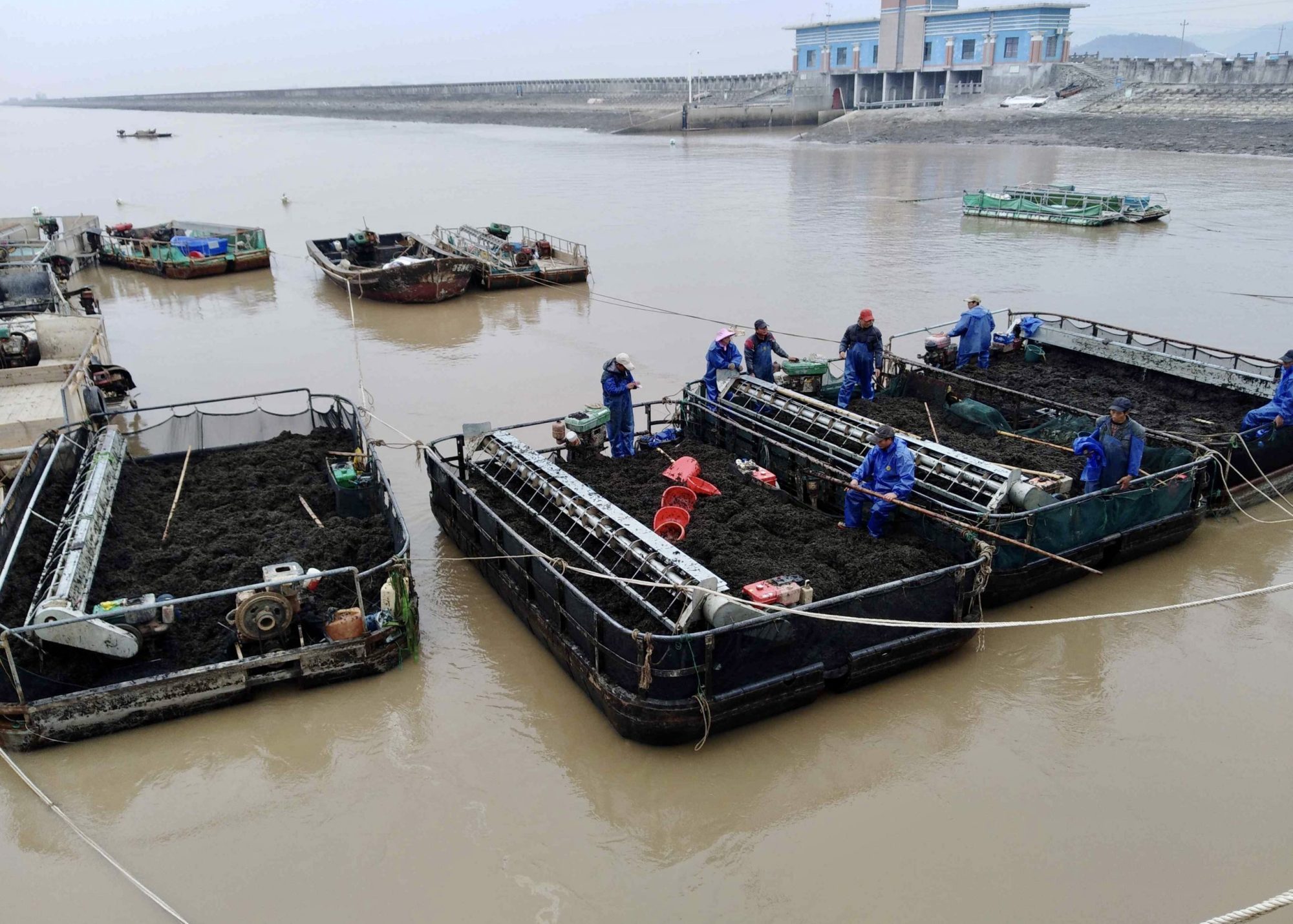
In China, farmers only harvest the amount that can be processed on that day since farming and primary processing is done by the same entity.
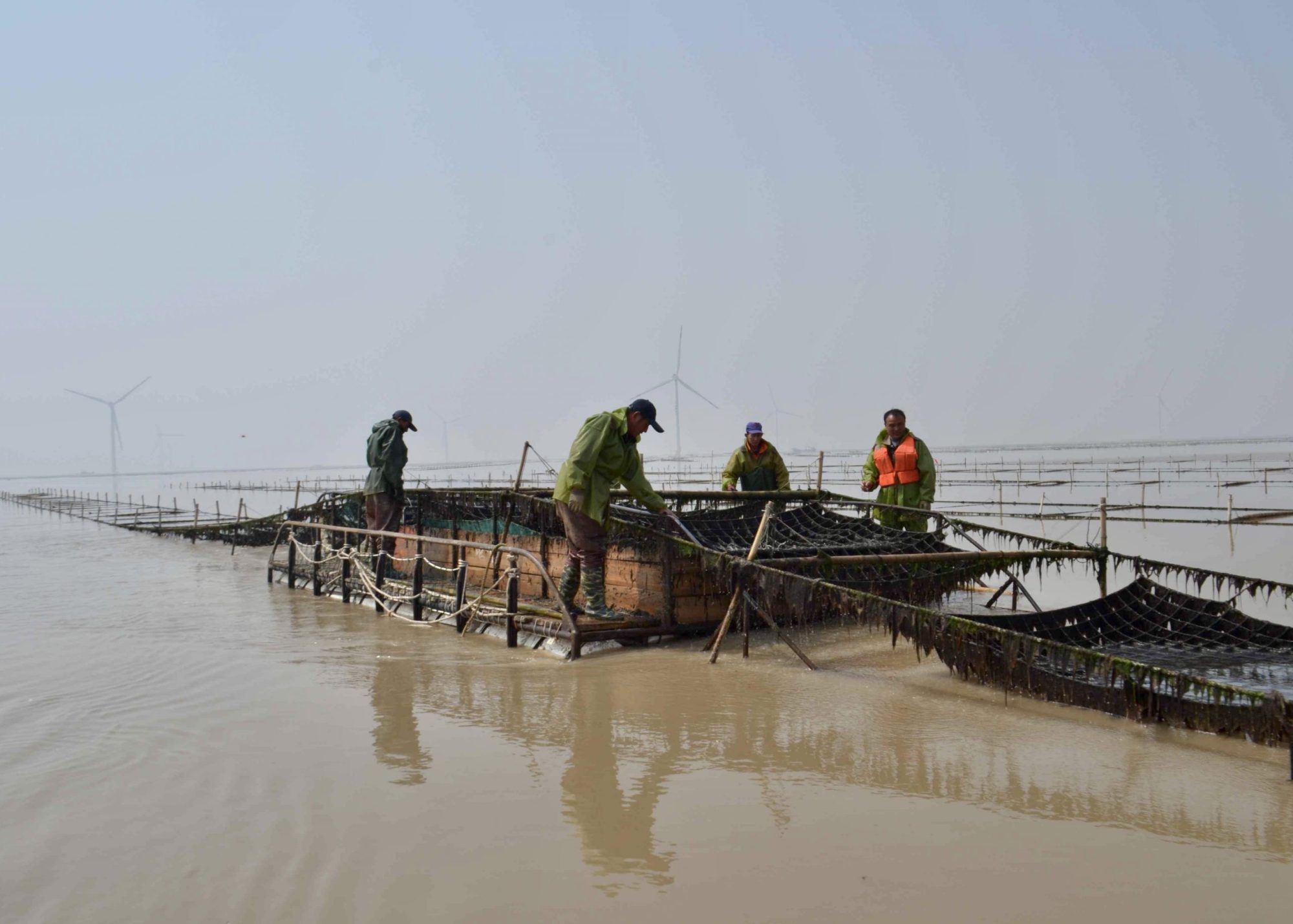
Harvesting boat in China. (Photo courtesy of Li-En Yang)
Transport of the full harvest boat back to the shore. (Photo courtesy of Li-En Yang)

Farmers report that Pyropia harvesting technology has become more efficient and improved significantly. The main challenges are processing capacity and price.

Harvest


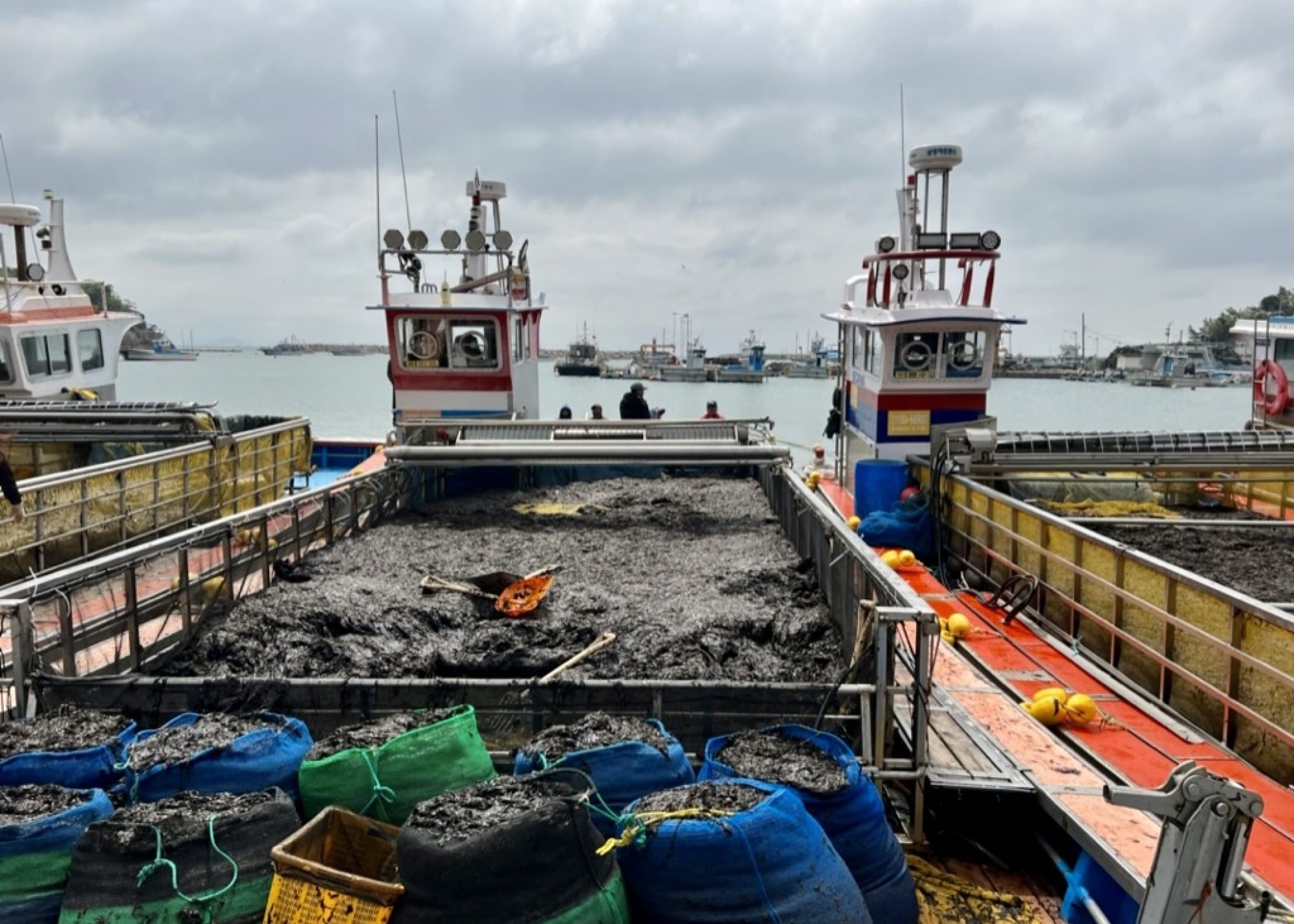
In South Korea, the core harvesting takes place between December and April. Sometimes harvesting starts as early as late October and continues all the way until early May. The harvest is done in the early morning hours when it is still dark and only lasts for a few hours. The harvesting boat then returns to a port where the auction of the fishery cooperative takes place every morning.


The harvested Pyropia is typically sold immediately since the primary processing is done by other companies. Therefore in peak season between January and March, a lot of Pyropia biomass is harvested and needs to be sold immediately. This causes strong fluctuation in price. Because of this, some farmers say they would only harvest when the price is reasonable. 
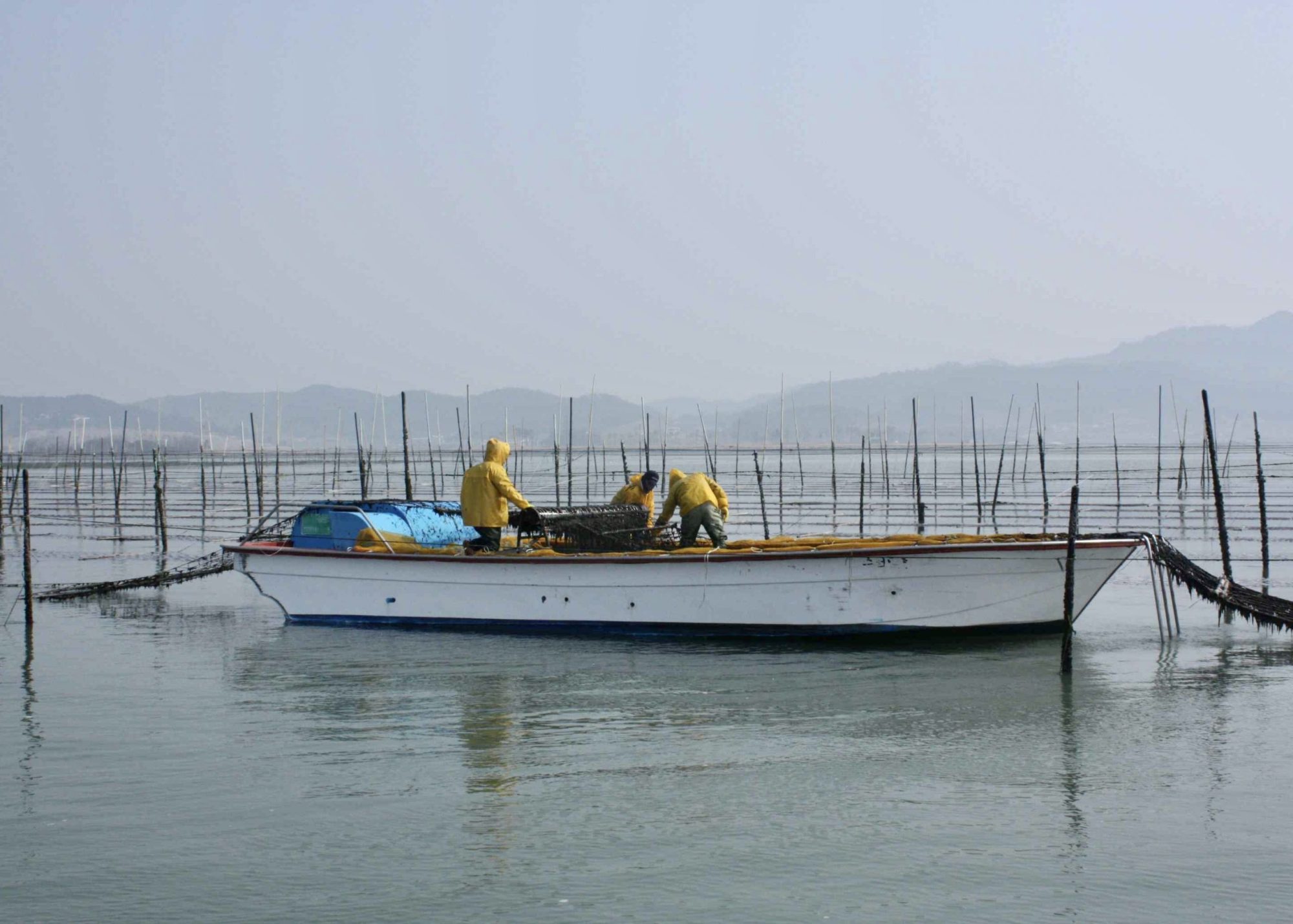
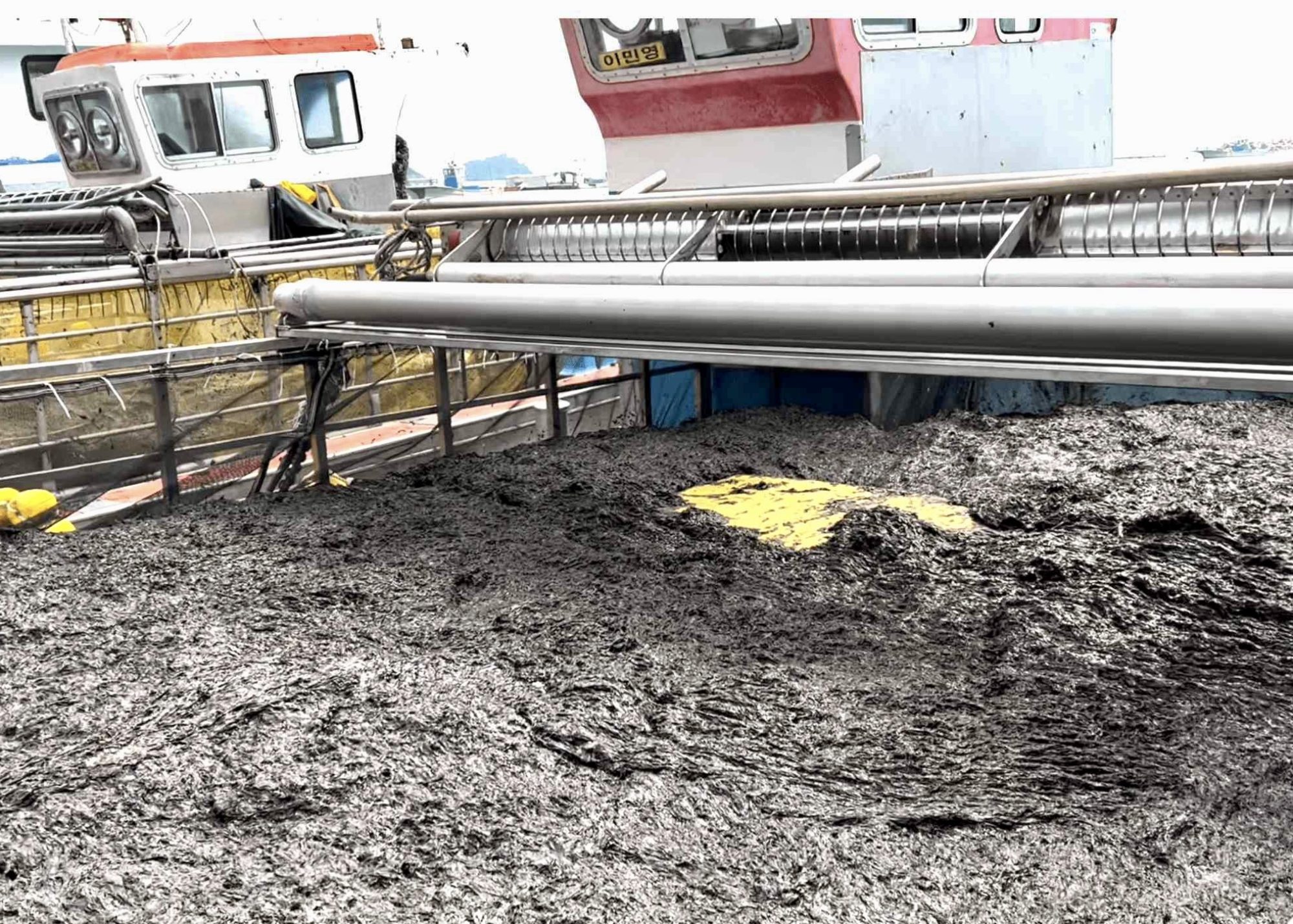
Harvesting process in South Korea. (Photo courtesy of Dr Hwang EK)
Automatic cutter on harvesting boat in South Korea.
Harvesting boat with harvested biomass back in port in Jindo, South Korea.

In Japan, the first harvest takes place after 30 days, usually at the end of November. For the next month the nets are harvested every four to five days. Then, the nets will be replaced with frozen ones which can be harvested from January to the end of March. The harvesting takes place in the early morning hours in order to process the harvested biomass within one day.


In Japan, farmers only harvest the amount that can be processed on that day since farming and primary processing is done by the same entity.

Previous
Next
Seaweed

Contact us:

info@hatch.blue
www.hatch.blue

Copyright © 2026 Hatch Blue Limited. All rights reserved.

  • Terms and conditions
  • Privacy policy

Hatch Blue is a global impact business focussed on farmed and alternative seafood. Hatch Innovation Services is the consultancy arm of Hatch, advising corporates, investors and governments on innovation and investment projects in the global aquaculture industry.

For our Shrimp Farming Insights visit: www.shrimpfarm.tech.