Seaweed
  • Species production
  • Regional production
  • About
  • Reports
  • en
  • es
  • pt
  • Species Production Overview
  • Eucheumatoids
  • Saccharina
  • Undaria
  • Pyropia
  • Gracilaria
  • Macrocystis
  • Global Production Overview
  • East Asia
  • South East Asia
  • Central America & Caribbean
  • South America
  • Species production
    • Species Production Overview
    • Eucheumatoids
      • Production Overview
      • Site selection
      • Farm design
      • Seeding
      • Grow out
      • Harvest
      • Post harvest
      • Sales
      • The farmer
      • Future of farm
    • Saccharina
      • Production Overview
      • Site selection
      • Farm design
      • Seeding
      • Grow out
      • Harvest
      • Post harvest
      • Sales
      • The farmer
      • Future of farm
    • Undaria
      • Production Overview
      • Site selection
      • Farm design
      • Seeding
      • Grow out
      • Harvest
      • Post harvest
      • Sales
      • The farmer
      • Future of farm
    • Pyropia
      • Production Overview
      • Site selection
      • Farm design
      • Seeding
      • Grow out
      • Harvest
      • Post harvest
      • Sales
      • The farmer
      • Future of farm
    • Gracilaria
      • Production Overview
      • Site selection
      • Farm design
      • Seeding
      • Grow out
      • Harvest
      • Post harvest
      • Sales
      • The farmer
      • Future of farm
    • Macrocystis
      • Production Overview
  • Regional production
    • Global Production Overview
    • East Asia
    • South East Asia
    • Central America & Caribbean
    • South America
  • About
  • Reports
Seaweed
  • en
  • es
  • pt
  • Production Overview
  • Site selection
  • Farm design
  • Seeding
  • Grow out
  • Harvest
  • Post harvest
  • Sales
  • The farmer
  • Future of farm

Pyropia Site Selection

Table of contents
  • East Asia
    1. Overview

    2. Substrates

    3. Licences

East Asia

Overview

Pyropia is cultivated during the winter in estuaries or brackish water zones and grows well in temperatures below 10°C. Sheltered sites are preferred since the net structures have a larger surface area that can get damaged by stronger wave action or storms.

Substrates

Licences

A concession or licence to farm is mandatory to obtain from the government, since the farmable area is publicly owned.  Permission to use this area will be granted through application via the local government in all three countries.


In South Korea and Japan it is mandatory to be in a farmers association in order to receive a permit and a fee for the farm area has to be paid. In China farmers generally don’t have to pay any fee for the use of the farm area. 


In China and South Korea it is getting more difficult to obtain permits for new farms or farm expansions, as the maximum carrying capacity has been reached in most established locations.

The strong tide fluctuations in the Yellow Sea provide excellent Pyropia farming conditions.

In China, the Pyropia farming hotspot is the coastline of Jiangsu province, which is North of Shanghai. Zhejiang and Fujian province further South follow in terms of production output.


In South Korea the majority of Pyropia farming takes place in the Southern coast, particularly Jeonnam region, where large tidal fluctuations and sheltered environment provide excellent growing conditions. 


In Japan, the regions around the Ariake Sea are most famous for Pyropia production, namely Saga, Fukoumo, Hyogo and Kumamoto. A sheltered environment combined with strong tidal fluctuations provide good growing conditions.
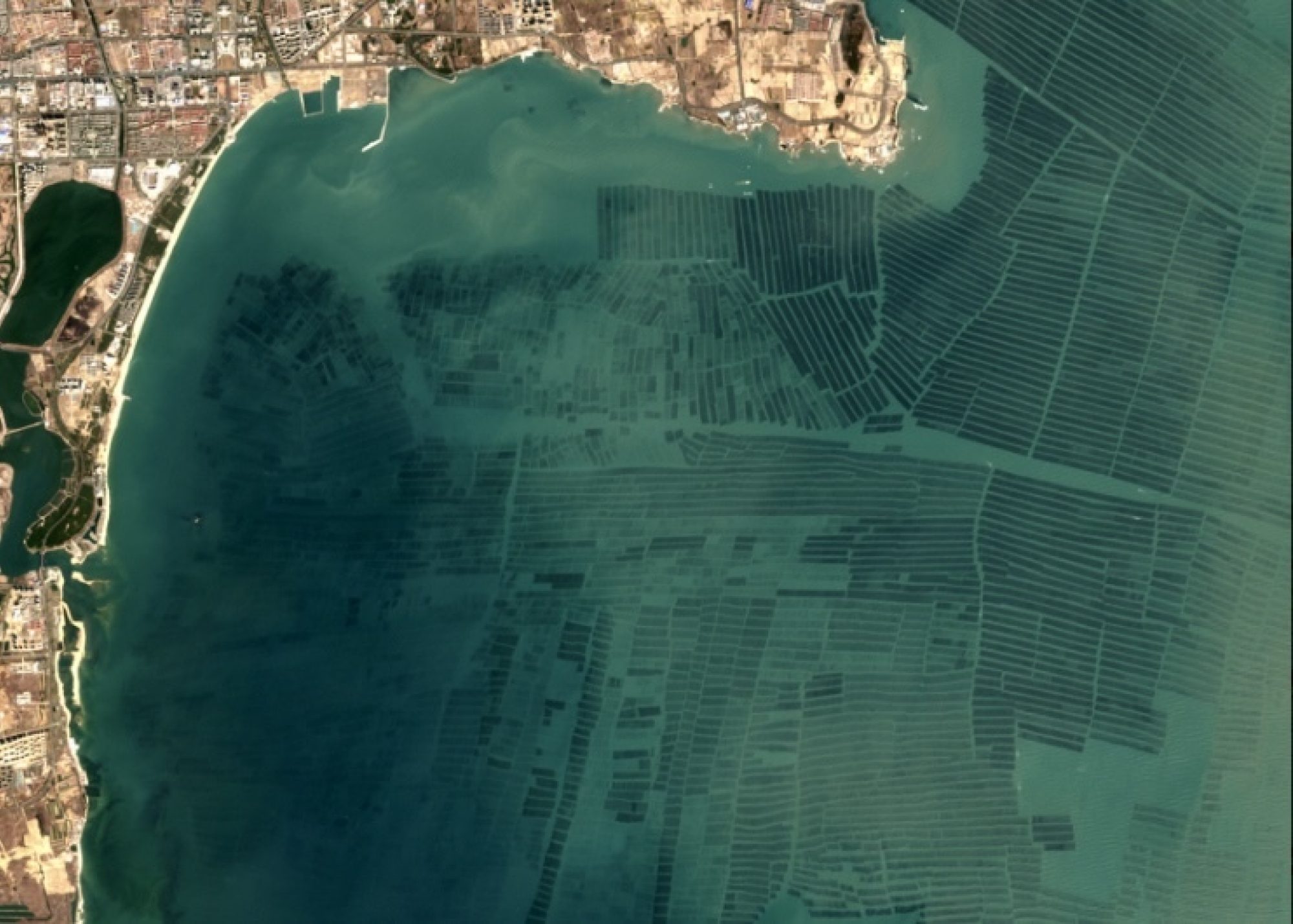
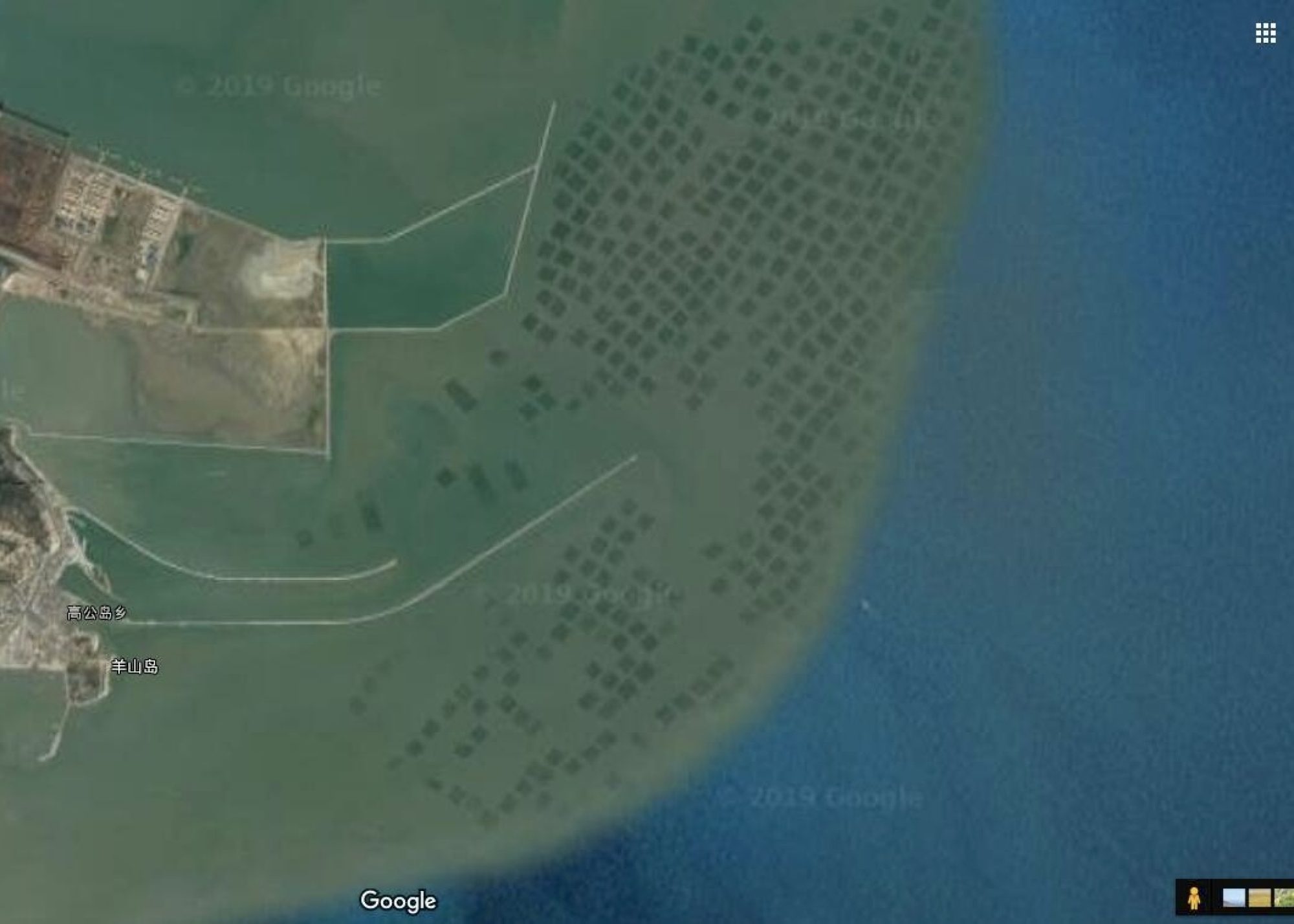
Pyropia farms in China (SeaWarden)
Pole method in North Jiangsu from satellite imagery 2019 (Picture courtesy of Dr. Lien Yang)
Pyropia farms in South Jeolla Province, South Korea are visible from satellite imagery (Google Earth)
Previous
Next
Seaweed

Contact us:

info@hatch.blue
www.hatch.blue

Copyright © 2026 Hatch Blue Limited. All rights reserved.

  • Terms and conditions
  • Privacy policy

Hatch Blue is a global impact business focussed on farmed and alternative seafood. Hatch Innovation Services is the consultancy arm of Hatch, advising corporates, investors and governments on innovation and investment projects in the global aquaculture industry.

For our Shrimp Farming Insights visit: www.shrimpfarm.tech.